Migrate from WordPress to Astro in Barcelona
Many businesses in Barcelona run WordPress but face performance ceilings, security overhead, and rising hosting costs. Astro solves these with static HTML output, zero JavaScript by default, and edge deployment. I migrate existing WordPress sites to Astro with full SEO preservation, URL mapping, and 301 redirects.
- PageSpeed 95-100
Static HTML with zero JavaScript. Faster than any WordPress solution.
- SEO-safe migration
URL mapping, 301 redirects, Google rankings preserved.
- Cloudflare Pages hosting
Global CDN, free SSL, instant deployments. Hosting costs near zero.
I am Mariusz Szatkowski, a solo developer based in Gdynia, Poland. I build Astro sites for companies that sell and communicate in Barcelona and across Catalonia, where a public website is rarely monolingual. Catalan and Spanish pages matter for local trust and for search; English often carries investor, tourism, or export-facing copy. Heavy WordPress multilingual stacks or single-page apps that rewrite the whole DOM on language change slow mobile routes and complicate compliance with Spain's LSSI-CE rules on identification, commercial communications, and cookies. Astro lets me ship static HTML per locale, hydrate only the widgets that need it, and keep legal and linguistic structure visible in the repository rather than buried in a CMS checkbox.
What Barcelona buyers expect from a bilingual public website
Barcelona sits between a strong municipal and regional public sector, a dense SME fabric from the old city to the innovation belt around Poblenou, and tourism-facing hospitality along the coast and Port Vell. None of those audiences tolerate a site that loads a full application shell before showing a menu in the right language.
When I read briefs from Barcelona, the recurring requirements are predictable even when the sectors differ (logistics near the port, professional services around Eixample, product companies recruiting internationally):
- Parallel Catalan and Spanish content, not machine-translated duplicates stuffed with keywords.
- English routes for export pages, career sections, or press rooms without breaking the Catalan and Spanish tree.
- Core Web Vitals that meet the thresholds published on web.dev (LCP up to 2.5 s, INP up to 200 ms, CLS up to 0.1), because most local discovery still starts on a phone.
- Cookie and analytics behaviour that matches how the AEPD cookies guide explains consent for electronic communications services.
- Identification and contact data on every template, aligned with Ley 34/2002 (LSSI-CE) duties for information society service providers.
Graphic design, wireframes, and brand manuals come from your side. I implement the layout you approve and wire the language structure underneath.
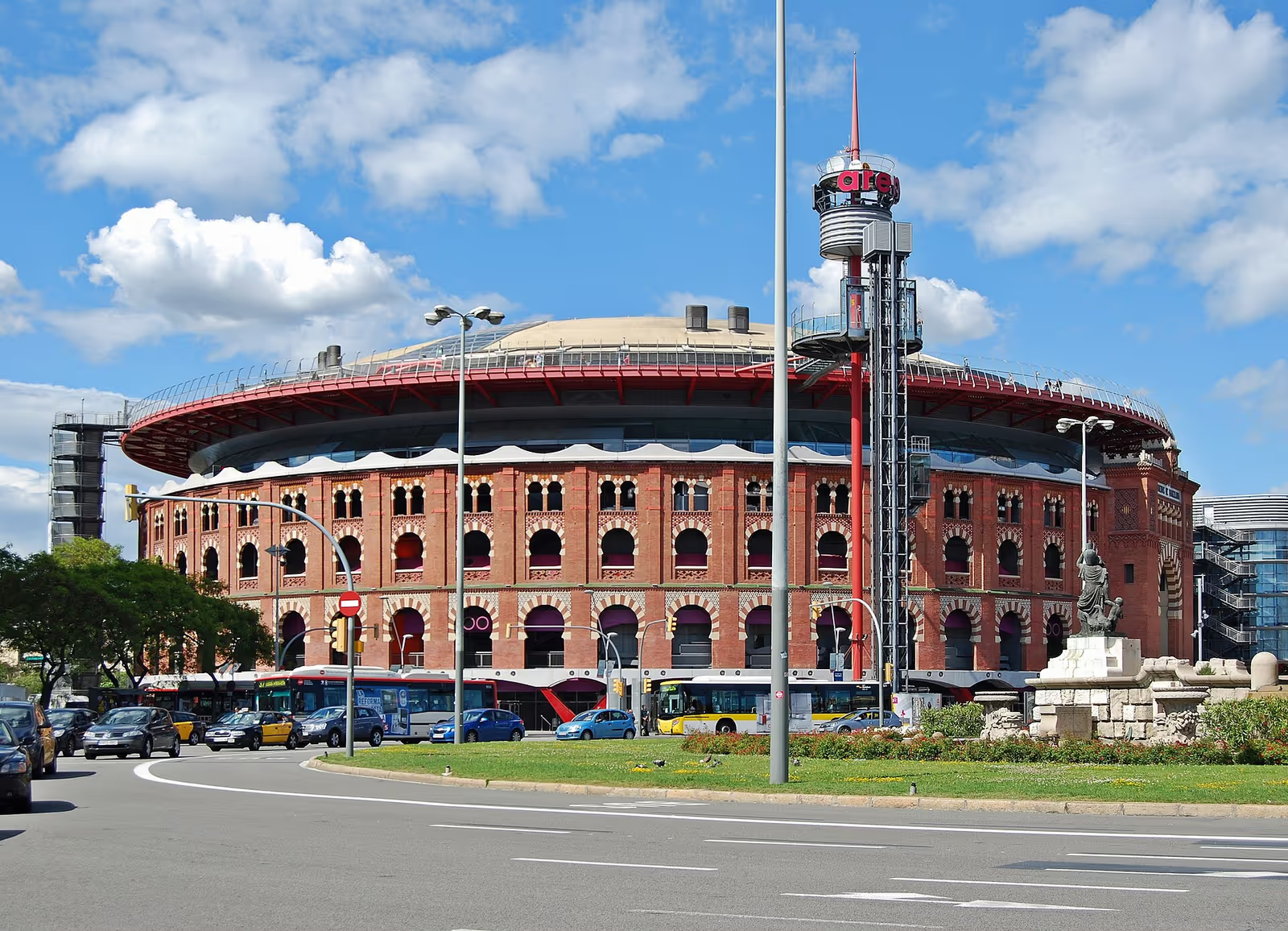
Photo: Felix König, CC BY 3.0, Wikimedia Commons.
How Astro i18n routing fits Catalan, Spanish, and English trees
Astro documents i18n routing in the internationalization guide. The model I use for Barcelona clients keeps three ideas in one place: file-based locale segments, a single configuration block, and build-time verification so a missing translation blocks deploy.
A minimal astro.config.mjs excerpt (field names and behaviour described in the official docs) looks like this:
import { defineConfig } from 'astro/config';

export default defineConfig({
  site: 'https://example.cat',
  i18n: {
    defaultLocale: 'ca',
    locales: ['ca', 'es', 'en'],
    routing: {
      prefixDefaultLocale: true,
    },
  },
});
With prefixDefaultLocale: true, Catalan URLs live under /ca/..., Spanish under /es/..., and English under /en/.... That matches how many Catalan businesses already think about their IA: one brand, several language roots, each with crawlable URLs.
I do not rely on Accept-Language redirects for primary navigation. Client-side redirects steal crawl budget and annoy users who share links. The Astro docs describe redirectToDefaultLocale and fallback types; for Barcelona marketing sites I prefer explicit language links in the header that point to the translated slug, backed by a shared translationKey in content collections.
Content collections and translation parity
Marketing copy, service descriptions, and FAQ entries sit in typed collections (Markdown or MDX). Each entry carries a translationKey and a lang field. A small build script walks the collection and asserts:
| Check | Why it matters in Barcelona |
|---|---|
Every translationKey has ca, es, and en rows when the brief demands three live languages | Prevents launching Sant Joan campaign pages in Spanish only |
hreflang link pairs are reciprocal in the layout | Google Search Console surfaces fewer “hreflang mismatch” warnings |
| Slugs are human-readable per locale | /ca/serveis/ and /es/servicios/ can diverge while staying linked |
| Legal snippets (privacy, cookies, terms) exist per locale | LSSI-CE text must be understandable in the language shown |
The Astro islands concept keeps language switchers and consent banners as small hydrated components (client:load or client:visible only where needed). The article body stays static HTML in the active language, which helps both performance and screen-reader predictability under the European Accessibility Act expectations many Barcelona buyers now add to RFP checklists.
LSSI-CE and AEPD: what I implement in the template, not in a plugin tick box
Spanish law treats a company website as an information society service. The consolidated text of Ley 34/2002 (LSSI-CE) is the backbone for Barcelona commercial sites even when GDPR and the European Accessibility Act also appear in the procurement PDF.
In practice I wire these surfaces into the Astro layout so they cannot be forgotten on a new landing page:
- Article 10 style identification - corporate name, tax identifier (NIF/CIF), registered address, contact email, and any trade register data your counsel wants visible. Footer partials render from a typed config file reviewers can diff in Git.
- Commercial communications - newsletter or promotional forms include the lawful basis and an unsubscribe path described in Articles 21 and 22 of LSSI-CE, in the language of the form (Catalan copy on
/ca/, Spanish on/es/). - Cookies and similar storage - before any non-essential script runs, the site presents choices consistent with the AEPD cookies guide. Astro default of shipping no client JavaScript until hydration makes it straightforward to gate tag managers and pixels behind a consent island.
GDPR privacy notices still belong in your privacy policy content, usually maintained by your DPO or external counsel. My job is to ensure the technical delivery matches what that policy promises: no stray pixel loads, clear records of consent events if you enable logging, and data minimisation on contact forms.
When islands beat a monolithic framework for Barcelona content sites
Product teams in Barcelona sometimes run React or Next.js for logged-in areas while the public site still needs fast catalogues, neighbourhood landing pages, or event microsites. Astro separates those concerns:
- Static routes compile to HTML with no default client bundle, as described in the islands documentation.
- Interactive pieces (room availability, mortgage calculator, CRM hand-off form) mount as islands in React, Vue, or Svelte without hydrating the entire page.
- Server islands and actions (where the docs cover them) can defer expensive fragments without converting the whole site to SPA architecture.
For hospitality near Port Vell or professional services around Plaça de Catalunya, the pattern is the same: long-form trust content in the visitor language, one or two hydrated widgets where business logic lives.

Photo: Felix König, CC BY 3.0, Wikimedia Commons.
Typical deliverables I ship
- Corporate and campaign sites with Catalan, Spanish, and optional English trees.
- Documentation or resource hubs using MDX and content collections instead of a database theme.
- Migrations from WordPress multilingual setups where plugins added latency and fragile URL rules.
- Headless setups where WordPress or another CMS remains editorial, Astro remains public.
- Performance and markup audits on existing Astro repos before a statutory or accessibility review.
I do not invent case studies or client logos. If you need references, ask in the WordPress Barcelona meetup channel named in many local briefs, or request peer contacts in your sector directly.
How a written project runs from first brief to staging review
I work remotely. There are no discovery calls, no workshops in your Barcelona office, and no promise of instant chat replies. What you get instead is a traceable thread: brief, written questions, a scope note, staging URLs, and pull requests you can forward to counsel or SEO partners.
| Phase | What you see | What I need from you |
|---|---|---|
| Intake | Written restatement of goals and risks | Site URL, language list, must-have legal pages, Figma or approved HTML/CSS |
| Architecture note | i18n map, collection schemas, redirect list | Confirmation of default locale and slug rules per language |
| Build sprints | Preview on staging, changelog in Git | Content in each language or signed-off placeholders clearly marked |
| Compliance pass | Footer IDs, cookie gating, form labels | Legal text from your advisor, cookie taxonomy |
| Launch | DNS checklist, redirect file, Search Console hints | Go-live window, owner for DNS |
Staging stays up across revisions so Catalan and Spanish reviewers can click real URLs, not PDF screenshots. Acceptance is checklist-driven: translation parity, LSSI fields present, vitals spot-check on key templates, forms delivering to the inbox or CRM you specify.
Checklist you can use before signing with anyone (including me)
Even if you never hire me, this list saves rework common on Barcelona RFPs:
- Decide whether Catalan, Spanish, and English are launch-critical or phased.
- List statutory pages (privacy, cookies, legal notice, terms) per language.
- Freeze URL patterns (
/ca/,/es/,/en/) before content authors start writing. - Require reciprocal hreflang in HTML and sitemap, not only in a plugin admin screen.
- Map cookies to categories before marketing pastes a tag manager snippet.
- Plan Core Web Vitals measurement on real 4G profiles, not only on office Wi-Fi.
- Assign a single owner for legal copy updates after launch.
Related services in Barcelona
Depending on where you are in the stack, these adjacent pages may fit better as a starting point:
- Next.js developer in Barcelona when the product is closer to a logged-in application than to a multilingual brochure site.
- Next.js to Astro migration in Barcelona when you want to shrink client bundles but keep component investments.
- WordPress developer in Barcelona when editorial workflows must stay inside WordPress for now.
- PHP developer in Barcelona when you need a Laravel or Symfony backend behind the Astro front.
Start with a written brief
If you need a Catalan and Spanish Astro site (with or without English), a headless refactor, or a compliance-focused template rebuild, use the contact form. Include your URL, languages, deadlines, and who supplies design files. I reply in writing on working days with next questions or a scope outline. The first written estimate is free once the brief is clear enough to quote responsibly.
Selected projects
Examples of my work.
E-commerce Development: haveabook.pl
The haveabook.pl website is a modern platform dedicated to publishing and printing, catering to demanding clients from Scandinavian countries. The project wa...
E-commerce Development: ILOVEHAIR
Ilovehair.pl is an e-commerce store based on the WordPress platform, dedicated to the sale of professional hairdressing products by Hair Saloon Products. As ...
E-commerce Development: jpg.pl
jpg.pl is an advanced hosting platform designed for secure storage, management, and distribution of images. The service is aimed at both individual users and...
WordPress support & development in Barcelona
Need this service: Astro developer in Barcelona?
Describe your project by e-mail. I reply within 48 hours.
Describe your projectExplore other WordPress services and knowledge base
Migration to Astro, Next.js, and headless WordPress.
WooCommerce sync with ERP and wholesale systems.
Business process automation around WordPress and company systems.
Library of concrete automation use cases.
Headless WordPress, Sanity, Strapi, and Contentful with Astro or Next.js.
Astro, MDX, edge delivery, and Core Web Vitals measured on real traffic.
Custom WordPress engineering and architecture.
Scalable headless, ERP, and AI architecture for enterprise.
Related categories
Supporting articles
Six to sixteen weeks for typical engagements, with a four-phase shape: discovery, scoping, build and cutover, tuning. The variables are catalogue size, integration count, URL preservation, and editorial team readiness, not framework choice.
A definitive 4-year Total Cost of Ownership (TCO) analysis, real-world Core Web Vitals benchmarks, Astro 7 GraphQL APQ architecture, and a 10-point executive decision matrix for choosing between decoupled and traditional WordPress.

The Shopify Plus vs WooCommerce headless decision in 2026 is no longer a binary "platform vs custom" trade-off. Both can run headless, both integrate AI, both ship at the edge. The real axes are control, total cost over five years, and exit strategy. This article walks the matrix with confirmed platform facts.