Migrate from WordPress to Astro in Brussels
Many businesses in Brussels run WordPress but face performance ceilings, security overhead, and rising hosting costs. Astro solves these with static HTML output, zero JavaScript by default, and edge deployment. I migrate existing WordPress sites to Astro with full SEO preservation, URL mapping, and 301 redirects.
- PageSpeed 95-100
Static HTML with zero JavaScript. Faster than any WordPress solution.
- SEO-safe migration
URL mapping, 301 redirects, Google rankings preserved.
- Cloudflare Pages hosting
Global CDN, free SSL, instant deployments. Hosting costs near zero.
Who this page is for
You run a business in the Brussels-Capital Region, or sell into it, and you want an Astro website that works in French, Dutch and English. Maybe you have a WordPress site that has grown slow, maybe you start from nothing. I am Mariusz Szatkowski, a freelance developer in Gdynia, Poland, and I have worked with WordPress since 2006. I build Astro sites for clients in Belgium remotely, in writing, in English.
The language rule is simple. I write the code, the routing and the templates. French and Dutch copy comes from you or your translator, and I wire it in. Design is yours too: the layout comes as a wireframe or a spreadsheet from you, and I implement it.
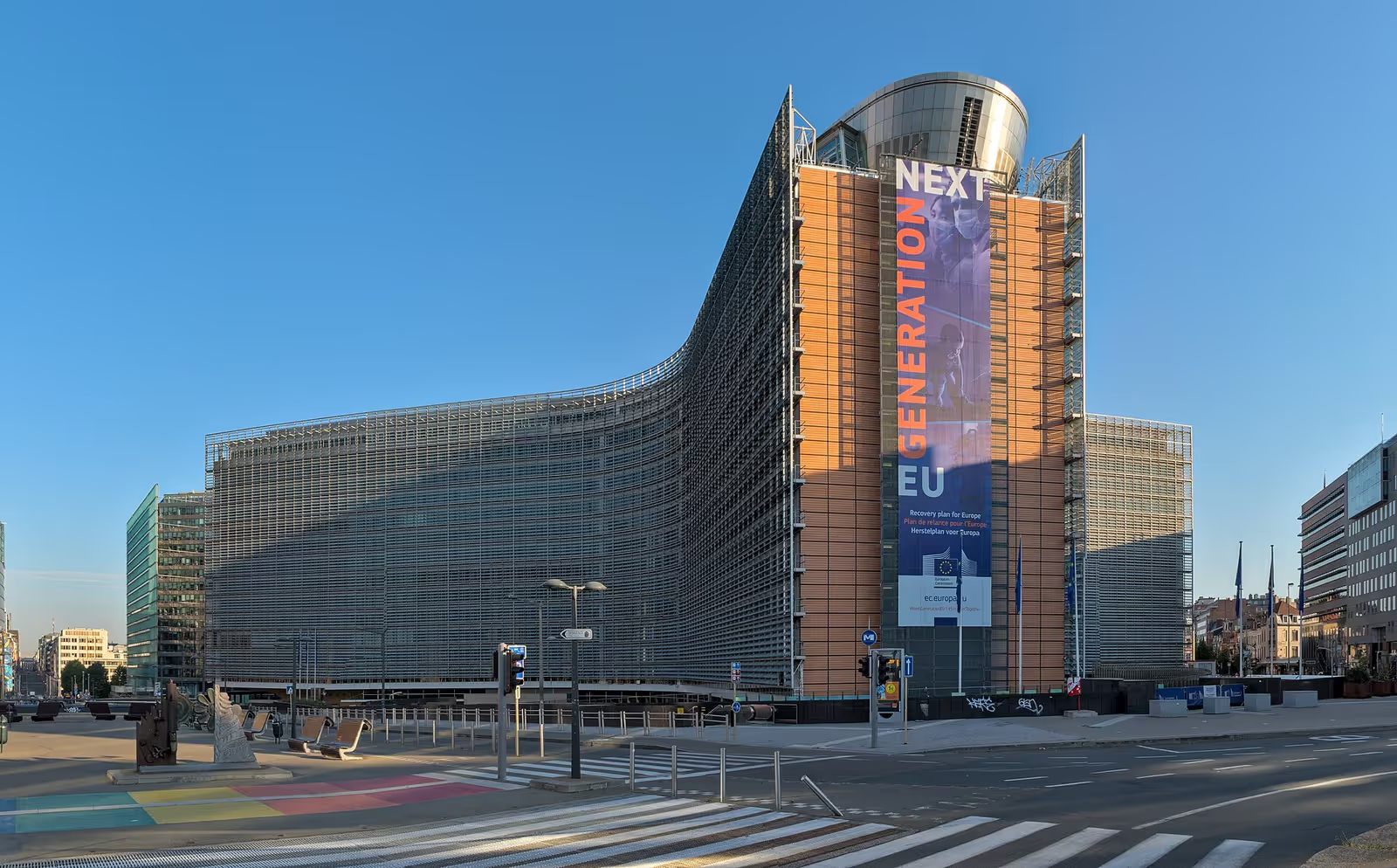
Photo: Trougnouf (Benoit Brummer), CC BY 4.0, Wikimedia Commons.
What Brussels asks of a website
Brussels is officially bilingual, French and Dutch, since the region was created in 1989, and English is widely spoken, according to Wikipedia’s Brussels article. The same article calls the city the de facto capital of the European Union and names Euronext Brussels among its financial institutions. The Berlaymont building on rue de la Loi houses the headquarters of the European Commission.
For a website this has one practical consequence: a single language is rarely enough. A visitor may type “développeur astro bruxelles”, another “astro website laten maken”, a third “astro developer netherlands”. Each expects the page in their own language, with the right language version showing up in search. That is a structure problem before it is a copy problem, and it is where Astro helps.
How Astro handles French, Dutch and English
The Astro internationalization guide describes the built-in routing. You list your locales, choose a defaultLocale, and put pages in folders named after each locale: src/pages/fr/about.astro becomes /fr/about/. With prefixDefaultLocale at its default of false, the default language has no prefix. Set it to true and every language gets one, which I prefer for a trilingual Brussels site, because /fr/, /nl/ and /en/ then look the same and nobody is the “main” language by accident.
Three details from that guide matter for your project:
- Fallbacks. The
fallbackoption maps a locale to another one for pages that do not exist yet.fallbackTypedefaults to"redirect";"rewrite"shows the fallback content at the original URL. Decide this on purpose: a Dutch visitor who lands on French text may leave. - Helpers.
getRelativeLocaleUrl()builds localized links, so the menu does not hard-code paths. - Manual routing.
routing: "manual"switches off Astro’s i18n middleware and leaves routing logic to you. I only use it when a project has rules the defaults cannot express.
The guide does not cover hreflang or sitemaps, so I take those from two other sources.
Hreflang for fr-BE, nl-BE and en
Google’s documentation on localized versions sets the rules. Every language version must reference itself and all the others, otherwise “the tags will be ignored”. Codes pair an ISO 639-1 language with an optional ISO 3166-1 region, so fr-BE and nl-BE are valid, while a bare be is not, because it is the Belarusian language code. URLs must be absolute. x-default marks a fallback page, for example a language selector. You can declare hreflang in HTML, in HTTP headers or in the sitemap; Google treats them as equivalent, so pick one and keep it.
The Astro sitemap integration takes an i18n option with a defaultLocale and a map of locale folders to language codes, for example { fr: 'fr-BE' }. It then writes xhtml:link alternates into the sitemap. It needs site set to the deployed URL. For a Brussels site I generate the sitemap alternates, check reciprocity on the built output, and test a few URLs before launch.
One decision belongs to you, not to me: whether you target fr-BE and nl-BE or only fr and nl. If your audience is Belgian, the regional codes say so. If you also sell in France or the Netherlands, we talk about it in writing before the structure is fixed.
Why Astro for a content site
The islands documentation states that Astro renders UI components to HTML and CSS and removes client-side JavaScript unless you add a client:* directive such as client:load, client:idle or client:visible. Interactive parts, say a quote form or a store locator, hydrate on their own. Islands can use React, Preact, Svelte, Vue or SolidJS, and server:defer makes a server island for dynamic fragments while the rest of the page can be cached.
For a service business in Brussels that means the marketing pages ship as plain HTML, and JavaScript loads where a visitor interacts. I measure the result against the official thresholds only: web.dev lists LCP at 2.5 seconds or less, INP at 200 milliseconds or less and CLS at 0.1 or less, at the 75th percentile of page loads, and a page passes only if it meets all three. I promise no score beyond that. Your real field data decides.
Content comes from content collections: a glob() loader reads Markdown, MDX, JSON or YAML files, and a Zod schema validates each entry. For a multilingual site this is useful, because the build fails when a French page lacks a field the Dutch one has. A missing translation shows up before a visitor sees it.
Moving a WordPress site to Astro
Two routes exist, and the Astro WordPress guide describes the first one. WordPress stays as the CMS and Astro fetches content from the built-in REST API at /wp-json/wp/v2/, optionally through WPGraphQL. Your editors keep their screens. Custom post types must be exposed to the REST API first, which is a check I do in week one.
The second route moves content to files. The migration guide points to the wordpress-export-to-markdown tool and warns that large or complicated sites need manual adjustment. It also advises keeping the same URL by updating the domain at your host. Either way, the order is the same: a URL inventory, a redirect map, then the build, and Search Console watched after launch. More on a framework switch is in my page on migrating Next.js to Astro, and the architecture options for WordPress plus Astro are in Astro DB and WordPress hybrid architecture.
If you want the general service description first, it is on the Astro developer page.
Belgian rules that touch a website
I am a developer, not a lawyer. What follows is what the official pages say, so you can ask the right questions of your adviser.
Accessibility: the law of 5 November 2023
Belgium transposes the European Accessibility Act, Directive (EU) 2019/882, in part through the law of 5 November 2023, published on 28 November 2023. It amends the Code of Economic Law. The text covers consumer-facing “services de commerce électronique”, defined in Article I.9/1, 7° as services provided at a distance, via websites or mobile-device services, electronically and at an individual consumer’s request, to conclude a consumer contract. It entered into force on 28 June 2025 (Article 38).
A micro-enterprise, fewer than ten employees and turnover or balance sheet total of at most 2,000,000 euros, is excluded until 28 June 2030, with an exception for Article 5 (Article 40). The FPS Economy notice states that its Economic Inspection checks compliance of e-commerce and consumer banking services, that fines can reach 200,000 euros or 6% of annual turnover for the most serious infractions, and that several authorities in Belgium can enforce the law.
What I do: semantic HTML, keyboard operation, visible focus, labelled form fields, alternative text, and the same checks in French and Dutch. What I do not do: certify your business as compliant. Whether your shop falls under the law is a legal question.
B2B e-invoicing from 1 January 2026
The Belgian e-invoicing portal says that from 1 January 2026 Belgian VAT-liable enterprises must use structured electronic invoices in transactions with each other. Its FAQ names the Law of 06.02.2024 as the legal basis and points to a later e-reporting stage. The FPS Finance notice of December 2025 set a tolerance period for the first three months of 2026: no penalties if the company acted “in a timely and reasonable manner” and lacked the technical means or its system could not yet produce a valid invoice. It adds that penalties depend on the circumstances and that there is no general postponement.
An Astro site does not issue invoices. It matters in one place: a quote or order form on your site should hand data to an invoicing tool that can produce a structured invoice. I build the form and the hand-over. The portal offers an online tool to check whether your company is covered, and a list of compliant software.
Personal data and the Data Protection Authority
The Belgian Data Protection Authority supervises compliance with data protection principles, receives complaints and publishes opinions and recommendations. Its professional section lists the data protection officer, the record of processing activities and personal data breach notification through its portal. On a website this becomes concrete: what a contact form collects, how long you keep it, which scripts load before consent, and who gets the notification if something leaks. I list every third-party script in the brief and remove what you cannot justify.
Payments
Bancontact Pro lets merchants accept Bancontact and Wero payments with one solution, and the Bancontact site has a developer section and an online solution. I did not confirm integration details from those pages, so I do not promise a specific flow here. If you sell online, the payment provider is chosen first, then I read its developer documentation and write the integration scope.
Hosting
Astro’s Cloudflare deployment guide says a static site needs no adapter, and on-demand rendering needs the @astrojs/cloudflare adapter. Cloudflare recommends Workers for new projects, and existing Pages projects follow its migration guide. I usually deploy a static build on every push to GitHub. If your legal adviser needs data location or a specific provider, say so in the brief and we choose hosting around it.
How a project with me runs
- Brief in writing. You send the site URL, the goal, the deadline, the current stack and the languages. No call is needed.
- Questions in writing. I list what is unclear: URL structure, language targets, forms, integrations.
- Written scope. Scope, assumptions, what you provide and what is out of scope. Design, mockups and wireframes are yours; I implement them.
- Staging. You see progress on a staging address, page by page.
- Acceptance. You check the French, Dutch and English versions against the scope and the redirect map.
- Launch and maintenance. I cut over, watch Search Console and offer an optional maintenance arrangement afterwards.
The first written estimate is free.
What I need from you
- Access to the current site, hosting and DNS, or confirmation that none exists yet.
- The layout as a wireframe or a filled-in spreadsheet. I have a template I send you.
- Final copy in each language, or the name of the person delivering it.
- The list of integrations: forms, payments, invoicing, analytics.
Checklist for a trilingual site
- Each language has its own URL folder and its own title and description.
- Every version links to all others with absolute hreflang URLs, in both directions.
- The sitemap lists the alternates and the build output matches it.
- The language switcher links to the same page in the other language, not to the home page.
- Old WordPress URLs have a 301 to the matching new URL.
- Forms, error messages and cookie text exist in every language.
- Core Web Vitals checked on field data against the three official thresholds.
Questions
Can you build an Astro site in French and Dutch if you do not write either?
Yes. The structure, routing, hreflang and templates are my work. The copy comes from you or a translator, and I place it in content collections where each language has the same fields. I cannot check the quality of your French or Dutch text.
Do I need separate sites for Flanders and Wallonia?
Not necessarily. One site with /fr/, /nl/ and /en/ folders and correct fr-BE and nl-BE hreflang covers it. Separate domains are possible through Astro’s domains option, but that applies to server-rendered projects with an adapter, so it is a bigger decision.
Can I keep WordPress and add Astro in front?
Yes. Astro can read from the WordPress REST API, and your editors keep working in WordPress. The alternative is moving content to files in the repository. I recommend the first route when editors rely on WordPress daily.
Does my website have to follow the Belgian accessibility law?
If you sell to consumers through a website or app, you may be within the e-commerce definition of the law of 5 November 2023. Micro-enterprises are excluded until 28 June 2030, with a stated exception for Article 5. Ask your legal adviser, and I build to the standard either way.
Do I have to change my website because of e-invoicing?
Usually the website itself does not. The invoicing software does. A website that collects orders or quotes should pass data cleanly to that software. The Belgian portal has a tool that tells you whether your company is covered.
Do you work in Brussels in person?
No. I work remotely and in writing, in English. You get briefs, questions, scope, staging links and acceptance notes by email, and I reply on working days.
How do I start?
Write to me with your current site address, what you want the new site to do, the languages you need, the deadline and the stack you use today. I reply in writing with questions, then a first written estimate, which is free.
Write to me
Use the contact page and send the four things above. If you are not sure whether Astro is the right choice for your site, say so. Sometimes the honest answer is to keep what you have, and I will tell you that.
Selected projects
Examples of my work.
E-commerce Development: metal-meble.pl
metal-meble.pl is a WordPress website for a company offering metal furniture and constructions, with a clear catalogue, fast contact path, and simple administration.
E-commerce Development: mochola.com
mochola.com is a modern e-commerce platform based on WooCommerce, which I developed as a programmer, specializing in the sale of car parts. The store is aime...
E-commerce Development: nehrebeccy.pl
nehrebeccy.pl is a modern artistic agency that combines expertise in organising cultural events with a rich presentation of artistic offerings. The site was ...
WordPress support & development in Brussels
Need this service: Astro developer in Brussels?
Describe your project by e-mail. I reply within 48 hours.
Describe your projectExplore other WordPress services and knowledge base
Migration to Astro, Next.js, and headless WordPress.
WooCommerce sync with ERP and wholesale systems.
Business process automation around WordPress and company systems.
Library of concrete automation use cases.
Headless WordPress, Sanity, Strapi, and Contentful with Astro or Next.js.
Astro, MDX, edge delivery, and Core Web Vitals measured on real traffic.
Custom WordPress engineering and architecture.
Scalable headless, ERP, and AI architecture for enterprise.
Related categories
Supporting articles
Six to sixteen weeks for typical engagements, with a four-phase shape: discovery, scoping, build and cutover, tuning. The variables are catalogue size, integration count, URL preservation, and editorial team readiness, not framework choice.

A definitive 4-year Total Cost of Ownership (TCO) analysis, real-world Core Web Vitals benchmarks, Astro 7 GraphQL APQ architecture, and a 10-point executive decision matrix for choosing between decoupled and traditional WordPress.

The Shopify Plus vs WooCommerce headless decision in 2026 is no longer a binary "platform vs custom" trade-off. Both can run headless, both integrate AI, both ship at the edge. The real axes are control, total cost over five years, and exit strategy. This article walks the matrix with confirmed platform facts.