Migrate from WordPress to Astro in Málaga
Many businesses in Málaga run WordPress but face performance ceilings, security overhead, and rising hosting costs. Astro solves these with static HTML output, zero JavaScript by default, and edge deployment. I migrate existing WordPress sites to Astro with full SEO preservation, URL mapping, and 301 redirects.
- PageSpeed 95-100
Static HTML with zero JavaScript. Faster than any WordPress solution.
- SEO-safe migration
URL mapping, 301 redirects, Google rankings preserved.
- Cloudflare Pages hosting
Global CDN, free SSL, instant deployments. Hosting costs near zero.
Mariusz Szatkowski works from Gdynia, Poland, on Astro builds for organisations that sell along the Costa del Sol, operate proptech or hospitality stacks from Málaga, or ship product marketing from campuses around Parque Tecnológico de Andalucía (PTA). Typical briefs combine July traffic spikes, registration numbers on short-term rental listings, German and British guest funnels, and B2B demos for teams anchored at Málaga TechPark or Polo Digital. A WordPress theme overloaded with page-builder blocks, or a client-rendered catalogue that repaints before statutory footers render, wastes crawl budget and creates avoidable friction under Spain's Ley 34/2002 on information society services (LSSI-CE) and under expectations the Spanish Data Protection Agency (AEPD) sets for cookie choice. Astro compiles marketing routes to static HTML, hydrates only widgets that need runtime logic, and keeps identification fields plus consent gating in version control where Andalusian counsel can review pull requests before a Feria week campaign goes live.
What Costa del Sol operators expect from a public website
Málaga is not a single buyer profile. A property manager in Torremolinos, a boutique hotel group in Benalmádena, a channel manager startup near PTA, and a coworking brand in Soho Malaga all need fast mobile pages, but compliance subtext differs. Tourism operators fight for visibility when British and German guests search on phones at AGP. Proptech teams sell APIs to landlords who must display Andalusian registration data on every listing surface. TechPark founders need investor-ready storytelling without shipping a React runtime on every markdown article.
When I read scopes for Málaga and the wider Costa del Sol, these items recur in RFP matrices and agency checklists:
- Article 10 identification visible on every locale template, not buried inside a PDF linked once from the blog.
- Article 21 commercial communications rules reflected on newsletter, remarketing, and webinar signup flows in Spanish and, when live, in English or German.
- Cookie loading order that matches the AEPD cookies guide before any non-essential tag manager fires.
- Core Web Vitals within the thresholds Google documents on web.dev, because guests and journalists open links on coastal LTE during peak weeks.
- Multilingual trees where Spanish carries statutory tone and English or German carries guest-facing offers without duplicate spam URLs.
Photography, brand motion, and illustration come from your Málaga agency or in-house studio. I translate Figma or PDF layouts into Astro templates and lock statutory blocks beneath the brand layer.
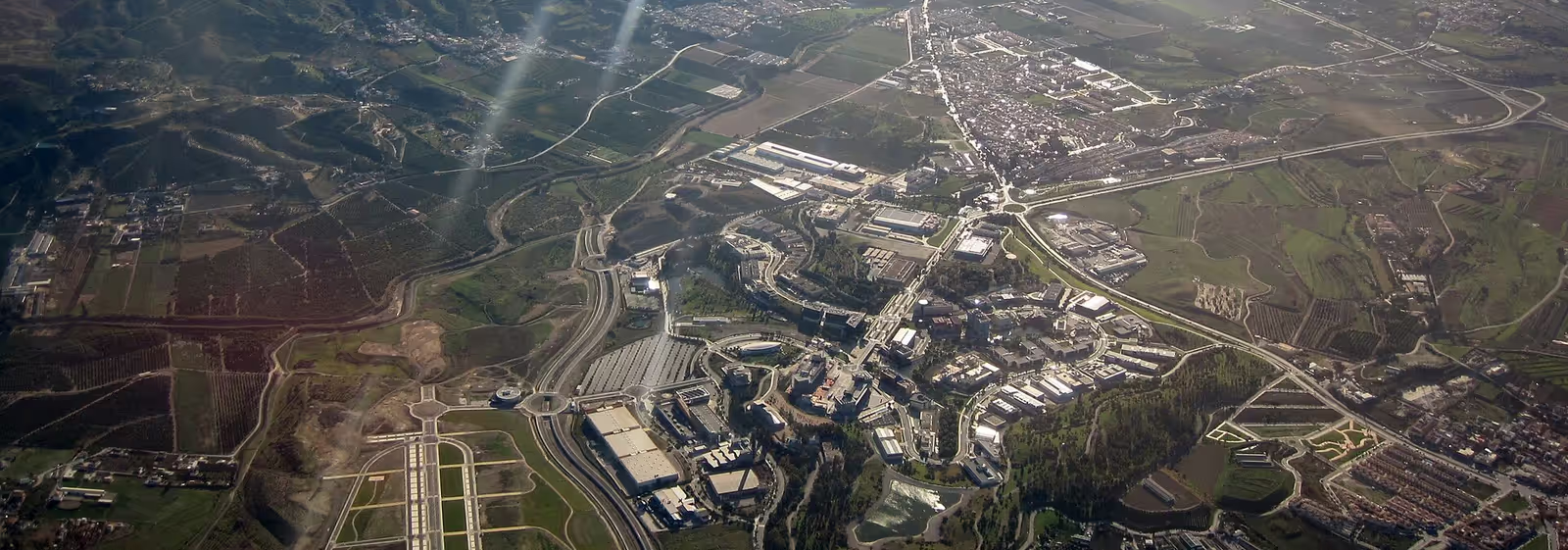
Campus imagery stored in the project image set for Málaga TechPark and PTA context.
PTA, Polo Digital and the Málaga TechPark startup lane
Parque Tecnológico de Andalucía sits northwest of the city centre and has hosted technology firms, research groups, and spin-offs for decades. Málaga TechPark branding and Polo Digital initiatives concentrate newer startups, incubator programmes, and international offices that recruit across Spanish and English-speaking markets. Google and other technology employers raised hiring visibility in the city, which increases competition for senior front-end contractors who understand both performance engineering and statutory footers.
Astro fits that lane because product marketing pages compile without a default JavaScript runtime. Islands hold the pieces that genuinely need client logic: interactive pricing calculators for B2B SaaS, demo request forms with NIF validation hooks, job-board filters, or a consent manager. Everything else stays static, which keeps Largest Contentful Paint and Interaction to Next Paint inside the bands Google uses as ranking signals when your launch collides with South Summit or a PTA demo day.
Deliverables I ship for TechPark and digital-nomad buyers
- Product and employer-brand sites with Spanish primary URLs and English investor sections.
- Documentation microsites where engineers edit MDX but legal footers stay typed objects in Git.
- Migration off WordPress stacks that slow mobile articles during funding announcements.
- WordPress or Storyblok as the editorial backend with Astro compiling the public edge-cached marketing layer at build time.
- Lighthouse, structured-data, and cookie-loader audits on legacy Astro repos before counsel or municipal reviewers sign off.
Portfolio entries name only work you authorize. If you need a local reference, ask in communities your team already trusts, including WordPress Málaga practitioner channels, or request peer contacts in your vertical directly.
Tourism, proptech and multilingual booking surfaces
Costa del Sol hospitality lives inside brutal seasonality. Marketing wants a campaign live in hours, not weeks, while operations must keep availability accurate across channel managers, iCal feeds, and property management APIs that were never designed for a static front end. Astro cannot replace a PMS, but it can publish listing catalogues, experience landing pages, and governance copy that survive crawl spikes when Feria de Málaga or Easter week compresses traffic.
Proptech operators face a parallel problem: landlords need registration numbers and house rules visible on every locale, while guests expect currency toggles and instant-book widgets. I keep heavy booking logic inside islands or linked subdomains, and I keep statutory paragraphs in content collections validated at build time so a missing German house-rules block fails CI instead of shipping during an inspector audit window.
| Visitor segment | Typical Astro surface | Compliance touchpoint |
|---|---|---|
| Short-term rental guest | Listing template with ES/EN/DE copy | Andalusian registration reference on each listing partial |
| Hotel or apart-hotel brand | Seasonal campaign landings | Article 21 paths on promo email capture |
| Experience operator | Ticketing microsite with capacity islands | Cookie taxonomy before remarketing pixels |
| B2B channel manager | Partner docs plus marketing site | Article 10 footer on every locale |
| Coworking for nomads | Membership funnel in two languages | Consent before analytics on pricing pages |
Multilingual booking flows need explicit brief answers: which language is legally primary, whether English targets British guests only or also EU procurement copy, and whether Nordic locales are marketing experiments or contractual requirements. I map that to Astro locale folders, hreflang reciprocity on built HTML, and content collections so a missing Norwegian cancellation policy blocks release.
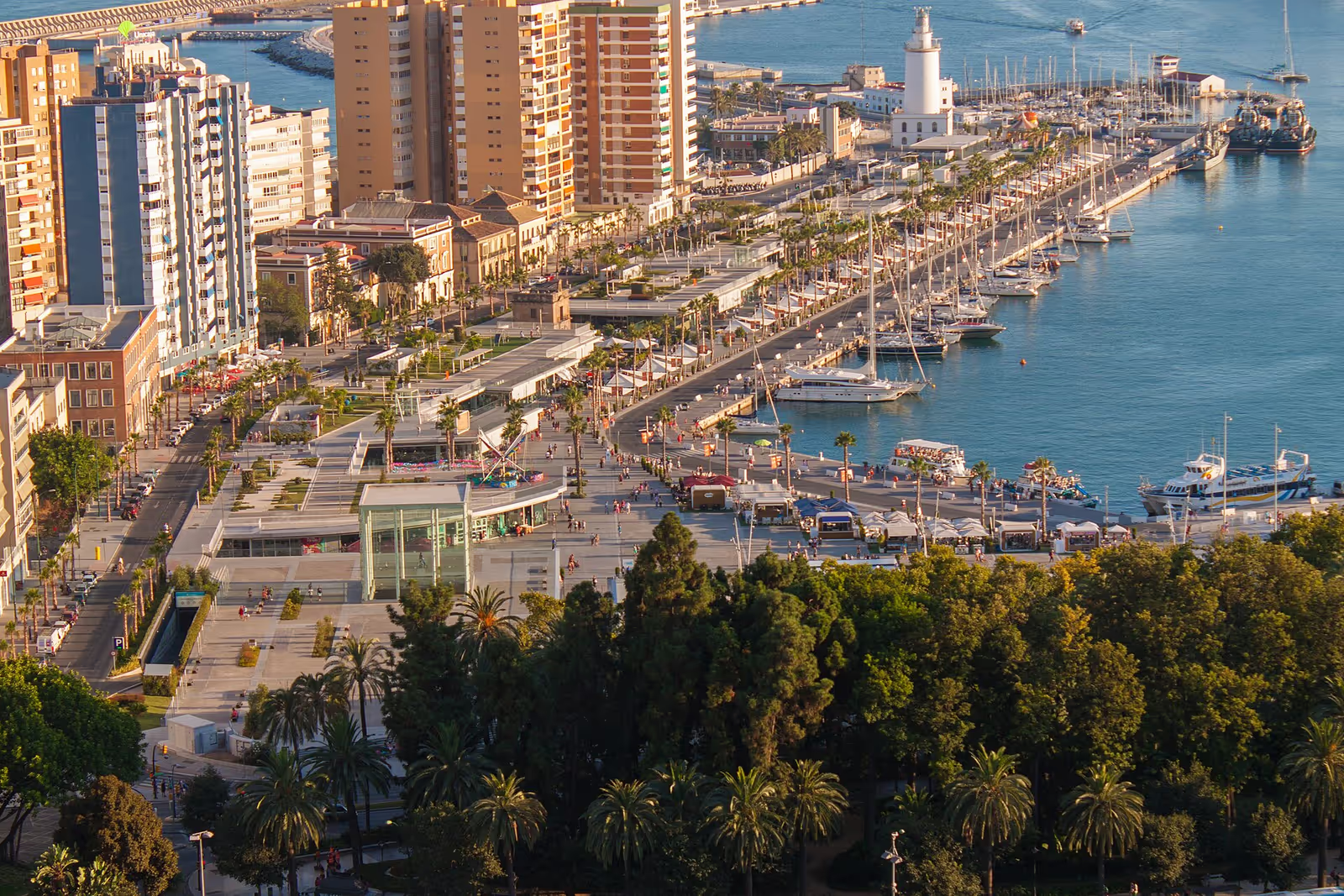
Harbour imagery for Costa del Sol tourism and mobility context.
LSSI-CE Article 10 and commercial communications on Astro layouts
Ley 34/2002, consolidated as LSSI-CE, classifies your marketing domain as an information society service. Under Article 10, visitors must reach provider identification without paywalls or hidden PDFs: legal name, NIF, domicilio social, contact channels, and commercial-register citations when they apply. Costa del Sol lawyers usually want those strings in Spanish on guest-language templates too, because the operator registered in Andalusia stays on the hook for disclosure even when the hero copy targets British or German tourists.
Article 21 covers promotional messages you push through the domain or capture with onsite forms. A Feria weekend newsletter capture is still a regulated commercial communication: it needs lawful basis, honest copy, and unsubscribe mechanics guests can use without hunting settings pages. I bind each form variant to a typed partial so counsel signs Spanish and English strings once, and CI rejects campaign landings that lack the paired footer and consent linkage.
Because Astro renders footers from data files in Git, procurement teams and compliance officers can compare pull requests during sprint review. That beats hunting checkboxes inside a page builder after a rebrand swaps colours overnight.
| Surface | LSSI-CE anchor | How I wire it in Astro |
|---|---|---|
| Global footer | Article 10 identification | Typed legalIdentity object injected into every layout |
| Booking remarketing list | Article 21 commercial comms | Separate partial with unsubscribe copy per locale |
| Partner CRM hand-off | Transparency on data use | Form schema links to privacy policy slug in active language |
| Cookie banner | Article 22 plus AEPD guide | Consent island gates tag manager and pixels |
GDPR privacy policies remain your data protection officer’s text. On the engineering side I enforce zero pre-consent analytics calls, the smallest viable lead forms, and optional consent logs your DPO can export.
Short-term rental disclosure and Andalusian registration context
Andalusian authorities publish guidance on viviendas de uso turístico through the Junta de Andalucía. Listing sites must surface registration identifiers, capacity limits, and sometimes municipal references that differ between Málaga city, Torremolinos, Benalmádena, and Marbella. Those fields are not optional marketing badges; they belong beside price and availability on every locale that sells nights.
I model listing objects with typed fields so content authors cannot publish an English-only page without the registration string counsel approved. When your channel manager supplies JSON feeds, build scripts validate required keys before static pages generate. If a municipality changes label wording after an ordinance update, you change one partial rather than editing hundreds of CMS entries by hand.
Hotel groups and apart-hotels share similar needs with different emphasis: star-rating claims, packaged experience upsells, and Article 21 paths on abandoned-cart emails. Astro keeps the marketing layer fast while islands call your booking engine or CRM. The architecture note documents which routes call external APIs and which stay purely static for edge caching during heat waves.
AEPD-aligned cookie and analytics loading on Astro defaults
The Spanish Data Protection Agency publishes a cookies guide aimed at electronic communications services, which Costa del Sol counsel still cite during audits of hospitality domains. Out of the box, Astro pages compile without client bundles; you add JavaScript only through named islands. That baseline lets you defer analytics, heatmaps, and remarketing until the banner records a purpose choice.
Before build I maintain a script register you sign: necessary, analytics, personalization, advertising. Loaders hang off that register and the consent island chooses which import runs. A mid-sprint pixel lands as a pull request against the register, never as a mystery tag in a CMS sidebar.
When you already run Google Analytics 4 or Matomo, I wire either compile-time guards or runtime hooks per your DPO memo. Proof lives on staging: decline cookies, reload, and watch the network panel stay clean until opt-in, then repeat the check on a listing template that carries booking widgets.
Islands architecture for seasonal traffic without SPA weight
Costa del Sol sites rarely need full single-page-application behaviour on every route. What they do need is selective interactivity:
- Availability calendars that respect rate-parity rules without reloading the entire catalogue.
- Currency and language toggles that persist guest choice without bloating every static paragraph.
- Experience and conference signups with Spanish double opt-in routed through your marketing automation stack.
- Partner portals with lightweight authentication islands while help articles stay static HTML.
The Astro islands model isolates React, Vue, or Svelte widgets while the article body remains plain HTML. Assistive tech gets stable headings, and crawlers index full copy on first fetch without a hydration pause.
When a subsidiary insists on Next.js for a logged-in owner dashboard, I still recommend Astro for the anonymous catalogue that feeds SEO. Hybrid architectures are normal along the coast: performance-sensitive public HTML, heavier client bundles only behind authentication.
Content collections for listing and policy copy
House rules, cancellation policies, sustainability statements, and seasonal FAQs fit content collections with Zod validation. Each entry carries lang, propertyId, and translationGroup fields. Build scripts assert that every Spanish statutory paragraph has an English counterpart when the brief demands parity, or explicitly mark guest-only English pages so hreflang maps stay honest.
MDX allows embedded maps where your design agency supplies coordinates, but registration numbers in prose still need a named municipal source. I leave placeholders tagged TBD until your compliance team supplies identifiers; I do not invent registry strings to pad length.
Technical stack I use on Málaga Astro engagements
Every repository targets current stable Astro with TypeScript strictness, Tailwind CSS design tokens from your brand PDF, and content collections for long-form pages. Deployment usually lands on Cloudflare Pages with automatic preview URLs per branch so Málaga agencies can review without VPN fuss.
| Layer | Role on Costa del Sol sites |
|---|---|
| Astro 5.x | Static marketing and listing routes, view transitions where brand allows |
| TypeScript | Schema validation on legal and listing content |
| Tailwind CSS 4 | Utility layout matching supplied Figma spacing |
| React or Vue islands | Booking widgets, consent, calculators |
| Cloudflare Pages | EU-friendly edge, custom headers for security policies |
| GitHub Actions | Lint, typecheck, Lighthouse CI on pull requests |
Structured data comes from the same typed content: Organization with legal name and Andalusian address, LodgingBusiness or ProfessionalService where appropriate, WebSite with inLanguage, and FAQPage only where FAQs are visible on the page. Staging builds run through Rich Results tests and whatever validator your SEO partner standardizes on.
Written delivery from Gdynia without a Málaga desk
I do not maintain an office on Calle Larios or weekly onsite stand-ups at PTA. Delivery flows through tickets or email threads, a shared repo, passworded staging URLs, and acceptance checklists your operations lead can forward.
| Phase | Málaga-side participants | What you receive |
|---|---|---|
| Intake | Marketing owner, legal counsel, SEO agency | Restated scope, risk log, language map |
| Architecture | IT security, DPO | Route diagram, cookie taxonomy, subdomain plan |
| Build sprints | Brand agency, content authors | Preview URLs, diffs for legal footers |
| Compliance pass | DPO, municipal liaison if listings change | Evidence pack for cookie and ID checks |
| Launch | DNS owner, channel manager vendor | Redirect file, Search Console checklist |
Central European working hours cover most Andalusian business days. Urgent production defects get written acknowledgement the same day when they block a coastal campaign; feature scope still flows through change notes so procurement retains audit trail.
Pricing stays individual. Market surveys quote wide hourly bands for senior front-end contractors in Spain; my quotes follow scope after the written audit and name no figure on this page.
Migration from WordPress or Next.js without losing coastal SEO equity
Many Costa del Sol domains grew on WordPress with page builders that embed Spanish legal shortcodes inconsistently across English clones. I start migrations from a merged inventory: crawler output, CMS export, analytics landing reports, and Search Console rows. Every legacy URL lands in a bucket: keep the slug, 301 once to a successor, or 410 when nothing replaces it.
Imports land as validated Markdown and components, never as unchecked SQL exports. Page-builder blocks become components or Markdown with explicit review for tables copied from PDF house manuals. I capture Lighthouse scores on PTA and tourism-sector templates before and after migration so Costa del Sol marketing leads get numbers they can paste into board packs.
Next.js cutovers strip default client bundles from catalogue routes that behaved like brochures, not apps. Owner dashboards that already use React Server Components stay on Next while anonymous listing HTML moves to Astro behind the edge CDN.
Local visibility for Málaga and Costa del Sol service queries
Local SEO for hospitality and proptech is part map pack, part entity clarity: consistent NAP data in footers, schema that matches how you actually operate properties, and location landing pages only when you manage distinct municipalities beyond a single registered office.
For AI-assisted discovery, clean semantic HTML and explicit about entities in structured data help parsers cite your policy or sustainability pages accurately. I avoid keyword-stuffed neighbourhood lists; guests and inspectors punish transparent fluff.
Checklist before you sign any Astro contract in Málaga
Use this list internally even if you choose another vendor:
- Confirm Article 10 fields render on Spanish and guest-language templates alike.
- Map Article 21 flows for every form that triggers email campaigns or remarketing audiences.
- Freeze cookie categories before marketing installs tag containers ahead of peak season.
- Decide how Andalusian registration references appear on each listing partial per municipality.
- Confirm hreflang pairs in rendered HTML, not only inside a CMS plugin screen.
- Name one compliance contact who signs off footer pull requests before they merge.
- Plan vitals measurement on real mobile profiles tourists use along the coast.
How to start
Send your Málaga domain, languages, and whether the project is greenfield, migration, or performance recovery. On CET working days I reply with the next written step and open staging once scope is frozen. EU B2B contracting, individual quote after the audit, no Málaga office and no improvised phone discovery.
Selected projects
Examples of my work.
funderwear.pt - Premium Underwear E-commerce Platform
Funderwear.pt is a WooCommerce online store that meets the needs of even the most demanding customers looking for unique gifts or wanting to treat themselves to premium, fun-designed underwear.
Healthcare Website: fermentum-mobile.pl
The website fermentum-mobile.pl is a dedicated platform created for fermentation enthusiasts who wish to explore traditional processing methods and discover ...
High Quality Artificial Plants - sztuczne-rosliny.pl E-commerce Platform
The sztuczne-rosliny.pl website is a modern e-commerce platform for a company specializing in the import and distribution of high-quality artificial plants in Poland.
WordPress support & development in Málaga
Need this service: Astro developer in Málaga?
Describe your project by e-mail. I reply within 48 hours.
Describe your projectExplore other WordPress services and knowledge base
Migration to Astro, Next.js, and headless WordPress.
WooCommerce sync with ERP and wholesale systems.
Business process automation around WordPress and company systems.
Library of concrete automation use cases.
Headless WordPress, Sanity, Strapi, and Contentful with Astro or Next.js.
Astro, MDX, edge delivery, and Core Web Vitals measured on real traffic.
Custom WordPress engineering and architecture.
Scalable headless, ERP, and AI architecture for enterprise.
Related categories
Supporting articles
Six to sixteen weeks for typical engagements, with a four-phase shape: discovery, scoping, build and cutover, tuning. The variables are catalogue size, integration count, URL preservation, and editorial team readiness, not framework choice.
A definitive 4-year Total Cost of Ownership (TCO) analysis, real-world Core Web Vitals benchmarks, Astro 7 GraphQL APQ architecture, and a 10-point executive decision matrix for choosing between decoupled and traditional WordPress.
The Shopify Plus vs WooCommerce headless decision in 2026 is no longer a binary "platform vs custom" trade-off. Both can run headless, both integrate AI, both ship at the edge. The real axes are control, total cost over five years, and exit strategy. This article walks the matrix with confirmed platform facts.