Migrate from WordPress to Astro in Wrocław
Many businesses in Wrocław run WordPress but face performance ceilings, security overhead, and rising hosting costs. Astro solves these with static HTML output, zero JavaScript by default, and edge deployment. I migrate existing WordPress sites to Astro with full SEO preservation, URL mapping, and 301 redirects.
- PageSpeed 95-100
Static HTML with zero JavaScript. Faster than any WordPress solution.
- SEO-safe migration
URL mapping, 301 redirects, Google rankings preserved.
- Cloudflare Pages hosting
Global CDN, free SSL, instant deployments. Hosting costs near zero.
I am Mariusz Szatkowski, a solo web developer based in Gdynia on the Baltic coast, and I build Astro sites for companies that sell, hire, and publish in Wrocław and Dolny Śląsk. Three kinds of buyer in that market tend to need what Astro does well: product and R&D tenants around Wrocławski Park Technologiczny who must ship fast documentation and careers pages without another PHP admin on the public domain, gaming and software studios between Biskupin and Muchobor whose campaign sites must stay sharp on a mid-range phone, and shared-service or industrial groups along ul. Fabryczna whose compliance PDFs mention RODO, UODO, and the 2024 amendments to the Electronic Communications Law before they mention typography. Astro compiles pages to HTML ahead of time and sends JavaScript only where you mark a component interactive, which makes consent gating and form minimisation easier to prove: a script that never mounts cannot drop a cookie.
Who in Wrocław actually benefits from Astro
Astro is a content framework. It suits sites where most pages are read rather than operated: marketing pages, editorial collections, documentation, product catalogues, recruitment hubs, investor summaries. It suits logged-in dashboards, real-time trading floors, and complex configurators less well; for those, the Next.js developer page for Wrocław describes the better fit.
In Wrocław that content profile shows up in organisations that look nothing alike on paper but repeat the same technical anxieties in procurement. A fifteen-person studio publishing patch notes and a Volvo Tech Hub careers site both care about Core Web Vitals. A B2B manufacturer in Psie Pole and a tourism brand by the Market Square both need Polish copy that counsel can tie to a privacy notice. Astro keeps the shared problems in templates instead of in plugins that load on every route.
Dolny Śląsk tech geography: park, corridor, and campus
Lower Silesia concentrates engineering employers, suppliers, and the universities that feed them. Wrocław is the anchor city; Legnica, Wałbrzych, and Jelenia Góra extend the same hiring pool. On the map of where briefs originate, four zones matter for Astro work:
| Zone | What sits there | Typical site shape |
|---|---|---|
| Wrocławski Park Technologiczny | R&D units, suppliers, scale-ups | Docs, API references, partner onboarding, EN careers |
| Fabryczna and Psie Pole | SSCs, logistics, industry | Compliance-heavy forms, multilingual service catalogues |
| Biskupin and Muchobor | Product companies, gaming | Campaign landings, media-rich pages with lazy islands |
| Stare Miasto and Ostrów Tumski | Tourism, culture, retail | Seasonal spikes, PL primary with EN for guests |
The park itself is the reference point many international hiring managers already know. Tenants compete for visibility in English and Polish without running a separate WordPress install per language. Astro’s content collections let you fail a build when an English case study lacks its Polish sibling, instead of discovering the gap after a LinkedIn campaign goes live.

Along ul. Fabryczna and toward Bielany Wrocławskie, large employers run sites where security reviewers ask for a subprocessor list before marketing approves a new hero video. Static HTML on Cloudflare Pages or a similar edge host reduces the attack surface compared with a public WordPress admin URL, while editors can still work in Git, a headless CMS, or WordPress behind the build.
Between Biskupin and the campuses of Wrocław University of Science and Technology (Politechnika Wrocławska), product companies ship releases faster than their marketing site refreshes. Astro fits that mismatch: changelog and documentation live in the same repository as the landing templates, validated by schema, while designers iterate on islands without hydrating entire routes.
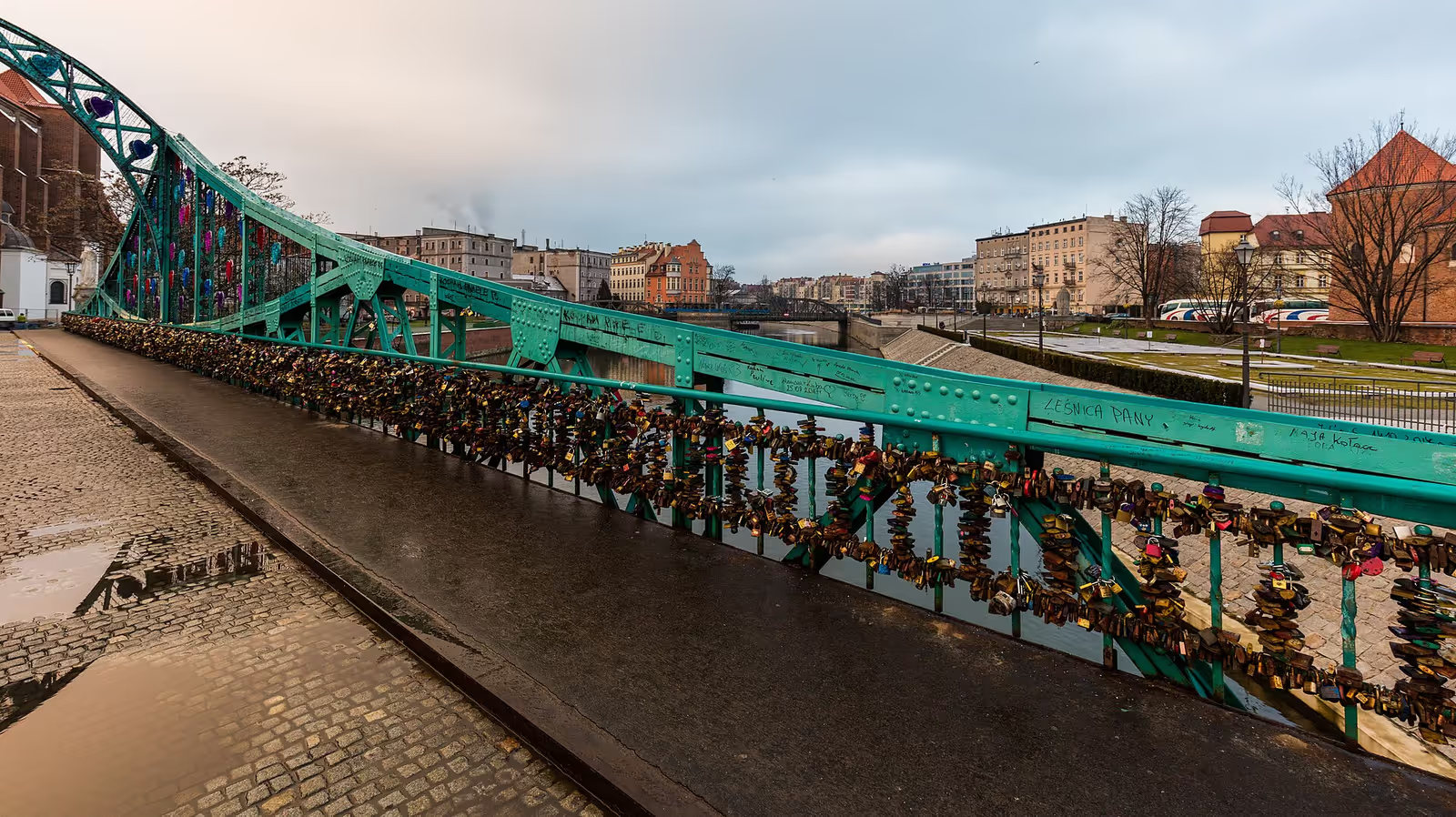
Why Wrocław is not Warsaw on a smaller map
Warsaw briefs often centre on Mokotów fintech and Jerozolimskie corridor SSCs. Wrocław briefs more often mention export to Germany and Czechia, industrial catalogs, or game launches timed with Steam visibility. The legal frame is still Polish and EU, but the sector mix differs. Copy that only swaps city names from a Warsaw template is easy to spot; your procurement team will notice if the only local anchor is a generic mention of RODO.
WordPress Wrocław on Meetup remains a practical place to sanity-check a vendor name before you sign. I do not treat meetups as a sales channel; I treat them as evidence that your market already compares implementations in public.
Wrocławski Park Technologiczny and product marketing sites
Tenants around the technology park often need a public layer that is faster than their internal tools but still safe to hand to legal. Typical asks include:
- A Polish primary site with English routes for investors, OEM partners, or job seekers abroad.
- Downloadable PDFs with stable URLs years after a grant report was filed.
- Recruitment pages that embed an ATS form without loading six analytics scripts on the job description.
- A changelog or knowledge base that non-developers can update through Markdown pull requests.
Astro answers those with static output and typed content. Pages compile without a database round trip. Islands hydrate application forms, salary calculators, or interactive demos only where the brief requires interactivity. Starlight, Astro’s documentation theme, covers API handbooks when the marketing site and the docs share one repository.
Hosting cost stays modest compared with managed WordPress plans sized for traffic spikes you only see during a funding announcement. Preview URLs on each pull request let a park tenant forward a staging link to a parent company security desk in Stuttgart without opening firewall rules for your laptop.
Gaming, software houses, and media-heavy landings
Wrocław’s game and software cluster cares about performance for a different reason than an SSC: visual fidelity. Trailers, key art, and screenshot carousels can wreck Largest Contentful Paint if they are implemented like a single-page application that ships React to every visitor.
Patterns I use on media-heavy Astro pages include:
- Campaign stills processed through Astro’s image pipeline into AVIF and WebP with explicit width and height so layout does not shift while a poster loads.
- Video embeds behind a click-to-play placeholder so third-party players do not compete with first paint.
- Carousels implemented as islands with
client:visibleso JavaScript downloads when the user scrolls, not when the hero loads. - Press kits as static zip links with checksums recorded in the repository, so PR teams do not e-mail hundred-megabyte attachments.
Checkout and account flows can stay on Steam, a custom launcher site, or Shopify while Astro carries the editorial story. The Shopify developer page for Wrocław covers commerce when the cart must stay on a dedicated platform.
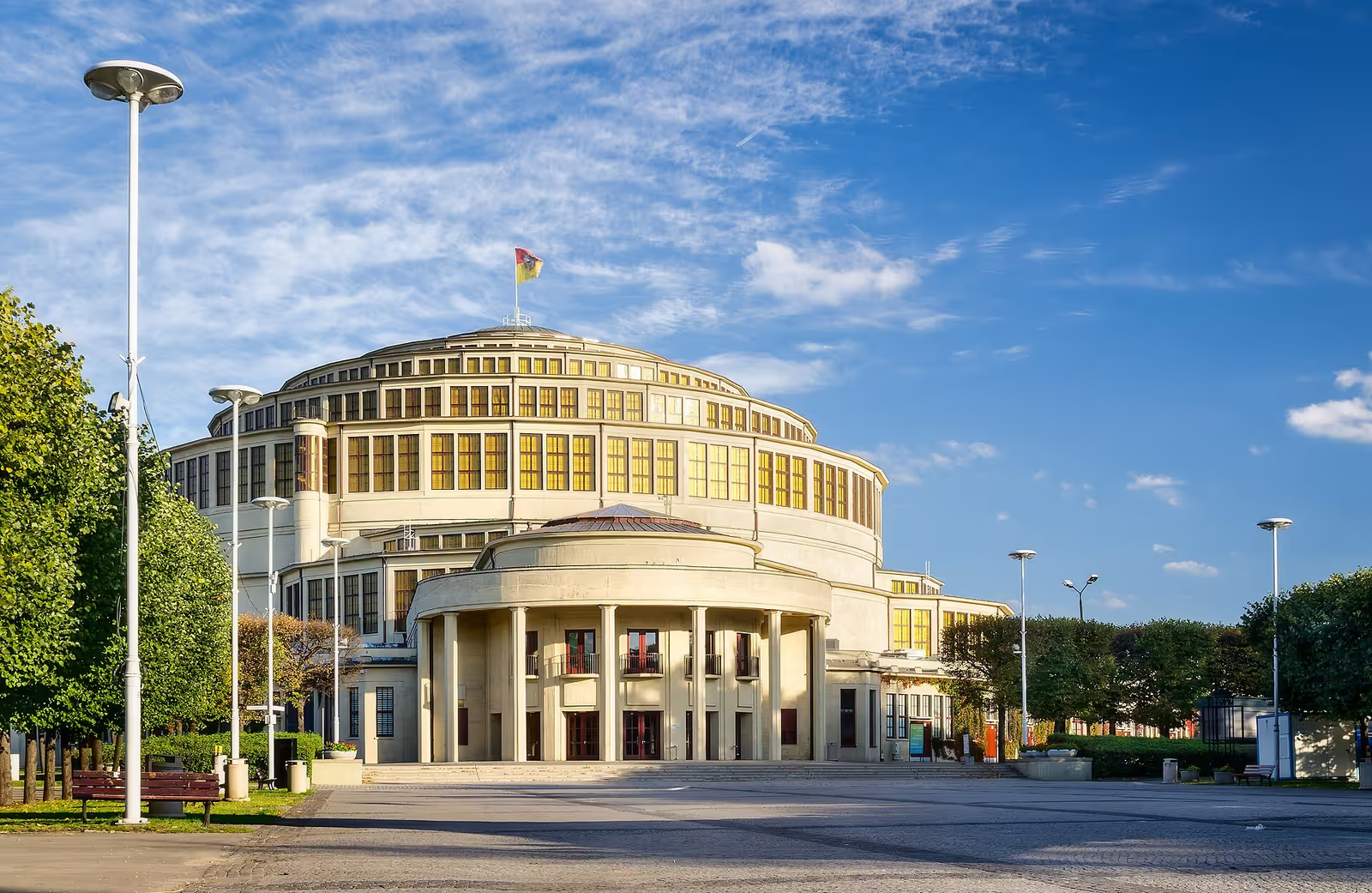
SSC, industry, and multilingual service catalogues
Shared-service and industrial buyers along Fabryczna often run service catalogues that must exist in Polish, English, and sometimes German. They also face audits where counsel asks what happened to a contact form submission eighteen months ago.
Astro does not replace records management policy, but it makes the technical story legible:
- Forms post through Astro Actions or a thin API route with server-side validation, not unchecked client JSON.
- Each template pulls footer legal data from one typed company record so a host migration updates every page at once.
- hreflang pairs are generated from the same content entries and checked in continuous integration.
When the buyer already runs WordPress for historical reasons, the Astro build imports posts through the REST API or GraphQL and publishes compiled HTML to the edge. Editors keep Gutenberg; security sees no wp-admin on the marketing hostname. The dedicated WordPress developer page for Wrocław describes WordPress-first projects; this page covers the split stack.
Polish compliance: RODO, UODO, and PKE after the 2024 amendment
Polish sites process personal data under the EU General Data Protection Regulation, referred to locally as RODO, and the national Act of 10 May 2018 on the protection of personal data published on ISAP. The President of the Personal Data Protection Office (Prezes UODO) publishes guidance, templates, and enforcement news at uodo.gov.pl. Your counsel still writes the privacy policy; my job is to make the running site behave the way that policy describes.
The Electronic Communications Law (PKE), as amended in 2024 (Journal of Laws item 1221), tightened how commercial messages and tracking technologies are treated. Articles 398 and 399 matter on marketing sites because they intersect with newsletter signups, remarketing pixels, and chat widgets. UODO cases still often start from a complaint about a contact form or a cookie banner, even when the underlying statute is PKE rather than RODO alone.
Implementation lives in shared Astro partials so a rushed landing page cannot ship without the same hooks:
- Consent before non-essential scripts - analytics, heatmaps, and advertising tags mount only after an explicit choice recorded in a consent island. Astro’s default of shipping no client JavaScript until hydration keeps the before-and-after network tab easy to screenshot for auditors.
- Direct marketing opt-in - newsletter and SMS signup checkboxes stay unchecked by default; purpose text sits beside the field in the language of the route.
- Form minimisation - contact and recruitment forms include only fields the business process uses, with lawful basis language your DPO approves adjacent to the submit control.
- Hosting and subprocessors - the handover lists the edge host, form processor, and any CRM endpoint so records of processing stay accurate when UODO or a customer DPO asks.
How Polish requirements map to Astro features
| Requirement | Where it comes from | How the Astro build handles it |
|---|---|---|
| Lawful processing and transparency | RODO and the 2018 national act | Purpose text on forms, privacy links versioned in Git |
| Cookie and tracker consent | PKE articles 398 and 399 (2024 amendment) | Third-party scripts live in islands gated by consent state |
| Supervisory oversight | UODO | Technical measures documented to match published guidance |
| Accessible public sector and large employer sites | Polish accessibility law and the European Accessibility Act | Semantic landmarks, labelled controls, focus states in shared components |
Accessibility expectations increasingly appear in Wrocław SSC procurement alongside security questionnaires. Building landmarks, heading order, and form labels into components is cheaper than bolting them onto finished Figma exports.
How Astro islands fit Wrocław content sites
Astro documents the islands architecture as zero JavaScript by default, with selective hydration for interactive pieces. For a Wrocław buyer moving off WordPress page builders or trimming a Next.js marketing shell, the trade is explicit:
- Static routes compile to HTML without shipping a React runtime on every article.
- Interactive pieces (ATS embeds, configurators, mortgage or leasing calculators) mount as islands without hydrating the entire page.
- Content collections hold Markdown or MDX copy with types checked at build time, as described in the content collections guide.
A minimal pattern for bilingual sites keeps Polish as defaultLocale when the brief says so:
import { defineConfig } from 'astro/config';

export default defineConfig({
  site: 'https://example.pl',
  i18n: {
    defaultLocale: 'pl',
    locales: ['pl', 'en'],
    routing: {
      prefixDefaultLocale: true,
    },
  },
});
With prefixDefaultLocale: true, Polish lives under /pl/... and English under /en/.... Shared translationKey fields in collections let the build fail when an English service page is missing while the Polish counterpart ships.
Deliverables I ship for Wrocław clients
- Corporate and campaign sites with Polish and optional English or German trees.
- Documentation hubs and changelogs using MDX or Starlight.
- Migrations from WordPress where shortcodes and page-builder markup added latency.
- Headless setups where WordPress or a CMS remains editorial and Astro remains public.
- Performance and markup audits on existing Astro repositories before a statutory review.
Core Web Vitals targets follow web.dev guidance: Largest Contentful Paint up to 2.5 seconds, Interaction to Next Paint up to 200 milliseconds, Cumulative Layout Shift up to 0.1 on real mobile profiles, not only on office Wi-Fi.
When Wrocław teams keep WordPress behind Astro
Many Lower Silesia companies already invested in Gutenberg workflows, ACF field groups, or WooCommerce for a single market. I usually split editorial cutover from the public frontend cutover so marketing is not retraining and rehosting on the same Friday. Astro can treat WordPress as a content API: scheduled builds pull fresh posts and pages, then ship only static assets to visitors.
The pattern suits:
- Park tenants that publish case studies weekly but want PageSpeed scores that satisfy a parent company scorecard.
- Manufacturers that need a fast product catalogue while pricing still lives in ERP-backed WooCommerce.
- Export brands that must add German or English routes without duplicating the entire plugin stack.
Marketing teams keep wp-admin for drafts; the edge serves only compiled HTML and assets. If the migration target is a slimmer bundle, Next.js to Astro migration in Wrocław covers the path when React components must survive the move.
Project rhythm from Wrocław brief to signed staging
I work from Gdynia without travel to Fabryczna or the technology park for kickoffs. Wrocław shares my CET clock, so morning questions from Psie Pole land in the same business day. Expect email and Git artifacts rather than standing calls: a restated brief, numbered risks, staging URLs, and merge requests your IT vendor can review asynchronously.
| Phase | What you see | What I need from you |
|---|---|---|
| Intake | Written restatement of goals and risks | Site URL, language list, must-have legal pages, Figma or approved HTML |
| Architecture note | Locale map, collection schemas, redirect list | Confirmation of default locale and slug rules per language |
| Build sprints | Preview on staging, changelog in Git | Content in each language or signed-off placeholders clearly marked |
| Compliance pass | Footer IDs, cookie gating, form labels | Legal text from your advisor, cookie taxonomy |
| Launch | DNS checklist, redirect file, Search Console hints | Go-live window, owner for DNS |
Preview environments stay live while copy changes land, so reviewers in Wrocław open real URLs on a phone rather than a slide deck. Sign-off follows a short checklist: promised languages present, consent blocks scripts until opt-in, Lighthouse spot-check on home and one inner template, and test submissions reaching the inbox or CRM you name.
A typical greenfield Astro engagement for a Wrocław marketing site spans eight to eleven weeks depending on migration volume and bilingual parity. Moving fifty to two hundred URLs off WordPress into Astro in Dolny Śląsk projects often takes ten to fourteen weeks because industrial buyers also map legacy product PDFs, German export slugs, and Fabryczna SSC footer requirements into the same redirect file.
Checklist before you sign with anyone (including me)
Even if you never hire me, this list saves rework common on Wrocław RFPs:
- Decide whether Polish, English, or German routes are launch-critical or phased.
- Draft privacy, cookie, and terms URLs per locale before writers paste body copy into Figma.
- Freeze URL patterns (
/pl/,/en/) before marketing prints QR codes for trade fairs in Germany. - Require reciprocal hreflang in rendered HTML and XML sitemaps, not only inside a CMS dashboard.
- Inventory trackers and pixels with legal before marketing installs Google Tag Manager.
- Plan Core Web Vitals measurement on a real mobile profile.
- Assign an owner for legal text who will publish counsel revisions within one sprint after launch.
- Pick a merge approver on GitHub or GitLab before an agency pushes feature branches.
Related services in Wrocław
Depending on where you are in the stack, these adjacent pages may fit better as a starting point:
- Next.js developer in Wrocław when the product is closer to a logged-in application than to a multilingual brochure site.
- Next.js to Astro migration in Wrocław when you want to shrink client bundles but keep component investments.
- WordPress developer in Wrocław when editorial workflows must stay inside WordPress for now.
- Astro development for the general service description outside the Wrocław context.
Contact for Wrocław Astro work
For a Dolny Śląsk marketing site, headless split, or PKE-aware template rebuild, open the contact form. Include the live domain, required locales, hard deadlines such as a trade fair in Leipzig, and who supplies Figma or HTML/CSS. Replies go out on CET business days as either clarifying questions or a bullet scope sketch; a binding quote waits until that sketch stops moving.
Selected projects
Examples of my work.
Airhelp - WordPress Project | WPPoland
AirHelp was founded in 2013 as a start-up and has grown to become the global leader in defending air passenger rights, helping over 13 million people underst...
alextg.pl - WordPress Project | WPPoland
alextg.pl is a WordPress website for a company that helps customers obtain financing. The project focused on clear service presentation, contact flow and stable technical upkeep...
Andergrant.com - Historic Website for Olsztyn's Premier Club (2009)
The andergrant.com project was created in 2009 as a website for the largest club in Olsztyn, utilizing project-specific technical choices of that era including PHP 5, MySQL, jQuery, and Flash multimedia.
WordPress support & development in Wrocław
Need this service: Astro developer in Wrocław?
Describe your project by e-mail. I reply within 48 hours.
Describe your projectExplore other WordPress services and knowledge base
Migration to Astro, Next.js, and headless WordPress.
WooCommerce sync with ERP and wholesale systems.
Business process automation around WordPress and company systems.
Library of concrete automation use cases.
Headless WordPress, Sanity, Strapi, and Contentful with Astro or Next.js.
Astro, MDX, edge delivery, and Core Web Vitals measured on real traffic.
Custom WordPress engineering and architecture.
Scalable headless, ERP, and AI architecture for enterprise.
Related categories
Supporting articles
Six to sixteen weeks for typical engagements, with a four-phase shape: discovery, scoping, build and cutover, tuning. The variables are catalogue size, integration count, URL preservation, and editorial team readiness, not framework choice.
A definitive 4-year Total Cost of Ownership (TCO) analysis, real-world Core Web Vitals benchmarks, Astro 7 GraphQL APQ architecture, and a 10-point executive decision matrix for choosing between decoupled and traditional WordPress.
The Shopify Plus vs WooCommerce headless decision in 2026 is no longer a binary "platform vs custom" trade-off. Both can run headless, both integrate AI, both ship at the edge. The real axes are control, total cost over five years, and exit strategy. This article walks the matrix with confirmed platform facts.