My place in the WordPress community
- I have had a wordpress.org account since 2006.
- I contributed to WordPress core for versions 7.0 and 7.1.
- I maintain 30 plugins on wordpress.org.
- I organise and speak at WordCamps.
- I have attended every WordCamp Europe from 2017 to 2026.
- Local WordPress meetup: WordPress Amsterdam
Edge development for Dutch e-commerce and events
The Netherlands is a country of web shops. Dutch consumers buy online at a high rate, they pay with iDEAL at the checkout, and a Dutch shop competes with marketplaces and with the neighbouring German and Belgian markets from the first day. Amsterdam adds the event side: concerts, festivals, clubs, museums and the city’s own calendar, which sends bursts of visitors to a ticketing page.
Two peaks come up again and again. King’s Day on 27 April turns the city into a street market and a festival, and the businesses around it plan promotions, tickets and bookings for the days before. Amsterdam Dance Event in October fills the city with an industry audience that looks up artists, venues and tickets in a few concentrated days. A shop that sells festival merchandise or an event that sells tickets sees a sale open at a fixed minute, and the traffic arrives in that minute.
Most of these sites run on WordPress with WooCommerce. A plain hosting plan copes with an ordinary Tuesday. It does not cope with a sale that opens at noon.
My name is Mariusz Szatkowski and WPPoland is my one-person company in Gdynia, building WordPress sites since 2006. I work for Amsterdam clients remotely and in writing. Amsterdam and Gdynia share the same time zone, so nothing needs shifting. Scope, schedule and contract go by email, and you review the work on a staging environment. I do not offer on-site meetings.
A Cloudflare Worker is code that runs on Cloudflare’s network close to the visitor. It starts in a V8 isolate, scales with traffic and needs no server to provision. Cloudflare’s public network page lists Amsterdam among its cities, and the city is also home to AMS-IX, one of the major internet exchanges in Europe, so a visitor in Amsterdam is served from very close by. My own platform, wppoland.com, runs in production on Cloudflare Pages with Workers middleware. The wider service description is on the Cloudflare edge development page; this page covers what it means for Amsterdam.
What a Worker does in front of WooCommerce
Watch a shop origin in the minute a sale opens. PHP workers saturate, the database connection pool empties, and the queue behind them is made up of identical anonymous requests for the same category pages, product pages and search results. None of that needs WooCommerce to build the page again for each visitor.
WooCommerce stays where it is as the origin, with its products, orders, plugins and checkout untouched, and a Worker takes over four jobs.
Caching complete HTML at the edge is the first. Anonymous visitors get the cached page in tens of milliseconds. Logged-in customers and non-empty baskets pass through to the origin. That session-aware split is the part that ordinary cache plugins and badly configured CDN rules most often get wrong, and getting it wrong means a customer sees someone else’s basket or an old price.
Redirects are the second. Shops that rename categories, retire products and change their structure leave old URLs that search engines and price comparison sites still point at. A Worker holds the rules in one versioned table and answers before the origin is involved.
Security headers are the third, kept in one place instead of scattered across the theme. Request filtering is the fourth and has its own section below.
If your Amsterdam site needs work before an edge layer makes sense, that is a separate engagement, described on the WordPress developer in Amsterdam page. For the shop itself, the WooCommerce developer in Amsterdam page is the better starting point.
Does edge caching break the iDEAL return page?
It can, and this is the first thing I check in a Dutch shop. A redirect payment works like this: the customer chooses iDEAL at the checkout, the shop sends them to the bank, the customer approves the payment, and the bank returns them to a URL in the shop. That URL carries the state of the order. If a cache stores it or serves another customer’s copy, the customer sees the wrong confirmation, or the shop never registers the payment as complete.
The rule I follow is simple. The basket, the checkout, the account area and the payment return routes are never cached. They pass through to the origin untouched, with cookies and headers intact. Webhooks from the payment provider, which tell the shop that a payment succeeded, are excluded from any filtering rule that could block them. A bot rule that challenges unknown traffic must not challenge the payment provider’s server.
I then test the complete flow with a real test payment on a staging copy: add to basket, pay, return, confirm, receive the order email. I repeat the test after every change to the edge rules, because a rule that was safe yesterday can catch the return route today. A shop that runs on this basis does not lose orders to its own cache.
How to prepare a sale or a ticket release
A sale has a recognisable shape. Visitors arrive just before the start, refresh the page, open the product, and a small fraction buy. Most of the load is browsing, and most of the browsing is identical for everyone.
I treat the page in layers. Category pages, product descriptions, images and static content are cached at the edge and survive the rush without touching the origin. Stock levels and prices that must be exact are fetched separately and kept small. Add to basket and checkout go to the origin, which now has only the work that must be correct: stock, orders and payment.
Stock is the delicate part. If a product has fifty units and ten thousand people want it, the shop needs a model that does not oversell, and the edge cache does not provide one. WooCommerce stock handling does, together with sensible reservation settings, and I check that it does before the sale. A Worker takes the browsing load away so the origin can concentrate on this.
A few days before the sale I rehearse it. A load test against a staging copy shows where the origin breaks first. Often the weak point is not PHP but a slow query in a filter plugin, a shipping calculator that calls an outside service, or an image resized on demand. The fix in that case is a code change, not more infrastructure, and I report it that way, because the cheapest fix is the right one. I also plan the failure case: if the shop is overwhelmed regardless, a Worker can serve a clear static page with the sale status instead of an error.
Dutch and English from one shop
An Amsterdam shop or venue serves Dutch customers and an international audience, especially tourists and the event crowd. The routing question is which version a first-time visitor sees.
A Worker can read the browser’s language preference, send a first-time visitor to the matching version and remember the choice. Three rules stay fixed. Every version keeps its own URL and hreflang annotation, so search engines index Dutch as Dutch and English as English. The redirect never applies to crawlers or to visitors who followed a link to a specific version. And language is not chosen by IP address, because an English speaker living in Amsterdam is an ordinary case, and so is a Dutch speaker abroad.
Currency and shipping are separate decisions. A Worker can help show the right currency, but price, tax and delivery rules belong to the shop and must come from it. I do not let the edge layer invent a price.
Bots, scalpers and scrapers
Shops and ticket sites draw automated traffic of a particular kind. Resale bots try to reserve tickets in bulk the moment a sale opens. Price scrapers copy catalogues for comparison sites and competitors. Card testing tools try small purchases with stolen card numbers, and form spam fills the contact page. The cost is not only load. A bot that holds stock in baskets keeps real customers from buying.
At the edge I classify requests before they reach the origin. Typical measures are rate limiting by request pattern, challenges for traffic that behaves like a script, limits on the number of baskets from one source, and explicit rules for the crawlers you want, such as the major search engines. The rules are tuned from your own logs rather than from a generic list. As described above, the payment provider’s webhooks are excluded from every rule that could block them.
I do not promise that no bot gets through. Filtering reduces automated traffic, and I measure the effect before and after, so you can see whether it was worth the effort.
GDPR and Dutch cookie rules at the edge
A Dutch company that uses Cloudflare treats it as a processor under the General Data Protection Regulation. Article 28 requires a contract that sets out, among other things, the subject matter and duration of the processing. Cloudflare offers a data processing agreement and publishes its sub-processors, and your legal adviser should review them as with any supplier.
My part is technical. I design Workers so the edge layer touches as little personal data as possible. A caching Worker that serves anonymous pages needs no personal data at all. A Worker that reads cookies to separate logged-in customers processes identifiers, and I document that. A Worker in front of a checkout sees order data in transit, which is another reason checkout routes pass straight through. I deliver a short description of the data flows that your data protection officer can use in the records of processing.
Transfers outside the European Economic Area fall under Chapter V of the same regulation, starting with Article 44. Whether a given configuration satisfies it is a legal question for your adviser.
The Netherlands has its own supervisory authority, the Autoriteit Persoonsgegevens. Cookies and similar trackers fall under the Dutch Telecommunications Act, where the rules on placing and reading information on a visitor’s device are set out. I did not retrieve the article text for this page, so ask your adviser for the exact provision. What I do is technical: I check in the browser that scripts do not load before consent where consent is required, because a plugin setting can say one thing while the page does another.
When a Workers project is the wrong call
Take a shop in the Jordaan that sells a few dozen handmade items, ships mostly within the Netherlands and has a steady trickle of orders. An edge architecture would be waste. A good cache plugin, properly sized images and decent hosting deliver most of the benefit at a fraction of the effort, and the saved budget buys better product photography.
There is a second reason to decline. A Worker is software, and software needs maintenance. Several takeover projects I see begin as someone else’s orphaned Worker, undocumented and sitting in the request path of a shop that has forgotten it. And a Worker that sits in front of a checkout is a part of the payment path, so an unowned one is a risk to revenue. If a project cannot fund its upkeep, the responsible answer is not to build it.
What justifies the build is usually one of three conditions: traffic that arrives in bursts around sales, tickets and events, an audience abroad, or persistent bot pressure on baskets and catalogues. All three are measurable before any commitment. If none is present, the audit will say so, and a small invoice will have prevented a much larger one.
If your problem is a heavy front end rather than a slow origin, the fix may be a rebuild. For that path, see my Next.js and Astro migration service. I recommend sequencing: put the edge layer in front of the existing system first, measure, and only then decide whether a rebuild is worth paying for.
Is there a WordPress community in Amsterdam?
I did not verify a WordPress meetup or WordCamp in Amsterdam for this page, so I will not claim one. I organise the WordUp Trojmiasto meetup in Gdynia, a role I have held since 2015, and I was among the organisers of the first bilingual WordCamp in Poland in 2025, which you can check on the WordCamp Gdynia 2025 organisers page.
What to send in the first email
- the address of your shop or event site and the date of the next sale or release,
- the payment methods you offer and the payment provider you use,
- access to your analytics or Search Console, and server logs if you can export them,
- who hosts the site and who administers the DNS,
- the plugins that handle stock, shipping and checkout,
- any contract or compliance requirement about where data may be processed.
If a point is missing, I will write back what is missing and what it means for scope and schedule.
How I work with Amsterdam clients
I work as a company, with a contract and an invoice. The process stays in writing:
- You send the first email with the points above.
- After I review your site and measurements, you receive a scope, a schedule and a contract.
- I build the pilot Worker on a staging environment, which you review and comment on in writing.
- After launch, documentation and access stay with you, and I check the effect against the measurements taken at the start.
Quotes are individual and depend on the scope of the edge logic. After the pilot, every stage is a checkpoint at which you can stop, keep the gains and the documentation, and owe nothing further. For ongoing care, there is WordPress maintenance and support in Amsterdam. You can send the first email through the contact page.
Selected projects
Examples of my work.
E-commerce Development: mavicon.pl
The website mavicon.pl has been designed with a view to providing a comprehensive presentation of the company’s offerings, which are based on innovative tech...
E-commerce Development: metal-meble.pl
metal-meble.pl is a WordPress website for a company offering metal furniture and constructions, with a clear catalogue, fast contact path, and simple administration.
E-commerce Development: mochola.com
mochola.com is a modern e-commerce platform based on WooCommerce, which I developed as a programmer, specializing in the sale of car parts. The store is aime...
WordPress support & development in Amsterdam
See also in Netherlands
Need this service: Cloudflare Workers edge in Amsterdam?
Describe your project by e-mail. I reply within 24 hours.
Describe your projectExplore other WordPress services and knowledge base
Custom WordPress engineering and architecture.
Scalable headless, ERP, and AI architecture for enterprise.
Stores, checkout flow, and sales logic.
Stability, updates, and post-launch support.
What the monthly care fee covers and what changes it.
Business process automation around WordPress and company systems.
Headless WordPress, Sanity, Strapi, and Contentful with Astro or Next.js.
Astro, MDX, edge delivery, and Core Web Vitals measured on real traffic.
Related categories
Supporting articles
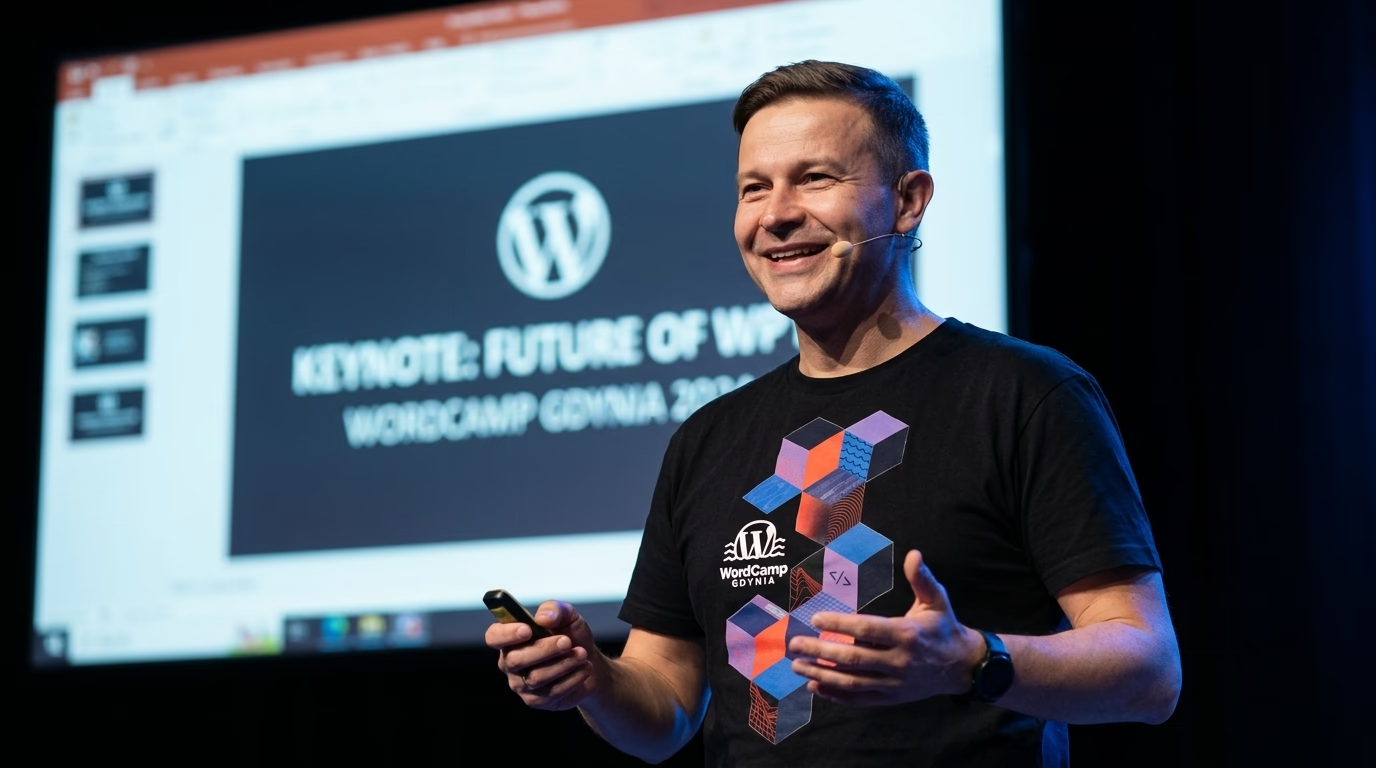
How to start as a WordPress developer in 2026. Local environment, theme and plugin development, REST API and headless paths, security and Core Web Vitals. A practitioner playbook that does not waste your first month.

WordPress 7.0 with AI Client vs Astro 6 after Cloudflare acquisition. Speed, cost, SEO and security comparison. My take after 20 years as a WP developer - when to migrate and when to stay.
WordPress 7.0 with AI Client against Astro 7 with the Rust compiler and Vite 8. Speed, cost, SEO and security compared, plus the real bill for my own Astro 6 to 7 migration.