My place in the WordPress community
- I have had a wordpress.org account since 2006.
- I contributed to WordPress core for versions 7.0 and 7.1.
- I maintain 30 plugins on wordpress.org.
- I organise and speak at WordCamps.
- I have attended every WordCamp Europe from 2017 to 2026.
- Local WordPress meetup: WordPress Düsseldorf Meetup
Why do trade fair peaks matter for a Düsseldorf website?
Düsseldorf has an unusual relationship with the calendar. Messe Düsseldorf runs international trade fairs on its grounds, and companies across the region plan their year around them. Exhibitors, suppliers, agencies, hotels and logistics firms all publish more, send more email and answer more enquiries in the weeks before a fair, during it and in the days after.
The website sees this as a shape. Traffic is flat for months, rises steeply a few weeks before opening, peaks during the fair and falls sharply afterwards. The visitors are mostly new: people who read a name on a hall plan or a badge and type it into a phone. They want the same few things: what the company sells, where the stand is, how to book a meeting, how to download a brochure.
A server sized for the quiet months is wrong for the peak, and a server sized for the peak is waste for the rest of the year. A Cloudflare Worker resolves the mismatch. It is code that runs on Cloudflare’s network near the visitor, starts in a V8 isolate and scales without a server of your own. In front of WordPress it answers anonymous requests for the same pages from the edge, so the origin sees only the work that needs a CMS.
My name is Mariusz Szatkowski and WPPoland is my one-person company in Gdynia, active since 2006. I work for Düsseldorf clients remotely and in writing. Düsseldorf and Gdynia share the same time zone, so there is no schedule shifting. Scope, schedule and contract go by email, and you review the work on a staging environment. I do not offer on-site meetings. The general description is on the Cloudflare edge development page; this page covers what it means for a company in Düsseldorf.
How do you prepare an exhibitor site for a fair?
A fair has a fixed date, which is an advantage. The date lets me plan backwards, and I prefer to start at least several weeks before opening. An edge layer needs time to measure, adjust and test, and it should never go live on the evening before the fair.
My preparation has five steps.
First, I list the pages that visitors actually reach: the front page, the product or service pages, the fair landing page, the contact page and any download. These are cached at the edge for anonymous visitors with a lifetime that matches how often you edit them.
Second, I keep the parts that must be live at the origin. Enquiry forms, meeting booking and lead capture are never cached. If the form handler is slow, I tell you, because that is where leads are lost.
Third, I rehearse the burst. A load test against a staging copy, with the cache warm and then cold, shows where the origin breaks first. Often the weak point is not PHP but a plugin that runs an expensive query on every request, and the fix is removing it.
Fourth, I plan the failure case. If a form or booking tool is unavailable, the page serves a clear message with an alternative contact route instead of a blank error.
Fifth, I agree on what happens after the fair. A peak ends, and the layer keeps working at a low cost. If you want it removed, the documentation says how, and the rollback is part of the handover.
If the foundation needs work before an edge layer makes sense, that is a separate engagement, described on the WordPress developer in Düsseldorf page. For exhibitor shops, the WooCommerce developer in Düsseldorf page is the better starting point.
English and German on one site: routing for an international audience
Düsseldorf is a city where English is a working language in many offices, and where the international community is large. It has a well-known Japanese community, among the largest in Germany, and many companies deal with customers who read neither German nor English as a first language. A site often needs a German version, an English version and sometimes more.
The routing question is the same as everywhere: which version does a first-time visitor see? A Worker can read the browser language and direct the visitor to the matching version, then store the choice so the visitor is not redirected again. My rules do not bend.
Each version has its own URL and hreflang annotation, so search engines can index every version. The redirect never applies to crawlers or to visitors who arrived by a direct link to a specific language. The language switcher stays visible on every page.
I avoid choosing language by location. An English-speaking manager in Düsseldorf wants English, and a German buyer abroad wants German. Browser preference is a better signal than the IP address, and an explicit choice beats both.
Content is the other half. A company with international customers gains more from an English page written for that audience than from a literal translation of the German one. Technical products have conventions: units, standards, certifications and the way a datasheet is read differ by market. I take care of the technical side and leave the wording to someone who knows your field.
What do German consent rules require from an edge layer?
Germany regulates cookies and similar technologies in section 25 of the TDDDG, the law on data protection and privacy in telecommunications and digital services. It requires the consent of the user before information is stored on a device or read from it, and the consent must meet the standard of the General Data Protection Regulation. Consent is not needed where the sole purpose is transmitting a message, or where storage or access is strictly necessary for a digital service the user has expressly requested.
For Düsseldorf, the state data protection authority is the Landesbeauftragte für Datenschutz und Informationsfreiheit Nordrhein-Westfalen. The language of the page does not change the rule: an English site operated from Germany or targeting German visitors should assume it applies.
What this means in practice for an edge project:
- A cookie that a Worker sets, for example to remember a language choice, has to be judged against the rule. A cookie needed to deliver what the visitor asked for may be exempt. A cookie that only supports measurement is not.
- A consent banner does not prove that scripts wait for consent. I open the page in a clean browser, decline consent and read the network log for requests to analytics and advertising domains. A plugin setting can say one thing while the page does another.
- Third-party fonts, maps and video embeds loaded at page view are a common source of requests that bypass consent. I list them, and either they are loaded after consent or served from your own domain.
The General Data Protection Regulation governs the personal data itself. A company that uses Cloudflare treats it as a processor, and Article 28 requires a contract covering the subject matter and duration of the processing. Cloudflare offers a data processing agreement and publishes its sub-processors. I design Workers to touch as little personal data as possible, and I write a short data flow description for your records of processing. Transfers outside the EEA fall under Chapter V, starting with Article 44, and whether a given setup satisfies it is a legal question for your adviser.
Is a Workers project sensible for a consultancy or agency site?
Düsseldorf is also a centre for advertising, consulting and banking, and many of its companies run sites that are polished but small. A consultancy with a dozen pages, a news section and a contact form does not need an edge architecture. A good cache plugin, optimised images and disciplined updates deliver most of the benefit.
The picture changes under specific conditions: a site that carries a fair-related campaign with a hard date, a portal or shop with many pages and heavy automated traffic, or a group of sites that share a template and could share rules. In the last case, a Worker can apply the same security headers, redirects and cache rules across many hostnames from one versioned configuration, instead of dozens of separately configured plugins.
I decline work that would leave you with unmaintained code. A Worker is software, and software needs maintenance. Several takeover projects I see begin as someone else’s orphaned Worker, undocumented and sitting in the request path of a business that has forgotten it. If a project cannot fund its upkeep, the responsible answer is not to build it. The audit exists to give that answer early, for a small invoice, instead of late and at great cost.
If the real problem is a heavy front end, the fix may be a rebuild, which is a separate decision. I recommend putting the edge layer in front of the existing system first, measuring, and only then deciding whether a rebuild is worth paying for.
Bots, scrapers and fair-season crawlers
Exhibitor lists, product catalogues and price pages draw automated traffic, and the weeks before a fair bring more of it. Competitors collect product ranges, lead-harvesting tools copy contact details, and scrapers collect exhibitor data to resell. The cost is load, distorted analytics and, for contact data, a real privacy problem.
At the edge I classify requests before they reach the origin. Typical measures are rate limiting by pattern, challenges for suspicious traffic and explicit rules for the crawlers you want. The rules are tuned from your own logs, not from a generic list, because a rule that suits a retailer can block a legitimate partner or a press contact.
I do not promise that no bot gets through. Filtering reduces automated traffic, and I measure the effect before and after, so you can see whether it was worth doing. If you publish personal contact details, the better protection is often to publish less, and I will say so.
Is there a WordPress community in Düsseldorf?
Yes. The Düsseldorf WordPress Meetup has a group page on Meetup.com at Düsseldorf WordPress Meetup, which I checked while preparing this page. The page states that events and registration have moved to wpdus.de. I have not attended it, so I cannot describe its events. I organise the WordUp Trojmiasto meetup in Gdynia, a role I have held since 2015, and I was among the organisers of the first bilingual WordCamp in Poland in 2025, listed on the WordCamp Gdynia 2025 organisers page.
What should you send in the first email?
- the address of your site and the dates of the fairs or campaigns that matter,
- a description of the busiest pages and the forms that capture leads,
- access to your analytics or Search Console, and server logs if you can export them,
- the languages you serve, and who writes the content,
- any contract or compliance requirement about where data may be processed,
- the date by which something must work, and the reason for that date.
If a point is missing, I will write back what is missing and what it means for scope and schedule.
How do I work with Düsseldorf clients?
I work as a company, with a contract and an invoice. The process stays in writing:
- You send the first email with the points above.
- After I review your site and measurements, you receive a scope, a schedule and a contract.
- I build the pilot Worker on a staging environment, which you review and comment on in writing.
- After launch, documentation and access stay with you, and I compare the effect with the measurements taken at the start.
Quotes are individual and depend on the scope of the edge logic. After the pilot, every stage is a checkpoint at which you can stop, keep the gains and the documentation, and owe nothing further. For ongoing care there is WordPress maintenance and support in Düsseldorf. You can send the first email through the contact page.
Selected projects
Examples of my work.
E-commerce Development: VECTOR GROUP
The project for VECTOR Group, a dynamically growing technology consortium operating on global markets in the field of access network infrastructure and data ...
E-commerce Development: VECTOR SMART DATA
Vectorsmartdata.net is a website created for VECTOR Group, a provider of advanced telemetry solutions enabling real-time data monitoring and management. As ...
E-commerce Development: wyposazenie-szkol.com
The website wyposazenie-szkol.com was designed to comprehensively present the offer of educational facility supplies. The main goal of the site is to showcas...
See also in Germany
Need this service: Cloudflare Workers edge in Düsseldorf?
Describe your project by e-mail. I reply within 24 hours.
Describe your projectExplore other WordPress services and knowledge base
Custom WordPress engineering and architecture.
Scalable headless, ERP, and AI architecture for enterprise.
Stores, checkout flow, and sales logic.
Stability, updates, and post-launch support.
What the monthly care fee covers and what changes it.
Business process automation around WordPress and company systems.
Headless WordPress, Sanity, Strapi, and Contentful with Astro or Next.js.
Astro, MDX, edge delivery, and Core Web Vitals measured on real traffic.
Related categories
Supporting articles
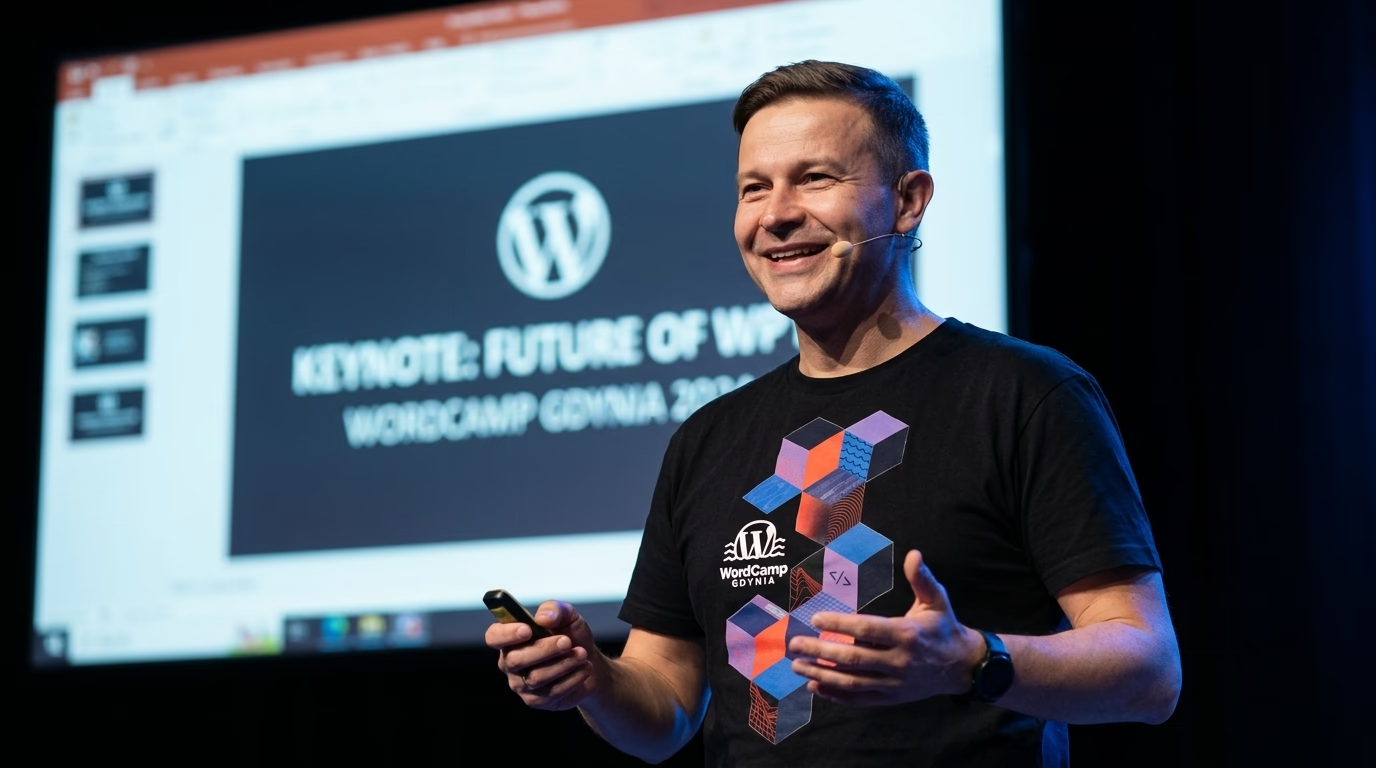
How to start as a WordPress developer in 2026. Local environment, theme and plugin development, REST API and headless paths, security and Core Web Vitals. A practitioner playbook that does not waste your first month.

WordPress 7.0 with AI Client vs Astro 6 after Cloudflare acquisition. Speed, cost, SEO and security comparison. My take after 20 years as a WP developer - when to migrate and when to stay.
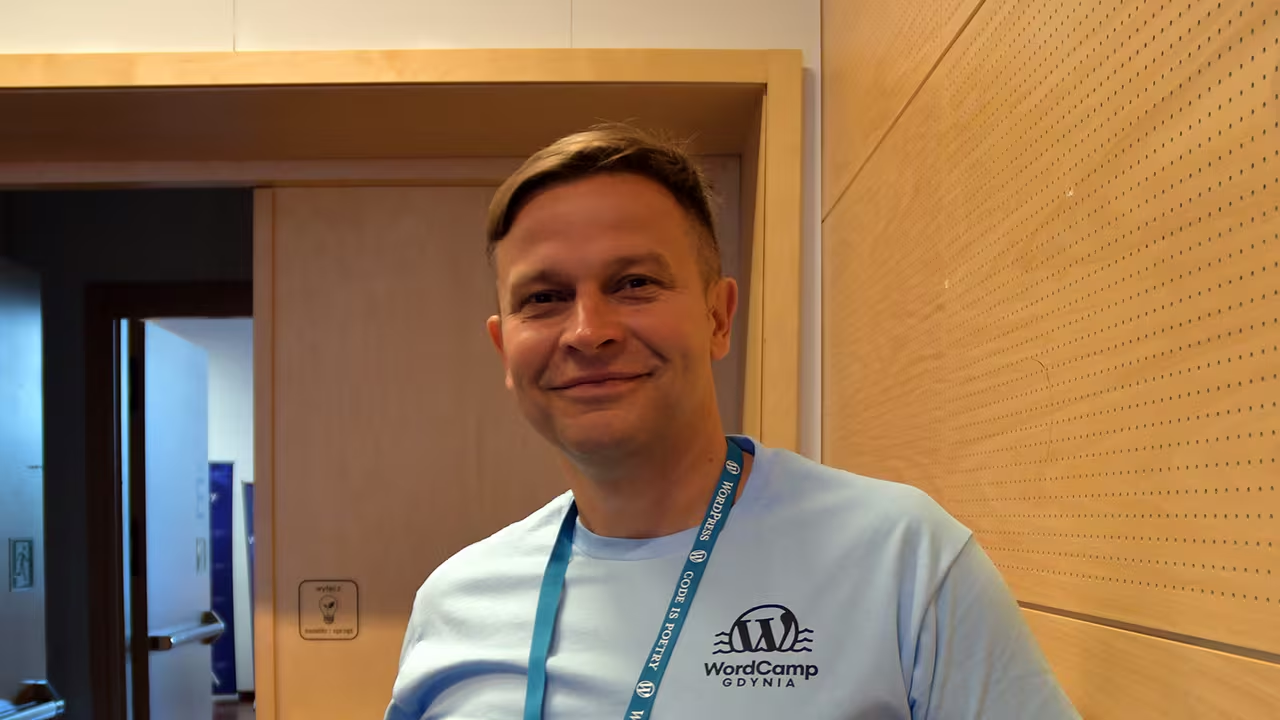
WordPress 7.0 with AI Client against Astro 7 with the Rust compiler and Vite 8. Speed, cost, SEO and security compared, plus the real bill for my own Astro 6 to 7 migration.