My place in the WordPress community
- I have had a wordpress.org account since 2006.
- I contributed to WordPress core for versions 7.0 and 7.1.
- I maintain 30 plugins on wordpress.org.
- I organise and speak at WordCamps.
- I have attended every WordCamp Europe from 2017 to 2026.
Edge development in the city that hosts the internet exchange
Frankfurt is an unusual place to talk about the edge, because the edge already lives there. DE-CIX Frankfurt is one of the largest internet exchange points in the world, and a great deal of European network traffic passes through the city. Banks, the European Central Bank, a large fair ground and an airport that handles freight from every continent add their own web presence on top of that. A Frankfurt company is rarely short of connectivity.
What it is often short of is a site that copes with its own audience. Messe Frankfurt runs fairs such as the Frankfurt Book Fair, and each one sends visitors to exhibitor pages, hall plans and ticket offers in a few concentrated days. A fintech announces a product and the press, the competition and the regulator open the same page within the same hour. A logistics firm publishes a status page that thousands of customers refresh when something goes wrong. These are mostly identical anonymous requests, and WordPress renders each one again.
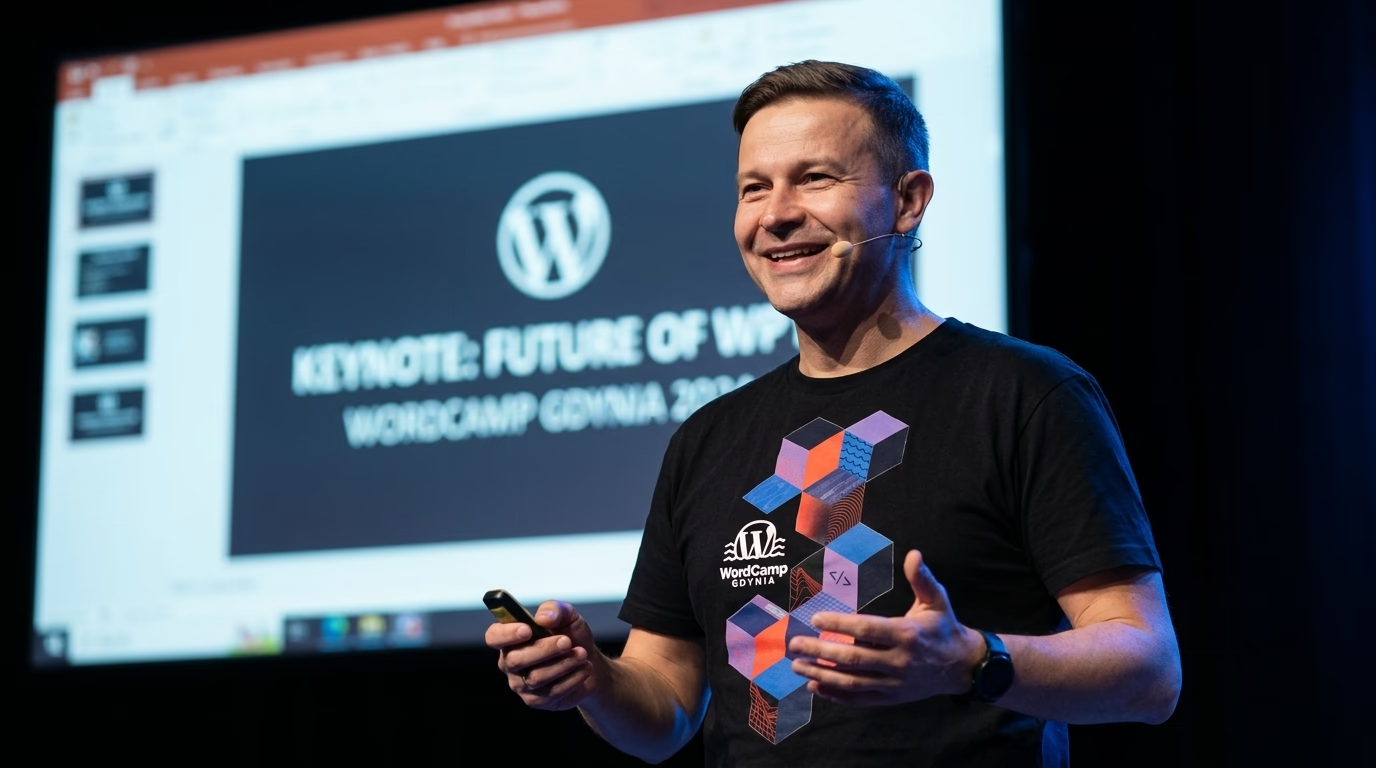
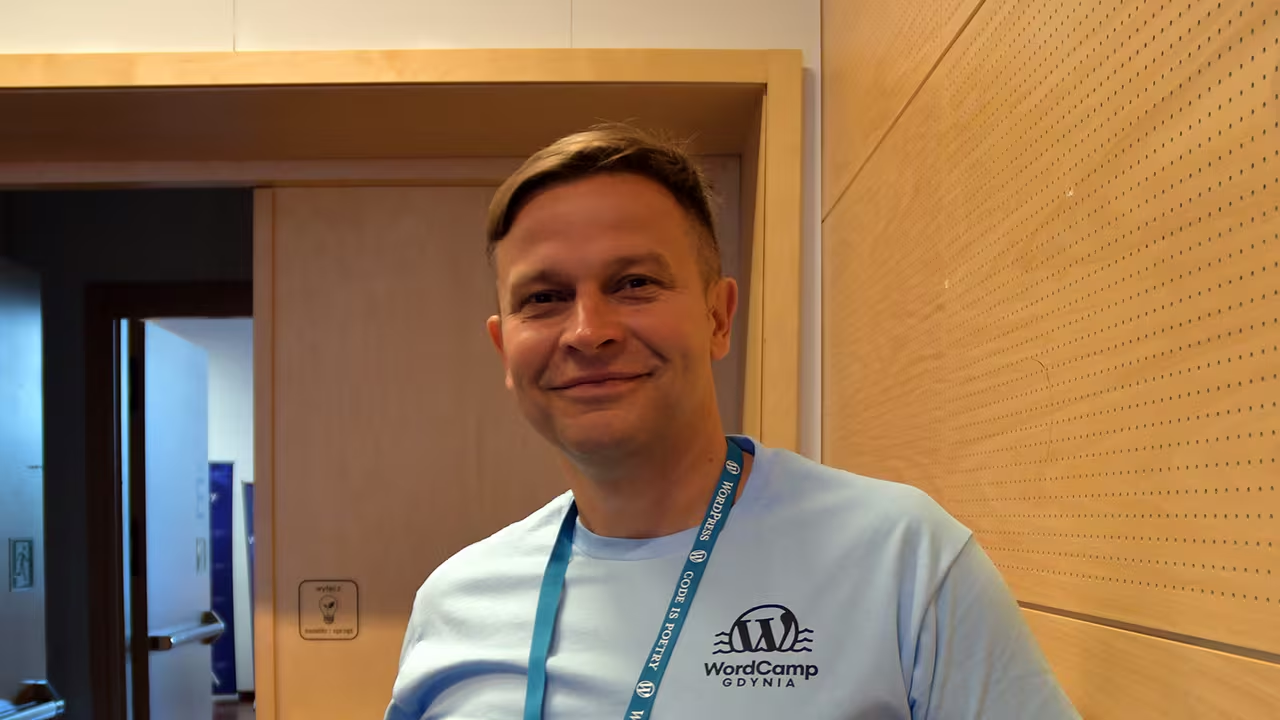
My name is Mariusz Szatkowski and WPPoland is my one-person company in Gdynia, building WordPress sites since 2006. I work for Frankfurt clients remotely and in writing. Frankfurt and Gdynia share the same time zone, so nothing needs shifting. Scope, schedule and contract go by email, and you review the work on a staging environment. I do not offer on-site meetings.
A Cloudflare Worker is code that runs on Cloudflare’s network close to the visitor. It starts in a V8 isolate, scales with traffic and needs no server to provision. Cloudflare’s public network page lists Frankfurt among its cities. I use Workers to put a layer in front of an existing WordPress or WooCommerce site, so the origin only handles the work that truly needs a CMS. My own platform, wppoland.com, runs in production on Cloudflare Pages with Workers middleware. The wider service description is on the Cloudflare edge development page; this page covers what it means for Frankfurt.
Does a Frankfurt location mean data stays in Germany?
This is the question I hear most from German companies, and the short answer is no, not by itself.
A Cloudflare location is a place where requests are answered. A visitor in Frankfurt is likely to be answered from the Frankfurt location, which is good for speed. But where a given request is processed depends on how traffic is routed and on the regional controls you configure. Where logs and analytics data end up depends on the contract and the plan. A location on a map is not a statement about any of these.
So I separate the questions.
Speed is the first. For a visitor in Frankfurt, an edge location in the same city is as close as it gets, and for an audience in Munich, Vienna or Warsaw it is a short hop. I measure the actual response times from live visitor sessions, and I trust those figures over synthetic tests.
Content is the second. Public pages contain nothing confidential, and caching them across the network raises no residency question. Most of a corporate site belongs here.
Data is the third. Request logs, IP addresses, cookies and submitted forms are personal data, and where they are processed is a matter for your contract and your data protection officer. If German-only processing is a hard requirement, it needs a specific review of which features and plan can satisfy it, and sometimes the review concludes that a global edge platform does not fit. That conclusion belongs in an audit report, not in a post-mortem.
What a Worker does in front of WordPress and WooCommerce
Watch an origin on the first morning of a fair. PHP workers saturate, the database connection pool empties, and the queue behind them is made up almost entirely of anonymous requests for the same few pages: the exhibitor directory, the hall plan, the programme and the ticket page. None of that needs a CMS to render again for each visitor.
WordPress or WooCommerce stays where it is as the origin, with its editors, plugins and checkout untouched, and a Worker takes over four jobs.
Caching complete HTML at the edge is the first. Anonymous visitors get the cached page. Logged-in editors, non-empty baskets and form submissions pass through to the origin, so a shop keeps its session logic and an editor sees changes within seconds. That split between what may be cached and what may not is where ordinary cache plugins most often fail.
Redirects are the second. Companies that have merged, rebranded or moved from an old system collect hundreds of old URLs that partners and press still link to. A Worker holds them in one versioned table and answers before the origin is involved.
Security headers are the third, kept in one place instead of scattered across the theme. Request filtering is the fourth and has its own section below.
If your Frankfurt site needs work before an edge layer makes sense, that is a separate engagement, described on the WordPress developer in Frankfurt page. For shops, the WooCommerce developer in Frankfurt page is the better starting point.
How to prepare a site for a fair or a product announcement
A page for a fair or an announcement has one useful property: many people read it for a short time, and it hardly changes in that time. I split such a page into three parts.
The stable part, such as descriptions, images, programme text and fixed prices, is served from the edge cache. I set cache rules so that a correction by the editorial team reaches the cache quickly and no old version lingers.
The live part, such as ticket availability or a registration form, is fetched separately and kept small. Visitors see the page immediately, and the origin answers a few light requests instead of building the whole page for everyone.
The third part is the list of third-party scripts. Fair and campaign pages tend to load analytics, chat, video and booking widgets. One slow script can stall the page for everyone, whatever the origin does. I check which scripts block rendering and defer the ones that do not need to run first.
Before a known peak I rehearse it. A load test against a staging copy shows where the origin breaks first. Often the weak point is not PHP but a slow query in a filter plugin or an image resized on demand. The fix in that case is a code change, not more infrastructure, and I report it that way, because the cheapest fix is the right one. And I plan the failure case: if a booking system behind the page is unavailable, a Worker can serve a clear static message with a contact address instead of a white page.
Bots, scrapers and credential stuffing
Financial, logistics and fair sites attract automated traffic for different reasons. Scrapers copy exhibitor lists and product data, aggregators pull prices, credential stuffing tools try stolen passwords against login pages, and AI crawlers read whole archives. The cost is not only load. Fake logins fill the log, scrapers distort analytics, and a shop with limited stock can see inventory held by scripts.
At the edge I classify requests before they reach the origin. Typical measures are rate limiting by request pattern, challenges for traffic that behaves like a script, and explicit rules for the crawlers you want, such as the major search engines. The rules are tuned from your own logs rather than from a generic list, because a blocklist that suits one business can block a partner’s legitimate integration at another.
I do not promise that no unwanted request gets through. Filtering reduces automated traffic, and I measure the effect before and after, so you can see whether it was worth the effort.
German consent and imprint rules for an edge layer
A German company that uses Cloudflare treats it as a processor under the General Data Protection Regulation. Article 28 requires a contract that sets out, among other things, the subject matter and duration of the processing. Cloudflare offers a data processing agreement and publishes its sub-processors, and your legal adviser should review them as with any supplier.
Germany adds national rules on top. Section 25 of the Telecommunications Digital Services Data Protection Act, known as the TDDDG, requires consent before information is stored on or read from a visitor’s device, with exceptions for what is strictly necessary. That is the rule behind the cookie banner. The Digital Services Act of Germany, the DDG, carries the imprint duty in section 5, which means every commercial site needs a complete, reachable legal notice. An edge layer changes neither. A Worker that caches a page must not make trackers load before consent, and it must never cache a state in which the imprint is missing.
I check consent in the browser, not in the plugin settings. A banner can show a choice while a tag manager fires analytics at once, and only a test of the loaded page tells the difference.
Supervision in Hesse sits with the Hessian Commissioner for Data Protection and Freedom of Information, based in Wiesbaden. Whether a configuration satisfies the transfer rules in Chapter V of the regulation is a question for your adviser. What I do is describe the data flows precisely: which requests, which cookies and which submitted data pass through which service. I deliver that as a short document your data protection officer can use in the records of processing.
When a Workers project is the wrong call
Take a locksmith in Bornheim with a six-page site, a phone number and steady local searches. An edge architecture would be waste. A good cache plugin, sized images and a clean theme deliver most of the benefit at a fraction of the effort, and the saved budget buys reviews and better local listings.
There is a second reason to decline. A Worker is software, and software needs maintenance. Several takeover projects I see begin as someone else’s orphaned Worker, undocumented and sitting in the request path of a company that has forgotten it. If a project cannot fund its upkeep, the responsible answer is not to build it.
What justifies the build is usually one of three conditions: traffic that arrives in bursts around fairs and announcements, an international audience, or persistent bot pressure on login, shop and directory pages. All three are measurable before any commitment. If none is present, the audit will say so, and a small invoice will have prevented a much larger one.
If your problem is a heavy front end rather than a slow origin, the fix may be a rebuild. For that path, see my Next.js and Astro migration service. I recommend sequencing: put the edge layer in front of the existing system first, measure, and only then decide whether a rebuild is worth paying for.
Is there a WordPress community in Frankfurt?
I did not verify a WordPress meetup or WordCamp in Frankfurt for this page, so I will not claim one. I organise the WordUp Trojmiasto meetup in Gdynia, a role I have held since 2015, and I was among the organisers of the first bilingual WordCamp in Poland in 2025, which you can check on the WordCamp Gdynia 2025 organisers page.
What to send in the first email
- the address of your site and the dates of the fairs, campaigns or announcements that drive traffic,
- the countries your visitors come from and the languages you publish in,
- access to your analytics or Search Console, and server logs if you can export them,
- who hosts the site and who administers the DNS,
- the routes that carry logins, baskets or forms,
- any contract or compliance requirement about where data may be processed.
If a point is missing, I will write back what is missing and what it means for scope and schedule.
How I work with Frankfurt clients
I work as a company, with a contract and an invoice. The process stays in writing:
- You send the first email with the points above.
- After I review your site and measurements, you receive a scope, a schedule and a contract.
- I build the pilot Worker on a staging environment, which you review and comment on in writing.
- After launch, documentation and access stay with you, and I check the effect against the measurements taken at the start.
Quotes are individual and depend on the scope of the edge logic. After the pilot, every stage is a checkpoint at which you can stop, keep the gains and the documentation, and owe nothing further. For ongoing care, there is WordPress maintenance and support in Frankfurt. You can send the first email through the contact page.
Selected projects
Examples of my work.
Real Estate Platform: zamki-szkocji.com
zamki-szkocji.com is a comprehensive information portal dedicated to the castles of Scotland, combining rich historical content, interactive maps, photo gall...
Scalac.io - Big Data and Business Scaling Solutions Platform
scalac.io is an international platform founded in 2014 to meet the challenges associated with big data management and business operations scaling, specializing in Scala, distributed systems, and cryptography solutions.
sprint.pl - WordPress Project | WPPoland
Sprint.pl is a website created for Sprint S.A., an Olsztyn-based company operating since 1988 as a systems integrator and provider of advanced software. The ...
WordPress support & development in Frankfurt am Main
See also in Germany
Need this service: Cloudflare Workers edge in Frankfurt am Main?
Describe your project by e-mail. I reply within 24 hours.
Describe your projectExplore other WordPress services and knowledge base
Custom WordPress engineering and architecture.
Scalable headless, ERP, and AI architecture for enterprise.
Stores, checkout flow, and sales logic.
Stability, updates, and post-launch support.
What the monthly care fee covers and what changes it.
Business process automation around WordPress and company systems.
Headless WordPress, Sanity, Strapi, and Contentful with Astro or Next.js.
Astro, MDX, edge delivery, and Core Web Vitals measured on real traffic.
Related categories
Supporting articles
How to start as a WordPress developer in 2026. Local environment, theme and plugin development, REST API and headless paths, security and Core Web Vitals. A practitioner playbook that does not waste your first month.

WordPress 7.0 with AI Client vs Astro 6 after Cloudflare acquisition. Speed, cost, SEO and security comparison. My take after 20 years as a WP developer - when to migrate and when to stay.
WordPress 7.0 with AI Client against Astro 7 with the Rust compiler and Vite 8. Speed, cost, SEO and security compared, plus the real bill for my own Astro 6 to 7 migration.