My place in the WordPress community
- I have had a wordpress.org account since 2006.
- I contributed to WordPress core for versions 7.0 and 7.1.
- I maintain 30 plugins on wordpress.org.
- I organise and speak at WordCamps.
- I have attended every WordCamp Europe from 2017 to 2026.
Edge development for organisations that publish in three languages
Munich is a city of publishers that do not call themselves publishers. Trade associations post position papers, consultancies release studies, agencies announce calls for proposals, think tanks put out briefings, and event organisers open registration. Most of them run WordPress, most of them publish in Germany and English, and many of them see their traffic arrive in a pattern that a plain hosting plan was never sized for.
The pattern is the deadline. A public consultation on the European Commission’s Have Your Say portal runs for a fixed feedback period, and organisations that want to be read by the people drafting a response publish their analysis shortly before it closes. A funding call closes on a date, and the programme page is opened by hundreds of applicants in the last days. A conference opens registration at ten in the morning. In each case the visitors are looking at a handful of identical documents, and the origin server renders each one again for every visitor.
My name is Mariusz Szatkowski and WPPoland is my one-person company in Gdynia, building WordPress sites since 2006. I work for Munich clients remotely and in writing. Munich and Gdynia share the same time zone, so nothing needs shifting: a message sent in the morning is answered the same working day. Scope, schedule and contract go by email, and you review the work on a staging environment. I do not offer on-site meetings, and an edge project does not need them.
A Cloudflare Worker is code that runs on Cloudflare’s network close to the visitor. It starts in a V8 isolate, scales with traffic and needs no server to provision. Visitors in Munich are usually served from nearby European points of presence such as Munich, Frankfurt or Amsterdam. I use Workers to put a layer in front of an existing WordPress site, so the origin only handles the work that truly needs a CMS. My own platform, wppoland.com, runs in production on Cloudflare Pages with Workers middleware, which is where I learned which parts of this work are routine and which are not. The wider service description is on the Cloudflare edge development page; this page covers what it means for Munich.
What a Worker does in front of WordPress
Watch an origin during a deadline rush. PHP workers saturate, the database connection pool empties, and the queue behind them is made up almost entirely of anonymous requests for the same five pages: the call text, the eligibility rules, the submission form, the FAQ and the contact page. None of that needs WordPress to build the page again for each visitor.
WordPress is good at editorial work and structured content. It is poor at absorbing thousands of identical requests a minute or telling a scraper from an applicant. So it stays where it is as the origin, with its editors and plugins untouched, and a Worker takes over four jobs.
Caching complete HTML at the edge is the first. The decision is precise: anonymous visitors get the cached document, while logged-in editors, preview links and form submissions pass through to the origin. That split is what ordinary cache plugins often get wrong, and it is why an editor can publish a correction and see it live within seconds.
Redirects are the second. Associations rename programmes, merge committees and change their site structure every few years, and the old URLs are cited in papers, in press releases and in other organisations’ footnotes. A Worker holds those rules in one versioned table and answers before the origin is involved.
Security headers are the third, kept in one place instead of scattered across theme files and plugins. Request filtering is the fourth and has its own section below.
If your Munich website needs work before an edge layer makes sense, that is a separate engagement, described on the WordPress developer in Munich page. For shops and paid event registration, the WooCommerce developer in Munich page is the better starting point.
How to serve Germany and English from one site
Munich is an trade-fair city with a strong agency and industrial sector with a large international community. Organisations based there often need Germany for local readers and English for international partners. That usually means separate URLs for each language, not a single page that flips by cookie.
That creates a routing question. Which version does a first-time visitor see? A Worker can read the browser’s language preference, send the visitor to the matching version and store the choice so the visitor is not redirected again. Three rules stay fixed.
First, every version keeps its own URL and its own hreflang annotation, so a search engine can index the Germany page as Germany and the English page as English. A site that switches language on one URL by cookie gives search engines a single page with unstable content.
Second, the redirect never applies to crawlers, and never to a visitor who followed a link to a specific language. Someone who clicks a Germany link in a newsletter should land on the Germany page even when the browser prefers English.
Third, language is not chosen by IP address. An English-speaking manager in Munich wants English, and a German buyer abroad wants German. Browser preference is a better signal, and a language switcher stays visible on every page so the visitor can overrule the guess.
The wording is a separate job. A Germany page written for a Munich association is not a literal translation of its English sibling, because the institutions and the audience differ. I handle the technical side, including making sure each language version has a complete sibling in the others, and leave the text to someone who knows the field.
What happens to your site when a consultation or call closes
A deadline page has a specific shape. Most of what visitors see does not change from one minute to the next: the call text, the criteria, the annexes. A small part does: a counter of submissions, a banner announcing an extension, a form that must accept an upload.
I split such a page into the stable part and the live part. The stable part is cached at the edge. The live part is fetched separately and kept small, so the origin answers a few light requests instead of rendering the entire page for everyone. Downloads such as PDF annexes are served from the cache too, which matters more than it sounds: a popular annex is often the largest single load on a small hosting plan.
Before a known deadline I rehearse the rush. A load test against a staging copy shows where the origin breaks first, and that is where the edge layer earns its place. Often the weak point is not PHP at all but one slow query in a plugin or an upload handler that holds a connection open. The fix in that case is a code change, not more infrastructure, and I report it that way, because the cheapest fix is the right one.
I also plan for the failure case. If the submission system behind the page is unavailable, a Worker can serve a clear static message with a contact address instead of a white page. For an organisation whose entire week depends on a closing date, a polite message that names the next step is worth having ready.
Crawlers and scrapers on policy and research pages
Position papers and studies draw automated traffic. Search engines are welcome. Alongside them come monitoring services that copy every new publication, scrapers that feed aggregators, and an increasing number of AI crawlers that read a whole archive page by page. For an association with a modest hosting plan, a determined crawler can use more origin capacity than its members do.
At the edge I classify requests before they reach WordPress. Typical measures are rate limiting by request pattern, challenges for traffic that behaves like a script, and explicit rules for crawlers you want, such as the major search engines, so that a firm rule against abusive traffic does not catch them. The rules are tuned from your own server logs rather than from a generic list. A blocklist that suits a retailer can block a partner organisation that syndicates your publications.
Whether AI crawlers should be allowed is a decision for the organisation, not for me. Some associations want their briefings read everywhere. Others prefer to restrict reuse. I implement either choice and measure the load before and after, so the decision rests on numbers. I do not promise that no unwanted request gets through. Filtering reduces automated traffic, and the measurement shows whether it was worth the effort.
GDPR and data flows at the edge
An organisation in Germany that uses Cloudflare treats it as a processor under the General Data Protection Regulation. Article 28 requires a contract that sets out, among other things, the subject matter and the duration of the processing. Cloudflare offers a data processing agreement and publishes its sub-processors, and your legal adviser should review them as with any supplier.
My part is technical. I design Workers so the edge layer touches as little personal data as possible. A caching Worker that serves anonymous pages needs no personal data at all. A Worker that reads cookies to separate logged-in editors from visitors processes identifiers, and I document that. A Worker that sits in front of a registration form sees the submitted data in transit, and I document that as well. I deliver a short description of the data flows, which your data protection officer can drop into the records of processing.
Transfers outside the European Economic Area fall under Chapter V of the same regulation, starting with Article 44. Whether a given configuration satisfies it is a legal question for your adviser. I can tell you precisely which requests and which data pass through which service, and I can tell you where Cloudflare’s regional controls help and where they do not.
Germany has its own supervisory body, the Data Protection Authority, which publishes guidance in German and English. Cookies and similar trackers fall under Article 5(3) of the ePrivacy Directive, which requires consent before analytics and marketing scripts run on a visitor’s device, and Germany implements it in national electronic communications law. I did not retrieve the national article for this page, so ask your adviser for the exact reference. What I do is technical: I check in the browser that scripts do not load before consent, because a plugin setting can say one thing while the page does another.
When a Workers project is the wrong call
Take a professional association in Ixelles with a site of thirty pages, a newsletter, and a few thousand visits a month spread evenly across the week. An edge architecture would be waste there. A good cache plugin, an image optimisation step and a tidy theme deliver most of the benefit at a fraction of the effort, and the saved budget buys something that brings members or applicants.
There is a second reason to decline. A Worker is software, and software needs maintenance. Several takeover projects I see begin as someone else’s orphaned Worker, undocumented and sitting in the request path of an organisation that has forgotten it. If a project cannot fund its upkeep, the responsible answer is not to build it.
What justifies the build is usually one of three conditions: traffic that arrives in bursts around deadlines and events, a multilingual site whose language routing and redirects have become fragile, or persistent crawler pressure on the origin. All three are measurable before any commitment. If none is present, the audit will say so, and a small invoice will have prevented a much larger one.
If your problem is a heavy front end rather than a slow origin, the fix may be a rebuild. For that path, see my Next.js and Astro migration service. I recommend sequencing: put the edge layer in front of the existing system first, measure, and only then decide whether a rebuild is worth paying for.
Is there a WordPress community in Munich?
I did not verify a WordPress meetup or WordCamp in Munich for this page, so I will not claim one. I organise the WordUp Trojmiasto meetup in Gdynia, a role I have held since 2015, and I was among the organisers of the first bilingual WordCamp in Poland in 2025, which you can check on the WordCamp Gdynia 2025 organisers page.
What to send in the first email
- the address of your site and a description of the busiest days and pages,
- the languages you publish in and how visitors currently reach each version,
- access to your analytics or Search Console, and server logs if you can export them,
- the next fixed date by which the site must cope with a rush, and what is at stake,
- who hosts the site and who administers the DNS,
- any contract or compliance requirement about where data may be processed.
If a point is missing, I will write back what is missing and what it means for scope and schedule.
How I work with Munich clients
I work as a company, with a contract and an invoice. The process stays in writing:
- You send the first email with the points above.
- After I review your site and measurements, you receive a scope, a schedule and a contract.
- I build the pilot Worker on a staging environment, which you review and comment on in writing.
- After launch, documentation and access stay with you, and I check the effect against the measurements taken at the start.
Quotes are individual and depend on the scope of the edge logic. After the pilot, every stage is a checkpoint at which you can stop, keep the gains and the documentation, and owe nothing further. For ongoing care, there is WordPress maintenance and support in Munich. You can send the first email through the contact page.
Selected projects
Examples of my work.
abovio.pl, Electronics Distribution with Extensive Product Catalog
Abovio.pl is an advanced online store project in my WordPress developer portfolio, created as an electronics distribution platform for both companies and ind...
Airhelp - WordPress Project | WPPoland
AirHelp was founded in 2013 as a start-up and has grown to become the global leader in defending air passenger rights, helping over 13 million people underst...
alextg.pl - WordPress Project | WPPoland
alextg.pl is a WordPress website for a company that helps customers obtain financing. The project focused on clear service presentation, contact flow and stable technical upkeep...
See also in Germany
Need this service: Cloudflare Workers edge in Munich?
Describe your project by e-mail. I reply within 24 hours.
Describe your projectExplore other WordPress services and knowledge base
Custom WordPress engineering and architecture.
Scalable headless, ERP, and AI architecture for enterprise.
Stores, checkout flow, and sales logic.
Stability, updates, and post-launch support.
What the monthly care fee covers and what changes it.
Business process automation around WordPress and company systems.
Headless WordPress, Sanity, Strapi, and Contentful with Astro or Next.js.
Astro, MDX, edge delivery, and Core Web Vitals measured on real traffic.
Related categories
Supporting articles
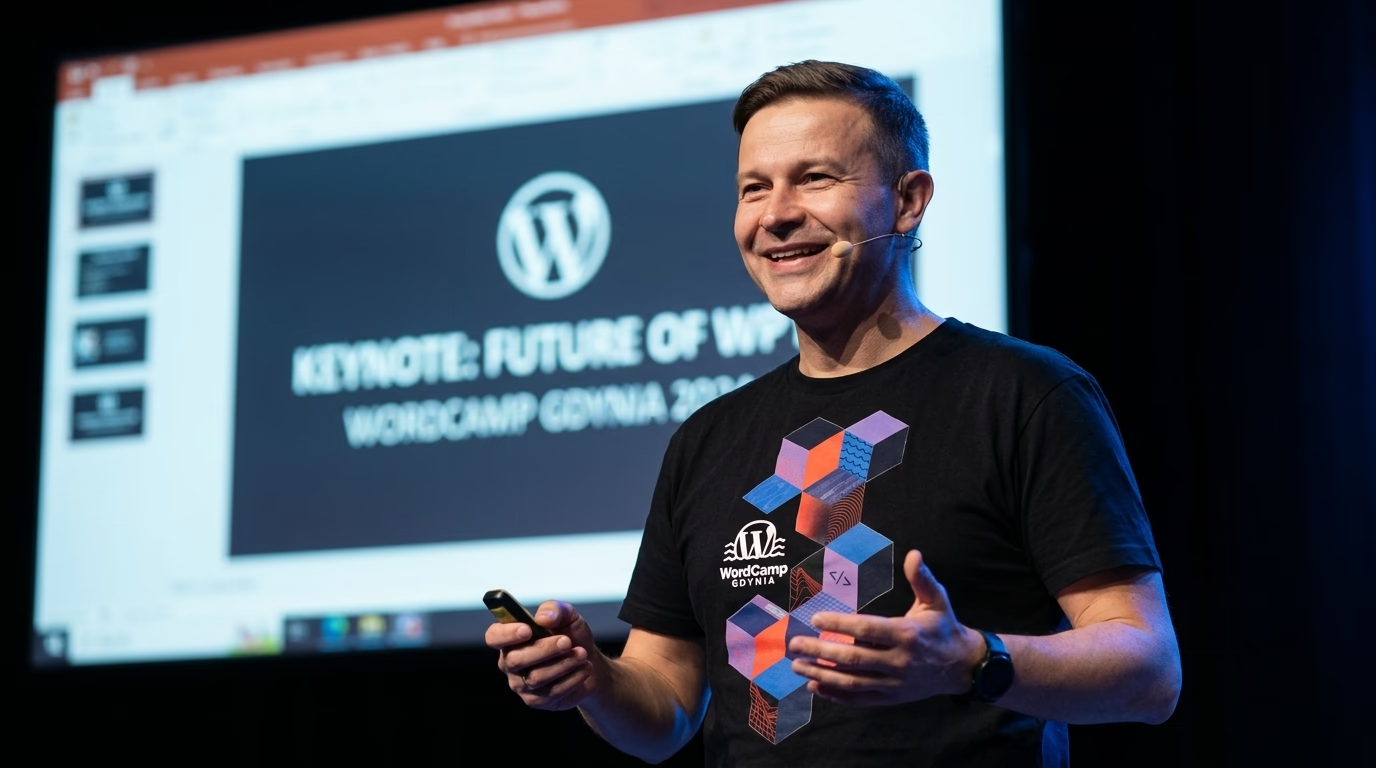
How to start as a WordPress developer in 2026. Local environment, theme and plugin development, REST API and headless paths, security and Core Web Vitals. A practitioner playbook that does not waste your first month.

WordPress 7.0 with AI Client vs Astro 6 after Cloudflare acquisition. Speed, cost, SEO and security comparison. My take after 20 years as a WP developer - when to migrate and when to stay.
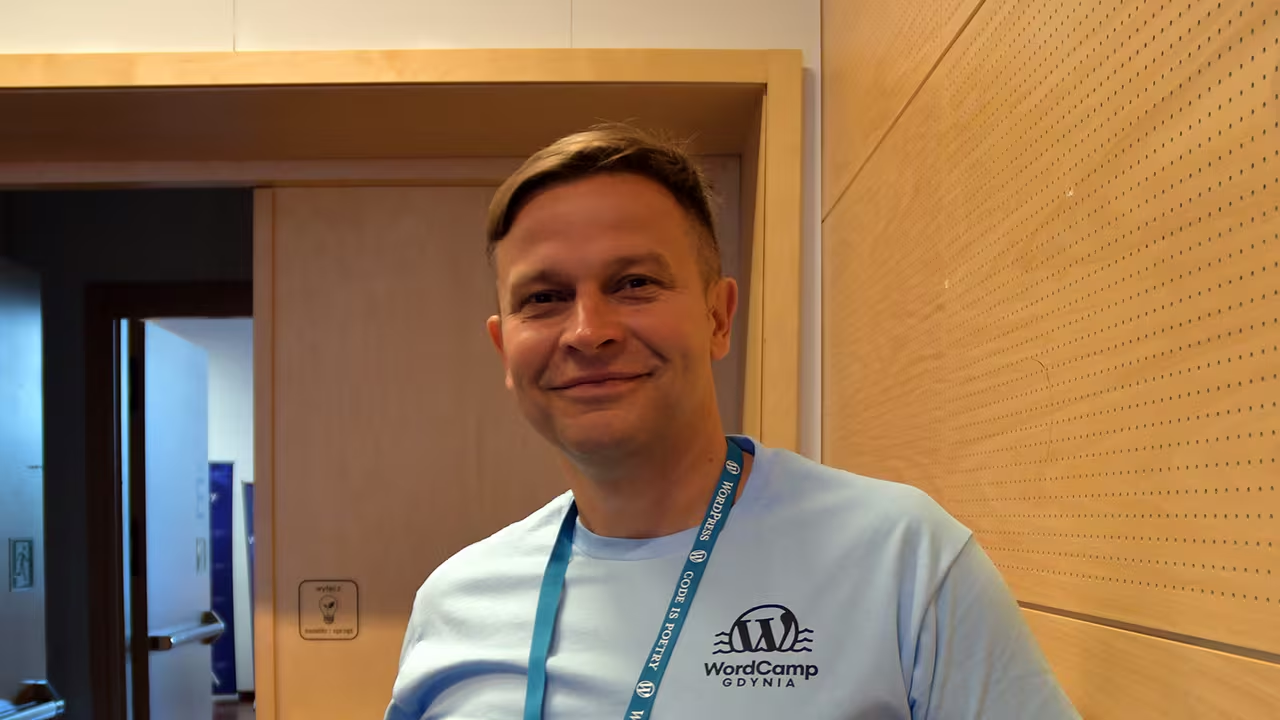
WordPress 7.0 with AI Client against Astro 7 with the Rust compiler and Vite 8. Speed, cost, SEO and security compared, plus the real bill for my own Astro 6 to 7 migration.