My place in the WordPress community
- I have had a wordpress.org account since 2006.
- I contributed to WordPress core for versions 7.0 and 7.1.
- I maintain 30 plugins on wordpress.org.
- I organise and speak at WordCamps.
- I have attended every WordCamp Europe from 2017 to 2026.
Who needs Cloudflare Workers in Timisoara?
Timisoara has a large number of software houses, design studios and agencies that build websites for clients in Romania and abroad. It also has online shops and local companies that sell to Romanian customers, and a university and technical culture that produces people who can read a Worker script as easily as I can. That mix shapes who needs edge work and in what form.
For a shop or a company with its own site, the case is the usual one: a WordPress or WooCommerce origin that struggles under bursts or automated load, and a team that would rather not run infrastructure. For an agency, the case is different. The agency has clients with exactly those problems, and its developers know the front end but may not want to own a layer of edge code for every client forever.
A Cloudflare Worker is code that runs on Cloudflare’s network near the visitor. It starts in a V8 isolate and scales without a server of your own. In front of a WordPress site it serves anonymous pages from the edge, routes requests and filters automated traffic, so the origin handles only what needs a CMS.
My name is Mariusz Szatkowski and WPPoland is my one-person company in Gdynia, active since 2006. I work for Timisoara clients remotely and in writing. Timisoara is one hour ahead of Gdynia, so most of the working day is shared and there is no need to change schedules. Scope, schedule and contract go by email, and you review the work on a staging environment. I do not offer on-site meetings. The general description of the service is on the Cloudflare edge development page; this page covers what it means for Timisoara.
Can an agency subcontract edge work?
Yes, and for some studios it is the sensible model. You keep the client relationship, the design and the application work. I build and document the Workers layer under your project, and you present it as part of your delivery.
The terms are simple. The contract is between your company and mine, with a defined scope and a staged plan. Everything I build lives in a repository you can access, with documentation written for your developers, not for me. Deployment uses the same pipeline pattern for every client, so the second project is faster than the first and the knowledge stays in your team.
What I avoid is a hidden dependency. If a client’s site depends on a Worker that only one person understands, the client has a risk it did not choose. I therefore hand over each project with a description of what the Worker does, how to deploy it, how to roll it back and what to check when it misbehaves. After handover, your developers should be able to change a cache rule without calling me.
I do not take over the client relationship, and I do not contact your client unless you ask me to in writing. My work for your client is visible in the repository and the invoice, not in the marketing.
If your studio needs help with the WordPress foundation, a headless front end or an Astro build, those are separate engagements. For a front-end rebuild, see my Astro developer in Timisoara page.
How do Romanian diacritics break search and caching?
This is a detail I find in a surprising number of Romanian sites, and it is the kind of problem an edge layer can fix cheaply.
Romanian uses the letters s and t with a comma below. For historical reasons, many fonts, keyboards and older software used s and t with a cedilla instead, which look almost identical but are different characters. Unicode has both. Text typed on one system and searched on another therefore often fails to match, because the characters differ even though the words look the same. The name of the city itself contains such a letter.
On a WordPress site the effects are concrete:
- an internal search for a word typed one way misses products entered the other way,
- a URL with an encoded character and the same URL with the other character become two addresses,
- the cache stores two copies of what should be one page,
- analytics records two search terms that are the same word.
A Worker can normalise the forms in the query string and in search requests before the origin or the cache sees them. It can also redirect an address containing the wrong form to the correct one with a permanent redirect, so search engines consolidate on one version. The product data itself should be corrected at the source, and I will tell you how many records contain the older form, but the edge rule protects you while the cleanup is under way and catches new data that arrives from suppliers’ feeds.
Slugs are a related decision. Many Romanian sites use plain letters in URLs, dropping the diacritics, which is simple and robust. I do not change slugs on a live site without a redirect map, because every changed address is a ranking risk.
What does a Romanian checkout need from the cache?
A Romanian online shop commonly offers more than one way to pay. Card payments go through a provider’s page and return to the shop with a result. Many customers still prefer to pay on delivery, and the shop must record and confirm that kind of order without any payment callback at all.
Both paths must survive an edge layer. The rules I apply are the same as in every shop project:
- cart, checkout, account and order routes are never cached,
- payment return and callback addresses go straight to the origin and are never rewritten, challenged or throttled in a way that drops a legitimate callback from a provider,
- the cart cookie switches caching off for that visitor from the first item added,
- product and category pages are cached for anonymous visitors, with short lifetimes or purge on stock changes.
I test one full order for each method on a staging copy: add to basket, choose the payment method, complete or return, confirmation email, stock decrement. Then I repeat the test with the cache warm. The second test matters more, because it matches what your customers meet.
Courier integrations are a further source of surprises. Shops that print labels or query a courier’s API from the checkout depend on requests that must not be cached or filtered. I list these integrations in the audit and exclude them explicitly.
I do not choose payment providers, and I do not advise on their contracts. The commerce foundation of the shop itself is a separate project.
What did the 2023 Capital of Culture year change for web traffic?
Timisoara held the title of European Capital of Culture in 2023, shared that year with Veszprem in Hungary and Elefsina in Greece. For anyone who runs a site for a venue, a festival, a hotel or a cultural organisation, that year showed a pattern that many local sites know: traffic follows the programme. Announcements, ticket releases and event days bring bursts, and between them the site is quiet.
I will not quote visitor figures for the programme, because I have not found an audited public count for the web audience, and I prefer to leave a number out than to repeat a guess. The point is structural. Cultural and event sites in any city have traffic that arrives in the same few minutes: the minute tickets open, the day a lineup is announced, the hour after a social media post.
For such sites the edge layer does three things. It serves the programme and information pages from the cache, so a burst of identical requests is answered at the edge. It keeps ticketing and booking routes at the origin or at the ticketing provider, with a clear static message if that system is unavailable. And it filters bots that try to grab inventory or scrape the programme.
Rehearsal is part of the work. Before a big announcement I run a load test against a staging copy, and the first weak point is rarely where people expect. Often it is a single slow query on a listing page, and the fix is a query change, not more infrastructure. I report that honestly, because the cheapest fix is the right one.
Which data rules apply in Romania?
The General Data Protection Regulation applies in Romania, and the national supervisory authority is the National Supervisory Authority for Personal Data Processing, in Romanian ANSPDCP. Rules on cookies and similar technologies come from the national implementation of the ePrivacy directive. For the exact provisions, your legal adviser is the right source.
A company that uses Cloudflare treats it as a processor. Article 28 requires a contract covering, among other things, the subject matter and duration of the processing. Cloudflare offers a data processing agreement and publishes its sub-processors, and your adviser should review them like any other.
My part is technical. A caching Worker serving anonymous pages needs no personal data. A Worker that reads cookies to separate logged-in users processes identifiers, and I document that. I deliver a short data flow description for your records of processing. Transfers outside the EEA fall under Chapter V, starting with Article 44, and whether a given setup satisfies it is a legal question. I can state exactly which requests and which data pass through which service.
I also check consent behaviour in a clean browser: decline the banner and read the network log. If analytics or advertising requests still go out, the plugin setting has a gap that the banner hides.
When is a Workers project the wrong call?
Take a small local company with a six-page site, steady traffic and a contact form. An edge architecture would be waste. A good cache plugin, optimised images and a tidy theme deliver most of the benefit at a fraction of the effort.
There is a second reason to decline. A Worker is software, and software needs maintenance. Several takeover projects I see begin as someone else’s orphaned Worker, undocumented and sitting in the request path of a business that has forgotten it. If a project cannot fund its upkeep, the responsible answer is not to build it.
What justifies the build is usually one of two conditions: bursts of traffic, from announcements, campaigns or sales, or persistent automated pressure on listings and login pages. Both are measurable before any commitment. If neither is present, the audit will say so, and a small invoice will have prevented a much larger one.
Is there a WordPress community in Timisoara?
I did not verify a WordPress meetup or WordCamp in Timisoara for this page, so I will not claim one. I organise the WordUp Trojmiasto meetup in Gdynia, a role I have held since 2015, and I was among the organisers of the first bilingual WordCamp in Poland in 2025, which you can check on the WordCamp Gdynia 2025 organisers page.
What should you send in the first email?
- the address of your site and a description of its busiest days and pages,
- access to your analytics or Search Console, and server logs if you can export them,
- the payment methods and courier integrations in use,
- the languages you serve, and whether product data comes from supplier feeds,
- any contract or compliance requirement about where data may be processed,
- the date by which something must work, and the reason for that date.
If you are an agency, add the number of client sites that might need the same layer. If a point is missing, I will write back what is missing and what it means for scope and schedule.
How do I work with Timisoara clients?
I work as a company, with a contract and an invoice. The process stays in writing:
- You send the first email with the points above.
- After I review the site and measurements, you receive a scope, a schedule and a contract.
- I build the pilot Worker on a staging environment, which you review and comment on in writing.
- After launch, documentation and access stay with you, and I compare the effect with the measurements taken at the start.
Quotes are individual and depend on the scope of the edge logic. After the pilot, every stage is a checkpoint at which you can stop, keep the gains and the documentation, and owe nothing further. You can send the first email through the contact page.
Selected projects
Examples of my work.
funderwear.pt - Premium Underwear E-commerce Platform
Funderwear.pt is a WooCommerce online store that meets the needs of even the most demanding customers looking for unique gifts or wanting to treat themselves to premium, fun-designed underwear.
Healthcare Website: fermentum-mobile.pl
The website fermentum-mobile.pl is a dedicated platform created for fermentation enthusiasts who wish to explore traditional processing methods and discover ...
High Quality Artificial Plants - sztuczne-rosliny.pl E-commerce Platform
The sztuczne-rosliny.pl website is a modern e-commerce platform for a company specializing in the import and distribution of high-quality artificial plants in Poland.
WordPress support & development in Timișoara
Need this service: Cloudflare Workers edge in Timișoara?
Describe your project by e-mail. I reply within 24 hours.
Describe your projectExplore other WordPress services and knowledge base
Custom WordPress engineering and architecture.
Scalable headless, ERP, and AI architecture for enterprise.
Stores, checkout flow, and sales logic.
Stability, updates, and post-launch support.
What the monthly care fee covers and what changes it.
Business process automation around WordPress and company systems.
Headless WordPress, Sanity, Strapi, and Contentful with Astro or Next.js.
Astro, MDX, edge delivery, and Core Web Vitals measured on real traffic.
Related categories
Supporting articles
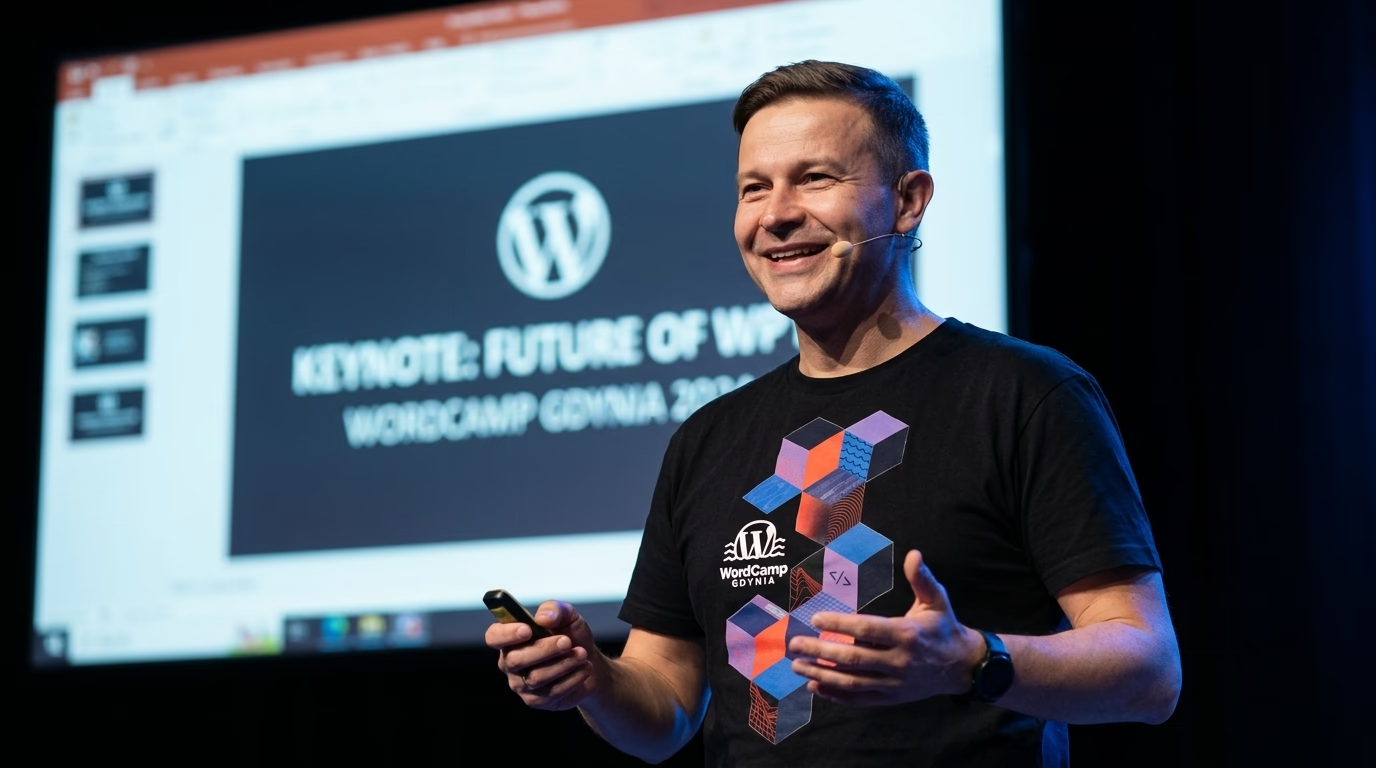
How to start as a WordPress developer in 2026. Local environment, theme and plugin development, REST API and headless paths, security and Core Web Vitals. A practitioner playbook that does not waste your first month.

WordPress 7.0 with AI Client vs Astro 6 after Cloudflare acquisition. Speed, cost, SEO and security comparison. My take after 20 years as a WP developer - when to migrate and when to stay.
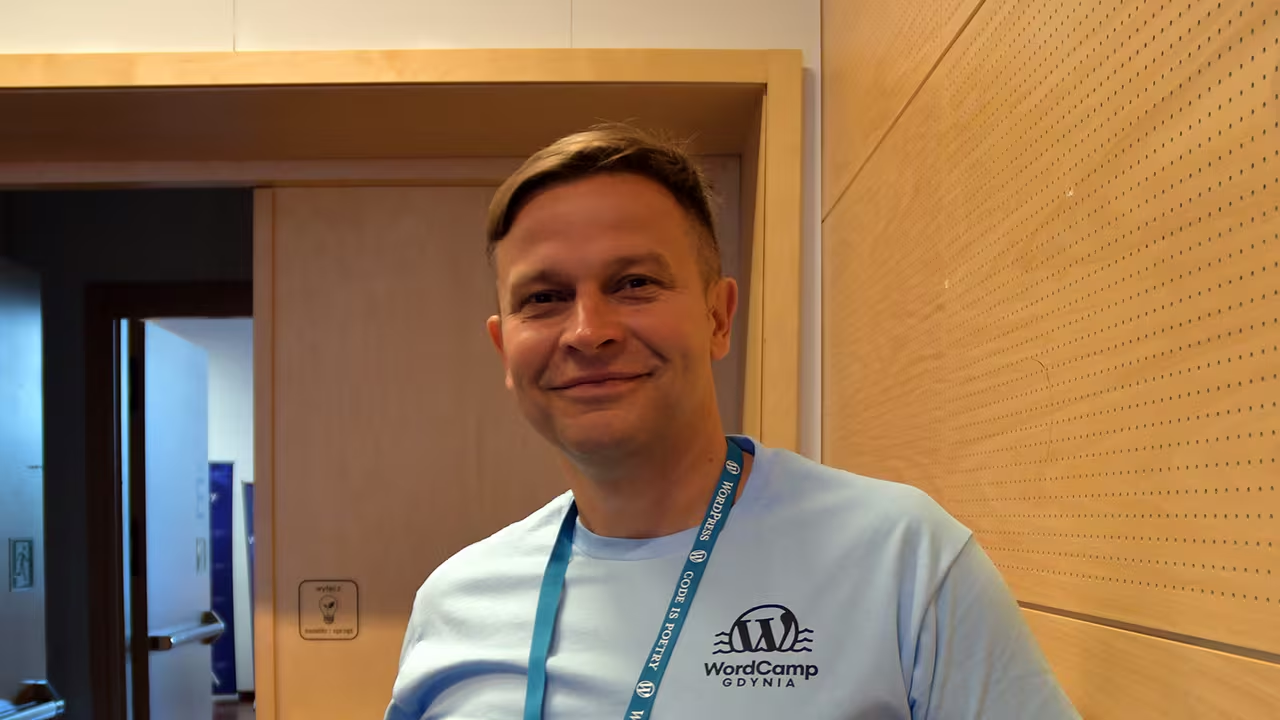
WordPress 7.0 with AI Client against Astro 7 with the Rust compiler and Vite 8. Speed, cost, SEO and security compared, plus the real bill for my own Astro 6 to 7 migration.