My place in the WordPress community
- I have had a wordpress.org account since 2006.
- I contributed to WordPress core for versions 7.0 and 7.1.
- I maintain 30 plugins on wordpress.org.
- I organise and speak at WordCamps.
- I have attended every WordCamp Europe from 2017 to 2026.
- Local WordPress meetup: WordPress Zürich
Edge development for a city with strict clients
Zurich is where banks, insurers, reinsurers, pharmaceutical groups and a large technology cluster keep their headquarters or their European offices. Their websites differ from a typical business site in one respect: the people responsible for them are asked questions about where data goes. A marketing director in Zurich who proposes a new service is likely to hear from compliance before hearing from anyone else.
That shapes how I approach edge work here. Speed is the visible benefit of an edge layer, and I measure it. The harder part in Zurich is explaining precisely which data an edge layer touches, which regulation applies, and what can and cannot be promised about residency. I would rather give a clear answer to that question than a smooth one.
The usual load problems exist as well. A bank publishes a result and the investor relations page is opened by thousands of people in one minute. A recruiting campaign for graduates sends traffic to one careers page. A fund publishes a monthly document that is downloaded again and again. These are mostly identical anonymous requests for the same documents, and WordPress renders them anew each time.
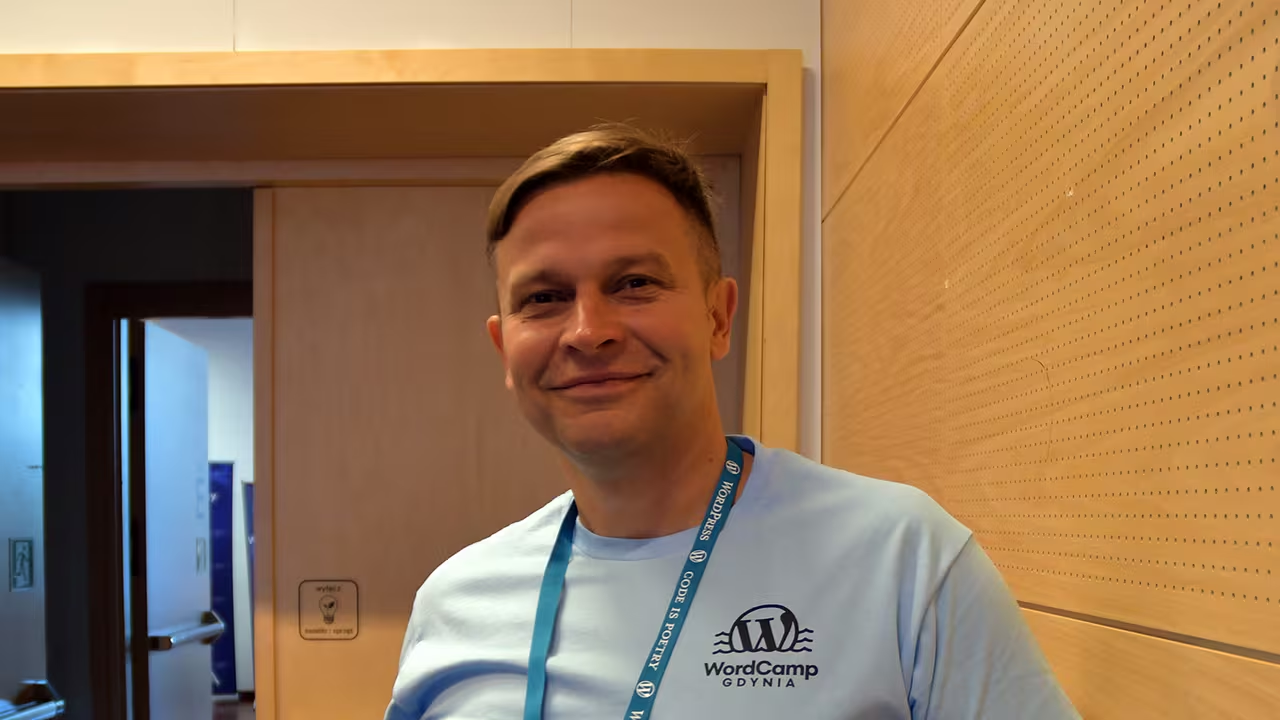
My name is Mariusz Szatkowski and WPPoland is my one-person company in Gdynia, building WordPress sites since 2006. I work for Zurich clients remotely and in writing. Zurich and Gdynia share the same time zone, so nothing needs shifting. Scope, schedule and contract go by email, and you review the work on a staging environment. I do not offer on-site meetings.
A Cloudflare Worker is code that runs on Cloudflare’s network close to the visitor. It starts in a V8 isolate, scales with traffic and needs no server to provision. Cloudflare’s public network page lists Zurich among its cities, so a visitor in Zurich is served from nearby. My own platform, wppoland.com, runs in production on Cloudflare Pages with Workers middleware. The wider service description is on the Cloudflare edge development page; this page covers what it means for Zurich.
What a Worker does in front of a corporate WordPress site
Watch an origin when a results announcement goes live. PHP workers saturate, the database connection pool empties, and the queue behind them is made up almost entirely of anonymous requests for the same pages: the press release, the investor page, the downloadable report. None of that needs WordPress to build the page again for each visitor.
WordPress stays as the origin, with its editors, approval workflow and plugins untouched, and a Worker takes over four jobs.
Caching complete HTML at the edge is the first. Anonymous visitors get the cached page. Logged-in editors, preview links and form submissions pass through to the origin, so a correction approved by legal appears within seconds.
Redirects are the second. Large organisations rename divisions, merge brands and restructure their sites, and the old URLs live on in press archives, regulatory filings and other people’s footnotes. A Worker holds the rules in one versioned table and answers before the origin is involved.
Security headers are the third, kept in one place instead of scattered across the theme. Request filtering is the fourth and has its own section below.
If your Zurich site needs work before an edge layer makes sense, that is a separate engagement, described on the WordPress developer in Zurich page. For shops and paid registrations, the WooCommerce developer in Zurich page is the better starting point.
What does Swiss data protection law mean for a Worker?
Switzerland is not a member of the European Union, and it has its own data protection law. The revised Federal Act on Data Protection has applied since 1 September 2023, and the Federal Data Protection and Information Commissioner supervises it. I am not a Swiss lawyer, and I do not give legal advice. What I can do is describe the technical facts a lawyer needs.
A caching Worker that serves anonymous pages needs no personal data to do its job. A Worker that reads cookies to tell an editor from a visitor processes identifiers. A Worker that sits in front of a contact or application form sees the submitted data while it passes through. Request logs hold IP addresses. I write these facts down per Worker, in a short document, so that your adviser can judge each of them against the Swiss act and record it.
Two further points come up in Zurich projects. The first is that Swiss companies that offer services to people in the EU may also fall under the General Data Protection Regulation, which applies to some processing outside the Union. The second runs the other way: the EU has recognised Switzerland as providing an adequate level of protection, so personal data can generally flow from the EU to Switzerland without extra transfer tools. Your adviser decides which regime applies to which processing.
On cookies, the Swiss Telecommunications Act requires that users are informed about the use of cookies and told how to refuse them. I did not retrieve the article text for this page, so ask your adviser for the exact provision. What I do is technical: I check in the browser that scripts do not load when the visitor has declined them, because a plugin setting can say one thing while the page does another.
Can data stay in Switzerland when you use an edge network?
The honest answer is that it depends on what you mean by data, and a global edge platform is not built for strict national containment. Cloudflare offers regional controls for where traffic is processed, and these are defined around regions rather than around every country. A requirement for strictly Swiss processing needs a specific review: which features, which plan tier, and what architecture can satisfy it.
I separate three cases.
The first is public content. A press release, a product page or a report that the company publishes for everyone contains no confidential data, and caching it worldwide raises no residency question. Most of a corporate site belongs here.
The second is traffic metadata. Request logs and IP addresses pass through the network, and whether that is acceptable depends on your policy and on the contract. This is the case that needs your adviser.
The third is confidential or regulated data, such as client portals, application documents and anything covered by banking or professional secrecy. My default is that such data does not go through the edge cache at all. The Worker is configured to pass those routes to the origin without storing anything, or the routes stay off the edge platform entirely.
In some projects the review concludes that a requirement and a global edge platform do not fit together. A conclusion like that belongs in an audit report, not in a post-mortem, and it is part of the audit I do before any build work is committed.
German, French and English from one site
Switzerland has four national languages, and a Zurich company usually needs German, English and often French, sometimes Italian. The routing question is which version a first-time visitor sees.
A Worker can read the browser’s language preference, send a first-time visitor to the matching version and remember the choice. Three rules stay fixed. Every version keeps its own URL and hreflang annotation, so search engines index each language. The redirect never applies to crawlers or to visitors who followed a link to a specific version. And language is not chosen by IP address, because a French-speaking client of a Zurich bank may well be sitting in Zurich.
German deserves a separate note. Swiss written German differs from the German of Germany in spelling and vocabulary, notably in the lack of the letter eszett and in many everyday terms. A Zurich site that reads like it was written in Hamburg is noticed by its audience. I handle the technical side and leave the wording to someone who writes for the Swiss market.
Crawlers and scrapers on financial and corporate pages
Public pages with market-relevant content draw automated traffic. Monitoring services copy every new announcement, aggregators scrape fund documents, and AI crawlers read a whole archive page by page. For a company with a modest hosting plan, the automated load can exceed the human one, and it distorts analytics.
At the edge I classify requests before they reach WordPress. Typical measures are rate limiting by request pattern, challenges for traffic that behaves like a script, and explicit rules for the crawlers you want, such as the major search engines. The rules are tuned from your own logs rather than from a generic list, because a firm rule against abusive traffic must not catch a regulator’s or a rating agency’s legitimate fetch.
Whether AI crawlers may read your public content is a decision for your company and your legal team. I implement either choice and measure the load before and after. I do not promise that no unwanted request gets through. Filtering reduces automated traffic, and the measurement shows whether it was worth the effort.
When a Workers project is the wrong call
Take a physiotherapy practice in Wiedikon with a site of eight pages, an online booking widget from a third party and steady local traffic. An edge architecture would be waste. A good cache plugin and a tidy theme deliver most of the benefit at a fraction of the effort, and the saved budget buys something that brings patients.
There is a second reason to decline. A Worker is software, and software needs maintenance. Several takeover projects I see begin as someone else’s orphaned Worker, undocumented and sitting in the request path of a company that has forgotten it. If a project cannot fund its upkeep, the responsible answer is not to build it.
For a regulated company there is a third reason: if the residency requirement cannot be met by an edge platform, the right answer is to keep the site on a Swiss host and improve the origin instead. What justifies the build is usually traffic that arrives in bursts, an international audience, or persistent crawler pressure, all of which are measurable before any commitment. If none is present, the audit will say so, and a small invoice will have prevented a much larger one.
If your problem is a heavy front end rather than a slow origin, the fix may be a rebuild. For that path, see my Next.js and Astro migration service. I recommend sequencing: put the edge layer in front of the existing system first, measure, and only then decide whether a rebuild is worth paying for.
Is there a WordPress community in Zurich?
I did not verify a WordPress meetup or WordCamp in Zurich for this page, so I will not claim one. I organise the WordUp Trojmiasto meetup in Gdynia, a role I have held since 2015, and I was among the organisers of the first bilingual WordCamp in Poland in 2025, which you can check on the WordCamp Gdynia 2025 organisers page.
What to send in the first email
- the address of your site and the pages that carry the heaviest traffic,
- the languages you publish in,
- the written data protection or residency requirement, if there is one, exactly as your compliance team states it,
- access to your analytics or Search Console, and server logs if you can export them,
- who hosts the site and who administers the DNS,
- which routes carry forms, logins or client data.
If a point is missing, I will write back what is missing and what it means for scope and schedule.
How I work with Zurich clients
I work as a company, with a contract and an invoice. The process stays in writing:
- You send the first email with the points above.
- After I review your site and requirements, you receive a scope, a schedule and a contract.
- I build the pilot Worker on a staging environment, which you review and comment on in writing.
- After launch, documentation and access stay with you, and I check the effect against the measurements taken at the start.
Quotes are individual and depend on the scope of the edge logic. After the pilot, every stage is a checkpoint at which you can stop, keep the gains and the documentation, and owe nothing further. For ongoing care, there is WordPress maintenance and support in Zurich. You can send the first email through the contact page.
Selected projects
Examples of my work.
Confidential WooCommerce Performance Recovery & Core Web Vitals Optimization
How an EU-based B2B WooCommerce operator with a multilingual catalogue resolved critical checkout lag, reduced LCP from 5.4s to 1.8s, and cut checkout TTFB from 2.1s to 0.4s without risking transaction integrity.
Corporate Website: BALTIC PALACE
Baltic Palace is a unique spot on the map of the Polish coastline, combining modernity with cozy interior designs and a distinctive architectural form. Locat...
Corporate Website: centrum-csr.com
centrum-csr.com is a modern online platform dedicated to promoting the concept of Corporate Social Responsibility (CSR) and sustainable development. The webs...
Need this service: Cloudflare Workers edge in Zurich?
Describe your project by e-mail. I reply within 24 hours.
Describe your projectExplore other WordPress services and knowledge base
Custom WordPress engineering and architecture.
Scalable headless, ERP, and AI architecture for enterprise.
Stores, checkout flow, and sales logic.
Stability, updates, and post-launch support.
What the monthly care fee covers and what changes it.
Business process automation around WordPress and company systems.
Headless WordPress, Sanity, Strapi, and Contentful with Astro or Next.js.
Astro, MDX, edge delivery, and Core Web Vitals measured on real traffic.
Related categories
Supporting articles

How to start as a WordPress developer in 2026. Local environment, theme and plugin development, REST API and headless paths, security and Core Web Vitals. A practitioner playbook that does not waste your first month.

WordPress 7.0 with AI Client vs Astro 6 after Cloudflare acquisition. Speed, cost, SEO and security comparison. My take after 20 years as a WP developer - when to migrate and when to stay.
WordPress 7.0 with AI Client against Astro 7 with the Rust compiler and Vite 8. Speed, cost, SEO and security compared, plus the real bill for my own Astro 6 to 7 migration.