Full site editing and the block editor in WordPress
Gutenberg blocks, synced patterns, full site editing, custom templates, and block plugins for teams that want a cleaner WordPress editing system.
I do. WPPoland is a one developer business in Gdynia, Poland, and I have worked with WordPress since 2006. For Leeds I take on bespoke projects: themes written to a brand, plugins that carry a business rule, blocks that keep editors inside the design, and secure areas where clients can log in.
Leeds is the main centre for banking, legal and professional services in the north of England, so most of the briefs I would expect from the city share one trait. The firm sells expertise, and the website has to look and behave like an advisor that can be trusted with paperwork. That shapes everything from the typography of a team page to the way a contact form handles a confidential enquiry.
All work is remote. Poland is one hour ahead of the UK, so my hours cover your morning and the early afternoon. Scope, decisions and handover are written down and kept in a repository, which suits firms that already live by file notes and audit trails. I do not propose meetings, and I do not need to visit an office to build a site.
For the full service description see custom WordPress development and theme adaptation. This page is about what it means in Leeds.
Four things come up in nearly every project of this kind.
People are the product. A partner page with a photo, role, specialisms and a way to make contact is the most visited template on the site. I build it as a custom post type with structured fields, so the team grid, the individual profile, the search by specialism and the structured data all come from one source. Editors add a new colleague in one form, and the site does the rest.
Content ages and has to say so. Guidance on tax or employment rules is only useful while it is current. I add review dates, an author and a “reviewed by” field to articles, and I surface the ones that are due for review in the admin. This is a small custom feature, but it keeps a knowledge section from slowly turning into a liability.
Enquiries are confidential. A contact form on a legal or finance site receives text that the sender expects to stay private. I send form submissions to a mailbox or system you control, keep them out of the WordPress database where possible, and avoid sending the content through a third party mail plugin that stores a copy.
Trust is visual. Regulated firms often need regulator names and registration details visible in the footer and on key pages. I build these as editable global fields, so a change in a registration number is made once and applied everywhere.
For some firms, yes. Leeds finance and professional services businesses often want a place where a client can download a document, see where their case stands or send a file without email attachments. WordPress can do this well when the scale is modest and the workflow is simple.
My approach is conservative. Files live outside the public uploads directory and are served through an authenticated route. Each client sees only their own records, enforced in code and tested with automated checks that try to access another client’s record. Logins support two factor authentication, sessions expire sensibly, and sensitive actions are logged, so you can answer a “who opened this” question later.
I also say when to stop. A portal with complex approvals, large volumes, or integration deep into case management software is a separate application, and putting it inside WordPress would create a maintenance problem. In that case I build the public site in WordPress and connect it to the application through an API or single sign on. Honest scoping at the start is cheaper than a rebuild later.
The core law is UK GDPR together with the Data Protection Act 2018, supervised by the Information Commissioner. The Act sets out the Commissioner’s functions in its Part 5 and applies the GDPR standard in UK domestic law.
For anything that touches cookies, analytics or similar technologies, the relevant instrument is the Privacy and Electronic Communications Regulations 2003. Regulation 6 prohibits storing information on a user’s device, or accessing information already stored there, unless the regulation’s conditions are met. That is the rule behind every cookie banner.
The Data (Use and Access) Act 2025 adds a new wrinkle. It contains a section titled “Storing information in the terminal equipment of a subscriber or user” and a schedule of the same name, which change how the PECR rule works. Commencement of parts of the Act is staged, so the practical position changes over time. I build consent handling as a single configurable layer: which tags exist, which category each belongs to, what loads before and after a choice. When the rules move, the change is a configuration update and a re-test, not a rebuild of the theme.
Third party scripts are the usual weak point. Plugins that load fonts, maps or video from external servers set up data flows nobody listed. I audit what a page really requests in the browser, and I write the result into a data map: what the site collects, why, where it goes, who processes it. Your data protection lead can use it directly in the records of processing. I do not give legal advice and I will say so in every document I hand over.
Yes, in principle. Section 29 of the Equality Act 2010 prohibits discrimination by a service provider in connection with providing a service, and it brings in the duty to make reasonable adjustments. A website that a disabled customer cannot use is a service they cannot access on the same terms.
The Act does not name a technical standard. In practice, WCAG 2.1 at level AA is the benchmark most organisations use, and it is the one I build to. That means semantic headings and landmarks, keyboard operable menus, visible focus states, adequate colour contrast, form fields with real labels and error messages that explain how to correct the input. I test with a keyboard and a screen reader on key journeys, not only with an automated scanner, because scanners catch only a fraction of real issues.
Because some Leeds firms also sell to EU clients, the European Accessibility Act may touch them too. My overview of the European Accessibility Act and WCAG 2.1 explains where the two regimes overlap. I do not decide whether a given company is in scope. I build to a standard that satisfies both.
Less awkwardly than people expect. I work under a standard B2B contract, I invoice cross border as a Polish business, and the practical details are written into the agreement: who owns the code on payment, how access is granted, how long logs are kept.
The data protection angle is manageable. When I need access to a site, you grant me a named account that you can revoke. I do not copy production personal data to my own machines. I work on staging with synthetic data or anonymised exports. Transfers of personal data between the EU and the UK currently rest on adequacy arrangements, and those are reviewed over time, so I document my access in a way that survives a change in the rules.
For a firm with a procurement or information security questionnaire, I answer in writing and in plain language, and I point to the repository history and the access log as evidence rather than promises.
For a brochure site with five pages, a well configured existing theme is often enough. For a firm with a team directory, a library of insights, several service lines and a portal, a custom block theme pays back quickly. The pages share structure, the components are reused, and editors can assemble new pages from approved blocks without breaking the layout.
Page builders make the first week fast and the third year slow. They load more code than a page needs, they tie your content to their markup, and moving away later means rebuilding every page. A block theme keeps content in the standard WordPress format, which stays portable. My guide on classic and block themes sets out the trade-offs in detail.
Performance matters here as well. Clients often look up a firm on a phone before a first call, and a slow site reads as a slow business. I build for fast loading from the start: lean templates, optimised images, no heavy front end framework where plain markup does the job.
Yes. I design as well as build, using Claude Design for layout and visual direction, then I implement the result as a working, responsive interface. If your brand agency has already delivered a design, I implement that instead and report any places where it needs adjusting for a CMS before work starts.
For firms in Leeds the design brief usually asks for restraint: clear hierarchy, a limited palette, generous white space, and no decoration that competes with the content. I match that, and I show layouts for the three templates that matter most, home, team profile and article, before I build anything.
The site is handed over with its repository, editor documentation and a list of known limits. Updates to WordPress core, plugins and the theme are tested on staging and released from the repository, never edited on the live site. My WordPress website maintenance service covers that routine if you want me to keep it running.
If your team wants to extend the site themselves, the documentation is written for a developer who has never seen the project. The aim is that nobody depends on me. Anything outside the agreed scope is quoted separately and starts only after you confirm it in writing.
Firms in finance and professional services often send a security questionnaire before a supplier touches anything. I answer it in writing and back each answer with evidence from the project. The review covers who has access and how it is revoked, how code reaches the live site, how plugins are chosen and kept updated, where files and form submissions are stored, and how logins and sessions are protected.
For custom code I add the checks that matter most in WordPress: every input is validated and every output escaped, each action checks the user’s permission and a nonce, and database queries use prepared statements. Automated tests try to reach one client’s record while logged in as another. Findings and fixes are listed in the handover so your team can see what was checked.
Examples of my work.
predko.pl is a modern website dedicated to the life and career of rally driver Krzysztof Predko. The site was designed with fans of motorsports and anyone in...
Rezydencja Park Mielno is a complex of boutique apartments by the sea, created with the idea of harmony with the surrounding nature and providing a family at...
Sportostroda.pl is one of the interesting projects in my portfolio as a WordPress developer, realised as a local sports portal dedicated to the residents of ...
Describe your project by e-mail. I reply within 24 hours.
Describe your projectGutenberg blocks, synced patterns, full site editing, custom templates, and block plugins for teams that want a cleaner WordPress editing system.
A practical ACF repeater tutorial showing how to style even, odd, or every third row with PHP modulo logic or modern CSS nth-child selectors.
Gutenberg 24.2 turns on React 19 by default, moves notes into the editor margin and changes link search in menus. What React 19 removed, how to test blocks on a copy of the site and how to turn React 19 off.
Custom WordPress engineering and architecture.
Scalable headless, ERP, and AI architecture for enterprise.
Stores, checkout flow, and sales logic.
Stability, updates, and post-launch support.
What the monthly care fee covers and what changes it.
Business process automation around WordPress and company systems.
Headless WordPress, Sanity, Strapi, and Contentful with Astro or Next.js.
Astro, MDX, edge delivery, and Core Web Vitals measured on real traffic.
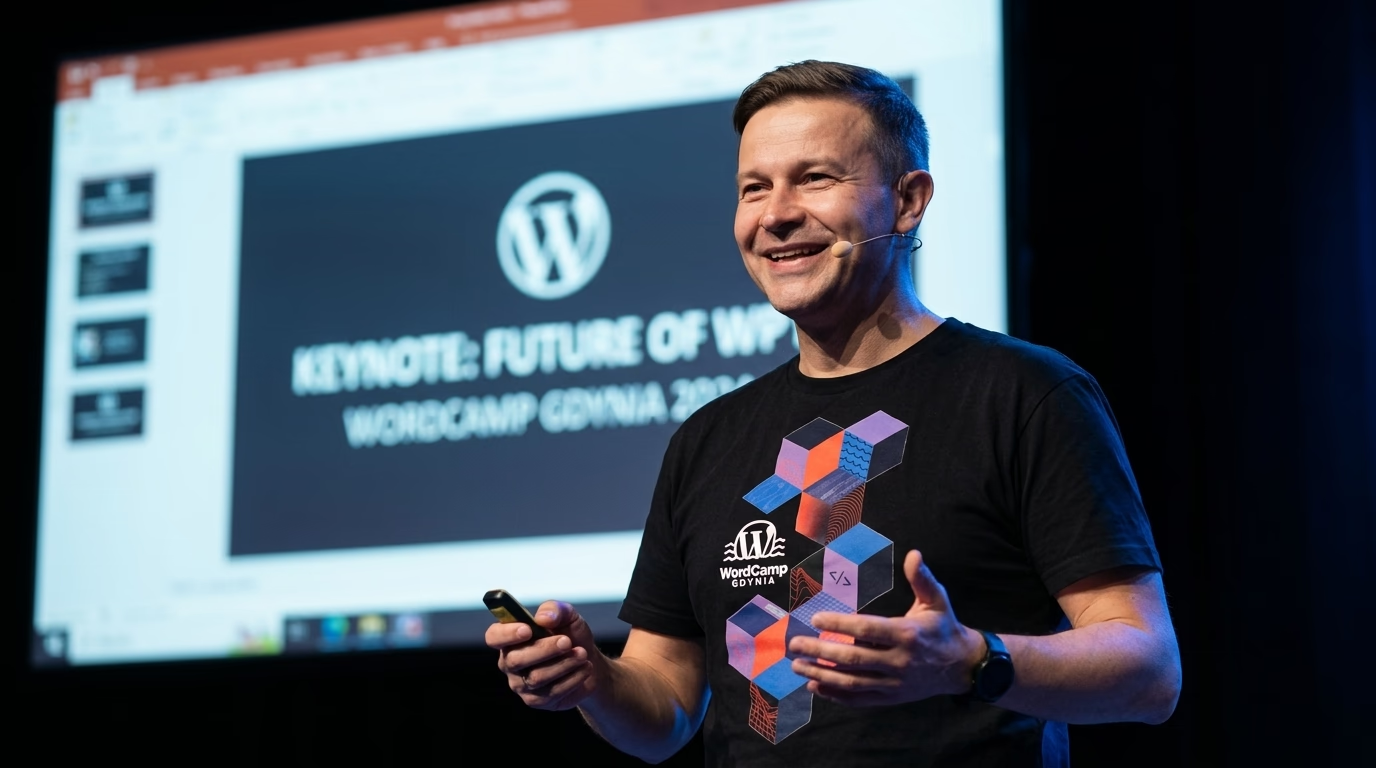
How to start as a WordPress developer in 2026. Local environment, theme and plugin development, REST API and headless paths, security and Core Web Vitals. A practitioner playbook that does not waste your first month.

WordPress 7.0 with AI Client vs Astro 6 after Cloudflare acquisition. Speed, cost, SEO and security comparison. My take after 20 years as a WP developer - when to migrate and when to stay.
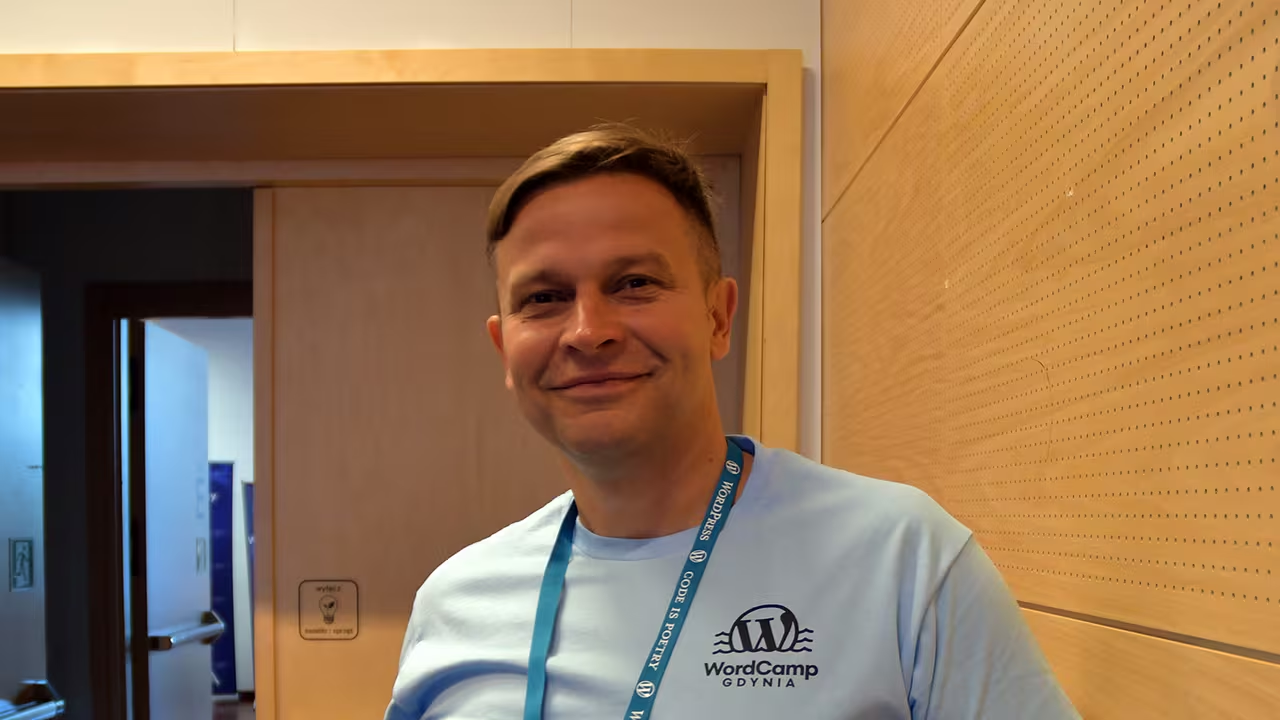
WordPress 7.0 with AI Client against Astro 7 with the Rust compiler and Vite 8. Speed, cost, SEO and security compared, plus the real bill for my own Astro 6 to 7 migration.