Full site editing and the block editor in WordPress
Gutenberg blocks, synced patterns, full site editing, custom templates, and block plugins for teams that want a cleaner WordPress editing system.

Custom WordPress themes, plugins and blocks for Stuttgart companies that work in English. iDEAL checkout, GDPR with the German regulator in view, remote delivery from Gdynia in the same time zone.
I do, from Gdynia on the Polish coast. WPPoland is one senior developer who has worked with WordPress since 2006, and I take on bespoke work for companies in Stuttgart: themes written from scratch, plugins that encode a business rule, Gutenberg blocks that give editors exactly the components they need, and integrations with the systems a company already runs.
Stuttgart is an easy city to serve from abroad for one practical reason. It runs on Central European Time, the same as Poland, including the daylight saving change. There is no overlap negotiation. Your morning is my morning, and a question sent at ten is usually settled before lunch. Everything is remote and written. Scope, decisions and handover live in documents and a Git repository, not in meetings that someone has to remember.
The broader description of the work sits on the custom WordPress development and theme adaptation page. This page covers what it means for a company in Stuttgart.
The city is international in a way that shows up in the briefs. Product teams hire from several countries, marketing is run in English with German as a second layer, and the client base is often European or global. So the usual request is a site that is written in English first, published in German as well, and edited by people who speak neither language equally well.
That has concrete consequences for the build. Editors need an interface that does not punish them for working in two languages: one content model, two or three language versions, clear markers for what is translated and what is not. Fields have to be named in plain English so that a new hire understands them. The theme has to handle German typography, such as the long compound words that break a narrow card layout, and the habit of mixing both languages in one navigation menu.
I deliver code comments, documentation and handover notes in English, and I build language switching so that search engines see each version properly: separate URLs, reciprocal alternates, no machine-translated duplicate that ranks against your own page. If you want German copy, I work from your text. Translation of marketing language is something your German writer should own, and I would rather put their words into a clean layout than invent them.
The answer is shorter than most agencies suggest. Custom code earns its place in three situations.
The first is a layout or component that no plugin gets right. Marketing teams in Stuttgart often work with a design studio that delivers a precise visual system: grids, type scales, motion rules. A page builder approximates that. A custom block theme reproduces it, and it gives editors a fixed set of components so the layout cannot drift after launch. For the choice between a classic theme and a block theme, my guide to classic and block themes sets out how I decide.
The second is a business rule that lives nowhere else. A booking window that depends on three conditions, a pricing display that follows a contract table, a member area with roles that do not match WordPress defaults. A plugin of thirty to a few hundred lines, written once and tested, is cheaper to own than five general plugins stacked on top of each other and configured to behave like one.
The third is an integration. Stuttgart companies tend to run a modern stack: a CRM, a marketing automation platform, an accounting tool, sometimes a product information system. WordPress talks to these over their APIs. I write the connector, handle the errors and log the failures, so a bad night at the supplier does not become a silent gap in your orders.
Everything else I leave alone. A contact form, a gallery and an SEO plugin are solved problems. Adding code where a maintained plugin exists is a liability, and I say so in the scoping document.
German online shoppers expect iDEAL, the bank transfer based payment method that most people in Germany use at checkout. A shop without it loses orders, and a shop that treats it as an afterthought loses them at the last click.
I do not write payment gateways from scratch. Your payment provider, such as a German payment service provider, maintains a WooCommerce plugin that supports iDEAL, and security and certification live with them. The custom work is around it: the order status flow when a payment is pending or cancelled at the bank, a retry link in the failed payment email, a clear message on the thank you page, and reconciliation reports your finance team can match to the bank statement.
German addresses add small details that cause large annoyances. Postcode plus house number is enough to fill in a street and city in most German forms, and customers notice when a checkout asks for four fields that the system could look up. I build the lookup against an address service you already pay for, and I keep the manual fallback visible for addresses the service does not know.
For a deeper view of shops, my WooCommerce developer page covers the commerce side separately.
The General Data Protection Regulation applies directly in Germany, and the national supervisory authority is the BfDI / LfDI BW, the German Data Protection Authority. Its role is to assess whether organisations, including companies and public bodies, comply with the rules on personal data, and it can impose fines.
I am not a lawyer and I do not write privacy policies. What I do is design the technical side so that the legal answers are easy to give.
First, forms collect only what the purpose needs. A newsletter form asks for an email address, not a phone number “just in case”. Second, third party scripts do not load before consent where consent is required: analytics tags, video embeds, chat widgets. Fonts are a frequent surprise, which is why I bundle them locally, as described in my note on Google Fonts and GDPR. Third, plugins are reviewed for where they send data, because a plugin that calls an external API on every page view is a data flow whether anybody documented it or not.
I write down what the site collects, where it goes and which processors are involved, in a plain table. Your data protection officer or lawyer can use it for the records of processing. If a client prefers a certain cookie consent tool, I integrate it and make sure that rejecting cookies really prevents the scripts from firing.
For companies in finance or other regulated areas, the same documentation helps with the wider security duties that come from EU rules. I covered the technical side of those in my article on the EU compliance stack for headless WordPress.
The European Accessibility Act, Directive (EU) 2019/882, has applied to many consumer services, including e-commerce, since 28 June 2025. Member states transposed it into national law, so the exact obligations for a German business depend on the German implementation and on whether your company is a microenterprise, which has a limited exemption for services.
From the build side the practical standard is WCAG 2.1 level AA, which is the level most national rules and the European standard EN 301 549 point to. I build to it from the first template: semantic landmarks, visible focus states, form labels tied to their fields, colour contrast checked against the design tokens, and keyboard operation for menus and dialogs. Retrofitting these on a finished site costs several times as much as writing them in. My overview of the European Accessibility Act and WCAG 2.1 explains the standard in more detail.
Yes. Design is part of my work, done with Claude Design: layout, wireframes and a visual system that I then implement as a theme. Some Stuttgart companies arrive with a finished design from a studio, and that is a good starting point. In that case I implement your design as delivered, and I flag the places where it cannot work in a CMS, such as a hero that assumes a headline of exactly three words, so the problem is solved on paper rather than after launch.
Either way, the result is a working responsive interface that editors can maintain. I test breakpoints from small phones to wide desktop screens and check that the editor view in WordPress matches the front end, because a block that looks different while editing causes more support questions than any bug.
Sometimes. The market here has a strong appetite for headless architectures, and the reasoning is usually sound: a marketing team wants freedom in the front end, and a product team wants to reuse the content in an app. With WordPress as the content backend and a framework such as Astro or Next.js in front, you get both.
The cost is a second system to run and a smaller pool of people who can maintain it. For a marketing site with a few dozen pages, a well built block theme is faster to deliver, cheaper to own and easier to hand to editors. I recommend the headless route when content must reach several channels, when the front end has interaction that a classic theme struggles with, or when the performance budget is strict enough that static output matters. My headless CMS developer page describes that option, and the WooCommerce headless migration page covers shops.
I put the decision in the scoping document with both options priced against the real need, not against a trend.
Yes. WordPress Stuttgart is a volunteer run meetup that, according to its website, takes place eight evenings a year at Stayokay Hostel Stuttgart Oost, with two talks per evening and open to every level of experience. If you are building a WordPress team in the city, it is a useful place to find freelancers and to see what other local companies are building. I mention it because it is real and relevant. It is not a partnership, and I do not attend it on your behalf.
The process is deliberately plain.
Anything outside the agreed scope is quoted separately and starts only after you confirm it in writing. That keeps both sides honest about what was bought.
Examples of my work.
Instytut-csr.net is one of the valuable projects in my WordPress developer portfolio, realised as an educational and informational platform dedicated to Corp...
Neolight.pl is an advanced project in my portfolio as a WordPress developer, realised as an advertising portal supporting LED screen campaigns in Poland. Aro...
Ogloszenia.osemka.pl is a classifieds portal that operated as a subdomain of the social platform Osemka.pl, designed and implemented in 2006-2007. The goal w...
Describe your project by e-mail. I reply within 24 hours.
Describe your projectGutenberg blocks, synced patterns, full site editing, custom templates, and block plugins for teams that want a cleaner WordPress editing system.
A practical ACF repeater tutorial showing how to style even, odd, or every third row with PHP modulo logic or modern CSS nth-child selectors.
Gutenberg 24.2 turns on React 19 by default, moves notes into the editor margin and changes link search in menus. What React 19 removed, how to test blocks on a copy of the site and how to turn React 19 off.
Custom WordPress engineering and architecture.
Scalable headless, ERP, and AI architecture for enterprise.
Stores, checkout flow, and sales logic.
Stability, updates, and post-launch support.
What the monthly care fee covers and what changes it.
Business process automation around WordPress and company systems.
Headless WordPress, Sanity, Strapi, and Contentful with Astro or Next.js.
Astro, MDX, edge delivery, and Core Web Vitals measured on real traffic.
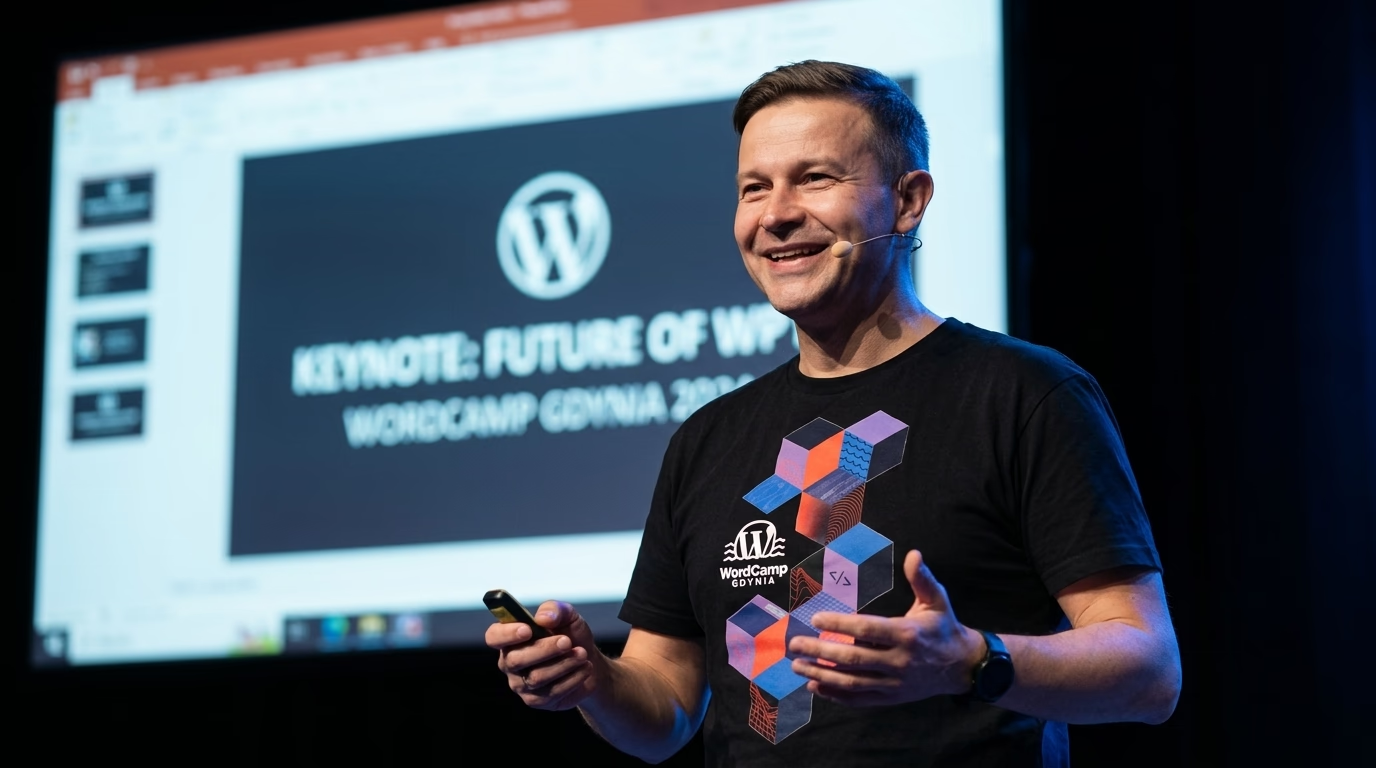
How to start as a WordPress developer in 2026. Local environment, theme and plugin development, REST API and headless paths, security and Core Web Vitals. A practitioner playbook that does not waste your first month.

WordPress 7.0 with AI Client vs Astro 6 after Cloudflare acquisition. Speed, cost, SEO and security comparison. My take after 20 years as a WP developer - when to migrate and when to stay.
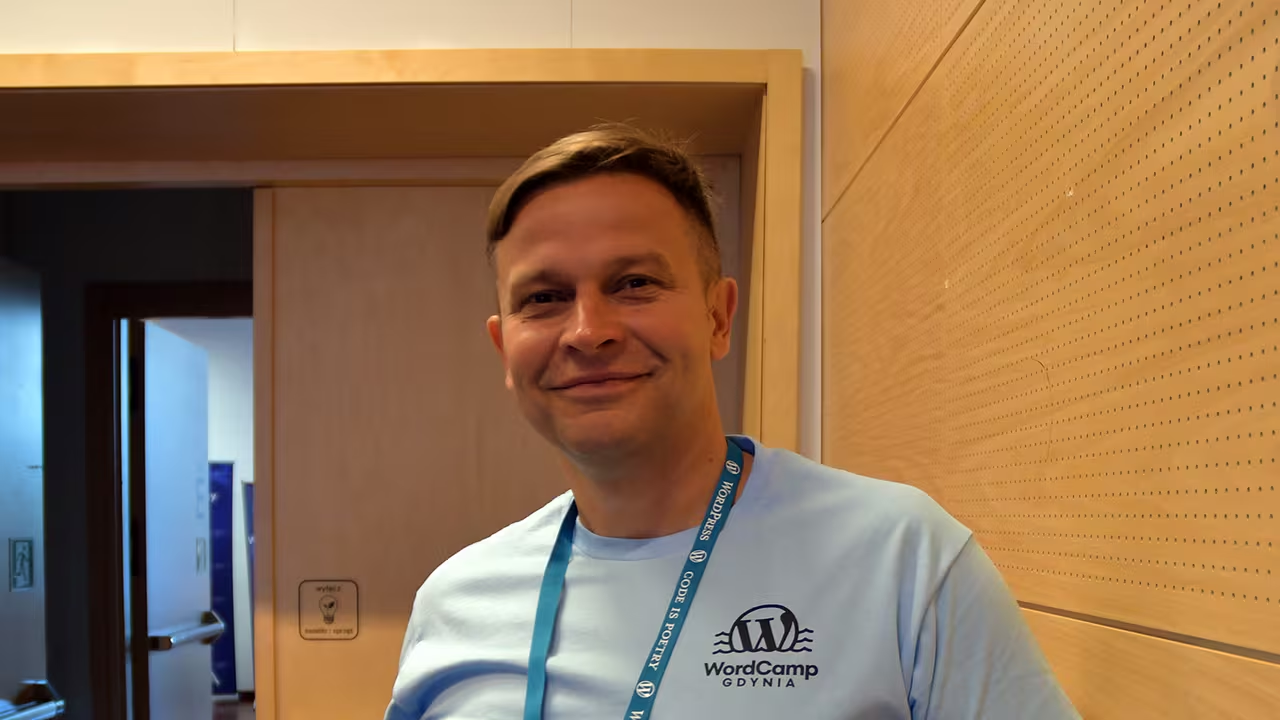
WordPress 7.0 with AI Client against Astro 7 with the Rust compiler and Vite 8. Speed, cost, SEO and security compared, plus the real bill for my own Astro 6 to 7 migration.