Full site editing and the block editor in WordPress
Gutenberg blocks, synced patterns, full site editing, custom templates, and block plugins for teams that want a cleaner WordPress editing system.
Turin is a city built around making things. Fiat was founded here in 1899, and the automotive supply chain that grew around it still shapes the local economy: machining, tooling, testing, design engineering. The Lingotto, the former Fiat factory with its rooftop test track, is now an exhibition and congress venue. The Politecnico di Torino trains engineers who go on to run technical firms of their own. The Egyptian Museum draws visitors from around the world, and the city hosts events such as the Salone del Libro book fair at Lingotto.
What these organisations have in common, from a web point of view, is a double audience. They talk to Italian buyers, colleagues and members, and they talk to people abroad who read English. A supplier of precision components sends catalogues to a procurement officer in Stuttgart. A research group posts a call for partners to institutions across Europe. A museum or festival writes for visitors who do not speak Italian. Their websites need to work in two languages without becoming two projects.
I am Mariusz Szatkowski, a WordPress developer in Gdynia, Poland, working with WordPress since 2006. WPPoland is one person. I write the code, I answer for it, and I deliver remotely and in writing. For Turin clients, that means a developer who works in your time zone and builds what a standard theme cannot.
Custom development means four things. Bespoke plugins that hold rules specific to your organisation. Editor blocks, so your team assembles pages within guardrails. Theme adaptation when the design is right but the behaviour is not. And integrations that connect WordPress to the systems around it. The overall offer is described on my page about development, customisation and theme adaptation for WordPress. My general page for the city is WordPress developer in Turin. This page covers what custom work looks like here.
The cheapest way to make a bilingual site is to install a translation plugin and let it duplicate every page. It works for a brochure. It starts to hurt when the site has products, documents or structured data, because the plugin copies content without understanding it.
My approach starts with the question of what is shared and what is not. A product has a code, dimensions and a drawing that are the same in both languages, and a description that is not. A research project has a title in two languages and one set of partners. If the shared fields live once and the language fields live next to them, an editor who updates a tolerance or a date changes it in one place.
Concretely, I decide the language model before building anything else. Each language gets its own URL path, with clear links between the two versions and the correct language declaration in the page markup, so search engines and screen readers handle each page properly. Menus, forms and error messages are translatable strings, not hardcoded text. Editors see which pages lack a counterpart, so gaps are visible rather than discovered by a customer.
I do not translate the content. The technical vocabulary of a machining firm or a research lab should be written or reviewed by someone who uses it daily. I make that work easy: side-by-side editing, a clear status for each version, and a review step before publishing.
A company that sells components to other companies has a different website problem from a shop. Buyers do not browse for pleasure. They arrive with a part number, a standard or a tolerance and want to know in a minute whether you can supply it.
A custom product catalogue can serve that. Products become a structured content type with fields for material, dimensions, certifications and datasheets, rather than a long page of text. Filters let a buyer narrow a range by the specification that matters. A request-for-quotation form attaches the selected products and sends a structured message to your sales team, instead of an email that says “please contact me”.
Behind it sits the question of where the data lives. If your product information is in an ERP or a spreadsheet, retyping it into WordPress guarantees errors. I would rather import it on a schedule from the source, validate it, and show the editor a report of what changed. The integration is not glamorous, but it is the part that keeps the catalogue true.
Datasheets and drawings are files, and files cause quiet trouble: names that change, versions that diverge, downloads that nobody can find. A simple convention, enforced by the plugin, keeps them tidy. Each file has a version and a date, and the product page always links to the current one.
Yes, and often with less custom code than people expect. Universities, research groups and cultural institutions publish many small things: projects, people, publications, events, calls. WordPress handles that well with custom content types and a few well-designed templates.
Where custom work earns its place is in the relationships. A publication belongs to several authors, a project to several partners, an event to a venue and a series. If those relationships are real data, you get automatic lists of “publications by this person” and “events in this venue” without editing five pages by hand. I design the content model first, on paper, with the people who will edit it, because a model that matches how they think is the thing they will actually use.
Events deserve particular care. A calendar that goes stale is worse than no calendar. I build listings that hide past events by default, mark cancelled ones clearly, and generate the structured data that search engines read for event results. For a festival or exhibition with a fixed date, I test the site under load before the announcement, because the traffic arrives on one day.
Italy follows EU law on the areas that matter most for a website, and I build to the EU baseline. I do not give legal advice, and your legal adviser decides what applies to you. The technical side I can make match.
The General Data Protection Regulation governs any personal data a site collects. Each form needs a stated purpose and a lawful basis, fields limited to what the purpose requires, a retention rule and a way to export or delete what you hold. I build those routines into custom code. Cookies and similar tools fall under the ePrivacy Directive and the national rules that implement it: scripts that track visitors load only after valid consent, and the consent record is stored so it can be shown later.
For online sales to consumers, the Consumer Rights Directive sets the information that must be given before purchase and the right to withdraw from a distance contract. Checkout pages and order emails should reflect that, and I build the templates so they can be adjusted when your legal text changes.
Accessibility has its own EU instrument. Directive (EU) 2019/882, the European Accessibility Act, covers some consumer services, including e-commerce, and it has exemptions for very small businesses. I write components with semantic markup, keyboard support, visible focus and labelled fields as the default, whether or not your site is formally in scope. If you want the background, I explain it in my guide to the European Accessibility Act.
Poland and Italy are in the same time zone, Central European Time in winter and Central European Summer Time in summer. A message you send at nine in the morning arrives at nine in the morning. There is no overlap negotiation, which makes small questions cheap to ask.
The mechanics are simple. A standard B2B contract between companies in the EU. Invoices issued by a Polish company. All communication by email and in a ticket system, so that decisions survive changes of staff on your side. I do all of my work remotely and do not do on-site work. Work is built on a staging site and shown to you with written notes. Nothing goes live without your approval, and releases happen on days you choose.
If your team prefers to write in Italian, I will manage in English with a translation tool for the details, and I keep the technical vocabulary consistent through a short glossary at the start of the project. If your own developer is part of the work, I follow your repository conventions.
Industrial and research sites tend to live a long time. A catalogue built today may still be online in six years, long after the person who commissioned it has moved on. Custom code needs a plan for that.
Every plugin I write checks permissions before it saves or shows anything, escapes output, validates input and uses the database through WordPress’s own functions. File uploads, such as datasheets, are restricted to the types you expect. Secrets such as API keys for your ERP live in configuration outside the repository, not in the code. I keep dependencies few, and I list the ones I use, so that a security notice about a library is easy to match against your site.
Updates follow a routine. WordPress core, the theme and plugins are updated on a staging copy first. The custom code has a small set of automated checks that run against that copy, covering the logic that would hurt most if it broke, such as price display, quotation requests and imports. Only then does anything reach the live site. This is dull work, and it is the reason a custom build stays dependable.
Documentation is the last piece. For each component the repository holds a short note: what it does, which settings it reads, how to deploy it, how to roll it back. A developer who has never met me should be able to take over from it.
Small and written down. You describe the problem and show me the manual step that wastes the most time. I reply with questions and a short technical plan: what exists, what is new, what could go wrong. If the plan makes sense, the first delivery is the smallest thing that proves the approach, on a staging site, within a few weeks.
From there the work is staged, and each stage has an output you can test. After launch, the code sits in your repository with documentation, and you decide whether to keep me on for maintenance. Many clients do for a while and then move to an internal owner. That is a normal ending, and I plan for it from the first commit.
I also do the design where it is needed. If you have no design system, I can produce layouts and build them. If you bring a designer’s files, I implement theirs. For a technical catalogue, the layout work is usually about hierarchy and density rather than decoration: what the buyer sees first, where the datasheet link sits, how the specification table behaves on a phone held on a factory floor.
If the site is a brochure for a small studio, a good theme and a few plugins will do. If a plugin covers nearly all of the need and the last bit is a habit, change the habit. If the underlying system is the problem, for example a management program that cannot expose any interface, custom code on top of it adds a second thing that breaks. And if nobody on your side will own the feature after launch, I will say so, because unowned code ages badly.
I would rather lose a project at the assessment stage than ship something that costs you more to keep than it saves. If speed is the real complaint, my speed optimisation page is the better starting point.
Examples of my work.
satyr.pl was a Polish satirical and adult-humour website from 2000-2015, built around WordPress publishing, multimedia, comments, ratings and performance work.
The merkam.eu website was designed for a manufacturer of kitchen countertops made from granite, conglomerate, and marble. The site's purpose is to showcase the product offering, gallery of completed projects, and generate inquiries from clients interested in modern kitchen solutions.
Tabris.js is a modern framework that enables the creation of native mobile apps from a single codebase using JavaScript or TypeScript. This solution allows d...
Describe your project by e-mail. I reply within 24 hours.
Describe your projectGutenberg blocks, synced patterns, full site editing, custom templates, and block plugins for teams that want a cleaner WordPress editing system.
A practical ACF repeater tutorial showing how to style even, odd, or every third row with PHP modulo logic or modern CSS nth-child selectors.
Gutenberg 24.2 turns on React 19 by default, moves notes into the editor margin and changes link search in menus. What React 19 removed, how to test blocks on a copy of the site and how to turn React 19 off.
Custom WordPress engineering and architecture.
Scalable headless, ERP, and AI architecture for enterprise.
Stores, checkout flow, and sales logic.
Stability, updates, and post-launch support.
What the monthly care fee covers and what changes it.
Business process automation around WordPress and company systems.
Headless WordPress, Sanity, Strapi, and Contentful with Astro or Next.js.
Astro, MDX, edge delivery, and Core Web Vitals measured on real traffic.
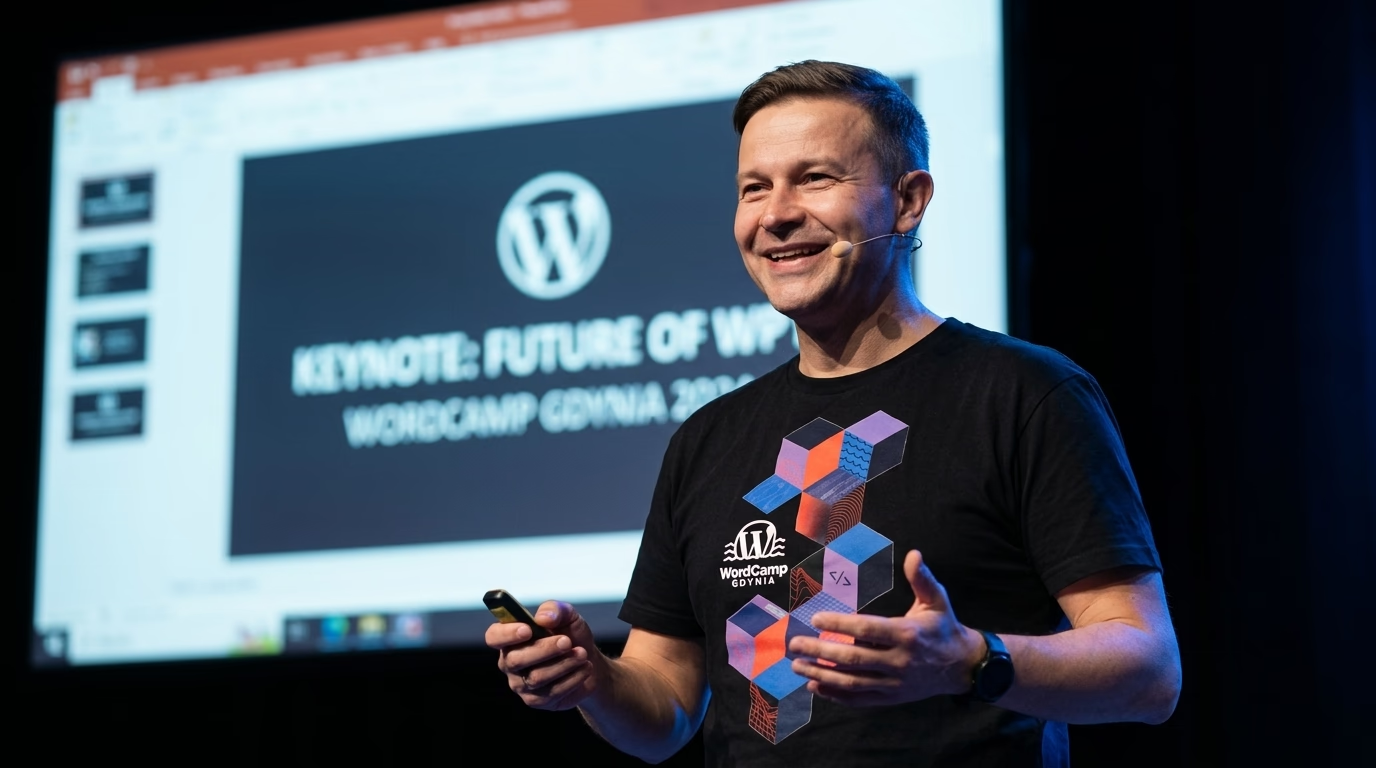
How to start as a WordPress developer in 2026. Local environment, theme and plugin development, REST API and headless paths, security and Core Web Vitals. A practitioner playbook that does not waste your first month.

WordPress 7.0 with AI Client vs Astro 6 after Cloudflare acquisition. Speed, cost, SEO and security comparison. My take after 20 years as a WP developer - when to migrate and when to stay.
WordPress 7.0 with AI Client against Astro 7 with the Rust compiler and Vite 8. Speed, cost, SEO and security compared, plus the real bill for my own Astro 6 to 7 migration.