Website & application migration in Bologna
I migrate sites from WordPress, Joomla, Drupal, Angular, Vue and other technologies to Astro and Next.js. I plan each migration to keep SEO, content and features intact and switch over in an agreed window. I work alone and have years of experience with both legacy and modern stacks.
- I have had a wordpress.org account since 2006.
- I contributed to WordPress core for versions 7.0 and 7.1.
- I maintain 30 plugins on wordpress.org.
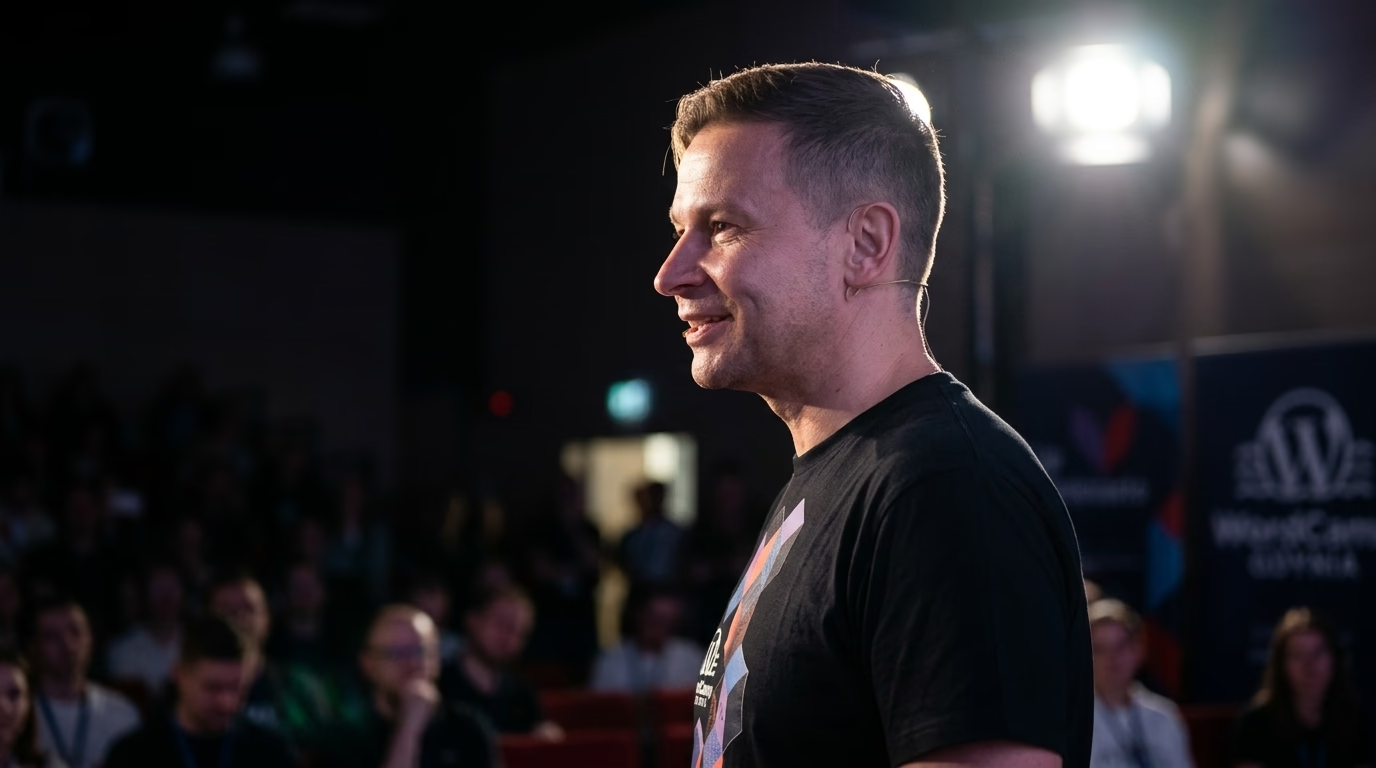
- I organise and speak at WordCamps.
- I have attended every WordCamp Europe from 2017 to 2026.
- Local WordPress meetup: WordPress Meetup Bologna
Bologna and the broader Emilia-Romagna region represent Italy’s premier engineering, manufacturing, and technological heartland. Renowned globally as the epicenter of packaging machinery, the iconic Motor Valley, precision ceramics, and advanced biomedical technology, Bologna demands digital representations that convey technical rigor and reliability. Furthermore, institutions like the University of Bologna and the Cineca supercomputing cluster underscore the city’s data-driven culture. Yet numerous established industrial firms, exporters, and consultancies in Bologna continue to operate vulnerable, slow-loading corporate websites powered by legacy WordPress, Joomla, or Drupal monoliths.
As an independent software engineer with over fifteen years of web development experience, I plan and implement clean technical migrations from aging monoliths to modern decoupled frontends built with Astro and Next.js. My methodology ensures maximum Core Web Vitals optimization, static security, and the complete preservation of your established search engine authority. Working remotely from Gdynia, Poland, I collaborate directly with Italian technical and marketing leadership in the Central European Time (CET) window, under transparent B2B milestones and full Git version control.
Key reasons Bologna companies are decoupling from monolithic CMS setups
For years, developing a corporate website meant hosting a monolithic CMS on a LAMP stack where PHP code executed dynamic queries against a MySQL database on every page view. In today’s digital landscape, this legacy paradigm creates critical liabilities for Emilia-Romagna enterprises:
First, chronic security vulnerabilities and relentless plugin patching. Monolithic architectures depend on dozens of commercial plugins for multi-language support, forms, and SEO. Each added extension expands the attack surface, requiring frequent emergency security patches to prevent brute-force attacks and code injections. An Astro static site, by contrast, compiles all content into immutable HTML, CSS, and media files served across regional edge points. Without an active PHP interpreter or exposed database on the public server, external vulnerability vectors drop to zero.
Second, web vitals performance and mobile user retention. Traditional WordPress themes send bulky JavaScript bundles and render-blocking CSS that throttle mobile browsing on cellular networks. This inflates Time to First Byte (TTFB) and Interaction to Next Paint (INP) latency, degrading conversion rates and damaging search engine trust. Astro solves this fundamentally through its Islands Architecture: content renders as lightweight static HTML by default, and client-side JavaScript is loaded exclusively for components that require active user interaction.
Third, hosting simplification and peak load endurance. Maintaining traditional monolithic websites through trade show surges or international marketing campaigns requires costly dedicated server tiers and intricate database caching. Decoupled static architectures hosted on global edge content delivery networks absorb traffic spikes with ease, delivering sub-second response times without escalating cloud bills.
A disciplined engineering roadmap for platform migration
Migrating an established corporate web asset requires forensic precision to safeguard existing search engine positions and prevent operational disruption. I apply a rigorous seven-stage technical delivery methodology:
1. Route inventory extraction and forensic crawl
The process starts with an exhaustive audit of your existing web property. Utilizing automated crawlers alongside Google Search Console data and raw server access logs, I construct an inventory of all public URLs, downloadable technical sheets, media files, and legacy redirect rules. High-priority landing pages with strong backlink profiles receive explicit tracking benchmarks.
2. Content normalization and legacy markup cleanup
Content stored within database tables is extracted using automated scripts that strip out obsolete visual builder shortcodes (such as WPBakery, Elementor, or Divi) and inline styling. Content entries are reorganized into typed Astro Content Collections or schema-validated JSON data stores, safeguarding all author attributes, dates, and localized taxonomy bindings.
3. Comprehensive 301 permanent redirect matrix
The primary cause of post-launch traffic collapse is sloppy URL redirect management. I design a granular URL correspondence map assigning permanent 301 headers so that every historical route resolves to its new landing page without intermediate hops. Vague catch-all redirects to the home page are strictly avoided, as search engine algorithms classify them as soft-404 errors, causing organic indexation to erode.
4. SEO metadata mirroring and structured data
All titles, meta descriptions, canonical targets, and OpenGraph tags are mirrored precisely from the original property. Furthermore, I implement modern Schema.org structured data tailored to Bologna manufacturing and tech firms (such as Organization, LocalBusiness, ProfessionalService, Product, and FAQPage schemas), ensuring maximum discoverability in both traditional search engines and AI generative models.
5. Staging evaluation and automated regression testing
Before routing live traffic, the updated platform is published to an authenticated, password-protected staging environment. In this phase, I run thorough automated verification suites:
- Comprehensive HTTP status validation across all mapped URLs to eliminate 404 errors.
- Automated WCAG 2.2 AA accessibility evaluations covering focus rings, accessible contrast levels, and proper screen-reader roles.
- Network throttling simulations confirming visual assets deliver via responsive WebP and AVIF formats without layout shifts.
- End-to-end testing of customer contact touchpoints, quotation funnels, and webhook synchronization into internal ERP tools.
6. Seamless production cutover
The DNS switch is executed in a designated off-peak period, preceded by shortening TTL parameters to enable rapid global network propagation. Once live traffic serves reliably from the new architecture, pre-launch robots restrictions are lifted and sitemaps are submitted.
7. Google Search Console surveillance
During the initial thirty days following cutover, I continually evaluate coverage reports and crawl statistics inside Google Search Console. Any crawl irregularities, 404 occurrences, or indexing discrepancies are identified immediately and corrected.
Architectural comparison: Astro vs. Next.js for your project
Choosing the correct frontend framework depends directly on the functional nature of your web portal:
| Architectural Metric | Astro (Static First & Island Architecture) | Next.js (App Router & Server Components) |
|---|---|---|
| Optimal Project Fit | Corporate marketing sites, tech docs, product catalogs | SaaS web apps, dynamic customer portals, intranets |
| Rendering Strategy | Static Site Generation (SSG) with selective hydration | Server-Side Rendering (SSR) and dynamic streaming |
| Client-Side JavaScript | Zero kilobytes by default on informational pages | Bundles React runtime across client-rendered components |
| Interaction Latency (INP) | Outstanding (commonly below 25 milliseconds) | Highly responsive when bundle sizes are kept lean |
| Hosting Complexity | Extremely simple (edge CDN or static object storage) | Requires Node.js application server or serverless compute |
For the majority of Bologna industrial manufacturers, packaging suppliers, and B2B corporate platforms, Astro provides the most cost-effective, high-performing foundation. When client portals demand user authentication, interactive calculators, or real-time data feeds, I construct the frontend with Next.js.
Italian regulatory compliance and digital standards
Rebuilding a digital frontend presents an opportune moment to ensure full alignment with Italian and European digital regulations:
Italian Garante cookie guidelines and GDPR
Under the General Data Protection Regulation and the Italian Privacy Authority (Garante per la protezione dei dati personali) guidelines of 10 June 2021, tracking cookies and profiling scripts cannot execute without explicit, granular opt-in consent. By deploying Astro, we remove unnecessary third-party tracking dependencies, host all typography locally, and provide lightweight consent management compliant with Italian regulatory standards.
European Accessibility Act and Legislative Decree 102/2024
Italy transposed the European Accessibility Act via Legislative Decree No. 102 of 3 May 2024, enforcing digital accessibility requirements for commercial e-commerce and consumer digital services starting June 2025. Interfaces must comply with European standard EN 301 549 and WCAG 2.2 Level AA. My implementations feature semantic HTML structures, descriptive alternative text for images, clear keyboard focus indicators, and logical heading hierarchies.
Mandatory corporate disclosures under Italian Civil Code Article 2250
Websites operating as commercial presences in Italy must clearly display essential registered business information in their footer or dedicated contact sections: registered company name, company registration number, tax identification number (Codice Fiscale and Partita IVA), Economic and Administrative Index (REA) number, registered office address, and whether the company is in liquidation or has a sole shareholder.
Initiate your migration project
If your organization in Bologna is seeking to retire an aging, vulnerable CMS and transition to an ultra-fast, modern web architecture, reach out with your website URL and project goals. I will analyze your existing system and deliver an actionable migration roadmap aligned with your business objectives.
Selected projects
Examples of my work.
E-commerce Development: autogaz.olsztyn.pl
autogaz.olsztyn.pl is a website for a workshop in Olsztyn installing car gas systems, with service information and simple contact.
E-commerce Development: capslock.pl
capslock.pl was a WooCommerce store for computer parts, built in 2013 with product catalogue, AB wholesaler integration, external marketplace exports, payments and performance optimisation.
E-commerce Development: car-mechanic-huntington.co.uk
The website project car-mechanic-huntington.co.uk was created with the aim of professionally presenting the services of a car workshop. The primary goal of t...
WordPress support & development in Bologna
Need this service: Next.js / Astro migration in Bologna?
Describe your project by e-mail. I reply within 48 hours.
Describe your projectExplore other WordPress services and knowledge base
Migration to Astro, Next.js, and headless WordPress.
WooCommerce sync with ERP and wholesale systems.
Business process automation around WordPress and company systems.
Library of concrete automation use cases.
Headless WordPress, Sanity, Strapi, and Contentful with Astro or Next.js.
Astro, MDX, edge delivery, and Core Web Vitals measured on real traffic.
Custom WordPress engineering and architecture.
Scalable headless, ERP, and AI architecture for enterprise.
Related categories
Supporting articles
Six to sixteen weeks for typical engagements, with a four-phase shape: discovery, scoping, build and cutover, tuning. The variables are catalogue size, integration count, URL preservation, and editorial team readiness, not framework choice.
A definitive 4-year Total Cost of Ownership (TCO) analysis, real-world Core Web Vitals benchmarks, Astro 7 GraphQL APQ architecture, and a 10-point executive decision matrix for choosing between decoupled and traditional WordPress.

The Shopify Plus vs WooCommerce headless decision in 2026 is no longer a binary "platform vs custom" trade-off. Both can run headless, both integrate AI, both ship at the edge. The real axes are control, total cost over five years, and exit strategy. This article walks the matrix with confirmed platform facts.