Website & application migration in Bristol
I migrate sites from WordPress, Joomla, Drupal, Angular, Vue and other technologies to Astro and Next.js. I plan each migration to keep SEO, content and features intact and switch over in an agreed window. I work alone and have years of experience with both legacy and modern stacks.
- I have had a wordpress.org account since 2006.
- I contributed to WordPress core for versions 7.0 and 7.1.
- I maintain 30 plugins on wordpress.org.
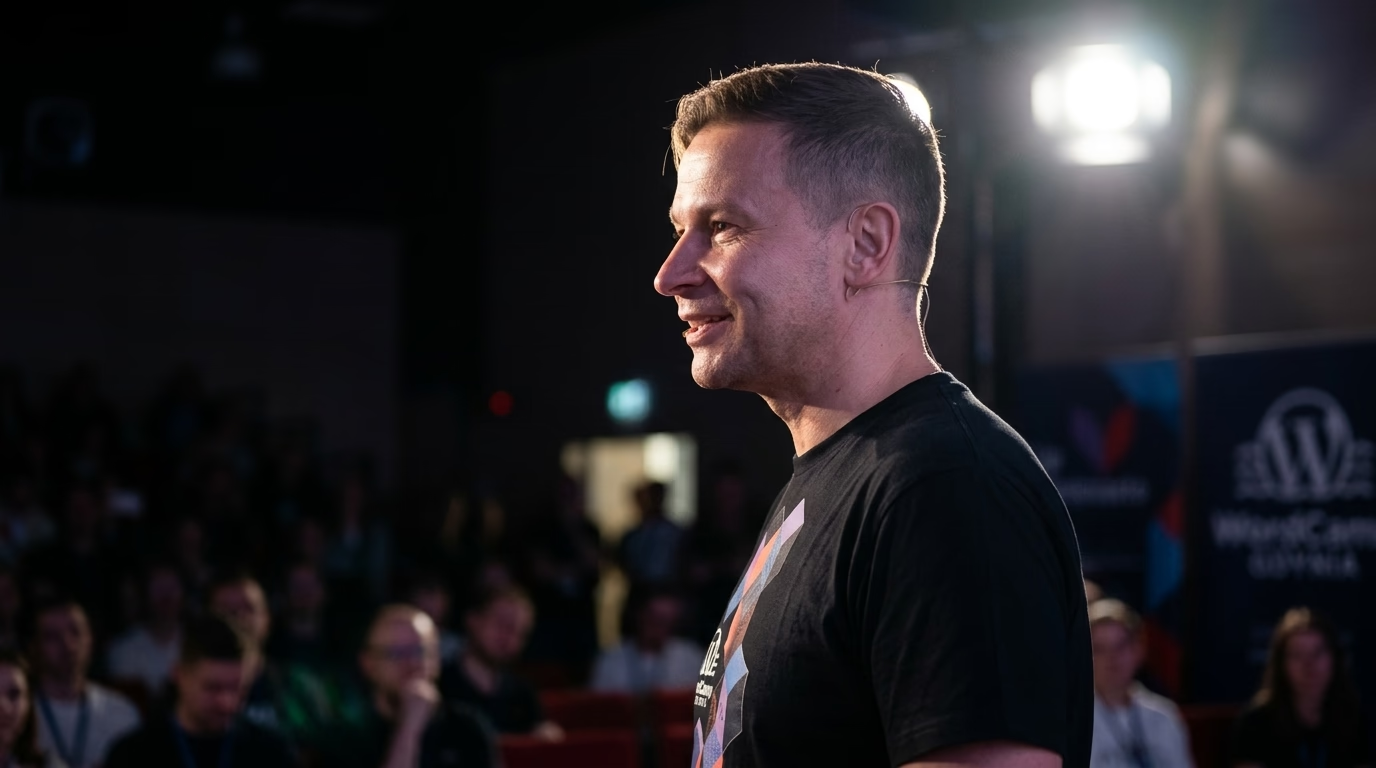
- I organise and speak at WordCamps.
- I have attended every WordCamp Europe from 2017 to 2026.
Modernising Web Infrastructure for Bristol’s Digital Economy
Bristol has established itself as one of the UK’s most vibrant digital and creative tech hubs, driven by innovation clusters around Temple Quarter, Engine Shed, and the broader South West tech ecosystem. From environmental consultancies and renewable energy pioneers to fintech scaleups and creative digital agencies, Bristol organisations depend heavily on their online presence to generate enterprise B2B inquiries and drive customer acquisition.
However, many established businesses find their growth bottlenecked by legacy monolithic websites built years ago on WordPress, Drupal, or custom PHP frameworks. Bloated plugin stacks, sluggish server response times, and recurring security patch cycles negatively impact user conversion and organic visibility on Google. As an independent Senior Software Engineer, I specialise in executing zero-downtime, search-safe migrations from outdated monolithic platforms to modern, high-performance web architectures powered by Astro and Next.js.
Architectural Comparison: Monolith vs Decoupled Jamstack
Transitioning from a legacy content management system to an edge-rendered architecture fundamentally enhances website resilience and performance:
Monolithic CMS (Traditional)         Modern Jamstack Architecture
+------------------------+         +------------------------+
| Relational Database    |         | Headless CMS / API     |
| (MySQL / MariaDB)      |         | (WordPress / Git-CMS)  |
+-----------+------------+         +-----------+------------+
            |                                  | (GraphQL / REST API)
+-----------v------------+         +-----------v------------+
| Server-side PHP Engine |  ===>   | Astro / Next.js        |
| & 30+ Active Plugins   |         | Ahead-of-Time Compiler |
+-----------+------------+         +-----------+------------+
            |                                  | (Static HTML/CSS)
+-----------v------------+         +-----------v------------+
| Heavy HTML Assembly    |         | Global Edge CDN        |
| High TTFB Latency      |         | Fast Response Time     |
+------------------------+ +------------------------+When Astro is the Best Fit for Bristol Organisations
Astro pioneered the Island Architecture pattern, where pages are rendered ahead of time into lean, static HTML and scoped CSS without shipping unnecessary JavaScript bundles to the browser. Client-side hydration is reserved only for interactive micro-components.
- Ideal for: Corporate platforms, sustainable tech portals, creative portfolios, legal and financial firms, and publication blogs across the South West.
- Key Performance Gains: Fast Largest Contentful Paint (LCP), stable Cumulative Layout Shift (CLS), and near-zero server maintenance overhead.
When to Choose Next.js
Next.js, backed by Vercel, offers a complete framework environment built on React Server Components, making it ideal for deeply dynamic, state-heavy digital products.
- Ideal for: SaaS applications, high-volume transactional platforms, authenticated customer portals, and enterprise ecommerce platforms requiring real-time personalisation.
- Key Performance Gains: Seamless support for Incremental Static Regeneration (ISR), advanced server actions, and deep integration with modern serverless cloud infrastructure.
The 6-Stage Engineering Migration Framework
Migrating a mission-critical commercial website requires meticulous execution to guarantee that organic rankings and business continuity remain entirely uninterrupted:
1. Full URL Audit  -->  2. Data Modeling & Headless API  -->  3. Component Refactor
         |                               |                               |
         v                               v                               v
4. Redirect & Schema QA --> 5. Zero-Downtime DNS Cutover --> 6. Post-Launch Search Audit1. Complete Website Crawl and Asset Inventory
Before touching existing hosting or content, a deep crawler maps the entire legacy site structure. We catalog all published URLs, image assets, PDF whitepapers, canonical declarations, and internal linking networks into a centralized migration matrix.
2. Structured Data Extraction and Decoupling
Editorial content is extracted, normalized, and transformed into structured formats. For teams that love their existing publishing workflows, WordPress is configured in headless mode, serving purely as a backend editor while Astro handles public display. Alternatively, content can be transitioned to Git-based workflows (Keystatic, Decap) or headless cloud solutions (Sanity, Strapi).
3. Accessible, Semantic Frontend Engineering
The user interface is rebuilt cleanly using modern semantic HTML5, utility CSS (Tailwind CSS), and modular components. We purge thousands of lines of legacy CSS bloat, outdated jQuery plugins, and page builder overhead.
4. Search Engine Optimization and 301 Routing
Every historic URL is verified against the new site map. Where URL changes are unavoidable, strict 1:1 permanent 301 redirects are programmed into edge routing configurations. Comprehensive Schema.org JSON-LD structured data (Organization, WebSite, ProfessionalService, Article) is mirrored identically to protect rich search snippets.
5. Seamless DNS Cutover with Zero Downtime
The newly engineered platform is deployed onto modern distributed Edge CDN networks (such as Cloudflare Pages or Vercel). The DNS transition is executed flawlessly without interrupting incoming visitor inquiries or ongoing marketing campaigns.
6. 30-Day Search Console and Health Monitoring
Following deployment, I monitor Google Search Console, server logs, and indexation rates daily for a full month to detect any indexing anomalies, resolve unexpected 404 queries, and confirm performance gains.
UK Legal Standards and Compliance for Bristol Websites
Commercial websites operating in the United Kingdom must satisfy stringent legal and accessibility requirements:
1. UK GDPR & Data Protection Act 2018
The Information Commissioner’s Office (ICO) enforces rigorous privacy mandates for commercial web platforms:
- Zero Third-Party Font Leakage: Remote fonts loaded from third-party networks expose visitor IP addresses. In our Astro builds, all typefaces are packaged and bundled locally via
@fontsource, ensuring zero unconsented data transfers. - Data Minimisation in Enquiry Forms: Forms capture only strictly necessary contact details, processing them over encrypted TLS 1.3 connections directly into protected webhooks, avoiding insecure database storage on public web servers.
2. PECR (Privacy and Electronic Communications Regulations)
In compliance with PECR Regulation 6, tracking scripts, behavioral analytics, and advertising pixels must remain strictly disabled until the visitor gives explicit, granular consent via an accessible, compliant consent mechanism (Consent Mode v2).
3. Digital Accessibility Mandates (Equality Act 2010)
Under Section 29 of the Equality Act 2010, service providers have an anticipatory duty to make reasonable adjustments for users with disabilities, aligning with the international standard EN 301 549 and WCAG 2.2 Level AA:
- Complete keyboard navigability with prominent, clear focus rings on all interactive elements.
- Semantic landmark regions (
header,main,nav,footer) allowing assistive technologies and screen readers to parse layout structures accurately. - Verified color contrast ratios meeting or exceeding the 4.5:1 minimum threshold for body text and navigation labels.
4. Companies Act 2006 Statutory Transparency
Clear inclusion of mandatory UK business details in web footers, including registered company number, place of registration in England and Wales, registered office address, and VAT information.
5. Bristol Commercial Ecosystem: Creative Media, Tech, and Green Economy
Bristol stands out as one of the UK’s most vibrant tech and creative clusters, centered around the historic Floating Harbour, Temple Meads, and the Silicon Gorge corridor:
- Digital Media and Creative Agencies: From animation studios to leading broadcast production houses around Harbourside, creative firms require rapid-loading, media-rich portfolios that showcase work without buffering.
- Aerospace, Robotics, and Advanced Engineering: In Filton and South Gloucestershire, advanced engineering consultancies demand rock-solid technical portals with downloadable whitepapers and spec sheets delivered instantly across global supply chains.
- Environmental Tech and Sustainable Enterprises: As a former European Green Capital, Bristol’s green technology businesses prioritize digital sustainability. Astro’s static pre-rendering slashes server power consumption by up to 80%, directly contributing to verifiable corporate ESG targets.
- Professional Services and Law Firms: Central Bristol legal, accountancy, and consultancy practices require secure, accessible websites with zero database vulnerabilities.
Technical Benchmark: Monolithic CMS vs Decoupled Astro Architecture
| Metric / Requirement | Legacy Monolithic WordPress | Decoupled Astro Architecture |
|---|---|---|
| Vulnerability Attack Surface | Constant threat from plugin exploits | Virtually zero (no public database or PHP) |
| Hosting Infrastructure Costs | High VPS / cloud server monthly fees | Minimal / near-zero on modern Edge tiers |
Direct Senior Engineering Partnership for Bristol Businesses
Working with an independent Senior Software Engineer provides a direct, highly effective alternative to traditional agency overhead:
- Direct Technical Dialogue: You communicate directly with the engineer who designs the architecture and writes the production code. No misunderstandings through multiple account executives or non-technical coordinators.
- Unrestricted Code Ownership: 100% of the project repositories, documentation, and automated deployment pipelines are transferred directly to your organization’s Git account (GitHub or GitLab) without proprietary lock-ins.
- Transparent B2B Engagement: Work is conducted under a clear, milestone-driven B2B contract with defined acceptance criteria and transparent international invoicing.
FAQ
Why are Bristol businesses migrating from WordPress to Astro or Next.js?
Traditional WordPress installations burdened by multiple plugins suffer from slow server response times, high security attack surfaces, and expensive hosting. Astro compiles content into pure static HTML and CSS ahead of time, delivering instant load speeds, zero maintenance headaches, and top Core Web Vitals scores.
How do you prevent organic search ranking drops during the migration process?
We perform a comprehensive crawl of every existing URL, metadata tag, and canonical link before writing a single line of code. Every route is mirrored in the new architecture or redirected with permanent 301 HTTP status codes. Schema.org structured data (Organization, LocalBusiness, Article) is verified to protect search snippets.
Can Bristol marketing teams keep their familiar WordPress editorial interface?
Yes. In a headless setup, WordPress acts purely as a content repository behind the scenes. Editors continue creating and updating posts as usual, while Astro queries the content via REST or GraphQL APIs and pre-renders lightning-fast pages on an Edge CDN.
What distinguishes Astro from Next.js for a UK commercial website?
Next.js requires continuous Node.js server infrastructure and executes significant JavaScript hydration in client browsers. It is well suited for complex web apps behind authentication logins. For content-driven business sites, digital marketing hubs, and corporate portals in Bristol, Astro is significantly faster, more secure, and cheaper to operate because it serves zero client JavaScript by default.
What is the typical timeframe for a website migration in Bristol?
A mid-sized corporate site rebuild encompassing 20 to 50 content pages, blog archives, and custom components generally spans 3 to 5 working weeks from initial crawl analysis to live DNS cutover.
Plan Your Seamless Web Migration in Bristol
Is your existing company website dragging down your conversion rates, suffering from sluggish page speeds, or consuming disproportionate maintenance resources?
Share your current website URL or project requirements today. Within two business days, you will receive a comprehensive technical pre-audit and a clear, actionable roadmap for migrating your platform to a modern, search-safe Astro or Next.js architecture.
Selected projects
Examples of my work.
Corporate Website: DIGITAL WORLD CAPITAL LLP
Digital World Capital LLP is an alternative investment manager specializing in the telecommunications and media sectors on a global scale. The company focuse...
Corporate Website: DUNE Resort
In the eastern part of Mielno, an exclusive apartment complex by the Baltic Sea, DUNE Resort, is being developed. This exceptional investment evokes the lu...
Corporate Website: instytut-csr.net
Instytut-csr.net is one of the valuable projects in my WordPress developer portfolio, realised as an educational and informational platform dedicated to Corp...
WordPress support & development in Bristol
See also in Great Britain
Need this service: Next.js / Astro migration in Bristol?
Describe your project by e-mail. I reply within 48 hours.
Describe your projectExplore other WordPress services and knowledge base
Migration to Astro, Next.js, and headless WordPress.
WooCommerce sync with ERP and wholesale systems.
Business process automation around WordPress and company systems.
Library of concrete automation use cases.
Headless WordPress, Sanity, Strapi, and Contentful with Astro or Next.js.
Astro, MDX, edge delivery, and Core Web Vitals measured on real traffic.
Custom WordPress engineering and architecture.
Scalable headless, ERP, and AI architecture for enterprise.
Related categories
Supporting articles
Six to sixteen weeks for typical engagements, with a four-phase shape: discovery, scoping, build and cutover, tuning. The variables are catalogue size, integration count, URL preservation, and editorial team readiness, not framework choice.
A definitive 4-year Total Cost of Ownership (TCO) analysis, real-world Core Web Vitals benchmarks, Astro 7 GraphQL APQ architecture, and a 10-point executive decision matrix for choosing between decoupled and traditional WordPress.

The Shopify Plus vs WooCommerce headless decision in 2026 is no longer a binary "platform vs custom" trade-off. Both can run headless, both integrate AI, both ship at the edge. The real axes are control, total cost over five years, and exit strategy. This article walks the matrix with confirmed platform facts.