Website & application migration in Bucharest
I migrate sites from WordPress, Joomla, Drupal, Angular, Vue and other technologies to Astro and Next.js. I plan each migration to keep SEO, content and features intact and switch over in an agreed window. I work alone and have years of experience with both legacy and modern stacks.
- I have had a wordpress.org account since 2006.
- I contributed to WordPress core for versions 7.0 and 7.1.
- I maintain 30 plugins on wordpress.org.
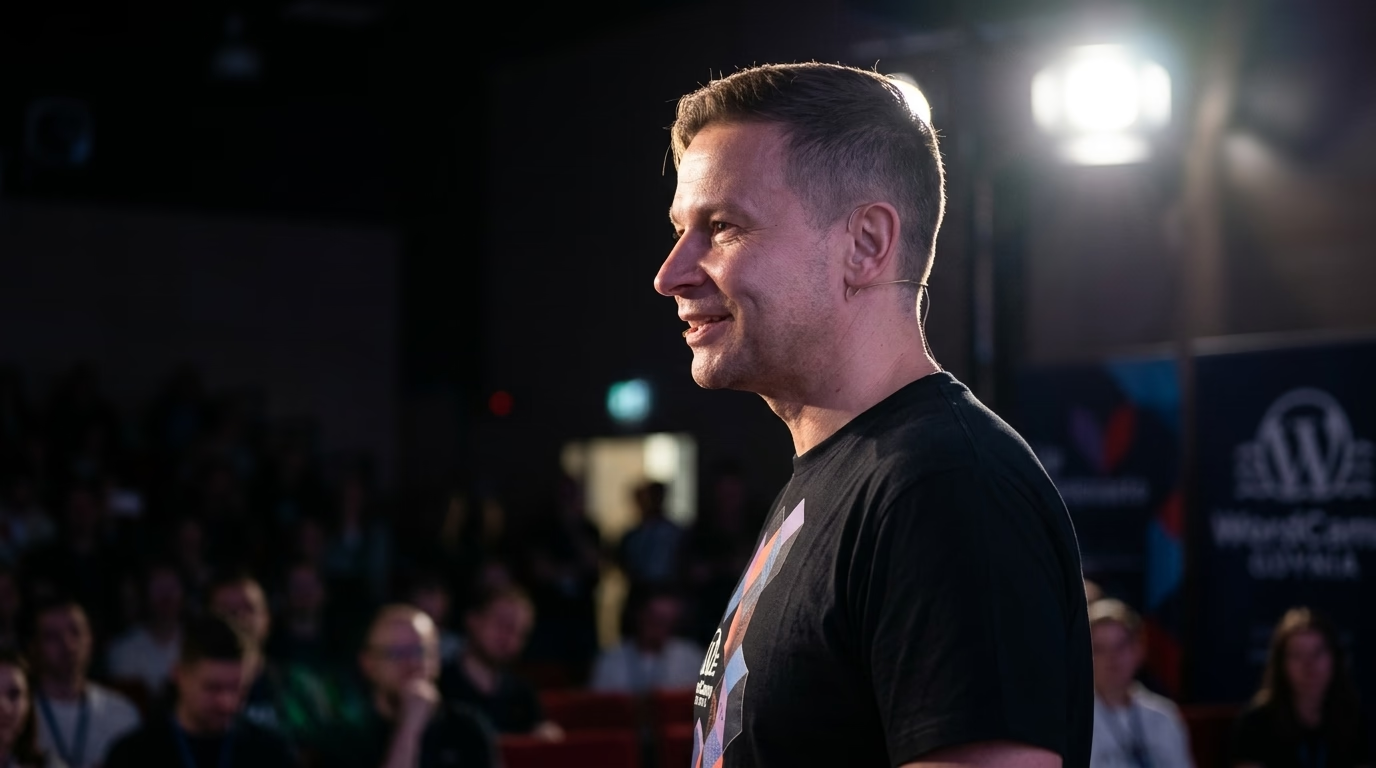
- I organise and speak at WordCamps.
- I have attended every WordCamp Europe from 2017 to 2026.
- Local WordPress meetup: Bucharest WordPress Meetup
Bucharest represents Eastern Europe’s premier technology powerhouse and the primary economic engine of Romania. Anchored by major business and technology districts such as Pipera, Floreasca, and the University Politehnica campus, the city hosts global technology giants, high-growth software scale-ups, fintech disruptors, and expanding industrial exporters. In such a competitive regional capital, operating an outdated, sluggish corporate website on an overloaded monolithic CMS creates friction in international client acquisition. Many Romanian enterprises find themselves trapped by brittle WordPress, Drupal, or Joomla installations burdened with security patches, slow response times, and high hosting bills.
As an independent software engineer with over fifteen years of development experience, I execute complete, zero-downtime platform migrations to modern decoupled architectures utilizing Astro and Next.js. My technical methodology guarantees the preservation of organic search visibility, delivers sub-second page speeds on mobile networks, and eliminates backend vulnerability risks. I collaborate remotely from Gdynia, Poland, operating smoothly within the Central European Time (CET) window with clear technical documentation, transparent Git commits, and direct engineer-to-client communication.
Key drivers for replacing monolithic CMS platforms in Bucharest
For over a decade, standard web projects deployed monolithic architectures that generated every single page dynamically through server-side PHP scripts and MySQL database queries. For modern enterprises in Bucharest, this traditional paradigm introduces severe technical and financial drawbacks:
First, security exposure and continuous plugin maintenance. Monolithic platforms depend heavily on third-party plugins for SEO, contact forms, multilingual routing, and caching. Every unpatched extension represents an entry point for automated attacks and credential compromises. With Astro, the public-facing frontend consists exclusively of compiled static HTML, CSS, and media files distributed across global edge delivery networks. Because there is no public database connection or executable script engine on the web server, external attack vectors are eliminated.
Second, web vitals performance and mobile user engagement. Heavy commercial CMS themes deliver massive bundles of JavaScript and unoptimized CSS that block main thread execution on mobile devices. This inflates Time to First Byte (TTFB) and Interaction to Next Paint (INP), leading to poor conversion rates and ranking downgrades in Google. Astro applies the Islands Architecture pattern: pages are delivered as clean HTML by default, and interactive JavaScript components are hydrated only when and where strictly needed.
Third, infrastructure cost control and effortless traffic scaling. Maintaining dedicated server instances with Redis cache layers to withstand traffic spikes during product launches or tech conferences can quickly inflate infrastructure budgets. In contrast, static and hybrid Astro/Next.js architectures run seamlessly on low-cost serverless edge environments, absorbing large visitor volumes with consistent stability.
A systematic engineering roadmap for zero-loss migrations
Executing a successful platform migration requires disciplined engineering to protect operational workflows and maintain hard-won search engine equity. I implement a proven seven-phase migration framework:
1. Forensic URL extraction and digital asset auditing
The project begins with a complete crawl of your existing web property. Combining automated scrapers, historical metrics from Google Search Console, and raw server access logs, I build an exhaustive database of all public URLs, downloadable documents, image assets, and legacy redirects. High-performing landing pages with valuable inbound backlink profiles are given dedicated tracking benchmarks.
2. Content normalization and legacy markup cleanup
Database contents often harbor residual code from obsolete page builders (such as Visual Composer, Divi, or Elementor) and unstructured inline styles. I develop custom extraction scripts to clean and normalize this data, organizing it into type-safe Astro Content Collections or clean JSON schemas, while preserving authors, publication dates, and category structures.
3. Exhaustive 301 permanent redirect matrix
The most critical step in preserving search engine visibility is precise URL mapping. I construct a deterministic redirect matrix where every retired or modified URL routes directly via a permanent HTTP 301 status code to its exact new destination. Blanket redirects to the home page are strictly avoided, as search engine crawlers classify them as soft-404 errors, causing organic authority to decay.
4. Preservation of SEO metadata, OpenGraph, and structured schema
All page titles, meta descriptions, canonical URLs, and OpenGraph social tags are accurately migrated. In addition, I implement rich JSON-LD semantic structured schemas tailored to Bucharest enterprises (including Organization, LocalBusiness, ProfessionalService, Product, and FAQPage schemas), ensuring clean discoverability in both traditional search engines and AI generative models.
5. Staging deployment and automated validation
Before any DNS records are modified, the new frontend is deployed to an authenticated, non-indexed staging environment. During this stage, I execute comprehensive automated verification sweeps:
- Deep status code scanning across all mapped URL paths to rule out 404 errors or redirection breaks.
- Automated accessibility audits against WCAG 2.2 AA guidelines (verifying focus rings, semantic color contrasts, and screen-reader tags).
- Throttled network profiling to ensure imagery renders efficiently via responsive modern AVIF and WebP encodings.
- End-to-end testing of lead generation forms and webhook connectivity into your internal CRM or notification channels.
6. Seamless production cutover
The DNS switch is scheduled during a planned low-traffic period, following advance reduction of TTL values to guarantee near-instant global propagation. As soon as incoming traffic lands reliably on the new production instance, pre-release noindex flags are cleared and crawler directives are audited.
7. Google Search Console surveillance
Throughout the first four weeks following the cutover, I continually evaluate coverage reports and crawl statistics inside Google Search Console. Any detected indexation anomalies or unforeseen search query shifts are rapidly diagnosed and resolved.
Architectural comparison: Astro vs. Next.js for your project
Choosing the correct frontend framework depends directly on the functional nature of your web portal:
| Architectural Metric | Astro (Static First & Island Architecture) | Next.js (App Router & Server Components) |
|---|---|---|
| Optimal Project Fit | Corporate marketing sites, tech docs, product catalogs | SaaS web apps, dynamic customer portals, intranets |
| Rendering Strategy | Static Site Generation (SSG) with selective hydration | Server-Side Rendering (SSR) and dynamic streaming |
| Client-Side JavaScript | Zero kilobytes by default on informational pages | Bundles React runtime across client-rendered components |
| Interaction Latency (INP) | Outstanding (commonly below 25 milliseconds) | Highly responsive when bundle sizes are kept lean |
| Hosting Complexity | Extremely simple (edge CDN or static object storage) | Requires Node.js application server or serverless compute |
For the majority of Bucharest manufacturing suppliers, software consultancies, and B2B corporate platforms, Astro represents the fastest, most secure, and most cost-effective solution. When client systems require protected account portals, real-time transactional feeds, or dynamic state mutations, I implement the frontend with Next.js.
Regulatory compliance and digital standards in Romania
Modernizing your web frontend provides an excellent opportunity to align with European Union directives and Romanian digital legislation:
Romanian Law 232/2022 and European standard EN 301 549
Romania transposed the European Accessibility Act via Law 232/2022, which establishes accessibility requirements for commercial electronic services and online trade. Frontends must be accessible to users with visual, auditory, or motor impairments, satisfying WCAG 2.2 Level AA. I implement semantic HTML structures, descriptive alternative text for images, high-contrast visual hierarchies, and full keyboard navigability.
Data protection under GDPR and Romanian Law 506/2004
Under the General Data Protection Regulation (GDPR) and Law 506/2004 concerning personal data processing in electronic communications, non-essential cookies and analytics scripts require informed prior consent. By building on Astro, we prune intrusive external trackers, bundle web fonts and SVG icons directly on the server, and deploy privacy-first banner solutions compliant with Romanian privacy standards. The Romanian supervisory authority is ANSPDCP.
Corporate transparency disclosures
Romanian commercial legislation mandates that commercial entities display essential identification information on their public websites: registered company name, unique fiscal registration code (CIF), Trade Register registration number (J-number), and official registered headquarters address.
Initiate your migration project
If your organization in Bucharest is seeking to retire an aging, vulnerable CMS and transition to an ultra-fast, modern web architecture, reach out with your website URL and project goals. I will deliver a comprehensive technical review and an actionable migration proposal aligned with your operational roadmap.
Selected projects
Examples of my work.
E-commerce Development: estel-poland.com
estel-poland.com is a professional online store for cosmetics, created for customers seeking high-quality skincare and makeup products. The platform is desig...
E-commerce Development: gdasj.pl
gdasj.pl is a local website from Gdansk, built for simple publishing, good performance, and clear access to content.
E-commerce Development: gidpl.ru
Since March 25, 2013, the GIDpl.ru portal has continuously informed users about the most important cultural and sports events as well as tourist and commerci...
WordPress support & development in Bucharest
See also in Romania
Need this service: Next.js / Astro migration in Bucharest?
Describe your project by e-mail. I reply within 24 hours.
Describe your projectExplore other WordPress services and knowledge base
Migration to Astro, Next.js, and headless WordPress.
WooCommerce sync with ERP and wholesale systems.
Business process automation around WordPress and company systems.
Library of concrete automation use cases.
Headless WordPress, Sanity, Strapi, and Contentful with Astro or Next.js.
Astro, MDX, edge delivery, and Core Web Vitals measured on real traffic.
Custom WordPress engineering and architecture.
Scalable headless, ERP, and AI architecture for enterprise.
Related categories
Supporting articles
Six to sixteen weeks for typical engagements, with a four-phase shape: discovery, scoping, build and cutover, tuning. The variables are catalogue size, integration count, URL preservation, and editorial team readiness, not framework choice.
A definitive 4-year Total Cost of Ownership (TCO) analysis, real-world Core Web Vitals benchmarks, Astro 7 GraphQL APQ architecture, and a 10-point executive decision matrix for choosing between decoupled and traditional WordPress.
The Shopify Plus vs WooCommerce headless decision in 2026 is no longer a binary "platform vs custom" trade-off. Both can run headless, both integrate AI, both ship at the edge. The real axes are control, total cost over five years, and exit strategy. This article walks the matrix with confirmed platform facts.