Website & application migration in Budapest
I migrate sites from WordPress, Joomla, Drupal, Angular, Vue and other technologies to Astro and Next.js. I plan each migration to keep SEO, content and features intact and switch over in an agreed window. I work alone and have years of experience with both legacy and modern stacks.
- I have had a wordpress.org account since 2006.
- I contributed to WordPress core for versions 7.0 and 7.1.
- I maintain 30 plugins on wordpress.org.
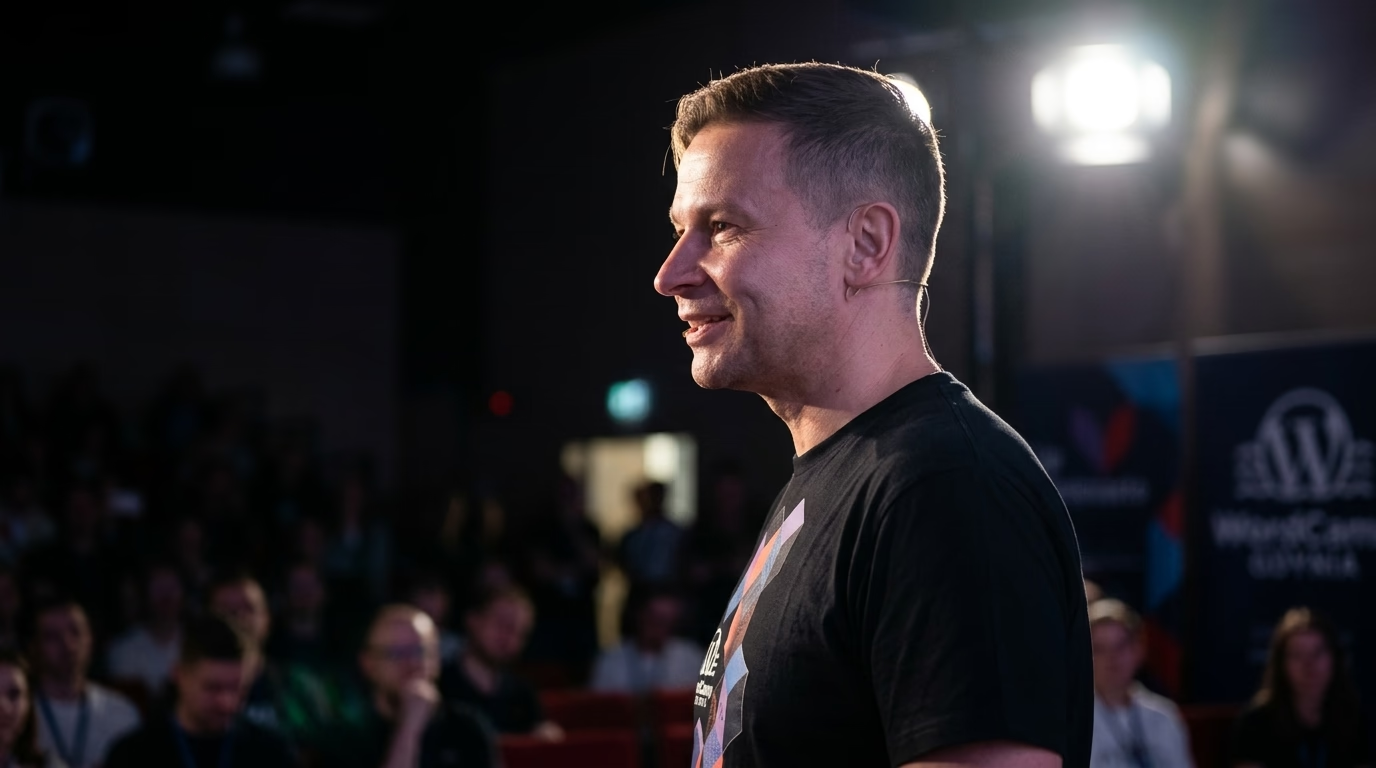
- I organise and speak at WordCamps.
- I have attended every WordCamp Europe from 2017 to 2026.
- Local WordPress meetup: Budapest WordPress Meetup
Budapest functions as the central economic engine, technological innovation center, and primary startup ecosystem of Hungary. Bolstered by prominent technology districts, software engineering hubs along the Danube, world-class academic institutions such as Budapest University of Technology and Economics (BME) and Eötvös Loránd University (ELTE), and an expanding roster of multinational scale-ups, local businesses compete aggressively on a global scale. However, numerous corporate organizations and B2B exporters in Budapest remain constrained by brittle monolithic websites built on legacy WordPress, Drupal, or older custom PHP frameworks, suffering from recurring maintenance headaches, plugin security alerts, and sluggish mobile page delivery.
As an independent software engineer with over fifteen years of specialized experience in modern web architecture, I deliver seamless, zero-loss technical migrations to decoupled static and hybrid platforms utilizing Astro and Next.js. My approach emphasizes radical performance gains in Core Web Vitals, impervious static security, and the complete preservation of historical search rankings. I provide direct engineering collaboration from Gdynia, Poland, operating in full alignment with Central European Time (CET) alongside teams in Budapest, with transparent written specifications and version-controlled Git deliverables.
Core motivations for replacing monolithic CMS systems in Budapest
The classical web paradigm of coupling content authoring, database management, and template rendering into a single monolithic server runtime has become an operational burden for forward-looking Hungarian enterprises:
First, recurring vulnerability risks and perpetual patching cycles. Traditional monolithic CMS installations depend on extensive arrays of third-party plugins for multilingual translation, SEO schemas, forms, and caching. Each individual extension expands the attack surface for automated bots probing for SQL injection and cross-site scripting vulnerabilities. In an Astro-powered architecture, the public website consists entirely of pre-compiled static HTML, CSS, and media assets deployed to global edge delivery networks. Because no live PHP runtime or public database connection exists in the delivery tier, external attack surfaces are removed.
Second, substandard web performance and mobile audience abandonment. Heavy commercial CMS themes deliver hundreds of kilobytes of unused JavaScript libraries and render-blocking stylesheets that saturate mobile processor threads. This results in elevated Time to First Byte (TTFB) and high Interaction to Next Paint (INP) latency. Astro addresses this fundamentally via its Islands Architecture: pages render as pure, instant HTML by default, and client-side JavaScript is hydrated exclusively for components that require active user interaction.
Third, hosting complexity and cost inflation during traffic spikes. Maintaining monolithic servers with Redis cache clusters to endure traffic spikes during marketing pushes or industrial trade fairs incurs substantial cloud hosting expenses. In contrast, decoupled static sites hosted on edge content delivery networks absorb intense traffic fluctuations with zero latency penalties and nominal operational expenses.
Disciplined seven-stage engineering protocol for platform migrations
A reliable platform migration demands rigorous execution to protect business operations and maintain hard-won search engine trust. I apply a proven engineering process:
1. Exhaustive crawl and route inventory extraction
The migration starts with an extensive audit of your existing web property. Utilizing automated crawlers alongside Google Search Console coverage data and raw server logs, I assemble an inventory of all public URLs, downloadable PDF assets, and localized routes. Pages with strong historical backlink authority receive explicit tracking checkpoints.
2. Content normalization and legacy shortcode sanitization
Database records are extracted through custom automated scripts that eliminate obsolete visual builder shortcodes (from tools such as WPBakery, Elementor, or Divi) and unstructured inline styles. The extracted copy is normalized into clean, typed Astro Content Collections or schema-validated JSON structures, ensuring that publication dates, authors, and localized taxonomy relationships remain intact.
3. Granular 301 permanent redirect matrix
The most critical step in preserving search engine visibility is precise URL mapping. I develop an exact URL redirection table assigning permanent 301 headers to ensure legacy addresses link to their direct replacement without intermediate hops. Catch-all redirects to root domains are deliberately rejected, because crawlers flag them as soft-404 responses, which degrades organic equity.
4. Reconstitution of SEO metadata and Schema.org markup
All page titles, meta descriptions, canonical declarations, and social OpenGraph tags are accurately migrated. In addition, I implement rich JSON-LD semantic structured schemas tailored to Budapest enterprises (including Organization, LocalBusiness, ProfessionalService, Product, and FAQPage schemas), ensuring clean discoverability in both traditional search engines and AI generative models.
5. Staging environment benchmarking and verification
Prior to modifying DNS records, the entire frontend is deployed to an authenticated, non-indexed staging environment. In this phase, I run thorough automated verification checks:
- Systematic HTTP status validation across all mapped URLs to eliminate 404 errors.
- Automated accessibility test suites verifying WCAG 2.2 AA conformance (sufficient color contrast, keyboard tab order, and screen-reader semantics).
- Performance audits under simulated low-bandwidth mobile connections verifying that media assets utilize modern AVIF and WebP encodings.
- Rigorous verification of inquiry funnels, file upload components, and webhook links into internal customer databases.
6. Coordinated DNS cutover and cache deployment
The cutover takes place during an agreed low-traffic window, preceded by lowering DNS TTL values to facilitate immediate global propagation. When production DNS successfully resolves to the new edge clusters, staging robots headers are decommissioned and production sitemaps submitted.
7. Continuous Search Console observation
Over the month following deployment, I actively review indexation and coverage metrics within Google Search Console. Any sudden crawl shifts, soft-404 alerts, or unmapped impressions are immediately diagnosed and rectified.
Strategic framework selection: Astro vs. Next.js in Budapest
Choosing the appropriate framework depends on the functional nature of your web portal:
| Technical Attribute | Astro (Static First & Island Architecture) | Next.js (App Router & Server Components) |
|---|---|---|
| Optimal Project Fit | Corporate marketing sites, tech docs, product catalogs | SaaS web apps, dynamic customer portals, intranets |
| Rendering Strategy | Static Site Generation (SSG) with selective hydration | Server-Side Rendering (SSR) and dynamic streaming |
| Client-Side JavaScript | Zero kilobytes by default on informational pages | Bundles React runtime across client-rendered components |
| Interaction Latency (INP) | Outstanding (commonly below 25 milliseconds) | Highly responsive when bundle sizes are kept lean |
| Hosting Complexity | Extremely simple (edge CDN or static object storage) | Requires Node.js application server or serverless compute |
For the majority of Budapest manufacturing exporters, financial service firms, and corporate tech websites, Astro delivers the optimal combination of speed, security, and low maintenance overhead. If your platform requires authenticated client dashboards, personalized data queries, or server-side workflows, I build the frontend with Next.js.
Digital legislation and regulatory standards in Hungary
Modernizing your web infrastructure provides an ideal opportunity to align with European Union regulations and Hungarian digital laws:
Accessibility compliance under Act CXXV of 2023
Hungary transposed the European Accessibility Act into national law through Act CXXV of 2023, mandating that digital services and consumer e-commerce platforms comply with European standard EN 301 549 and WCAG 2.2 Level AA accessibility criteria. I construct clean semantic HTML structures, high-contrast visual layouts, descriptive alternative text for graphical elements, and intuitive keyboard navigation patterns.
Privacy and cookie management under GDPR and Act CXII of 2011
In accordance with the General Data Protection Regulation (GDPR) and Hungarian Act CXII of 2011 on the Right to Informational Self-Determination, non-essential cookies and analytics scripts require informed prior consent. By deploying Astro, we remove unnecessary third-party tracking dependencies, host all typography locally, and provide lightweight consent management compliant with the National Authority for Data Protection and Freedom of Information (NAIH).
Corporate transparency disclosures
Hungarian commercial regulations require businesses operating digital presences to display essential corporate identification details: registered company name, registered company seat, tax identification number (adószám), company registration number (cégjegyzékszám), and direct electronic contact channels.
Initiate your migration project
If your organization in Budapest is seeking to retire an aging, vulnerable CMS and transition to an ultra-fast, modern web architecture, reach out with your website URL and project goals. I will conduct an architectural review and supply a phased migration blueprint suited to your digital strategy.
Selected projects
Examples of my work.
CMS Conf 2026: Modern Web Architecture
Building a high-performance conference website using Astro 5, Tailwind 4, and an AI-first approach with LLM optimization.
Confidential WooCommerce Performance Recovery & Core Web Vitals Optimization
How an EU-based B2B WooCommerce operator with a multilingual catalogue resolved critical checkout lag, reduced LCP from 5.4s to 1.8s, and cut checkout TTFB from 2.1s to 0.4s without risking transaction integrity.
Corporate Website: BALTIC PALACE
Baltic Palace is a unique spot on the map of the Polish coastline, combining modernity with cozy interior designs and a distinctive architectural form. Locat...
WordPress support & development in Budapest
Need this service: Next.js / Astro migration in Budapest?
Describe your project by e-mail. I reply within 48 hours.
Describe your projectExplore other WordPress services and knowledge base
Migration to Astro, Next.js, and headless WordPress.
WooCommerce sync with ERP and wholesale systems.
Business process automation around WordPress and company systems.
Library of concrete automation use cases.
Headless WordPress, Sanity, Strapi, and Contentful with Astro or Next.js.
Astro, MDX, edge delivery, and Core Web Vitals measured on real traffic.
Custom WordPress engineering and architecture.
Scalable headless, ERP, and AI architecture for enterprise.
Related categories
Supporting articles
Six to sixteen weeks for typical engagements, with a four-phase shape: discovery, scoping, build and cutover, tuning. The variables are catalogue size, integration count, URL preservation, and editorial team readiness, not framework choice.
A definitive 4-year Total Cost of Ownership (TCO) analysis, real-world Core Web Vitals benchmarks, Astro 7 GraphQL APQ architecture, and a 10-point executive decision matrix for choosing between decoupled and traditional WordPress.

The Shopify Plus vs WooCommerce headless decision in 2026 is no longer a binary "platform vs custom" trade-off. Both can run headless, both integrate AI, both ship at the edge. The real axes are control, total cost over five years, and exit strategy. This article walks the matrix with confirmed platform facts.