Website & application migration in Dublin
I migrate sites from WordPress, Joomla, Drupal, Angular, Vue and other technologies to Astro and Next.js. I plan each migration to keep SEO, content and features intact and switch over in an agreed window. I work alone and have years of experience with both legacy and modern stacks.
- I have had a wordpress.org account since 2006.
- I contributed to WordPress core for versions 7.0 and 7.1.
- I maintain 30 plugins on wordpress.org.
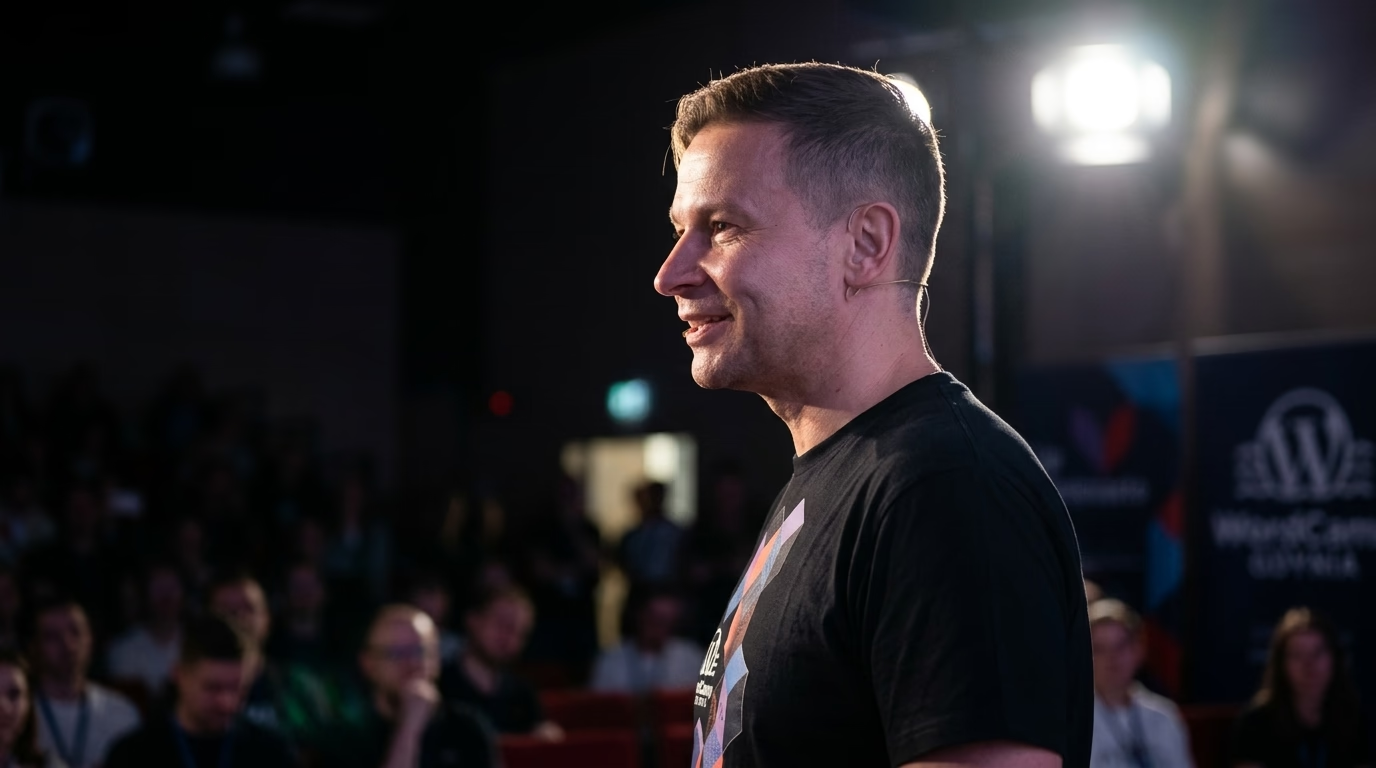
- I organise and speak at WordCamps.
- I have attended every WordCamp Europe from 2017 to 2026.
Modernising Digital Architecture for Dublin’s Tech and Corporate Leaders
Dublin is the vibrant technology and corporate capital of Ireland, anchoring European headquarters in Silicon Docks (Grand Canal Dock), global financial institutions in the IFSC, and high-growth professional services in Sandyford and Citywest. In this intensely competitive commercial environment, a company’s web platform is not merely a digital brochure; it is a critical revenue and lead-generation engine.
However, many established organisations across Ireland remain trapped by legacy infrastructure:
- Severe Monolithic Debt: Decades-old WordPress, Drupal, or Joomla installations burdened with bloated plugins, outdated PHP versions, and heavy SQL query chains that degrade server response times and produce red Core Web Vitals metrics.
- Client-Side Framework Bloat: Single-Page Applications (SPAs) built with React or Angular that force client mobile devices to parse megabytes of blocking JavaScript before displaying meaningful content.
- Escalating Security & Maintenance Costs: Constant patching of third-party plugin vulnerabilities and database vulnerabilities that consume valuable internal IT hours.
Migrating to modern frontend architectures, specifically Astro or Next.js, solves these problems at their root. As an independent Senior Web Engineer, I guide Dublin companies through seamless, secure migrations with zero downtime and guaranteed search visibility retention.
[Monolithic CMS (PHP/MySQL): heavy JS, slow TTFB, slow LCP]
---> [Decoupled Architecture (Astro/Next.js): Edge HTML, low TTFB, fast LCP]Architectural Decision: Choosing Between Astro and Next.js
Selecting the appropriate frontend framework depends strictly on the application’s functional requirements:
Astro: The Undisputed Leader for Marketing Sites, Portals & B2B
Astro is engineered around the revolutionary Islands Architecture:
- Zero-JavaScript by Default: Content is compiled ahead of time into pristine, semantic HTML and optimised CSS. Visitors download zero client-side JavaScript for informational sections.
- Selective Component Hydration: Interactive components (such as an enquiry calculator, a Dublin office locator, or a consultation booking widget) load as isolated React or Vue components only when they scroll into the viewport.
- Unrivalled Core Web Vitals Scores: Aims for green results on Google PageSpeed Insights, lowering user bounce rates and elevating organic search rankings.
Next.js: Tailored for Data-Intensive Apps and Headless Commerce
Next.js remains the premier framework for complex, application-driven digital environments:
- Hybrid Rendering Capabilities: Effortlessly combines Static Site Generation (SSG) with Server-Side Rendering (SSR) and Incremental Static Regeneration (ISR).
- Complex Backend Integrations: The optimal engine for client login portals, enterprise internal tools, and headless e-commerce platforms connected to enterprise ERPs.
Performance Comparison: Before and After Migration
| Technical Metric | Legacy Monolith (WordPress/Drupal) | Next.js (SSR / App Router) | Astro (Islands Architecture) |
|---|---|---|---|
| Database Vulnerability Risk | High (Direct SQL & PHP exposed) | Moderate (Serverless endpoints) | Virtually Zero (Static Edge distribution) |
| Scalability Under Traffic Spikes | Requires expensive autoscaling VPS | Node.js container scaling | Effortless global Edge CDN caching |
Guarding Organic Search Visibility During Migration
The primary concern when migrating an established enterprise website is preserving existing search rankings and referral traffic. My structured migration methodology guarantees zero loss of hard-earned organic equity:
Comprehensive URL Crawl & Inventory: Prior to any structural modifications, I execute a deep crawl of the existing site to document every active URL, heading hierarchy, meta description, image alt text, and internal link structure.
Deterministic 301 Redirect Rules at the CDN Edge: Any restructured or consolidated URLs are mapped into a strict 301 permanent redirection matrix deployed at the Edge network layer (Cloudflare or AWS CloudFront). This guarantees immediate response times and eliminates 404 dead ends.
Complete Schema.org Structured Data Parity: Implementation of rich JSON-LD microdata (
Organization,PostalAddressfor Dublin,Service,FAQPage,TechArticle), ensuring continuous indexing by search engine crawlers and generative AI answer engines (GEO/AEO).Staging Validation & Visual Regression Testing: The entire new frontend is deployed on an isolated staging domain. We conduct automated visual regression tests, Lighthouse audits, and link validation checks before updating production DNS records.
Irish Statutory Regulations, Accessibility, and Data Privacy
Corporate websites in Ireland must comply with rigorous statutory requirements:
1. European Accessibility Act (Irish S.I. No. 636/2023)
In effect since 28 June 2025, Ireland’s statutory instrument transposing the European Accessibility Act mandates that commercial services adhere to digital accessibility rules:
- WCAG 2.1 Level AA & EN 301 549: Digital services, consumer touchpoints, and commercial websites must be fully accessible.
- Native Semantic Markup: Astro’s clean HTML structure ensures native keyboard navigation, screen reader compatibility, and mathematically verified contrast ratios.
2. Privacy & Cookie Compliance (S.I. No. 336/2011 & GDPR)
Supervised by the Data Protection Commission (DPC) in Dublin:
- No Unconsented Tracking: Full integration of Google Consent Mode v2, programmatically halting analytics and marketing beacons until the visitor provides explicit opt-in consent.
- Elimination of Third-Party Data Leaks: Local self-hosting of web fonts and static libraries, preventing unauthorised data transfers to non-EU servers.
- Secure Form Data Ingestion: Form submissions are transmitted using TLS 1.3 encryption directly into your CRM via secure webhooks, without storing vulnerable unencrypted logs on web servers.
3. Corporate Transparency (Companies Act 2014 & Consumer Rights Act 2022)
Clear digital presentation of statutory business identification: CRO registration number, registered Dublin business address, and clear dispute resolution and withdrawal terms for commercial transactions.
4. Dublin Ecosystem Context: Silicon Docks, Fintech, and Global HQs
As Europe’s tech capital and headquarters hub for international technology leaders across the Grand Canal Docks:
- SaaS and Fintech Scale-ups: Dublin scale-ups need high-converting marketing sites that integrate smoothly with Stripe, Segment, or HubSpot while loading in sub-second speeds.
- Aircraft Leasing and Financial Services: Centered around the IFSC, financial institutions demand ironclad security architecture without vulnerable WordPress plugin matrices.
- Professional Services and Law Firms: Dublin commercial practices require accessible, fast documentation hubs compliant with strict DPC confidentiality rules.
- Green Tech and Sustainability Reporting: Irish businesses subject to EU sustainability disclosure rules cut hosting power usage by up to 80% through static Astro compilation.
Step-by-Step Migration Methodology
[1. Full Audit & Content Extraction]
  -> [2. Design System in Tailwind CSS]
  -> [3. Template Engineering in Astro/Next.js]
  -> [4. Rigorous Staging Audits & Testing]
-> [5. Zero-Downtime DNS Cutover]- Phase 1: Architecture Review & Data Inventory: Auditing content types, custom fields, and API endpoints without interrupting production editorial workflows.
- Phase 2: Component Library & Design System: Developing a modular UI library using Tailwind CSS and TypeScript, strictly aligned with your corporate branding.
- Phase 3: Frontend Implementation: Coding templates in Astro or Next.js and linking them to your data source (Headless WordPress, Sanity, or Git-based Markdown).
- Phase 4: Staging Verification & Performance Audits: Executing accessibility checks, Lighthouse testing, and verifying redirection rules on a private staging environment.
- Phase 5: DNS Cutover & Post-Launch Monitoring: Executing seamless domain delegation, validating SSL certificates, and actively monitoring indexing in Google Search Console.
The Advantages of Direct Senior Engineer Engagement
Partnering with an experienced independent contractor delivers significant efficiencies over multi-layered digital agencies:
- Direct Engineering Accountability: You work directly with the senior engineer who analyses the architecture, writes the code, and manages deployment.
- Commercial Transparency: Clear B2B milestone agreements, transparent billing, and absolute transfer of intellectual property upon delivery.
- Full Ownership of Source Code: Your codebase is version-controlled in your own private GitHub or GitLab repository, completely free of proprietary vendor lock-in.
- Rapid Communication: Direct access during European business hours with a guaranteed written reply within 48 business hours.
FAQ
Can our marketing team continue using WordPress after the migration?
Yes. We can decouple your setup, retaining your existing WordPress installation purely as a Headless CMS. Your marketing team continues publishing blog posts and pages in the familiar admin dashboard, while Astro retrieves the content via REST API or WPGraphQL at build time and serves it at lightning speed.
How long does an enterprise migration project take?
A typical corporate website migration comprising 20 to 50 unique page templates is generally completed within 3 to 5 working weeks. This covers technical discovery, design system coding, data migration, staging validation, and final cutover.
Will our current website experience downtime during the migration?
No. Your existing website remains entirely active and uninterrupted throughout the development process. All development and testing occur on an independent staging server. The final transition happens in seconds via a DNS update.
Where is the migrated site hosted?
The compiled static assets can be deployed to distributed global Edge networks (such as Cloudflare Pages or AWS CloudFront) or secure virtual private servers in EU data centres, ensuring ultra-low latency, GDPR compliance, and near-zero ongoing server bills.
Modernise Your Dublin Web Infrastructure Today
Are you ready to accelerate page speeds, eliminate technical debt, and ensure full compliance with Irish and EU web standards?
Get in touch today by providing the web address of your existing platform along with an overview of your migration goals. I will revert within 48 business hours with an initial architectural evaluation and actionable delivery timeline.
Selected projects
Examples of my work.
sprint.pl - WordPress Project | WPPoland
Sprint.pl is a website created for Sprint S.A., an Olsztyn-based company operating since 1988 as a systems integrator and provider of advanced software. The ...
Tech platform: VECTOR TECHNOLOGIES
VECTOR Technologies is an international technology company specialising in the development and production of telecommunications systems for providers providers across Europe.
Travel & Tourism Site: kaminski.pl
Kaminski.pl is a website created for traveler and blogger Michał Kamiński, who shared his experiences from exploring the world, inspiring others to discover ...
WordPress support & development in Dublin
Need this service: Next.js / Astro migration in Dublin?
Describe your project by e-mail. I reply within 48 hours.
Describe your projectExplore other WordPress services and knowledge base
Migration to Astro, Next.js, and headless WordPress.
WooCommerce sync with ERP and wholesale systems.
Business process automation around WordPress and company systems.
Library of concrete automation use cases.
Headless WordPress, Sanity, Strapi, and Contentful with Astro or Next.js.
Astro, MDX, edge delivery, and Core Web Vitals measured on real traffic.
Custom WordPress engineering and architecture.
Scalable headless, ERP, and AI architecture for enterprise.
Related categories
Supporting articles
Six to sixteen weeks for typical engagements, with a four-phase shape: discovery, scoping, build and cutover, tuning. The variables are catalogue size, integration count, URL preservation, and editorial team readiness, not framework choice.
A definitive 4-year Total Cost of Ownership (TCO) analysis, real-world Core Web Vitals benchmarks, Astro 7 GraphQL APQ architecture, and a 10-point executive decision matrix for choosing between decoupled and traditional WordPress.
The Shopify Plus vs WooCommerce headless decision in 2026 is no longer a binary "platform vs custom" trade-off. Both can run headless, both integrate AI, both ship at the edge. The real axes are control, total cost over five years, and exit strategy. This article walks the matrix with confirmed platform facts.