Website & application migration in Edinburgh
I migrate sites from WordPress, Joomla, Drupal, Angular, Vue and other technologies to Astro and Next.js. I plan each migration to keep SEO, content and features intact and switch over in an agreed window. I work alone and have years of experience with both legacy and modern stacks.
- I have had a wordpress.org account since 2006.
- I contributed to WordPress core for versions 7.0 and 7.1.
- I maintain 30 plugins on wordpress.org.
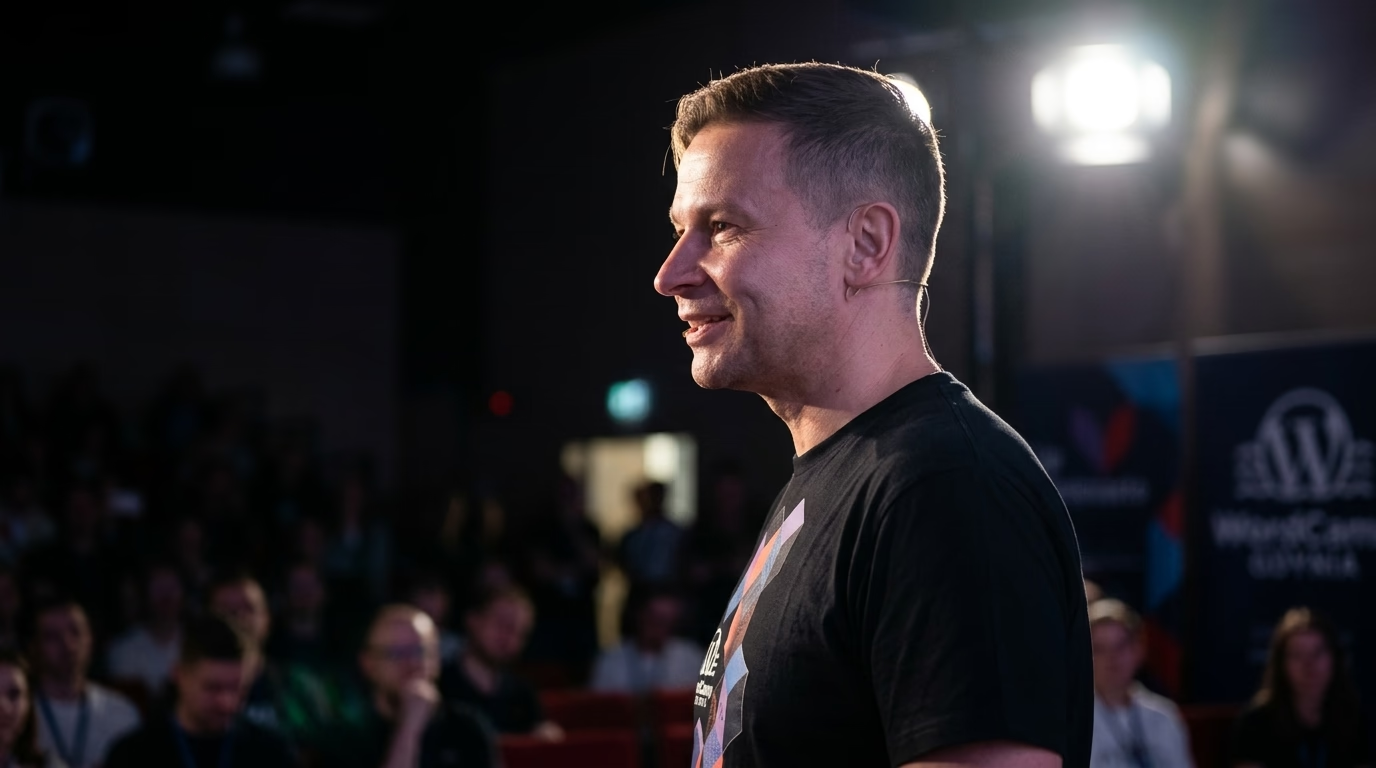
- I organise and speak at WordCamps.
- I have attended every WordCamp Europe from 2017 to 2026.
Modernising Digital Architecture for Edinburgh’s Financial, Academic, and Tech Ecosystem
Edinburgh stands as Scotland’s historic capital and premier commercial powerhouse, the second-largest financial centre in the UK after London, a European hub for fintech and asset management, home to world-renowned research universities, and a thriving digital and creative quarter spanning Leith and CodeBase. In this sophisticated commercial landscape, enterprise websites serve as critical brand anchors, client acquisition engines, and public communication portals.
However, many established Scottish organisations remain constrained by aging web platforms:
- Severe Monolithic Debt: Years of incremental additions to WordPress, Drupal, or Joomla instances have resulted in slow server response times, fragile database query chains, and red Core Web Vitals metrics.
- Client-Side Framework Bloat: Single-Page Applications (SPAs) built with React or Angular that force client mobile devices to parse megabytes of blocking JavaScript before displaying meaningful content.
- Escalating Security & Maintenance Costs: Constant patching of third-party plugin vulnerabilities and database vulnerabilities that consume valuable internal IT hours.
Migrating to modern frontend architectures, specifically Astro or Next.js, solves these problems at their root. As an independent Senior Web Engineer, I guide Edinburgh companies through seamless, secure migrations with zero downtime and guaranteed search visibility retention.
[Monolithic CMS (PHP/MySQL): heavy JS, slow TTFB, slow LCP]
---> [Decoupled Architecture (Astro/Next.js): Edge HTML, low TTFB, fast LCP]Technology Evaluation: When to Choose Astro vs Next.js
Selecting the optimal frontend environment depends strictly on your platform’s operational characteristics:
Astro: The Premier Solution for Editorial Portals, B2B & Research
Astro centres on the groundbreaking concept of Islands Architecture:
- Zero Client Scripting by Default: Editorial content and brochure layouts compile directly into lightweight HTML and minified CSS. Your site visitors download zero JavaScript overhead for standard reading experiences.
- Selective Component Hydration: Interactive components (such as an enquiry calculator, an interactive Edinburgh office locator, or a consultation booking widget) load as isolated React or Vue components only when they scroll into the viewport.
- Flawless Core Web Vitals: Targeting green scores on Google PageSpeed tests, which improves user retention and lifts organic keyword visibility.
Next.js: Tailored for Dynamic Applications and Headless Commerce
Next.js provides an established foundation for complex, transactional Scottish web platforms:
- Flexible Rendering Strategies: Seamlessly blends Static Site Generation (SSG) with Server-Side Rendering (SSR) and on-demand cache revalidation.
- Robust Enterprise Connectors: The premier framework for customer self-service portals, membership platforms, and headless commercial sites integrated directly with backend ERP systems.
Performance and Safety Benchmark: Monolith vs Modern Frontend
| Key Engineering Indicator | Legacy Scottish Monolith (WordPress) | Next.js Server Architecture | Astro Edge Islands |
|---|---|---|---|
| Direct Attack Surface | Broad (Exposed SQL/PHP engines) | Moderate (API endpoints) | Virtually Absent (Static pre-renders) |
| Traffic Spike Resilience | Fragile under simultaneous load | Elastic container scaling | Instant global Edge CDN response |
Technical Safeguards for Organic Search Equity
When Scottish organisations undergo architectural overhauls, safeguarding established SEO equity is non-negotiable. I deploy a rigorous, deterministic process to guarantee zero loss of search impressions:
Deep Site Crawl & Structural Mapping: Prior to altering server configurations, I execute an exhaustive crawl of the legacy site. This creates an exact audit of all indexable URLs, heading sequences (H1-H6), meta tags, media alt text, and internal link topologies.
Edge-Level 301 Redirection Architecture: Any relocated or consolidated pathways are mapped into high-speed permanent redirection rules deployed at the CDN edge (Cloudflare Workers or AWS Edge). This avoids redirect chains and returns 301 codes with negligible latency.
Complete Schema.org Structured Data Parity: Implementation of rich JSON-LD microdata (
Organization,PostalAddressfor Edinburgh,Service,FAQPage,TechArticle), ensuring continuous indexing by search engine crawlers and generative AI answer engines (GEO/AEO).Staging Review & Regression Safeguards: The entire compiled frontend is deployed onto an isolated staging environment. We run visual regression audits, Core Web Vitals profiling, and broken link verification before authorising the production DNS update.
UK Legal Standards, Accessibility and Data Privacy in Scotland
Corporate websites operating in Scotland must adhere strictly to UK statutory legislation and Scottish digital standards:
1. Digital Accessibility (Equality Act 2010 & WCAG 2.2 AA)
Under the Equality Act 2010 and Public Sector Bodies Accessibility Regulations:
- Commercial and public services must ensure barrier-free digital access complying with WCAG 2.2 Level AA standards.
- Astro renders clean, semantic document structures that deliver seamless screen reader interpretation, logical tab stops, and certified contrast ratios for text and UI controls.
2. Privacy & Data Integrity (UK GDPR, DPA 2018 & PECR)
Supervised by the Information Commissioner’s Office (ICO):
- Zero Illicit Tracking: Eliminating third-party tracking scripts and self-hosting all web typography locally to prevent non-compliant data leaks.
- Compliant Consent Integration: Technical integration of privacy consent mechanisms supporting Google Consent Mode v2, preventing marketing beacons from executing before explicit user agreement.
- Encrypted Form Transmission: Form submissions are secured via TLS 1.3 and piped directly into CRM or marketing automation webhooks without writing unprotected entries to web server disk.
3. Corporate Transparency & Language Standards
- Companies Act 2006: Clear digital presentation of statutory business identification: Companies House registration number, registered Scottish office address, and VAT registration.
- Bilingual Capabilities: For public authorities or organisations with obligations under the Gaelic Language (Scotland) Act 2005, Astro provides clean multilingual routing with separate URLs and
hreflang="gd"tags.
4. Edinburgh Business Landscape: Asset Management, Fintech, and Informatics
Edinburgh stands out as one of Europe’s premier knowledge economies:
- Asset Management and Financial Services: Institutions across Charlotte Square and George Street require high-security architectures free from public database attack surfaces.
- Fintech and Digital Banking: Scale-ups in the CodeBase tech incubator demand rapid page loads, zero client bloat, and smooth integration with international payment gateways.
- Academic Research and Life Sciences: Centered around the University of Edinburgh’s Informatics Forum and BioQuarter, technical portals demand accessible, search-engine-readable documentation hubs.
- Legal and Commercial Consultancies: Leading Scottish law firms and Edinburgh corporate consultancies require full compliance with WCAG 2.2 AA and strict confidentiality assurances.
Step-by-Step Migration Methodology
[Phase 1: Architecture Audit] -> [Phase 2: Tailwind UI Library] -> [Phase 3: Astro/Next Template Coding] -> [Phase 4: Staging Testing] -> [Phase 5: DNS Cutover]- Phase 1: Architecture Review & Data Inventory: Auditing content types, custom fields, and API endpoints without interrupting production editorial workflows.
- Phase 2: Semantic Component Engineering: Constructing an accessible, responsive design system in Tailwind CSS and TypeScript, tailored to your brand guidelines.
- Phase 3: Core Platform Coding: Building clean Astro or Next.js page templates and connecting them to your headless content repository (WordPress, Strapi, Sanity, or MDX files).
- Phase 4: Comprehensive Staging Audits: Validating performance scores via Google Lighthouse, auditing WCAG accessibility parameters, and testing all 301 redirection rules on a password-protected environment.
- Phase 5: Seamless DNS Transition: Executing the domain switch with automated SSL issuance, monitoring Google Search Console indexing, and providing post-launch engineering support.
Why Choose Direct Senior Engineer Collaboration in Edinburgh?
Engaging directly with an experienced independent contractor cuts through the inefficiency of traditional agency structures:
- Unfiltered Technical Access: You communicate directly with the software engineer who designs the architecture, writes the implementation code, and executes the production launch.
- Clear Commercial Terms: Predictable B2B billing schedules, structured sprint milestones, and unconditional assignment of all intellectual property rights.
- Codebase Independence: The entire source code is maintained inside your company’s private GitHub or GitLab account, granting you complete autonomy without platform lock-in.
- Reliable Turnaround: Ongoing direct communication aligned with UK business hours, accompanied by a formal 48-hour response guarantee.
FAQ
Is it possible for our editorial staff to keep using the WordPress dashboard?
Yes. We can decouple your site architecture, allowing your team to utilise your existing WordPress installation solely as a headless content engine. Content creators draft articles and updates within their habitual administrative panel, while Astro ingests published records during automated build routines and delivers static pages in milliseconds.
What is the expected delivery timeframe for a migration project in Edinburgh?
For a standard Scottish corporate website comprising 15 to 45 unique page templates and post archives, delivery typically spans 15 to 25 working days. The engagement incorporates technical analysis, UI component engineering in Tailwind CSS, content migration, accessibility benchmarking, and domain cutover.
Will our existing Scottish corporate website experience service downtime during the changeover?
No. Your live website remains fully functional, accepting client leads and enquiries without disruption throughout the entire build phase. The development lifecycle, component testing, and validation checks take place exclusively on a private staging sub-domain. The final go-live switchover is achieved smoothly via a rapid DNS record propagation.
What infrastructure environments are recommended for hosting the rebuilt platform?
Static assets and compiled markup distribute globally across modern Edge CDN networks (like Cloudflare Pages or AWS CloudFront with London/Edinburgh edge nodes), providing instantaneous loading times, robust DDoS immunity, and dramatically lowered hosting overheads.
Modernise Your Edinburgh Web Infrastructure Today
Are you ready to accelerate page speeds, eliminate technical debt, and ensure full compliance with UK and Scottish web standards?
Send a project brief with your current website address and key objectives. I will review your requirements and provide an initial architectural assessment and migration roadmap within 48 business hours.
Selected projects
Examples of my work.
E-commerce Development: nolaclub.pl
nolaclub.pl is an online store for nail polish and cosmetics distribution, with a product catalogue, checkout flow, and technical SEO.
E-commerce Development: Norwegian housing estate
osiedlenorweskie.pl is a website for a housing estate in Koszalin, presenting the place, architecture, and practical information.
E-commerce Development: PARTNERSTWO IOS/ANDROID APP
The mobile app, available at Google Play, was developed for NSZZ Solidarność to achieve the key objectives of a project promoting good practices in sustainab...
WordPress support & development in Edinburgh
See also in Great Britain
Need this service: Next.js / Astro migration in Edinburgh?
Describe your project by e-mail. I reply within 48 hours.
Describe your projectExplore other WordPress services and knowledge base
Migration to Astro, Next.js, and headless WordPress.
WooCommerce sync with ERP and wholesale systems.
Business process automation around WordPress and company systems.
Library of concrete automation use cases.
Headless WordPress, Sanity, Strapi, and Contentful with Astro or Next.js.
Astro, MDX, edge delivery, and Core Web Vitals measured on real traffic.
Custom WordPress engineering and architecture.
Scalable headless, ERP, and AI architecture for enterprise.
Related categories
Supporting articles
Six to sixteen weeks for typical engagements, with a four-phase shape: discovery, scoping, build and cutover, tuning. The variables are catalogue size, integration count, URL preservation, and editorial team readiness, not framework choice.
A definitive 4-year Total Cost of Ownership (TCO) analysis, real-world Core Web Vitals benchmarks, Astro 7 GraphQL APQ architecture, and a 10-point executive decision matrix for choosing between decoupled and traditional WordPress.

The Shopify Plus vs WooCommerce headless decision in 2026 is no longer a binary "platform vs custom" trade-off. Both can run headless, both integrate AI, both ship at the edge. The real axes are control, total cost over five years, and exit strategy. This article walks the matrix with confirmed platform facts.