Website & application migration in Liverpool
I migrate sites from WordPress, Joomla, Drupal, Angular, Vue and other technologies to Astro and Next.js. I plan each migration to keep SEO, content and features intact and switch over in an agreed window. I work alone and have years of experience with both legacy and modern stacks.
- I have had a wordpress.org account since 2006.
- I contributed to WordPress core for versions 7.0 and 7.1.
- I maintain 30 plugins on wordpress.org.
- I organise and speak at WordCamps.
- I have attended every WordCamp Europe from 2017 to 2026.
- Local WordPress meetup: WordPress Liverpool
Liverpool had an estimated 507,915 residents in 2025, and the wider Liverpool City Region encompasses over 1.5 million people across Liverpool, Wirral, Sefton, Knowsley, St Helens, and Halton. Invest Liverpool City Region highlights five primary commercial pillars: advanced manufacturing, creative and digital technologies, financial and professional services, maritime and logistics, and health and life sciences. Many organizations across these sectors run websites that grew organically over a decade on WordPress, Joomla, or Drupal and now load slowly on mobile or require risky plugin patching every week. Moving the public frontend to Astro or Next.js resolves those structural bottlenecks, provided the migration keeps every URL, every enquiry form, and every organic search signal intact. Operating as an independent developer working remotely and in writing from Gdynia, I run that migration for Liverpool businesses and verify every route before and after cutover.
Is my Liverpool website slow because of WordPress, or because of how it was built?
Often it is the latter. Before I propose a migration, I audit the existing website: hosting configuration, page caching, active plugins, visual page builders, image weight, and third-party marketing scripts. If deactivating bloated plugins and configuring proper server-level page caching would bring your existing WordPress install back to health, I state that clearly in my written review and the migration does not happen.
A migration to Astro or Next.js earns its keep when the CMS architecture itself has become the limiting factor. Typical signs include content that changes once a month still being queried from MySQL on every visitor request, a bespoke theme that breaks whenever PHP or plugins are updated, editors who avoid the admin panel because saving a page times out, or a security patch schedule nobody dares to run before a busy campaign.
Astro fits content-led websites: corporate service pages, project portfolios, news hubs, event listings, academic or training course pages, and technical documentation. It pre-renders clean static HTML at build time and ships JavaScript only to the interactive components that explicitly need it, making it straightforward to stay well within Google’s official Core Web Vitals thresholds (Largest Contentful Paint up to 2.5 s, Interaction to Next Paint up to 200 ms, Cumulative Layout Shift up to 0.1). Next.js fits platforms that require authenticated logins, customer portals, multi-step booking flows, or server rendering per request. Both frameworks can read content from a headless CMS, from Markdown/MDX files in a Git repository, or directly from your existing WordPress installation via its REST API or WPGraphQL while the move is in progress.
Liverpool City Region sectors: where decoupled frontends deliver the clearest return
Across business districts from the Commercial District around Old Hall Street and Princes Dock (Liverpool Waters) to the Baltic Triangle, the Knowledge Quarter (KQ Liverpool), and the Freeport logistics corridors around the Port of Liverpool in Seaforth and Wirral Waters, digital platforms face distinct operational demands:
- Maritime, Port Logistics and Freeport Supply Chains (Princes Dock, Seaforth, Birkenhead): Freight forwarders, marine engineering firms, and customs specialists serving the Port of Liverpool publish large libraries of vessel schedules, tariff guides, compliance certificates, and downloadable PDF datasheets. Moving public content to an edge-cached Astro build while isolating client shipment portals on a separate Next.js route eliminates database latency and protects high-value B2B search rankings.
- Health, Life Sciences and Research Spin-outs (Knowledge Quarter, Paddington Village, Sci-Tech Daresbury): Biotech companies, clinical diagnostics providers, and research collaborations linked to the University of Liverpool, Liverpool John Moores University, and the Liverpool School of Tropical Medicine maintain regulatory documentation, publication archives, and partner portals. Typed content schemas in Astro prevent formatting drift and ensure WCAG 2.1 AA accessibility compliance across every template.
- Creative, Digital and Professional Services (Baltic Triangle, Commercial District): Solicitors, chartered accountants, architectural practices, and digital studios around St Paul’s Square and Jamaica Street rely on fast mobile landing pages and case study directories to convert B2B enquiries without exposing a vulnerable database login to automated bot traffic.
What does the Liverpool migration actually involve, step by step?
- Comprehensive URL inventory. I crawl the live website and merge the output with the URLs that earn impressions or clicks in Google Search Console, landing pages recorded in analytics, and raw server access logs. Legacy redirects from earlier redesigns and direct links to PDF brochures or specification sheets go into the inventory too, because they frequently hold backlinks from local councils, universities, trade bodies, or regional press.
- Written URL map. Every legacy URL receives one explicit assignment: retain the exact path, redirect via a single-hop HTTP 301 to its closest successor page, or return a deliberate HTTP 410 when content is permanently retired. You receive the map both as a readable spreadsheet and as the production edge routing file. Zero redirect chains and zero blanket redirects to the homepage.
- Typed content model. Legacy post types, custom fields, taxonomy terms, navigation menus, and media assets are structured into typed collections. This extraction step cleans up visual page-builder shortcodes, inline styles, and inconsistent date formats before they touch the new templates.
- Structured data generation. Organization, LocalBusiness, BreadcrumbList, Article, Event, Product, or FAQPage JSON-LD markup is generated directly from the same template fields as the visible text, preventing schema drift.
- Language and regional hreflang. If your site serves only the UK in English,
hreflangis unnecessary. If you also operate an Irish edition (en-IE) or continental European versions alongside your UK pages (en-GB), each route carries reciprocalhreflanglinks verified directly on the compiled HTML. - Staging and parity checks. Old and new pages are compared systematically across
<title>, meta description, canonical URL, H1-H3 hierarchy, structured data, and internal links. Every difference is either fixed or documented as an intentional update. - Staged cutover. Larger sites transition section by section behind edge routing rules so the rest of the domain stays on the old system until each route family is verified. Smaller corporate sites switch in a single coordinated window with the legacy server kept warm as an instant fallback.
- Search Console verification after launch. I submit the updated XML sitemaps, inspect representative redirected URLs, and monitor the Page Indexing report. If the domain or subdomain changes, I file a Change of Address notification for every verified property variant, following Google’s site move documentation.
Pre-cutover verification table for Liverpool migrations
| Verification area | What I check before switching production traffic |
|---|---|
| URL & PDF redirect map | Every indexed page and linked PDF in Search Console and server logs returns HTTP 200 or a single 301 hop |
| Core Web Vitals thresholds | Templates verified against official web.dev thresholds (LCP up to 2.5 s, INP up to 200 ms, CLS up to 0.1) |
| PECR Schedule A1 & UK GDPR | Storage and scripts audited against PECR regulation 6; processor flows documented for every form |
| Equality Act 2010 accessibility | Semantic HTML landmarks, keyboard navigation, focus states, form labels and WCAG 2.1 AA contrast checked |
| Schema.org JSON-LD parity | Organization, BreadcrumbList, Article, Event and FAQPage schemas validated against legacy output |
| Companies Act 2006 footer | Registered company name, England & Wales number, registered office address and VAT details verified |
Which UK legal and regulatory rules matter for a Liverpool website migration?
Rebuilding a commercial website in England is an ideal moment to bring privacy, cookie storage, accessibility, and statutory company disclosures into clean alignment with current UK legislation:
Personal data and UK GDPR (Data Protection Act 2018 & Data (Use and Access) Act 2025). Personal data processed through your website, including contact form enquiries, newsletter sign-ups, job applications, and analytics logs, falls under the UK GDPR and the Data Protection Act 2018. Supervision and enforcement sit with the Information Commission (the corporate body established under the Data (Use and Access) Act 2025 to succeed the Information Commissioner’s Office, ico.org.uk). Because moving from a monolithic CMS to Astro or Next.js changes how form payloads are transmitted and stored, I document every endpoint, webhook, and processor region so your privacy notice and data processing agreements accurately reflect the live architecture.
Cookies and terminal storage (PECR 2003 Regulation 6 & Schedule A1). Electronic storage on visitors’ devices is governed by regulation 6 of the Privacy and Electronic Communications (EC Directive) Regulations 2003, as amended by the Data (Use and Access) Act 2025 (including Schedule A1). Strictly necessary storage required to deliver a service requested by the user needs no consent, and specific statistical analytics or appearance/preference storage can operate under Schedule A1 conditions only when users are given clear, comprehensive information and a simple, free way to object. Advertising, retargeting, and cross-site tracking pixels continue to require prior affirmative consent. Because the new Astro or Next.js frontend loads only the scripts you explicitly approve, I provide a complete script inventory and wire the consent mechanism to match what the site actually runs.
Accessibility (Equality Act 2010 Section 29 & PSBAR 2018). Under Section 29 of the Equality Act 2010, service providers owe an anticipatory duty to make reasonable adjustments so disabled people are not placed at a substantial disadvantage, and Section 20 specifies that where a duty concerns providing information, reasonable steps include ensuring it is provided in an accessible format. For public sector bodies and qualifying institutions in Merseyside, the Public Sector Bodies (Websites and Mobile Applications) (No. 2) Accessibility Regulations 2018 require compliance with WCAG 2.1 Level AA and an up-to-date accessibility statement. Building new Astro or Next.js templates from scratch is the cheapest time to establish clean heading hierarchies, keyboard operability, labelled form controls, and compliant colour contrast.
Corporate website disclosures (Companies Act 2006). Under the Companies (Trading Disclosures) Regulations 2008 made under the Companies Act 2006, every UK limited company (Ltd or PLC) must display its registered company name, company registration number, part of the United Kingdom in which it is registered (for example, England and Wales), and its registered office address on its website, alongside VAT registration details where applicable. I verify that these statutory disclosures remain present across every footer template in the new build.
What can go wrong during a migration, and how do I catch it?
- Orphaned URLs and broken backlinks. After launch I run the complete historical URL list against the live domain and fix any unexpected 404 or multi-hop redirect chain immediately.
- Redirects removed prematurely. Google’s site move documentation advises keeping permanent redirects active for at least one year and, for human visitors following old links, indefinitely. I keep them permanently in the edge routing configuration.
- Forms and conversion tracking failing silently. Enquiry forms, newsletter registrations, booking widgets, and analytics events often lived inside legacy WordPress plugins. I catalogue every integration before the build and test each one on staging with real submissions.
- Editorial bottlenecks. A fast frontend that your marketing team cannot update without developer intervention is an operational failure. The editing workflow (whether headless WordPress, a dedicated headless CMS, or Git-backed Markdown) is agreed at the start and documented in a clear written guide before cutover.
What do I hand over at the end of the project?
Your company receives full ownership of the Git repository, the complete URL map and edge redirect file, documented environment variables, the automated deployment pipeline, and a concise written runbook explaining how content is edited and published. Google Search Console, domain registrars, and analytics accounts remain under your own control throughout.
Requesting a written migration scope for your Liverpool website
Send me your current website URL, the CMS and version it runs on, your main traffic sources (organic search, paid campaigns, referrals, email), and any target timeline via the contact page. I reply in writing on working days with a free initial estimate and written scope covering what moves, what stays, which risks I see on your site, and how I would stage the switch. More on the general process is on my Next.js and Astro migration page, and the Astro architecture is covered on the Astro developer page.
Selected projects
Examples of my work.
E-commerce Development: car-mechanic-huntington.co.uk
The website project car-mechanic-huntington.co.uk was created with the aim of professionally presenting the services of a car workshop. The primary goal of t...
E-commerce Development: centrumpoludnie.pl
centrumpoludnie.pl is an information portal for a shopping centre in southern Gdansk, covering shops, promotions, news, and simple administration.
E-commerce Development: dkf.za.pl
DKF.za.pl is a website created in 2010 for the Film Discussion Club “ZA”, operating as part of the Polish Federation of Film Discussion Clubs. The project wa...
WordPress support & development in Liverpool
See also in Great Britain
Need this service: Next.js / Astro migration in Liverpool?
Describe your project by e-mail. I reply within 48 hours.
Describe your projectExplore other WordPress services and knowledge base
Migration to Astro, Next.js, and headless WordPress.
WooCommerce sync with ERP and wholesale systems.
Business process automation around WordPress and company systems.
Library of concrete automation use cases.
Headless WordPress, Sanity, Strapi, and Contentful with Astro or Next.js.
Astro, MDX, edge delivery, and Core Web Vitals measured on real traffic.
Custom WordPress engineering and architecture.
Scalable headless, ERP, and AI architecture for enterprise.
Related categories
Supporting articles
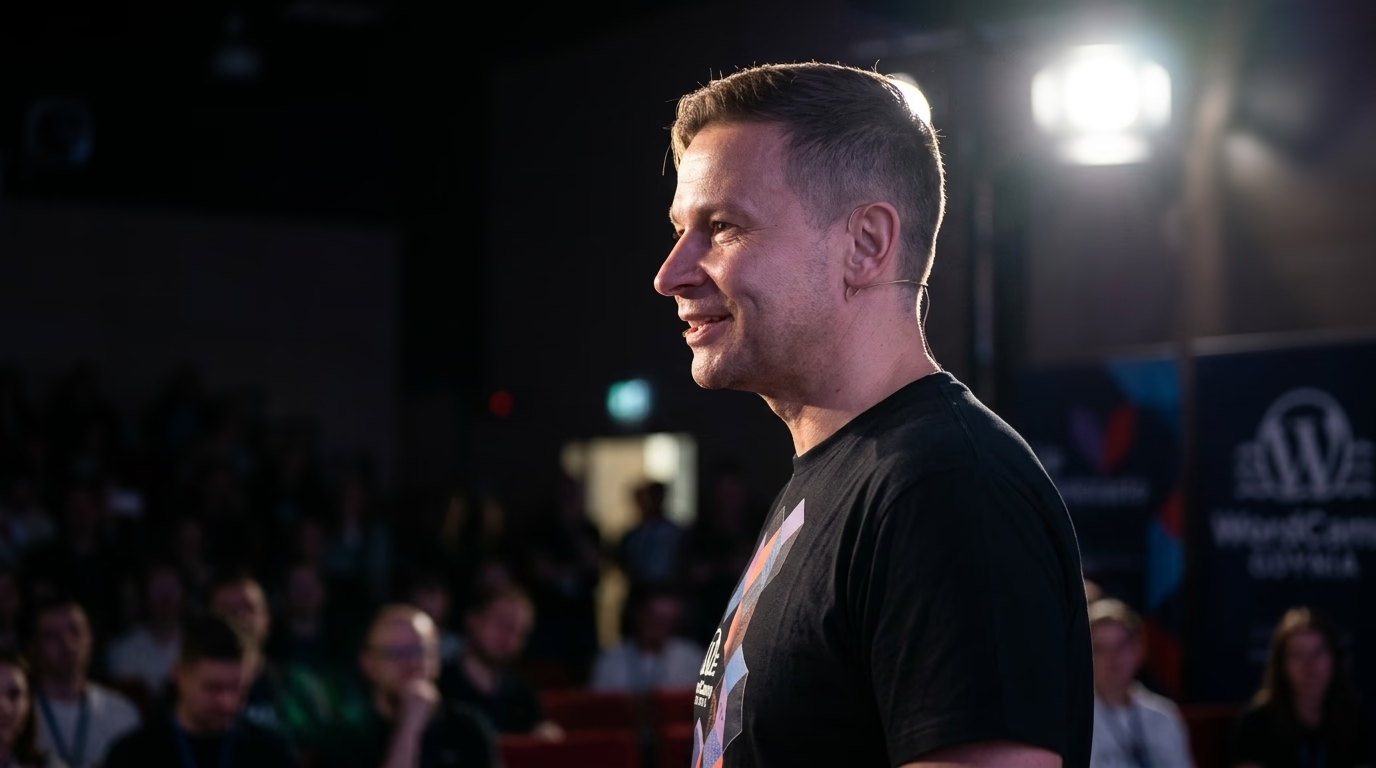
Six to sixteen weeks for typical engagements, with a four-phase shape: discovery, scoping, build and cutover, tuning. The variables are catalogue size, integration count, URL preservation, and editorial team readiness, not framework choice.
A definitive 4-year Total Cost of Ownership (TCO) analysis, real-world Core Web Vitals benchmarks, Astro 7 GraphQL APQ architecture, and a 10-point executive decision matrix for choosing between decoupled and traditional WordPress.
The Shopify Plus vs WooCommerce headless decision in 2026 is no longer a binary "platform vs custom" trade-off. Both can run headless, both integrate AI, both ship at the edge. The real axes are control, total cost over five years, and exit strategy. This article walks the matrix with confirmed platform facts.