Website & application migration in Málaga
I migrate sites from WordPress, Joomla, Drupal, Angular, Vue and other technologies to Astro and Next.js. I plan each migration to keep SEO, content and features intact and switch over in an agreed window. I work alone and have years of experience with both legacy and modern stacks.
- I have had a wordpress.org account since 2006.
- I contributed to WordPress core for versions 7.0 and 7.1.
- I maintain 30 plugins on wordpress.org.
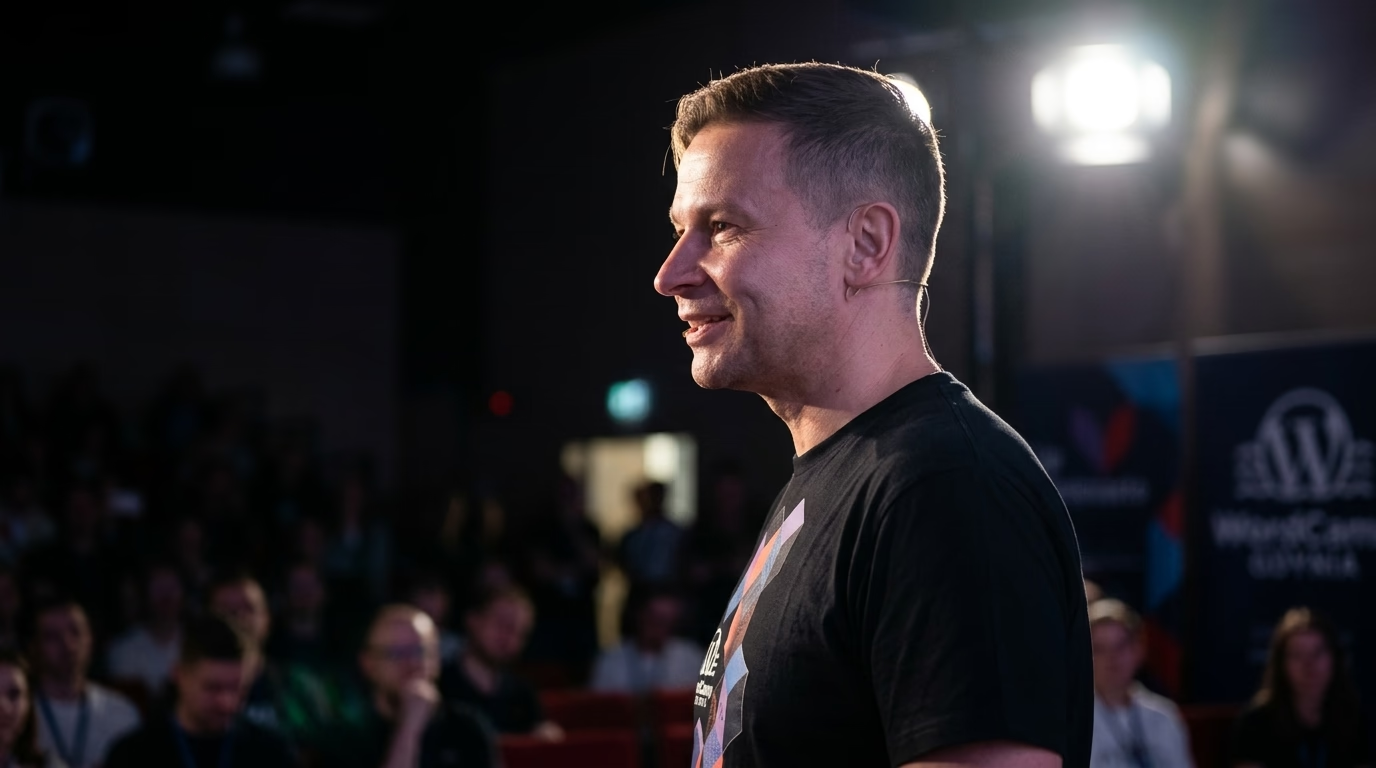
- I organise and speak at WordCamps.
- I have attended every WordCamp Europe from 2017 to 2026.
- Local WordPress meetup: WordPress Málaga
Companies in Málaga move off WordPress, Joomla, Drupal or an ageing PHP framework to Astro or Next.js when the legacy stack becomes slow on mobile connections, fragile during seasonal traffic peaks or risky to keep patched. Across the province, digital teams run two very different types of web estates: engineering, cybersecurity and SaaS platforms clustered around Málaga TechPark (Parque Tecnológico de Andalucía, PTA) in Campanillas and the Polo Nacional de Contenidos Digitales in Tabacalera, and multi-language real estate, hospitality, golf and travel booking portals spanning Centro Histórico, La Malagueta, Teatinos and the Costa del Sol corridor (Marbella, Estepona, Fuengirola, Benalmádena, Torremolinos). I execute the technical migration myself from Gdynia: URL inventory, typed content modelling, single-hop 301 redirect map, structured data parity, staged cutover and post-launch Search Console verification. This page explains what that work involves, what Spanish law adds to the scope, and what I need from you to prepare a written migration plan.
When is a migration to Astro or Next.js worth it for a Málaga business?
A migration pays off when the current CMS architecture holds back mobile performance, security or editorial publishing, and when a simple plugin cleanup plus page caching would not solve the root cause. Typical signs include a slow server response under seasonal tourist or campaign traffic, a WordPress or Drupal admin area that times out when editors save multilingual listings, security updates nobody dares to run before peak booking months, and pages that fail Google’s official Core Web Vitals thresholds (Largest Contentful Paint up to 2.5 seconds, Interaction to Next Paint up to 200 milliseconds, Cumulative Layout Shift up to 0.1) because a visual page builder injects dozens of render-blocking scripts.
It is not worth migrating when your existing site works reliably, ranks well and only suffers from unoptimised images or missing cache headers. When that is the case, I state it plainly in the written scope and suggest a targeted cleanup instead of a rebuild.
When a migration is justified, I select the target framework per route group rather than forcing one tool onto every page:
- Astro fits content-led and catalogue websites: B2B software marketing sites at Málaga TechPark, architectural and property development showcases, clinic and private healthcare portals serving international residents, legal and tax advisory publications, and tourism guides. Astro compiles routes to static HTML and ships zero client-side JavaScript by default, hydrating interactive islands (such as a mortgage calculator, a property filter or an enquiry drawer) only when the visitor interacts with them.
- Next.js fits when part of the platform acts as a stateful web application: authenticated investor or broker portals, live villa or charter availability engines, dynamic pricing feeds, or server-rendered dashboards.
- Headless CMS continuity: Both frameworks can pull content from a private headless WordPress installation (via REST API or WPGraphQL), Sanity, Directus, Strapi or typed Git Markdown collections, so your editorial workflow stays straightforward.
Why Costa del Sol and Málaga TechPark websites outgrow legacy CMS plugins
Websites operating out of Málaga face specific structural pressures that expose the limits of monolithic WordPress, Joomla or Drupal templates:
- Four-to-six-language property and hospitality catalogues (
es,en,de,fr,sv,nl). Real estate agencies, boutique hotels and healthcare providers along the Costa del Sol routinely publish thousands of listings across Spanish, English, German, French and Nordic languages. In a traditional database-driven CMS with WPML, every filtered search or archive load triggers complex SQL joins across post-meta tables. Moving the public frontend to Astro or Next.js pre-renders listing pages or caches them at the CDN edge, keeping page loads fast whether a buyer opens a property sheet from Madrid, London, Stockholm or Frankfurt. - External XML/JSON feed synchronisation. Many Málaga property and tourism portals ingest daily XML or REST feeds from external CRMs and PMS platforms (such as Inmobalia, Resales Online, Avantio or custom booking engines). When feed imports run inside the same PHP process that serves public visitors, daytime sync jobs lock database tables and cause 502/504 timeouts. Decoupling the frontend separates background feed ingestion from public HTML delivery.
- High-resolution photography and floorplan PDFs. Mediterranean architecture, hospitality and engineering sites rely heavily on visual galleries and downloadable PDF brochures. Rebuilding the frontend in Astro or Next.js replaces unoptimised legacy media outputs with strict
<picture>pipelines (AVIF and WebP with explicit width and height attributes to prevent layout shift) while preserving every legacy PDF path that external portals and email campaigns link to.
What does the technical migration work involve?
I split the project into six verifiable engineering steps, each producing a concrete output you can inspect before the next stage begins:
1. Complete URL inventory and 301 redirect matrix
I crawl the live domain and merge the crawl with exports from Google Search Console, XML sitemaps, analytics landing-page reports and backlink profiles. Every legacy URL gets a dedicated row in a version-controlled redirect specification: source path, target path, HTTP status (301 for permanent moves, 410 for deliberately retired content) and notes. Unchanged paths are listed explicitly so URL parity is tested automatically. Because redirect chains and catch-all redirects to the homepage are the primary cause of ranking drops after a relaunch, you review and approve the URL map before cutover.
2. Typed content model and repeatable migration script
Posts, pages, custom post types (properties, case studies, team members, documentation), taxonomies and custom fields become typed collections validated with TypeScript and Zod. Instead of manual copy-pasting, I write an automated extraction and transformation script that converts legacy database records, shortcodes and page-builder blocks into clean Markdown/MDX or headless CMS entries. Because it is scripted, I can re-run the content sync right before launch to capture any pages your Málaga editors published during development.
3. Metadata and Schema.org JSON-LD parity
Titles, meta descriptions, canonical URLs and Open Graph tags move across field by field. Structured data that legacy SEO plugins generated (Organization, LocalBusiness, RealEstateListing, LodgingBusiness, SoftwareApplication, Article, BreadcrumbList, FAQPage) is rebuilt directly in the Astro or Next.js templates and validated against the rendered HTML so rich results do not disappear after launch.
4. Multilingual routing and reciprocal hreflang
Each language version (es-ES, en-GB / en, de, fr, nl, sv) keeps its dedicated folder or subdomain structure. I extract translation group IDs directly from your legacy database tables rather than guessing by slug similarity, and generate reciprocal <link rel="alternate" hreflang="..." /> tags plus x-default across both the HTML <head> and the XML sitemaps.
5. Closed staging verification
The new site runs on a non-indexed staging URL (X-Robots-Tag: noindex, nofollow). Before switching traffic, I run automated checks across the entire redirect matrix, test every enquiry and booking form end to end, verify Core Web Vitals readiness, and inspect network requests in a clean browser profile.
6. Staged cutover and Search Console monitoring
On large multi-section sites, edge rules (Cloudflare or reverse proxy) can cut over one directory at a time; on smaller corporate sites, cutover happens in a single planned switch while the legacy origin remains on standby for instant rollback. After launch, I submit the updated sitemaps and monitor Search Console coverage, crawl stats and 404 logs across the first weeks as Googlebot re-indexes the domain.
Pre-cutover verification gates for Málaga migrations
Every staging build is tested against six engineering criteria before production DNS or edge routing changes:
| Verification gate | What I check on staging | Acceptance rule before launch |
|---|---|---|
| URL & brochure map | Every indexed URL, property/service slug and linked PDF from GSC and crawls | 100% return 200 OK at the same path or a single-hop 301 to the exact target |
| Hreflang reciprocity | Spanish (es), English (en) and additional European locales in HTML and sitemaps | Every translated page links to itself, all siblings and x-default with zero broken return links |
| Structured data parity | Rendered JSON-LD blocks compared template-by-template against production | Zero syntax or required-field errors; business identity and breadcrumbs intact |
| Core Web Vitals readiness | Static HTML payload, image dimensions (width/height) and script hydration | Engineered to meet official web.dev thresholds (LCP <= 2.5 s, INP <= 200 ms, CLS <= 0.1) |
| AEPD cookie & script gate | Clean browser session inspection prior to interacting with the consent banner | Zero non-essential analytics or advertising cookies/requests fired before consent |
| Lead & CRM delivery | Live test submissions on all contact, callback and property/demo enquiry forms | Payloads delivered to your CRM/email endpoint with GDPR consent timestamp recorded |
Which Spanish and EU laws does a migrated site in Málaga have to meet?
A frontend rebuild is the safest moment to clean up statutory compliance, because legal notices and consent mechanisms are often tangled inside old WordPress theme files or outdated plugins. I implement the technical side of four legal frameworks that apply to businesses in Málaga and Andalusia:
1. LSSI-CE (Ley 34/2002 de servicios de la sociedad de la información y de comercio electrónico)
Under Article 10 of Ley 34/2002 (LSSI-CE), any business providing information society services in Spain must make its corporate identification permanently, easily and directly accessible on the website (Aviso Legal): full company name (denominación social), registered address in Málaga or elsewhere in Spain, email address and direct contact channel, NIF/CIF, registration details in the Registro Mercantil de Málaga (tomo, libro, folio, sección, hoja), and regulated professional association details (colegio profesional and membership number) where applicable (such as architects, lawyers or healthcare practitioners). Under Article 22.2 LSSI-CE, non-essential cookies and terminal storage require prior informed consent.
2. AEPD (Agencia Española de Protección de Datos) and LOPDGDD (Ley Orgánica 3/2018)
Personal data collected through enquiry forms, newsletter sign-ups, investor portals or booking flows falls under the GDPR (RGPD) and Spain’s Ley Orgánica 3/2018 de Protección de Datos Personales y garantía de los derechos digitales (LOPDGDD), supervised nationwide by the AEPD. (Where a Málaga contractor builds or operates a portal on behalf of an Andalusian municipal or regional public body, oversight also involves the Consejo de Transparencia y Protección de Datos de Andalucía under Article 57 LOPDGDD.) Furthermore, the AEPD Guía sobre el uso de las cookies requires that the first layer of your cookie banner include an explicit option to reject all non-essential cookies (Rechazar) at the same visual level and prominence as the accept button (Aceptar), without deceptive colour contrast or dark patterns. Because migrating to Astro or Next.js replaces your old CMS cookie plugin, I build a clean, AEPD-compliant consent gate and hand you an exact list of all infrastructure sub-processors (CDN, hosting region, form handler, analytics) so your two-layer privacy notice (primera y segunda capa informativa) names the right providers.
3. Spanish Accessibility Law (Ley 11/2023) and EAA
Spain transposed the European Accessibility Act (Directive 2019/882) via Ley 11/2023, de 8 de mayo, whose accessibility requirements apply from 28 June 2025 to consumer e-commerce services, electronic banking, passenger transport booking and digital consumer contracts (exempting service microenterprises with fewer than 10 employees and annual turnover or balance sheet total under EUR 2 million). When building your Astro or Next.js components, I enforce semantic heading hierarchy (h1 to h6), explicit <label> elements on every input, visible keyboard focus rings, ARIA status announcements for form errors, and UNE-EN 301 549 / WCAG 2.1 Level AA colour contrast ratios.
4. Consumer protection (TRLGDCU) and Verifactu invoicing readiness
If your Málaga site sells services, courses, tickets or goods to consumers, Real Decreto Legislativo 1/2007 (TRLGDCU) governs pre-contractual pricing transparency, right-of-withdrawal notices (derecho de desistimiento) and the mandatory electronic complaints form information (hojas de quejas y reclamaciones de la Junta de Andalucía under Decreto 82/2022 where applicable). Where your web checkout or portal connects to billing software, I preserve clean API webhooks so your invoicing backend remains aligned with Spain’s anti-fraud billing rules (Real Decreto 1007/2023, reglamento Verifactu under the Ley Antifraude).
How I work with Málaga clients remotely from Poland
I run WPPoland as a solo developer based in Gdynia, Poland. When you commission a migration, I do the engineering work myself from the first crawl to the post-launch Search Console checks, without passing your project to junior staff or external subcontractors.
My working model follows three straightforward rules:
- 100% written, asynchronous communication. I do not hold phone calls, Zoom meetings or live screen-shares. You send your requirements, feedback and questions in writing by email, and I reply in writing on working days. Every URL map, architectural decision, staging checklist and progress report is documented in writing so your team in Málaga can review it whenever convenient.
- Visual design comes from your side. I am a technical migration and frontend engineer, not a graphic designer. If you want a visual redesign during the move, your designer or agency provides the Figma layouts or wireframes and I implement them in code. If your current design works well, I recreate your existing look cleanly in Astro or Next.js without the legacy theme bloat.
- Complete repository and infrastructure ownership. At handover, you keep the Git repository, the deployment pipeline, the redirect rules, the environment variable template and a written runbook covering how to publish pages, add redirects and roll back a release. For broader architectural context, see my Next.js and Astro migration overview, Astro developer page and headless CMS development.
How to get a written scope for your Málaga migration
Send me a message via the contact page with three details: your current website URL, the CMS or framework it runs on today, and where your traffic and enquiries come from (organic search, paid campaigns, property portals, booking engines or B2B referrals). If you use external XML/CRM feeds or publish in multiple languages, mention them too. I will inspect your site and reply in writing on working days with a concrete migration scope, URL preservation plan and recommended architecture.
Selected projects
Examples of my work.
Corporate Website: osemka.pl - Banner
A package of various special banners for the osemka.pl website
Corporate Website: osemka.pl - bannery
A package of various special banners for the osemka.pl website
Corporate Website: strefapremium.pl
The website strefapremium.pl has been designed as a modern premium portal, dedicated to users seeking exclusive content and services. The site combines high-...
WordPress support & development in Málaga
Need this service: Next.js / Astro migration in Málaga?
Describe your project by e-mail. I reply within 48 hours.
Describe your projectExplore other WordPress services and knowledge base
Migration to Astro, Next.js, and headless WordPress.
WooCommerce sync with ERP and wholesale systems.
Business process automation around WordPress and company systems.
Library of concrete automation use cases.
Headless WordPress, Sanity, Strapi, and Contentful with Astro or Next.js.
Astro, MDX, edge delivery, and Core Web Vitals measured on real traffic.
Custom WordPress engineering and architecture.
Scalable headless, ERP, and AI architecture for enterprise.
Related categories
Supporting articles
Six to sixteen weeks for typical engagements, with a four-phase shape: discovery, scoping, build and cutover, tuning. The variables are catalogue size, integration count, URL preservation, and editorial team readiness, not framework choice.
A definitive 4-year Total Cost of Ownership (TCO) analysis, real-world Core Web Vitals benchmarks, Astro 7 GraphQL APQ architecture, and a 10-point executive decision matrix for choosing between decoupled and traditional WordPress.
The Shopify Plus vs WooCommerce headless decision in 2026 is no longer a binary "platform vs custom" trade-off. Both can run headless, both integrate AI, both ship at the edge. The real axes are control, total cost over five years, and exit strategy. This article walks the matrix with confirmed platform facts.