Website & application migration in Milan
I migrate sites from WordPress, Joomla, Drupal, Angular, Vue and other technologies to Astro and Next.js. I plan each migration to keep SEO, content and features intact and switch over in an agreed window. I work alone and have years of experience with both legacy and modern stacks.
- I have had a wordpress.org account since 2006.
- I contributed to WordPress core for versions 7.0 and 7.1.
- I maintain 30 plugins on wordpress.org.
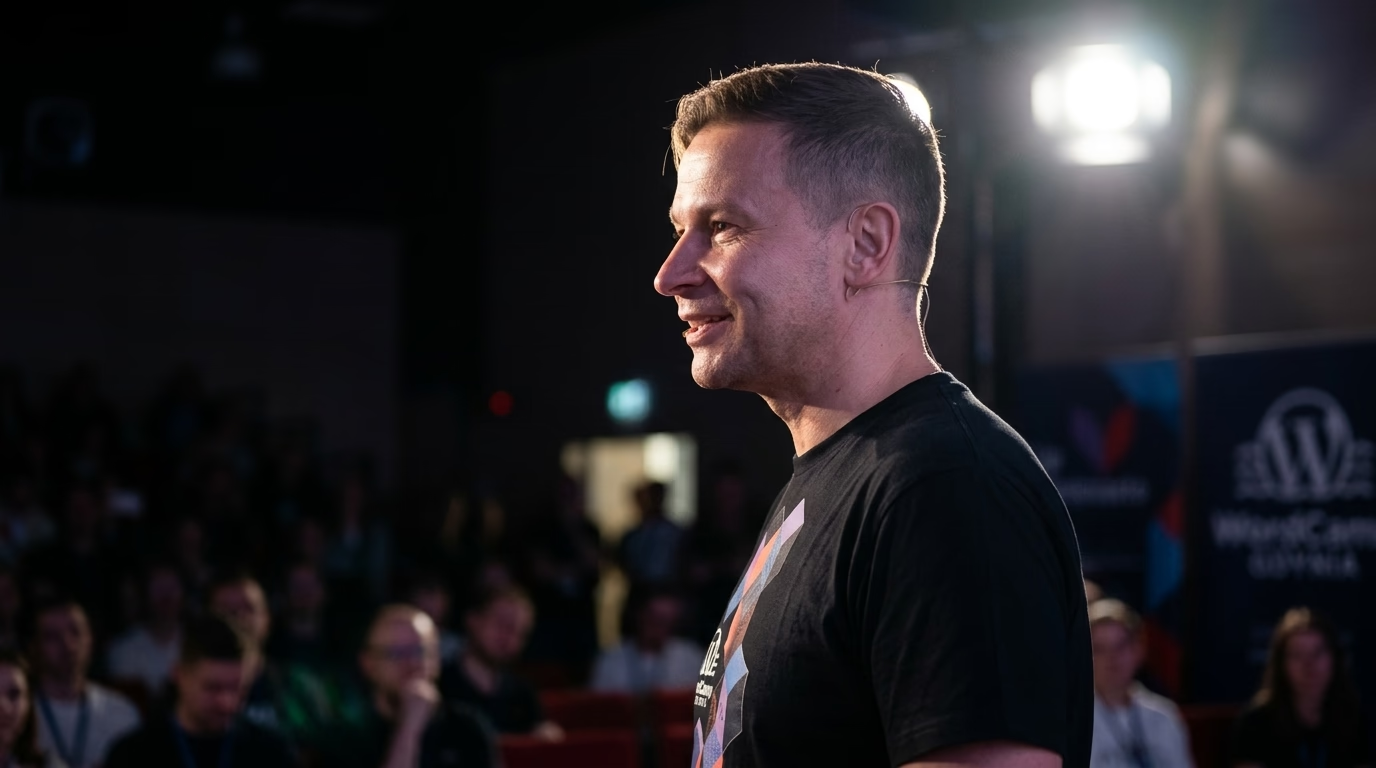
- I organise and speak at WordCamps.
- I have attended every WordCamp Europe from 2017 to 2026.
- Local WordPress meetup: WordPress Meetup Milano
Milan is the capital of Lombardy and Italy’s commercial and financial centre: Borsa Italiana operates from Piazza degli Affari, international fashion and luxury houses stage their collections across the Quadrilatero della Moda and Tortona, and Salone del Mobile draws global buyers to Rho Fiera every spring. That commercial environment produces two recurring website profiles that outgrow monolithic CMS platforms. First, image-heavy brand, architecture, and industrial catalogue sites where every seasonal release adds hundreds of high-resolution photographs and PDF spec sheets. Second, corporate, financial, and legal sites around Porta Nuova and CityLife where Italian (it) and English (en) editions must remain strictly synchronised. Both eventually hit a wall on ageing WordPress, Joomla, or Drupal builds; moving the public frontend to Astro or Next.js solves the speed and maintenance bottleneck, provided the migration preserves every URL and ranking the old site earned.
Should a Milan company migrate, or just fix the current site?
Fixing the existing installation comes first whenever a cleanup is enough: removing redundant plugins, configuring server-level page caching, and optimising image delivery cost far less than a platform rebuild, and I state that plainly in my initial review.
A migration to Astro or Next.js pays off when the underlying platform is the structural obstacle: core updates nobody dares to run ahead of Milan Design Week or a seasonal showroom launch, a legacy theme no developer can modify safely, or a visual page builder that ships megabytes of blocking JavaScript on every product and lookbook page.
Choosing between Astro and Next.js follows what each route on your site actually does:
- Astro fits content-led websites, lookbooks, architectural portfolios, and B2B product catalogues. Pages compile into clean static HTML at build time, client-side JavaScript loads only where an interactive island requires it, and the build-time image pipeline generates responsive AVIF and WebP variants automatically. That architecture makes it straightforward to stay well within Google’s official Core Web Vitals thresholds (Largest Contentful Paint up to 2.5 s, Interaction to Next Paint up to 200 ms, Cumulative Layout Shift up to 0.1).
- Next.js fits when the site includes authenticated B2B buyer portals, showroom appointment systems, per-user pricing tiers, or dynamic inventory views rendered on the server per request. Both frameworks can even share a single domain via edge routing.
Milan’s commercial and industrial sectors: where decoupled frontends excel
Across Milan and the wider Lombardy industrial belt (Monza, Bergamo, Brescia, Varese), organizations depend on web architectures that combine visual fidelity with fast international delivery:
- Fashion, Furniture Design and Luxury Catalogues (Tortona, Brera, Quadrilatero, Brianza design district): Furniture manufacturers exhibiting at Salone del Mobile and fashion houses publishing seasonal lookbooks rely on high-resolution photography, downloadable CAD/BIM files (
.dwg,.3ds,.ifc), and dealer locators in Italian, English, German, and French. Moving from a slow monolithic theme to Astro with an edge CDN eliminates image layout shift and protects long-tail product rankings. - Banking, Asset Management, Fintech and Corporate Law (Piazza Affari, Porta Nuova, Cordusio): Financial advisory firms, B2B fintech platforms, and legal practices publish market commentary, regulatory disclosures, and investor relations documentation. A static Astro build removes the public PHP and MySQL attack surface while keeping editorial publishing structured and auditable.
- Precision Manufacturing, Life Sciences and B2B Engineering (MIND Milano Innovation District, Bicocca, Assago): Industrial exporters and biotech firms maintain multilingual technical datasheets, ISO certifications, and distributor portals. Astro handles the public multilingual catalogue while Next.js can power gated distributor areas.
How do I keep Google rankings in Italy during the move?
Organic search visibility lives on specific URLs, so the URL map is built before any template code is written. Working solo, remotely and in writing from Gdynia in the same CET/CEST time zone as Milan, I crawl the live site, export every indexable URL with its <title>, meta description, canonical tag, hreflang links, and Schema.org JSON-LD, and combine that crawl with Google Search Console performance exports and raw server access logs.
Every historical URL receives one documented decision in a version-controlled redirect ledger:
- Keep the exact URL path on the new site wherever possible.
- Point changed or consolidated routes to their closest semantic equivalent via a single-hop HTTP 301 redirect.
- Return a deliberate HTTP 410 for discontinued pages that should leave the index permanently.
Google’s site move documentation sets the technical rules: use permanent server-side redirects (301 or 308), point straight to the final destination without redirect chains, keep redirects active for at least a year (I keep them permanently at the edge), and submit updated XML sitemaps listing the canonical target URLs. On staging, an automated script tests every single row of the redirect map to confirm a single hop and a final HTTP 200 status.
Structured data moves alongside the visible content. Product, Organization, BreadcrumbList, Article, and FAQPage JSON-LD blocks are generated directly from the typed content schema and compared field by field against the legacy site.
What changes for a Milan website running in Italian, English and export languages?
Italian is Italy’s official language, so for most Milan companies the Italian edition (it or it-IT) drives domestic search traffic while English (en), German (de), and French (fr) serve international buyers, press, and investors. In a CMS migration, multiple languages multiply the URL inventory and introduce the most common point of failure: broken hreflang reciprocity.
Every Italian page and its English or German counterpart must reference each other and themselves using valid ISO 639-1 codes, with self-referencing canonicals on each language version. Legacy WordPress plugins such as WPML or Polylang store translation links in custom database tables that break when slugs change. I export those relationships into explicit translation keys in the new content model and verify reciprocity on the compiled HTML before cutover.
Pre-cutover verification table for Milan migrations
| Verification area | What I check before switching production traffic |
|---|---|
| URL, PDF & CAD asset map | Every indexed URL and linked PDF/CAD file in Search Console and server logs returns HTTP 200 or a single 301 |
Multilingual hreflang (it, en) | Bidirectional return links and self-referencing canonicals verified on built HTML across all language editions |
| Core Web Vitals thresholds | Templates verified against official web.dev thresholds (LCP up to 2.5 s, INP up to 200 ms, CLS up to 0.1) |
| Garante Privacy cookie rules | Zero non-technical cookies before consent; top-right X closes banner keeping technical-only defaults |
| Legge Stanca & D.Lgs. 82/2022 | Semantic HTML landmarks, keyboard navigation, form labels and WCAG 2.1 AA contrast checked across layouts |
| Codice Civile Art. 2250 footer | Partita IVA, Registro delle Imprese (CCIAA Milano Monza Brianza Lodi), REA, PEC and share capital verified |
Italian privacy, accessibility and corporate disclosure rules for a rebuilt site
Replacing a legacy CMS is the right moment to bring cookie storage, personal data flows, accessibility, and mandatory company footer details into clean alignment with Italian law:
Cookies and tracking under the Garante’s guidelines (Provvedimento 10 giugno 2021). In Italy, GDPR and the Privacy Code (D.Lgs. 196/2003, as amended by D.Lgs. 101/2018) are supervised by the Garante per la protezione dei dati personali. Its guidelines on cookies and other tracking tools of 10 June 2021 impose specific UI and technical requirements on Italian websites:
- by default, no profiling or non-technical tracking cookies may be set before the user gives affirmative consent,
- the banner must include a clearly visible close command (typically an
Xin the top right corner) which lets the user continue browsing with only technical cookies active, - scrolling the page (
scroll) or continuing navigation never constitutes valid consent, - users must be able to review and modify their choices at any time via a persistent link or icon in the footer, and a refusal should not be re-prompted for at least six months unless conditions change,
- first-party or anonymised analytics cookies can be treated as technical cookies only when strict conditions are met, including masking at least the fourth octet of the IPv4 address and preventing the third-party provider from cross-referencing the data with other services.
On Astro or Next.js, I wire the consent state directly so non-technical scripts never execute in the browser before consent is granted, and I deliver a complete inventory of every script, form processor, and storage region for your privacy adviser.
Digital accessibility (Legge Stanca 4/2004, D.Lgs. 82/2022 & AgID). Italy transposed the European Accessibility Act through Legislative Decree no. 82 of 27 May 2022 (in force for covered products and e-commerce/consumer services from 28 June 2025), with AgID (Agenzia per l’Italia Digitale) acting as the supervisory authority for digital services. In addition, under Law no. 4 of 9 January 2004 (Legge Stanca), public administrations and private entities offering services to the public via websites or apps with an average annual turnover exceeding 500 million euros over the previous three years (soggetti erogatori) must comply with technical accessibility requirements and publish an annual Dichiarazione di accessibilità via the AgID portal. Building clean Astro or Next.js components from scratch ensures semantic heading hierarchies, keyboard focus order, form labels, and WCAG 2.1 Level AA contrast across every template.
Mandatory company disclosures on Italian websites (Art. 2250 Codice Civile & Art. 35 DPR 633/1972). Under Article 2250 of the Italian Civil Code and Article 35 of Presidential Decree 633/1972, Italian corporate websites must display the company’s legal name (ragione o denominazione sociale), registered office (sede legale), Partita IVA on the homepage, Companies Register office and registration number (for example, Registro delle Imprese di Milano Monza Brianza Lodi and numero REA), paid-up share capital (capitale sociale sottoscritto e versato for S.p.A., S.r.l., and S.a.p.a.), whether the company has a sole shareholder (società a socio unico) or is in liquidation, whether it is subject to management and coordination by another entity (direzione e coordinamento under Art. 2497-bis c.c.), and its certified email address (PEC). I make sure all of these statutory lines remain intact across every footer template.
How does the cutover work, and how do you know it succeeded?
Large sites transition section by section behind edge routing rules under the same domain, while smaller sites switch in a single coordinated window. Before cutover, rollback triggers are agreed in writing, and the legacy server remains ready in read-only standby.
After launch I monitor Google Search Console during the initial weeks: watching the old URLs hand over indexing to the new ones, verifying zero unexpected 404s or canonical conflicts in the Pages report, and tracking query impressions and Core Web Vitals field data against the pre-migration baseline.
Your team receives full ownership of the Git repository, documented environment variables, the deploy pipeline, the URL redirect file, and a written editorial guide. For the broader methodology, see my Next.js and Astro migration service, and if WordPress remains your editorial interface, the headless CMS page.
How to request a written scope for your Milan website
Send me your current website URL, the CMS and version it runs on, the languages you publish in (it, en or others), and where your traffic comes from (Search Console read access or an export is ideal) via the contact page. I reply in writing on working days with a free initial estimate and written scope covering what moves, what stays, which risks I see on your site, and how I verify each step.
Selected projects
Examples of my work.
exco.pl, Outsourcing and Consulting Services for Your Business
exco.pl is a professional website in my WordPress developer portfolio, created as a platform for outsourcing and consulting services for businesses. This modern project stands out for its elegant design, multilingual support, and advanced content management features.
floresy.online - Artificial Plants E-commerce Platform
Floresy is a leading manufacturer, wholesaler and retailer of artificial plants, flowers and trees with over 25 years of experience in creating the finest silk plants on the market.
frems.pl - WordPress Project | WPPoland
The website frems.pl is a modern online platform presenting the offer of the manufacturer and distributor of medical equipment specializing in FREMS technolo...
WordPress support & development in Milan
Need this service: Next.js / Astro migration in Milan?
Describe your project by e-mail. I reply within 48 hours.
Describe your projectExplore other WordPress services and knowledge base
Migration to Astro, Next.js, and headless WordPress.
WooCommerce sync with ERP and wholesale systems.
Business process automation around WordPress and company systems.
Library of concrete automation use cases.
Headless WordPress, Sanity, Strapi, and Contentful with Astro or Next.js.
Astro, MDX, edge delivery, and Core Web Vitals measured on real traffic.
Custom WordPress engineering and architecture.
Scalable headless, ERP, and AI architecture for enterprise.
Related categories
Supporting articles
Six to sixteen weeks for typical engagements, with a four-phase shape: discovery, scoping, build and cutover, tuning. The variables are catalogue size, integration count, URL preservation, and editorial team readiness, not framework choice.

A definitive 4-year Total Cost of Ownership (TCO) analysis, real-world Core Web Vitals benchmarks, Astro 7 GraphQL APQ architecture, and a 10-point executive decision matrix for choosing between decoupled and traditional WordPress.

The Shopify Plus vs WooCommerce headless decision in 2026 is no longer a binary "platform vs custom" trade-off. Both can run headless, both integrate AI, both ship at the edge. The real axes are control, total cost over five years, and exit strategy. This article walks the matrix with confirmed platform facts.