Website & application migration in Newcastle
I migrate sites from WordPress, Joomla, Drupal, Angular, Vue and other technologies to Astro and Next.js. I plan each migration to keep SEO, content and features intact and switch over in an agreed window. I work alone and have years of experience with both legacy and modern stacks.
- I have had a wordpress.org account since 2006.
- I contributed to WordPress core for versions 7.0 and 7.1.
- I maintain 30 plugins on wordpress.org.
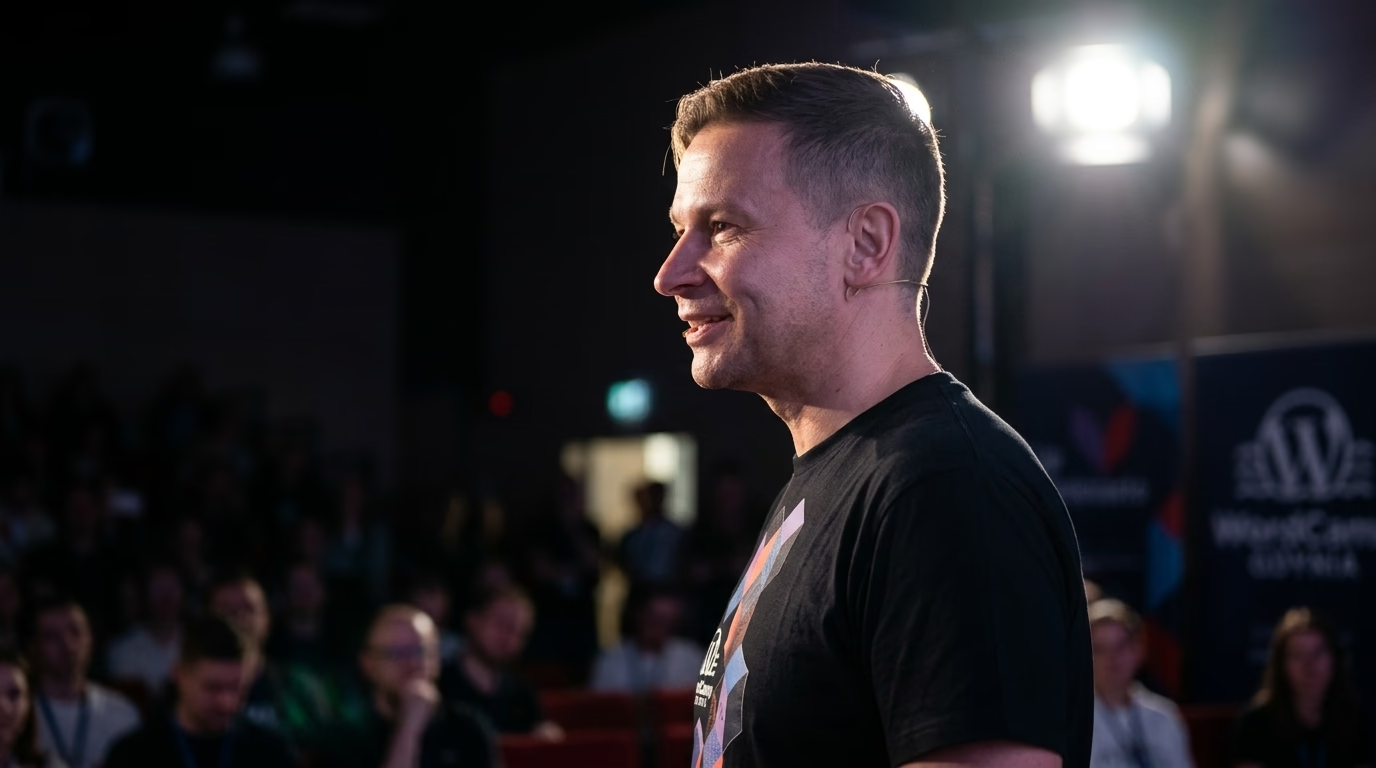
- I organise and speak at WordCamps.
- I have attended every WordCamp Europe from 2017 to 2026.
Newcastle upon Tyne has transformed into one of the United Kingdom’s most vibrant regional technological and industrial powerhouses. Anchored by the historic innovation cluster of Newcastle Helix, prestigious academic research from Newcastle University and Northumbria University, and a thriving community of software scale-ups, engineering consultancies, and green-energy enterprises along the River Tyne, local firms require digital assets that communicate technical credibility and speed. However, many established commercial organisations across Tyne and Wear remain burdened by legacy monolithic websites built on aging WordPress, Drupal, or Joomla installations that fail to meet modern speed, security, and scalability standards.
As an independent software engineer with over fifteen years of web architecture experience, I deliver robust, zero-downtime migrations from bloated monoliths to decoupled static and hybrid systems powered by Astro and Next.js. My approach prioritises measurable Core Web Vitals optimization, ironclad security, and the complete preservation of your historical search engine rankings. I collaborate remotely from Gdynia, Poland, operating across the Central European Time (CET) window with clear written milestones, transparent Git tracking, and direct developer communication.
Why Newcastle enterprises are moving away from monolithic platforms
For years, the standard approach to publishing content online was running a monolithic LAMP stack: a web server running PHP paired with a relational MySQL database. Every visitor request triggered server-side processing, database lookups, and on-the-fly HTML assembly. For modern commercial operations in Newcastle, this legacy architecture introduces persistent operational drawbacks:
First, recurring security vulnerabilities and maintenance friction. Monolithic CMS platforms depend heavily on third-party plugins for SEO, contact forms, social sharing, and performance tuning. Each added plugin expands the attack surface, requiring constant monitoring, patch testing, and emergency updates to fend off automated bot injections. In contrast, an Astro static site compiles everything down to immutable HTML, CSS, and optimized asset files served from global edge networks. Without a live PHP engine or exposed database in the public routing layer, security vulnerabilities disappear.
Second, substandard web vitals and mobile conversion degradation. Bloated legacy themes ship dozens of redundant CSS files, render-blocking scripts, and uncompressed image assets. This causes long Time to First Byte (TTFB), sluggish Largest Contentful Paint (LCP), and noticeable input delays that directly damage mobile conversion rates and Google visibility. With Astro, pages are pre-rendered into pure HTML, delivering pages in tens of milliseconds directly from the nearest regional point of presence.
Third, excessive infrastructure hosting and administrative overhead. Keeping a resource-heavy CMS stable under unpredictable traffic surges requires expensive cloud virtual machines, managed Redis caching layers, and database replica sets. Decoupled static architectures drastically reduce infrastructure complexity and hosting costs, maintaining complete operational stability even during sudden traffic peaks.
Engineering methodology for a risk-free platform migration
Migrating an established corporate website demands structural rigor to avoid breaking client workflows or sacrificing years of accumulated search engine trust. I follow an established seven-stage engineering protocol:
1. Complete crawl and URL inventory extraction
Before touching the codebase, I conduct a forensic audit of your existing web property. Combining exhaustive automated crawlers, server access logs, and performance metrics from Google Search Console, I assemble a complete database of every public URL, downloadable PDF document, author archive, and media asset. High-priority landing pages with valuable inbound backlink profiles receive explicit tracking benchmarks.
2. Content normalization and legacy markup cleanup
Content stored inside database dumps frequently contains broken shortcodes, obsolete page-builder markup (from tools such as WPBakery, Elementor, or Divi), and inline styling. I develop custom ETL scripts that parse and clean this data, structuring it into typed Content Collections within Astro or structured schemas served via a clean REST/GraphQL endpoint.
3. Individualized 301 permanent redirect matrix
The primary cause of post-launch traffic collapse is sloppy URL redirect management. I construct an exhaustive, deterministic redirect matrix where every retired URL points directly to its exact topical successor via a permanent HTTP 301 status code. Vague catch-all redirects to the home page are strictly avoided, as search engine crawlers classify them as soft-404 errors, causing organic indexation to erode.
4. Preservation of SEO metadata, OpenGraph, and Schema.org
All page titles, meta descriptions, canonical links, and OpenGraph social tags are accurately migrated. In addition, I implement modern JSON-LD semantic structured schemas tailored to Newcastle businesses (including Organization, LocalBusiness, ProfessionalService, Product, and FAQPage schemas), making your corporate entity clear to generative search systems such as ChatGPT, Perplexity, and Google Gemini.
5. Staging deployment and automated parity verification
The entire newly architected system is deployed to a password-protected staging environment that mirrors production configurations. Here, I execute rigorous automated verification suites:
- Comprehensive HTTP status validation ensuring zero broken internal references or redirect loops.
- Semantic HTML5 validation and accessibility audits meeting WCAG 2.2 AA standards (including full keyboard navigability and accessible contrast ratios).
- Performance benchmarking under throttled network conditions to guarantee that images are served in modern AVIF/WebP formats with appropriate responsive sizing.
- End-to-end testing of contact forms, inquiry funnels, and CRM webhook integrations.
6. Seamless production cutover
The DNS cutover is scheduled during an agreed low-traffic window, preceded by lowering DNS TTL values to ensure near-instant global propagation. Once live traffic routes to the new infrastructure, the staging noindex tags are removed, and the live robots.txt and sitemap directives are verified.
7. Post-launch search console monitoring
Over the four weeks following cutover, I actively monitor indexation coverage, crawl frequency, and query impressions in Google Search Console. Any emerging crawl anomalies or unmapped legacy queries are addressed immediately.
Strategic framework selection: Astro vs. Next.js in Newcastle
Both Astro and Next.js represent modern engineering standards, but each answers distinct project requirements:
| Technical Property | Astro (Static & Island Architecture) | Next.js (App Router & React Server Components) |
|---|---|---|
| Primary Architectural Fit | Corporate websites, technical documentation, B2B sites | Authenticated client portals, complex web applications |
| Rendering Strategy | Static Site Generation (SSG) with selective hydration | Server-Side Rendering (SSR) and dynamic hybrid streaming |
| Client-Side JavaScript | Zero kilobytes by default on non-interactive routes | Bundles the React runtime to hydrate client components |
| Interaction Responsiveness | Superior (typical INP < 30ms due to minimal script load) | High, provided client bundles are kept clean |
| Infrastructure Demands | Ultra-efficient edge CDN or static storage deployment | Node.js application server runtime or edge functions |
For the majority of Tyne and Wear professional services, manufacturing suppliers, research centers, and marketing teams, Astro provides the most cost-effective, high-performing foundation. If your platform requires real-time user authentication, customized client dashboards, or server actions, Next.js is selected.
British regulatory requirements and digital standards
Rebuilding a digital frontend presents an opportune moment to ensure full alignment with United Kingdom digital regulations:
UK GDPR and Data Protection Act 2018 compliance
Under the UK General Data Protection Regulation and the Privacy and Electronic Communications Regulations (PECR), accessing or storing cookies and device identifiers requires informed, prior consent from site visitors, unless strictly necessary for service delivery. By utilizing Astro, we eliminate unneeded tracking scripts, self-host all corporate typography and iconography locally, and implement clean, lightweight cookie consent mechanisms that honor visitor preferences without degrading performance. The UK supervisory authority is the Information Commissioner’s Office (ICO).
Digital accessibility and the Equality Act 2010
Service providers in the UK have an ongoing legal duty under the Equality Act 2010 to make reasonable adjustments for disabled users. Public sector and commercial frontends must provide accessible experiences conforming to WCAG 2.2 Level AA. My implementations feature semantic HTML structures, descriptive image alternative texts, clear focus rings for keyboard navigation, and logical document hierarchies.
Corporate disclosure standards under the Companies Act 2006
Websites operating as commercial presences in the United Kingdom must clearly display essential registered business information in their footer or dedicated contact sections: registered company name, company registration number, place of registration (e.g. registered in England and Wales), and official registered office address.
Initiate your migration project
If your organization in Newcastle upon Tyne is ready to move away from fragile monolithic hosting and build a lightning-fast, secure web platform, get in touch with your current website address and primary business objectives. I will review your existing technical stack and provide an actionable migration roadmap with fixed deliverables and transparent engineering terms.
Selected projects
Examples of my work.
Travel & Tourism Site: kaminski.pl
Kaminski.pl is a website created for traveler and blogger Michał Kamiński, who shared his experiences from exploring the world, inspiring others to discover ...
Vector Solutions - Telecommunications Technology Pioneer
Vector Solutions is a company recognized in Poland and throughout Europe as a pioneer in the technology sector, transforming modern communication with innovative solutions for cable operators and telecommunications companies.
Victim Assistance Office - odszkodowania.pl
The Victim Assistance Office website was designed to provide professional and empathetic information to support people in difficult life situations. The site...
WordPress support & development in Newcastle
See also in Great Britain
Need this service: Next.js / Astro migration in Newcastle?
Describe your project by e-mail. I reply within 48 hours.
Describe your projectExplore other WordPress services and knowledge base
Migration to Astro, Next.js, and headless WordPress.
WooCommerce sync with ERP and wholesale systems.
Business process automation around WordPress and company systems.
Library of concrete automation use cases.
Headless WordPress, Sanity, Strapi, and Contentful with Astro or Next.js.
Astro, MDX, edge delivery, and Core Web Vitals measured on real traffic.
Custom WordPress engineering and architecture.
Scalable headless, ERP, and AI architecture for enterprise.
Related categories
Supporting articles
Six to sixteen weeks for typical engagements, with a four-phase shape: discovery, scoping, build and cutover, tuning. The variables are catalogue size, integration count, URL preservation, and editorial team readiness, not framework choice.
A definitive 4-year Total Cost of Ownership (TCO) analysis, real-world Core Web Vitals benchmarks, Astro 7 GraphQL APQ architecture, and a 10-point executive decision matrix for choosing between decoupled and traditional WordPress.

The Shopify Plus vs WooCommerce headless decision in 2026 is no longer a binary "platform vs custom" trade-off. Both can run headless, both integrate AI, both ship at the edge. The real axes are control, total cost over five years, and exit strategy. This article walks the matrix with confirmed platform facts.