Website & application migration in Oslo
I migrate sites from WordPress, Joomla, Drupal, Angular, Vue and other technologies to Astro and Next.js. I plan each migration to keep SEO, content and features intact and switch over in an agreed window. I work alone and have years of experience with both legacy and modern stacks.
- I have had a wordpress.org account since 2006.
- I contributed to WordPress core for versions 7.0 and 7.1.
- I maintain 30 plugins on wordpress.org.
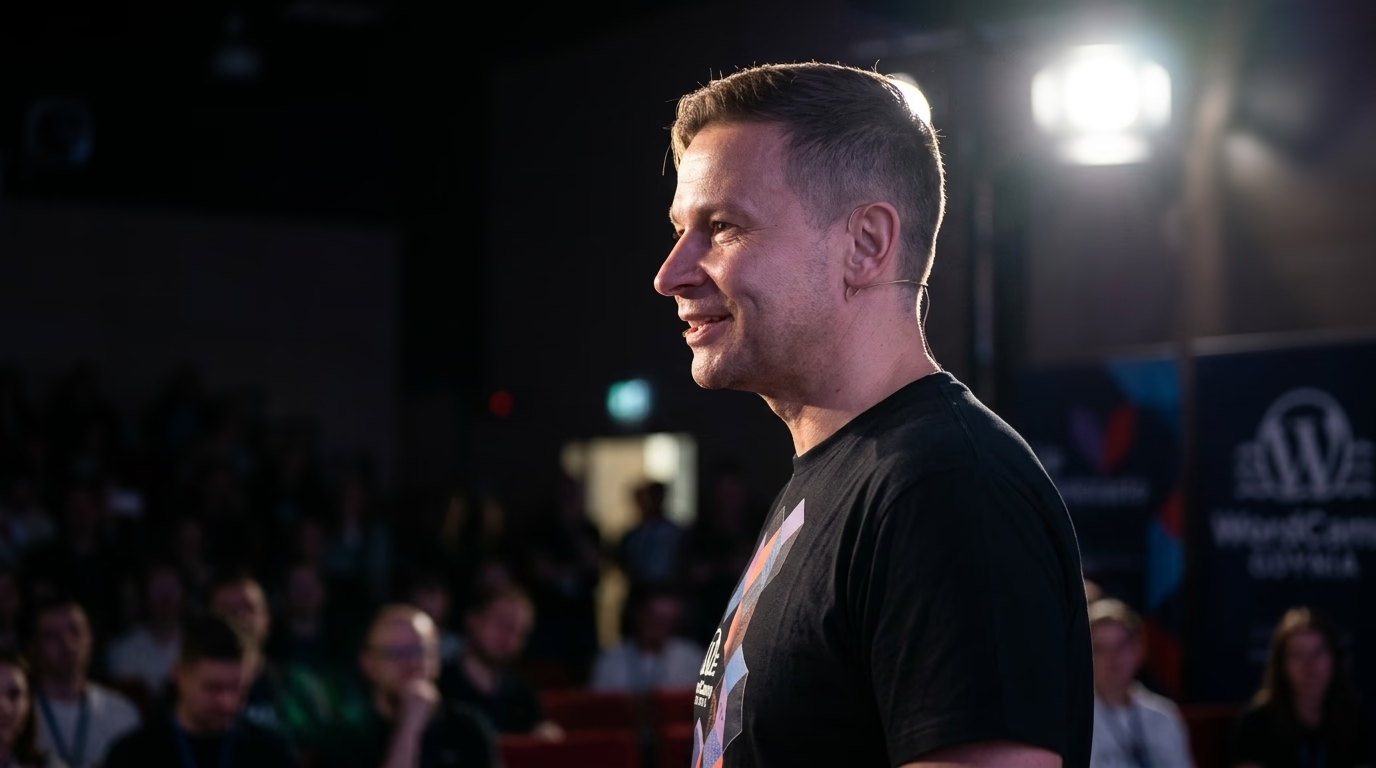
- I organise and speak at WordCamps.
- I have attended every WordCamp Europe from 2017 to 2026.
Oslo is Norway’s capital and, with 729,437 residents in the second quarter of 2026 according to Statistics Norway (SSB), its largest municipality, at the centre of the Greater Oslo region of over 1.5 million people. Many company websites here run on WordPress, Joomla, Drupal, or an ageing custom framework with a Norwegian (nb / nn) and an English (en) edition. Once that older CMS stack slows down on mobile connections, breaks during updates, or turns patching into a gamble, replacing the public frontend with Astro or Next.js resolves the bottleneck. Working solo, remotely and in writing from Gdynia in the same Central European Time zone, I execute that migration step by step and verify every route so search traffic, Norwegian universal design compliance, and cookie consent survive the switch intact.
When is a move to Astro or Next.js worth it for an Oslo business?
Replatforming is worth it when the underlying CMS architecture itself is the problem rather than a single heavy plugin or an underpowered hosting plan. Typical signs include pages that execute database queries on every visitor request for content that changes once a month, an administrative interface that editors avoid, plugin updates that break layout templates, or a security patch schedule nobody keeps up with. If deactivating unused plugins and configuring a proper server-level page cache would solve the issue, I state that plainly in my written review and the migration does not happen.
When a new frontend is justified, I match the framework to what each part of your site actually does:
- Astro fits content-driven platforms: corporate service pages, blogs, technical documentation, investor relations portals, and multilingual B2B websites. It compiles clean static HTML at build time and ships client-side JavaScript only where an interactive component (island) explicitly requires it, making it straightforward to stay well within Google’s official Core Web Vitals thresholds (Largest Contentful Paint up to 2.5 s, Interaction to Next Paint up to 200 ms, Cumulative Layout Shift up to 0.1).
- Next.js fits applications with authenticated user logins, customer dashboards, personalised pricing views, or heavy per-request server rendering. Where needed, Astro and Next.js can share the same Oslo domain behind an edge router. The broader methodology is covered on my Next.js and Astro migration page; this page explains what changes specifically for a website operated from Oslo.
Oslo and Eastern Norway sectors: where decoupled frontends deliver the clearest return
Across Oslo’s business corridors from Bjørvika (Barcode), Aker Brygge, Tjuvholmen, and Vika to Skøyen, Lysaker, Fornebu, and Oslo Science Park (Forskningsparken) in Gaustadbekkdalen, enterprises operate web platforms with distinct technical demands:
- Maritime, Offshore Energy and Renewables (Aker Brygge, Skøyen, Lysaker, Fornebu): Shipping companies, classification and marine engineering suppliers, hydro and offshore wind developers, and energy technology vendors along the Lysaker-Fornebu corridor publish thousands of technical specifications, fleet sheets, ESG reports, and safety certificates in Norwegian and English. Moving public content from a vulnerable monolithic CMS to a pre-rendered Astro build eliminates public database attack surfaces while keeping every historical PDF and URL mapped 1:1.
- Fintech, Banking, Shipping Finance and Legal Advisory (Bjørvika / Barcode, Vika, Kvadraturen): Financial institutions, B2B fintech platforms, and corporate law firms publish regulatory commentary, market reports, and investor disclosures (including Oslo Børs filings where listed). Static HTML delivery from edge nodes guarantees instant loading and strict schema consistency.
- SaaS Scaleups, Health Tech and Research Spin-outs (Forskningsparken, Nydalen, Sentrum): Software vendors and life-science companies collaborating with the University of Oslo or Oslo University Hospital maintain developer documentation, API references, and multi-language marketing pages. Astro lets engineering teams maintain technical docs in Git-backed MDX while marketing editors publish through a headless CMS.
What does the Oslo migration involve, step by step?
- Exhaustive URL and asset inventory. I crawl the live website and combine the output with every URL that receives impressions, clicks, or external backlinks according to Google Search Console, analytics, and raw server access logs. Legacy redirects from earlier redesigns and direct links to PDF reports or technical datasheets go on the list too.
- Written URL map. Every legacy URL receives one explicit outcome in a version-controlled redirect file: retain the exact path, redirect via a single-hop HTTP 301 to its closest successor, or return a deliberate HTTP 410 when obsolete content is permanently retired. Zero redirect chains and zero catch-all redirects to the homepage.
- Typed content model. Legacy post types, custom fields, taxonomies, and navigation menus are mapped into strictly typed collections (validated with Zod in Astro). Visual page-builder shortcodes and translations linked through legacy plugin tables are cleaned up during extraction.
- Structured data generation.
Organization,BreadcrumbList,Article,Product, orFAQPageJSON-LD markup moves with the content and is generated directly from the typed template fields so it never drifts from the visible text. - Languages and
hreflangverification. Every Norwegian and English page carries reciprocalhreflanglinks to all its sibling translations and to itself, as Google requires. Language codes follow ISO 639-1 with an optional ISO 3166-1 Alpha 2 region code:nbfor Norwegian Bokmål,nnfor Norwegian Nynorsk,nofor generic Norwegian, andnb-NOorenwhere regional targeting applies. - Staging and automated parity checks. Before cutover I compare old and new pages across
<title>, meta description, canonical URL, H1-H3 hierarchy, structured data, and internal links on a non-indexed staging domain. - Staged cutover. On larger domains the new frontend takes over one section at a time while edge routing rules send remaining paths to the legacy system. Smaller sites switch in a single coordinated window during low traffic with the old server kept warm as a fallback.
- Post-launch Search Console monitoring. I submit the updated XML sitemaps, monitor the Page Indexing report, and inspect redirected URLs over the following weeks. If the domain or subdomain changes (for example, moving from
.comto.no), I file a Change of Address notification in Search Console.
Pre-cutover verification table for Oslo migrations
| Verification area | What I check before switching production traffic |
|---|---|
| URL & PDF redirect ledger | Every indexed URL and linked PDF in Search Console and server logs returns HTTP 200 or a single 301 hop |
| Norwegian & English hreflang | Bidirectional return links (nb, nn, en) and self-referencing canonicals verified on built HTML |
| Core Web Vitals thresholds | Templates verified against official web.dev thresholds (LCP up to 2.5 s, INP up to 200 ms, CLS up to 0.1) |
| Uu-tilsynet universal design | WCAG 2.0 / 2.1 AA criteria (headings, keyboard focus, form labels, contrast) verified across templates |
| Datatilsynet & Ekomloven § 3-15 | Zero non-essential cookies or tracking scripts firing before GDPR-standard affirmative consent |
| Foretaksregisteret footer | Registered company name (AS/ASA), 9-digit organisasjonsnummer (Brønnøysundregistrene) and MVA status verified |
Which Norwegian laws and authorities does a rebuilt website in Oslo have to meet?
Norway is part of the European Economic Area (EEA) rather than the European Union, so EEA directives and national obligations apply through specific Norwegian acts and regulations. Four of them touch a commercial website rebuild directly:
Universal design of ICT (Forskrift om universell utforming av IKT-løsninger & Likestillings- og diskrimineringsloven). Unlike many European countries where mandatory web accessibility historically applied only to the public sector, Norway requires both public bodies and private enterprises (businesses, associations, and foundations offering ICT solutions aimed at the general public in Norway) to comply with universal design rules under Section 18 of the Equality and Anti-Discrimination Act and the Regulation on Universal Design of ICT Solutions (forskrift om universell utforming av IKT-løsninger, FOR-2013-06-21-732). Private-sector web solutions must meet 35 of the 38 success criteria in WCAG 2.0 Levels A and AA (all except 1.2.3, 1.2.4, and 1.2.5 for time-based media), while public-sector bodies must meet the full EN 301 549 (WCAG 2.1 AA) standard and publish an official accessibility statement (tilgjengelighetserklæring via uustatus.no). Supervision sits with the Authority for Universal Design of ICT (Tilsynet for universell utforming av ikt, Uu-tilsynet, part of Digdir). Because a migration replaces every template at once, I build and test headings, keyboard focus order, colour contrast, form labels, and screen-reader semantics on staging before cutover.
Personal data protection (Personopplysningsloven & Datatilsynet). The Norwegian Personal Data Act (personopplysningsloven, LOV-2018-06-15-38) incorporates the GDPR into Norwegian law, supervised by the Norwegian Data Protection Authority (Datatilsynet, headquartered in Oslo). Contact forms, recruitment portals, newsletter lists, and analytics scripts all process personal data. During the migration, I document where every form sends its payload, which processors handle it, and in which EEA/EU region it is stored, so your privacy notice (personvernerklæring) and data processing agreements (databehandleravtaler) match the live stack.
Cookies and terminal storage (Ekomloven § 3-15 & Nkom / Datatilsynet). Since 1 January 2025, Norway’s new Electronic Communications Act (ekomloven, LOV-2024-12-13-76) updated the Norwegian cookie rule in Section 3-15 (§ 3-15), replacing the old browser-setting interpretation with the strict GDPR consent standard: storing or reading information on a user’s communication equipment requires clear prior information and valid, active, affirmative consent (samtykke etter personvernforordningen), unless the storage is strictly necessary for transmitting a communication or providing a service explicitly requested by the user. In the rebuilt Astro or Next.js frontend, I wire all non-essential analytics and marketing scripts behind a consent banner that blocks execution until the visitor actively opts in.
Corporate disclosures and distance selling (Foretaksregisterloven, Aksjeloven & Angrerettloven). Under Section 10-2 of the Business Enterprise Registration Act (foretaksregisterloven) and Section 18-3 of the Private Limited Liability Companies Act (aksjeloven), websites and electronic communications of a Norwegian registered enterprise (such as an Aksjeselskap, AS, or Allmennaksjeselskap, ASA) must state its registered company name, corporate form, headquarters municipality, and 9-digit organization number (organisasjonsnummer in Brønnøysundregistrene), adding the letters MVA where registered in the VAT Register (Merverdiavgiftsregisteret). Where the site sells to consumers, information duties under the E-Commerce Act (ehandelsloven) and the Cancellation Act (angrerettloven, supervised by Forbrukertilsynet) are preserved across templates.
Which language versions should an Oslo site keep?
Under the Norwegian Language Act (språklova), Norwegian is the national main language, and Bokmål (nb) and Nynorsk (nn) are equal written standards. Most private companies in Oslo publish in Bokmål alongside an English edition (en) for international clients, investors, and English-speaking specialists, while public-sector suppliers and national institutions often publish in both Bokmål and Nynorsk.
A CMS migration is the moment to lock down that language architecture cleanly: URL prefixes (/nb/, /nn/, /en/), translated slugs, a language switcher that routes visitors directly to the equivalent translated page rather than dumping them on the homepage, and hreflang annotations generated from a shared translation ID in the content schema. Even if your site publishes only Bokmål and English today, structuring the schema cleanly means adding Nynorsk or another Nordic language later requires only new content files, not a template rewrite.
Typical migration failure points on an Oslo domain and how I prevent them
- Lost URLs and broken backlinks. An unmapped page or PDF that now returns HTTP 404 loses its search equity. After launch I re-crawl the complete historical URL list against the live domain and fix any unexpected 404 or redirect chain immediately.
- Language versions cut loose. If an English route redirects cleanly but its Norwegian counterpart is missed,
hreflangreciprocity breaks and Google may display the wrong language in Norwegian search results. I verify reciprocity directly on the compiled HTML. - Redirects removed prematurely. Google advises keeping permanent redirects active for at least a year and ideally indefinitely for visitors. I keep them permanently in the repository and edge configuration.
- Forms and analytics failing silently. Enquiry forms, newsletter sign-ups, and analytics events that previously relied on WordPress plugins are catalogued before the build and tested on staging with real submissions.
Deliverables transferred to your Oslo team at handover
Your company receives full ownership of the Git repository, documented environment variables, the automated deployment pipeline, the complete URL redirect map, and a concise written guide explaining how to publish content, add pages, and update redirects. If you want a back-office editorial interface rather than Markdown in Git, my headless CMS page covers the options I implement.
How to request a written scope for your Oslo website
Send me your current website URL, the CMS and version it runs on, the languages you publish in (nb, nn, en or others), and where your traffic comes from (organic search, paid ads, newsletters, referrals) via the contact page. I reply in writing on working days with a free initial estimate and written scope covering what moves, what gets retired, which framework I recommend and why, and what I need from your team before work begins.
Selected projects
Examples of my work.
E-commerce Development: jpg.pl
jpg.pl is an advanced hosting platform designed for secure storage, management, and distribution of images. The service is aimed at both individual users and...
E-commerce Development: kochamruch.pl
kochamruch.pl is a website for a community focused on movement and physical activity, with content publishing and stable technical foundations.
E-commerce Development: kredytywarszawa.pl
kredytywarszawa.pl is a WordPress website for a business offering loans and financial services, focused on clear services, performance, and basic security.
WordPress support & development in Oslo
See also in Norway
Need this service: Next.js / Astro migration in Oslo?
Describe your project by e-mail. I reply within 48 hours.
Describe your projectExplore other WordPress services and knowledge base
Migration to Astro, Next.js, and headless WordPress.
WooCommerce sync with ERP and wholesale systems.
Business process automation around WordPress and company systems.
Library of concrete automation use cases.
Headless WordPress, Sanity, Strapi, and Contentful with Astro or Next.js.
Astro, MDX, edge delivery, and Core Web Vitals measured on real traffic.
Custom WordPress engineering and architecture.
Scalable headless, ERP, and AI architecture for enterprise.
Related categories
Supporting articles
Six to sixteen weeks for typical engagements, with a four-phase shape: discovery, scoping, build and cutover, tuning. The variables are catalogue size, integration count, URL preservation, and editorial team readiness, not framework choice.
A definitive 4-year Total Cost of Ownership (TCO) analysis, real-world Core Web Vitals benchmarks, Astro 7 GraphQL APQ architecture, and a 10-point executive decision matrix for choosing between decoupled and traditional WordPress.

The Shopify Plus vs WooCommerce headless decision in 2026 is no longer a binary "platform vs custom" trade-off. Both can run headless, both integrate AI, both ship at the edge. The real axes are control, total cost over five years, and exit strategy. This article walks the matrix with confirmed platform facts.