Website & application migration in Rome
I migrate sites from WordPress, Joomla, Drupal, Angular, Vue and other technologies to Astro and Next.js. I plan each migration to keep SEO, content and features intact and switch over in an agreed window. I work alone and have years of experience with both legacy and modern stacks.
- I have had a wordpress.org account since 2006.
- I contributed to WordPress core for versions 7.0 and 7.1.
- I maintain 30 plugins on wordpress.org.
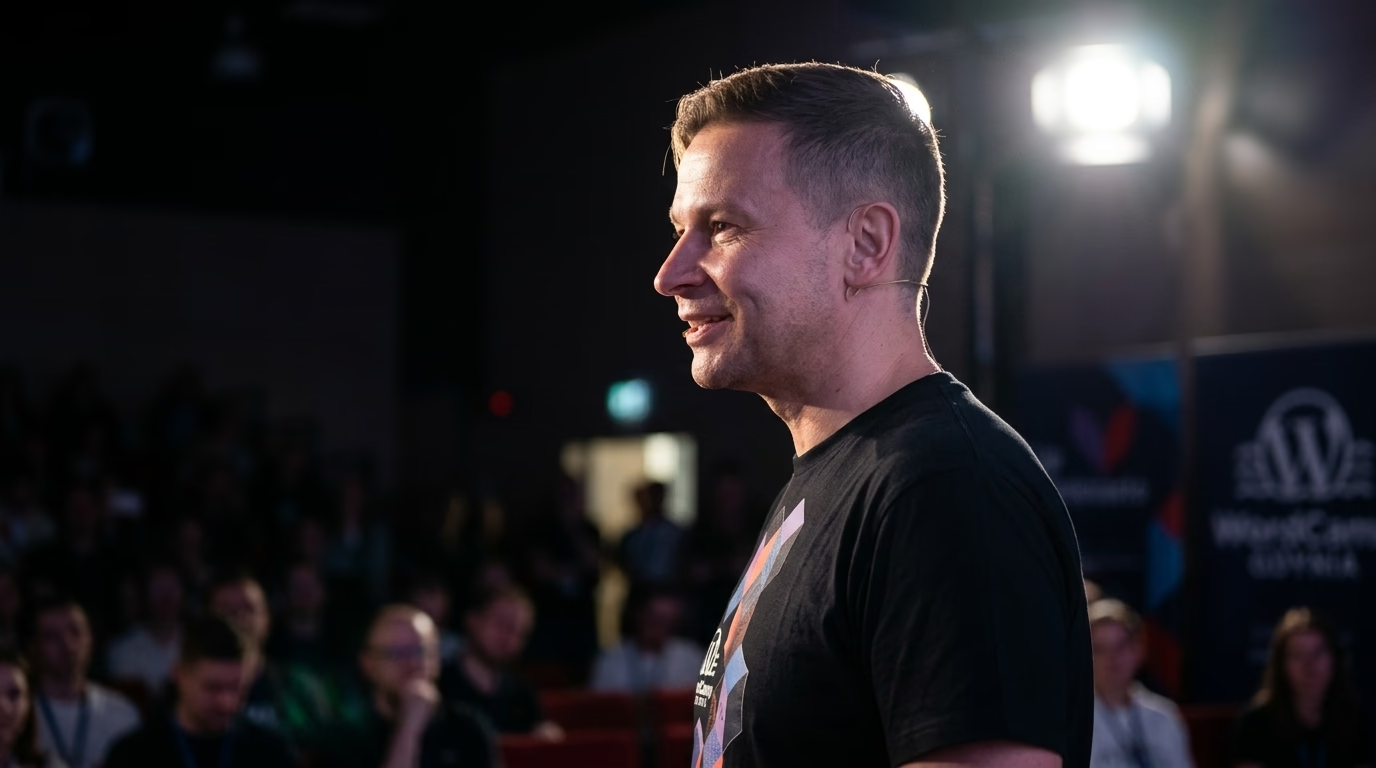
- I organise and speak at WordCamps.
- I have attended every WordCamp Europe from 2017 to 2026.
Rome is the capital and largest city of Italy and the administrative centre of the Lazio region, with about 2.75 million residents in the municipality (Roma Capitale) and over 4.2 million in the metropolitan area. Moving a commercial or institutional website here from WordPress, Joomla, or Drupal to Astro or Next.js requires both rigorous URL and SEO engineering and strict compliance with Italian regulatory frameworks. Both the Italian data protection authority (Garante per la protezione dei dati personali, headquartered at Piazza Venezia 11 in Rome) and the Agency for Digital Italy (Agenzia per l’Italia Digitale, AgID, headquartered in Rome) set national rules that shape how a rebuilt frontend handles cookies, personal data, and digital accessibility. Working solo, remotely and in writing from Gdynia in the same CET/CEST time zone, I execute the migration step by step so your rankings, backlinks, and regulatory posture come across intact.
Should a Rome organization migrate off WordPress, or fix the site it has?
A migration pays off when the same structural bottleneck returns after every local repair: a custom theme welded to a visual page builder that breaks on every PHP upgrade, a Joomla 3 or Drupal 7 installation past its security support window that nobody dares to touch, or a deployment setup that only one former contractor knows how to run. If your backend is current and the slowness comes from a heavy theme, unoptimised images, or too many plugins, cleaning up the existing CMS costs less, and my written review says so before any rebuild is proposed.
When a new frontend is justified, I choose the framework per route family rather than forcing one pattern across the entire domain:
- Astro fits corporate service pages, newsrooms, publications, technical documentation, and hospitality or cultural showcases: it pre-renders clean static HTML at build time and ships JavaScript only to the specific interactive islands that require it. That makes it straightforward to stay well within Google’s official Core Web Vitals thresholds (Largest Contentful Paint up to 2.5 s, Interaction to Next Paint up to 200 ms, Cumulative Layout Shift up to 0.1).
- Next.js fits routes with authenticated logins, member or citizen portals, dynamic booking engines, or complex search that depends on per-request server state. Both frameworks can even run under the same domain via edge routing. The broader engineering method is covered on my Next.js and Astro migration page.
Rome and Lazio commercial sectors: where decoupled frontends deliver the clearest gain
Across Rome’s commercial corridors from the EUR business district (Esposizione Universale Roma), Via Veneto, Prati, and Parioli to the Tiburtina technology valley and Fiumicino logistics hub, organizations manage digital platforms with specific operational pressures:
- Public-Sector Contractors, Defense, Aerospace and Infrastructure Engineering (EUR, Via Tiburtina, Prati): Engineering groups, aerospace suppliers, and IT consultancies headquartered in Rome publish large libraries of tender documentation, ISO and cybersecurity certifications, institutional reports, and bilingual corporate pages (
it,en). Migrating from a vulnerable monolithic CMS to a static Astro build eliminates public database attack surfaces while keeping every historical PDF and URL mapped 1:1. - Hospitality, Tourism, Cultural Institutions and Event Venues (Centro Storico, Via Veneto, Trastevere, Ostiense): Hotels, museum foundations, tour operators, and congress centres in Rome serve international visitors on mobile connections in Italian, English, Spanish, French, and German. Replacing a plugin-heavy WordPress theme with pre-rendered Astro pages and AVIF image pipelines removes render-blocking scripts and keeps mobile pages fast during peak travel seasons.
- Professional Associations, Legal Practices, Healthcare and Research Networks (Parioli, Policlinico / Sapienza corridor, EUR): National federations, law firms, and private healthcare providers maintain extensive article archives, member directories, and regulatory guidance. Astro handles the public content archive while Next.js can power authenticated member or patient portals.
How do I protect your Google rankings during a Rome website move?
Search rankings are lost through missing or chained URLs, not because of the new framework. Google’s site-move documentation calls for a complete ledger of every legacy URL mapped to its new destination, built from sitemaps, analytics, server logs, and the CMS database, including media and document paths. I build that inventory from three distinct sources and record where each address came from:
- A full crawl of the current live site, capturing every page, category, and asset still linked internally.
- Google Search Console exports, listing every URL Google has indexed and every landing page earning impressions, clicks, or external backlinks.
- Raw server access logs, exposing real requests from older newsletters, bookmarked PDFs, institutional directories, and external press links that no crawler sees.
Every URL in that ledger gets one explicit decision in a version-controlled redirect map: retain the exact path, issue a single-hop HTTP 301 redirect to its closest semantic successor, or return a deliberate HTTP 410 for obsolete pages removed on purpose. I never point batches of retired pages at the homepage, which Google’s guidance explicitly warns against. Before cutover, an automated script walks the entire map against the staging host and flags any chains, loops, or targets returning anything other than HTTP 200. The redirects stay active indefinitely at the network edge, and all internal links in the new templates are rewritten to point directly at the final canonical paths.
I also run a field-by-field parity comparison across <title>, meta description, canonical tag, robots directives, Open Graph cards, and Schema.org JSON-LD. On WordPress, structured data (Organization, LocalBusiness, BreadcrumbList, Article, Event, Product, FAQPage) often comes from a plugin such as Yoast or Rank Math and vanishes during a rebuild unless generated explicitly from the new content schema.
What does an Italian (it) and English (en) site in Rome need in hreflang?
Most Rome websites publish in Italian first. If your site also runs an English edition (en) or additional languages (es, fr, de) for international clients, tourists, or institutional partners, each language multiplies the URL inventory, the redirect table, and the risk of broken language pairing. Google ignores hreflang annotations whenever two translated pages fail to link back to each other reciprocally, so every Italian page must list its English counterpart and itself, and vice versa. Language codes follow ISO 639-1 (it, en), an ISO 3166-1 region code (it-IT) is optional, and x-default marks the international fallback route. I generate these tags directly from a shared translation ID in the content model, and my pre-launch verification script fails the build if any pair is non-reciprocal or points at a redirected URL.
Pre-cutover verification table for Rome migrations
| Verification area | What I check before switching production traffic |
|---|---|
| URL & PDF redirect ledger | Every indexed URL and linked PDF in Search Console and server logs returns HTTP 200 or a single 301 hop |
Multilingual hreflang (it, en) | Bidirectional return links and self-referencing canonicals verified on compiled HTML across all locales |
| Core Web Vitals thresholds | Templates verified against official web.dev thresholds (LCP up to 2.5 s, INP up to 200 ms, CLS up to 0.1) |
| Garante Privacy cookie rules | Zero non-technical cookies before consent; top-right X closes banner keeping technical-only defaults |
| Legge Stanca & D.Lgs. 82/2022 | Semantic HTML landmarks, heading hierarchy, form labels, focus order and WCAG 2.1 AA contrast checked |
| Codice Civile Art. 2250 footer | Partita IVA on homepage, CCIAA Roma / REA number, sede legale, share capital and PEC verified |
Italian privacy, accessibility and corporate disclosure rules for a Rome website
Rebuilding templates in Astro or Next.js is the cleanest point to bring cookies, personal data flows, digital accessibility, and corporate footer disclosures into strict compliance with Italian law:
Cookies and tracking under the Garante’s 2021 guidelines. The Garante per la protezione dei dati personali (Provvedimento del 10 giugno 2021, Linee guida cookie e altri strumenti di tracciamento) sets clear rules for Italian websites:
- by default, zero profiling or non-technical tracking cookies may be set when a user first lands on a page,
- closing the banner via the
Xbutton in the top-right corner must keep the default technical-only setting active, and theXmust be clearly visible, - scrolling down the page (
scroll) never counts as valid consent, - a user’s refusal must not be re-prompted for at least six months unless tracking conditions change significantly or the user clears their device storage, and a permanent footer link or icon must allow users to modify their choices at any time,
- analytics cookies qualify as technical cookies only when strict anonymisation criteria are met (masking at least a fourth of the IP address and prohibiting the third-party provider from combining the data with other datasets).
In an Astro or Next.js build, I wire every non-technical script so it cannot execute before consent is granted, and I document every form processor and data flow in the handover package.
Digital accessibility under Legge Stanca (Law 4/2004), D.Lgs. 82/2022 and AgID supervision. Italy operates two complementary accessibility frameworks overseen from Rome by AgID (Agenzia per l’Italia Digitale):
- Law no. 4 of 9 January 2004 (Legge Stanca) requires public administrations, public service concessionaires, and private entities offering services to the public through websites or mobile apps with an average annual turnover above 500 million euros over the last three years (
soggetti erogatori) to meet technical accessibility standards (EN 301 549 / WCAG 2.1 AA), publish an official accessibility statement (Dichiarazione di accessibilità) viaform.agid.gov.it, and provide a feedback mechanism (meccanismo di feedback). - Legislative Decree no. 82 of 27 May 2022 transposes the European Accessibility Act (Directive (EU) 2019/882) for covered products and consumer services, including e-commerce services, from 28 June 2025 (with microenterprises providing services exempt).
Building new Astro or Next.js components from scratch lets me enforce proper heading hierarchy, keyboard focus visibility, form labels, colour contrast, and ARIA landmarks across the entire component library at once.
Mandatory corporate footer disclosures (Art. 2250 Codice Civile & Art. 35 DPR 633/1972). Under Article 2250 of the Italian Civil Code and Article 35 of DPR 633/1972, commercial companies registered in Rome must display their full legal name, registered office (sede legale), Partita IVA on the homepage, registration office and number with the Registro delle Imprese (Camera di Commercio di Roma / CCIAA di Roma and numero REA), paid-up share capital (capitale sociale sottoscritto e versato for S.p.A., S.r.l., S.a.p.a.), sole-shareholder or liquidation status where applicable, direction and coordination disclosures (direzione e coordinamento, Art. 2497-bis c.c.), and certified email (PEC). I verify that these statutory items remain present across all locale footers.
How does the cutover work, and what stays with you?
I favour a staged cutover on larger domains: migrating one section of the website at a time behind edge routing rules while the legacy CMS continues serving the remaining paths until each section is verified. Smaller sites switch in a single coordinated window during low traffic, with the legacy server kept ready in read-only standby. On launch day I submit the new XML sitemap in Google Search Console, monitor the Page Indexing report, crawl stats, and 404 logs, and track clicks per page group over the following weeks.
Your organization keeps full ownership of the Git repository, documented environment variables, the automated deployment pipeline, the redirect map, and a concise written runbook so your internal team or any developer can maintain the site independently. If you want to retain WordPress purely as a back-office editorial interface, my headless CMS page explains how that architecture works.
How to request a written scope for your Rome website
Send me your current website URL, the CMS and version it runs on, the languages the site serves (it, en or others), and where your traffic comes from (organic search, paid ads, newsletters, institutional links) via the contact page. If you can include a Search Console export of your top landing pages by clicks, the initial inventory is even more exact. I reply in writing on working days with a free initial estimate and written scope covering what moves, what stays, which framework fits each part of your site, and what I verify before and after cutover.
Selected projects
Examples of my work.
Media & Publishing: satyr.pl
satyr.pl was a Polish satirical and adult-humour website from 2000-2015, built around WordPress publishing, multimedia, comments, ratings and performance work.
merkam.eu - WordPress Project | WPPoland
The merkam.eu website was designed for a manufacturer of kitchen countertops made from granite, conglomerate, and marble. The site's purpose is to showcase the product offering, gallery of completed projects, and generate inquiries from clients interested in modern kitchen solutions.
Native mobile apps using JavaScript - Tabris.js
Tabris.js is a modern framework that enables the creation of native mobile apps from a single codebase using JavaScript or TypeScript. This solution allows d...
WordPress support & development in Rome
Need this service: Next.js / Astro migration in Rome?
Describe your project by e-mail. I reply within 48 hours.
Describe your projectExplore other WordPress services and knowledge base
Migration to Astro, Next.js, and headless WordPress.
WooCommerce sync with ERP and wholesale systems.
Business process automation around WordPress and company systems.
Library of concrete automation use cases.
Headless WordPress, Sanity, Strapi, and Contentful with Astro or Next.js.
Astro, MDX, edge delivery, and Core Web Vitals measured on real traffic.
Custom WordPress engineering and architecture.
Scalable headless, ERP, and AI architecture for enterprise.
Related categories
Supporting articles
Six to sixteen weeks for typical engagements, with a four-phase shape: discovery, scoping, build and cutover, tuning. The variables are catalogue size, integration count, URL preservation, and editorial team readiness, not framework choice.
A definitive 4-year Total Cost of Ownership (TCO) analysis, real-world Core Web Vitals benchmarks, Astro 7 GraphQL APQ architecture, and a 10-point executive decision matrix for choosing between decoupled and traditional WordPress.

The Shopify Plus vs WooCommerce headless decision in 2026 is no longer a binary "platform vs custom" trade-off. Both can run headless, both integrate AI, both ship at the edge. The real axes are control, total cost over five years, and exit strategy. This article walks the matrix with confirmed platform facts.