Website & application migration in Sheffield
I migrate sites from WordPress, Joomla, Drupal, Angular, Vue and other technologies to Astro and Next.js. I plan each migration to keep SEO, content and features intact and switch over in an agreed window. I work alone and have years of experience with both legacy and modern stacks.
- I have had a wordpress.org account since 2006.
- I contributed to WordPress core for versions 7.0 and 7.1.
- I maintain 30 plugins on wordpress.org.
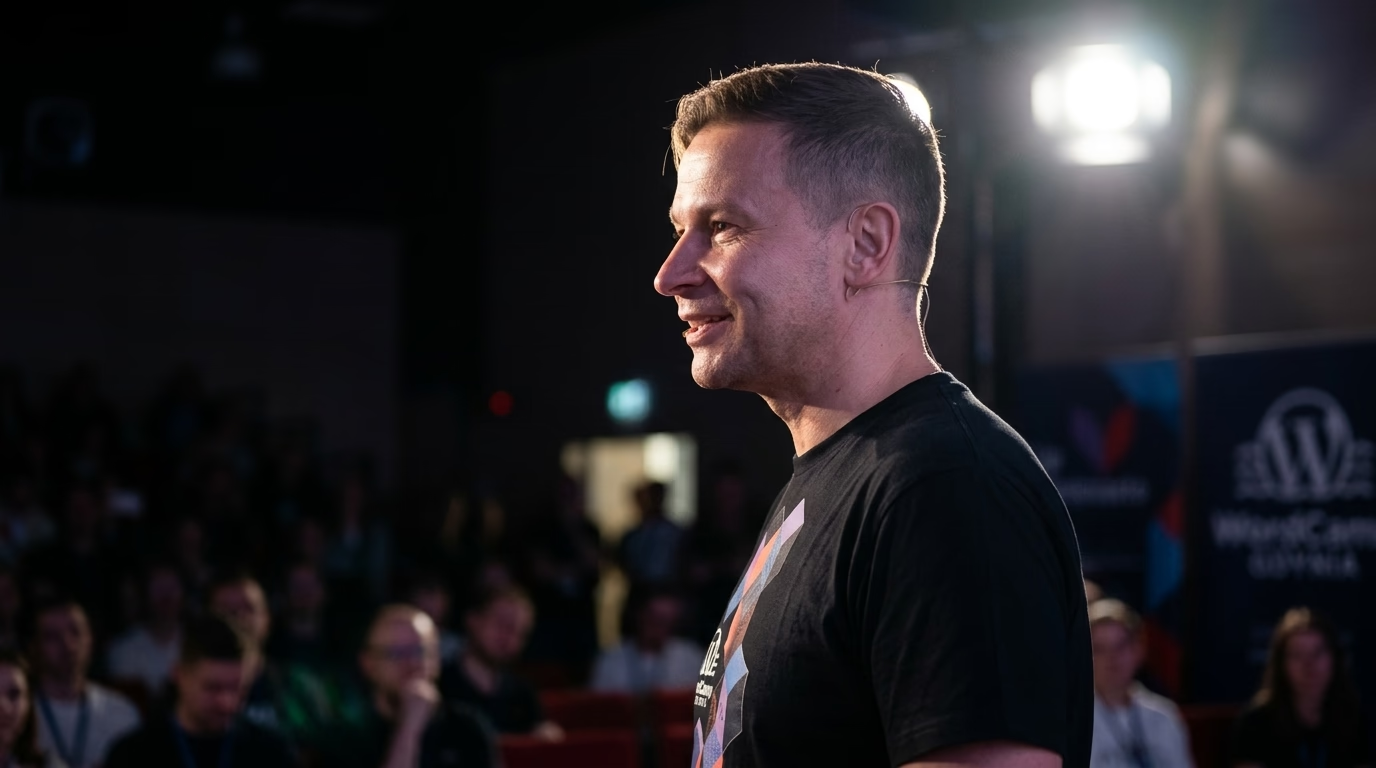
- I organise and speak at WordCamps.
- I have attended every WordCamp Europe from 2017 to 2026.
Sheffield City Council describes the city as combining significant advanced manufacturing capabilities with a growing digital, health-technology, and creative sector, anchored by the University of Sheffield, Sheffield Hallam University, and the Advanced Manufacturing Innovation District (AMID) along the Sheffield-Rotherham corridor. Websites across those South Yorkshire industries tend to share the same structural bottleneck: a WordPress, Joomla, or Drupal installation that has grown over a decade, carrying hundreds of product pages, technical datasheets, case studies, and event listings that still generate valuable organic search enquiries. Moving that website to Astro or Next.js is fundamentally about protecting what the existing domain already earns while stripping away slow database queries and plugin maintenance risk. Working solo, remotely and in writing from Gdynia, I execute that migration for Sheffield businesses and verify every route and UK regulatory requirement before and after cutover. My broader engineering methodology is on the Next.js and Astro migration page.
Is my Sheffield company website worth migrating off WordPress?
Rebuilding the frontend is worth it when the underlying CMS architecture itself is the bottleneck: plugin updates break the product specification filter, the administrative dashboard loads slower than the public website, or nobody dares to update PHP or the theme before a trade exhibition. It is not worth migrating when the slowness comes from a single bloated page builder, uncompressed images, and a dozen unused plugins. Cleaning up the existing WordPress installation costs far less in that case, and my written review will tell you so.
For a precision manufacturer, metallurgy specialist, or B2B engineering supplier in Sheffield, the typical website is a structured technical catalogue: product families, metallurgical or mechanical specification tables, downloadable PDF datasheets, ISO and UKCA/CE certifications, and a technical quote or enquiry form. Because that content changes deliberately rather than every second, it fits Astro ideally: Astro compiles clean static HTML at build time and ships zero client-side JavaScript by default unless an interactive component (island) explicitly requires it, keeping pages well within Google’s official Core Web Vitals thresholds (Largest Contentful Paint up to 2.5 s, Interaction to Next Paint up to 200 ms, Cumulative Layout Shift up to 0.1).
Next.js fits when the website does more than publish content: an authenticated distributor portal with custom trade price lists, an interactive engineering configurator, live stock or lead-time lookups pulled per request, or a logged-in client portal for a Sheffield SaaS or healthtech product. Those workflows benefit from on-demand server rendering.
Your editors can keep WordPress on a private subdomain purely as a headless CMS behind the new frontend, or move content into Git-backed Markdown/MDX or another headless CMS; I compare those options on the headless CMS developer page.
Sheffield and South Yorkshire sectors: where decoupled frontends pay off
Across Sheffield’s industrial and digital districts from the Advanced Manufacturing Park (AMP) and Sheffield Business Park near Catcliffe and Tinsley to the Lower Don Valley, Sheffield Digital Campus near the station, Kelham Island, and the Olympic Legacy Park in Attercliffe, organizations run web platforms with distinct technical pressures:
- Advanced Manufacturing, Materials Engineering and Precision Tooling (AMID, Lower Don Valley, Advanced Manufacturing Park): Suppliers to aerospace, energy, nuclear, and medical device supply chains maintain deep libraries of alloy specifications, CAD drawings, safety data sheets, and quality certificates (AS9100, ISO 9001). Migrating from an ageing WordPress or Joomla theme to typed Astro collections guarantees that every historical PDF link and product URL resolves in a single hop while serving specification tables instantaneously to international procurement engineers.
- Health Technology, Medtech and University Spin-outs (Sheffield Olympic Legacy Park, Innovation District): Clinical software vendors, rehabilitation technology developers, and research spin-outs require strict WCAG 2.2 AA accessibility compliance, clean documentation hubs, and zero third-party tracker leakage on patient-facing or NHS-facing portals.
- B2B SaaS, Creative Studios and Professional Services (Sheffield Digital Campus, Heart of the City, Kelham Island): Software companies, engineering consultancies, and legal or accounting practices need fast mobile landing pages, structured case study directories, and reliable CRM webhook integrations without maintaining a public PHP/MySQL attack surface.
How do I keep Google rankings when a Sheffield site moves to Astro or Next.js?
- Exhaustive URL and asset inventory. I collect every address the legacy site has ever served by combining a live site crawl, the XML sitemaps, Google Search Console landing page and backlink exports, and raw server access logs. Server logs are vital on Sheffield manufacturing and catalogue sites because PDF datasheets, CAD files, and older product URLs are frequently linked directly from distributor portals, tender documents, and customer emails without ever appearing in an XML sitemap.
- Typed content model. Each legacy post type, taxonomy, and custom field becomes a strictly typed schema in the new project. Specification tables built inside visual page builders, legacy shortcodes, and embedded quote forms are mapped individually into clean Astro or React components so formatting never breaks.
- Written 301 URL map. Every legacy URL receives one explicit destination in a version-controlled redirect file. Changed or consolidated paths receive a single-hop permanent redirect (HTTP 301 or 308) straight to the final canonical URL, with zero redirect chains and zero catch-all homepage redirects, staying active indefinitely.
- Metadata and structured data parity. Page titles, meta descriptions, canonical URLs, Open Graph tags, and Schema.org JSON-LD (
Organization,Product,Article,BreadcrumbList,FAQPage) are generated directly from the typed content model and compared field by field against the legacy crawl. - Multilingual
hreflangverification. If your Sheffield company publishes German (de), French (fr), or US/international English (en-US/en-GB) pages for export distributors, Google requires every language version to list itself and all sibling versions reciprocally. I test those pairs directly on the compiled HTML before cutover. - Staging verification. The rebuilt site runs on a protected preview address blocked from search indexing (
noindex). An automated script tests the entire URL map against staging: every legacy address must return HTTP 200 on the same path or a single 301 hop to a 200. - Staged cutover. Section by section under the same domain via edge routing rules, or in a single coordinated window for smaller corporate sites. Technical quote forms, analytics, and CRM or ERP webhooks are verified on production before the legacy server goes into read-only standby.
- Post-launch Search Console monitoring. I submit the updated XML sitemap, monitor the Page Indexing report for any unexpected 404s or redirect warnings, and compare organic clicks per route group against the pre-migration baseline.
Pre-cutover verification table for Sheffield migrations
| Verification area | What I check before switching production traffic |
|---|---|
| URL, PDF & datasheet ledger | Every indexed URL and linked PDF/CAD file in Search Console and server logs returns HTTP 200 or a single 301 |
| Core Web Vitals thresholds | Templates verified against official web.dev thresholds (LCP up to 2.5 s, INP up to 200 ms, CLS up to 0.1) |
| PECR Schedule A1 & UK GDPR | Storage and scripts audited against PECR regulation 6; processor flows documented for every enquiry form |
| Equality Act 2010 & WCAG 2.2 AA | Semantic HTML landmarks, keyboard navigation, focus states, form labels and colour contrast verified |
| Schema.org JSON-LD parity | Organization, Product, BreadcrumbList, Article and FAQPage schemas validated against legacy pages |
| Companies Act 2006 footer | Registered company name, England & Wales number, registered office address and VAT number verified |
What usually breaks in a CMS migration, and how do I catch it?
- Technical downloads that vanish. A datasheet folder buried inside
wp-content/uploads/is easy to miss if you only check HTML pages. Pulling server access logs in step 1 lists every requested PDF and CAD file so each keeps its path or receives a direct 301 redirect. - Multi-hop redirect chains. Stacking new migration rules on top of an old WordPress redirection plugin creates two-hop or three-hop chains that slow crawlers and bleed link equity. I flatten every rule to a single hop and verify the full table with an automated script.
- Silently dropped structured data. Legacy SEO plugins often injected
ProductorOrganizationschema that disappears when templates are rewritten unless explicitly generated from the new schema. - Quote forms that fail silently. An industrial RFQ or enquiry form that stops delivering to your sales team or CRM costs far more than any temporary ranking wobble. Every form is tested end to end with real submissions before cutover.
- Staging
noindexleaking to production. On launch day I verify both the rendered<meta name="robots">tag androbots.txtheaders across live production templates.
Which UK laws and regulatory standards apply to a Sheffield website rebuild?
Rebuilding your frontend in Astro or Next.js is the best moment to verify compliance across UK data protection, cookie storage, digital accessibility, and statutory company disclosures:
Personal data and UK GDPR (Data Protection Act 2018 & Data (Use and Access) Act 2025). Any Sheffield website that collects RFQ enquiries, CV uploads, distributor login accounts, or clinical/patient-adjacent data is governed by the UK GDPR and the Data Protection Act 2018, overseen by the Information Commission (ico.org.uk). Because decoupling the frontend changes how form payloads are transmitted and stored, I document every serverless endpoint, CRM webhook, and hosting region so your privacy notice and data processing agreements match the live architecture.
Electronic storage and cookies under PECR Schedule A1. Electronic storage on visitors’ devices falls under regulation 6 of the Privacy and Electronic Communications Regulations 2003, as updated by Schedule A1 inserted by the Data (Use and Access) Act 2025. Schedule A1 defines specific exemptions from prior consent, including storage strictly necessary to provide a service requested by the user, storage whose sole purpose is collecting first-party statistical information about how your service is used with a view to improving it, and storage used solely to adapt site appearance or preferences, provided visitors receive clear information and a simple, free way to object. Advertising, retargeting, and cross-site tracking pixels continue to require prior affirmative opt-in consent. During the rebuild, I strip out forgotten legacy plugins and wire your scripts cleanly into exempt and consent-gated categories.
Accessibility (Equality Act 2010 Section 29 & Public Sector Accessibility Regulations 2018). Section 29 of the Equality Act 2010 places an anticipatory duty on service providers (whether B2C or public-facing) to make reasonable adjustments so disabled users are not placed at a substantial disadvantage. Public sector bodies, NHS partners, universities, and qualifying publicly funded institutions must also comply with the Public Sector Bodies (Websites and Mobile Applications) (No. 2) Accessibility Regulations 2018, which require WCAG 2.2 Level AA conformance and a published accessibility statement. Rebuilding templates in Astro or Next.js is the most cost-effective moment to establish semantic HTML landmarks, keyboard focus indicators, accessible form error messages, and sufficient colour contrast.
Statutory trading disclosures under the Companies Act 2006. Under the Companies (Trading Disclosures) Regulations 2008 made under the Companies Act 2006, every UK limited company (Ltd or PLC) must display its full registered company name, company registration number, part of the United Kingdom in which it is registered (England and Wales), and registered office address on its website, alongside VAT registration details where applicable. I make sure these statutory disclosures are built directly into the global footer component.
What do I hand over when the Sheffield migration is finished?
Your company receives full ownership of the Git repository, the automated build and deployment pipeline, documented environment variables, the complete URL redirect map, and the typed content schema, all held in your own accounts. Your editors also receive a concise written publishing guide.
How to request a written scope for your Sheffield website
Send me your current website URL, the CMS and version it runs on, and where your traffic comes from (organic search, paid campaigns, referrals, direct), plus read-only Search Console access if available, via the contact page. Include a note on any distributor login, product configurator, technical downloads library, or CRM/ERP integration that must keep working. I reply in writing on working days with a free initial estimate and written scope covering what moves, which framework fits each part of the site, how the URL map will be built, and which technical risks I see.
Selected projects
Examples of my work.
E-commerce Development: aspirodesign.pl
aspirodesign.pl is a website for a creative design business, focused on portfolio presentation, performance, and simple content management.
E-commerce Development: autogaz.olsztyn.pl
autogaz.olsztyn.pl is a website for a workshop in Olsztyn installing car gas systems, with service information and simple contact.
E-commerce Development: capslock.pl
capslock.pl was a WooCommerce store for computer parts, built in 2013 with product catalogue, AB wholesaler integration, external marketplace exports, payments and performance optimisation.
WordPress support & development in Sheffield
See also in Great Britain
Need this service: Next.js / Astro migration in Sheffield?
Describe your project by e-mail. I reply within 48 hours.
Describe your projectExplore other WordPress services and knowledge base
Migration to Astro, Next.js, and headless WordPress.
WooCommerce sync with ERP and wholesale systems.
Business process automation around WordPress and company systems.
Library of concrete automation use cases.
Headless WordPress, Sanity, Strapi, and Contentful with Astro or Next.js.
Astro, MDX, edge delivery, and Core Web Vitals measured on real traffic.
Custom WordPress engineering and architecture.
Scalable headless, ERP, and AI architecture for enterprise.
Related categories
Supporting articles
Six to sixteen weeks for typical engagements, with a four-phase shape: discovery, scoping, build and cutover, tuning. The variables are catalogue size, integration count, URL preservation, and editorial team readiness, not framework choice.
A definitive 4-year Total Cost of Ownership (TCO) analysis, real-world Core Web Vitals benchmarks, Astro 7 GraphQL APQ architecture, and a 10-point executive decision matrix for choosing between decoupled and traditional WordPress.

The Shopify Plus vs WooCommerce headless decision in 2026 is no longer a binary "platform vs custom" trade-off. Both can run headless, both integrate AI, both ship at the edge. The real axes are control, total cost over five years, and exit strategy. This article walks the matrix with confirmed platform facts.