Website & application migration in Warsaw
I migrate sites from WordPress, Joomla, Drupal, Angular, Vue and other technologies to Astro and Next.js. I plan each migration to keep SEO, content and features intact and switch over in an agreed window. I work alone and have years of experience with both legacy and modern stacks.
- I have had a wordpress.org account since 2006.
- I contributed to WordPress core for versions 7.0 and 7.1.
- I maintain 30 plugins on wordpress.org.
- I organise and speak at WordCamps.
- I have attended every WordCamp Europe from 2017 to 2026.
- Local WordPress meetup: WordUp Warszawa
Warsaw is Poland’s capital and largest metropolitan market, so a commercial website built here usually serves Polish-speaking clients and regulators first (pl-PL) and English-speaking investors, enterprise partners or international candidates second (en). Across the city, from financial, fintech, legal and corporate headquarters around Rondo Daszyńskiego (Wola) and Śródmieście (Varso, Warsaw Spire, Warsaw Unit) to software houses, media publishers and B2B service hubs in Mokotów (Służewiec), Ochota, Praga-Południe and Ursynów, companies often run high-traffic WordPress, Drupal, Joomla or legacy custom PHP platforms that have accumulated years of technical debt. When editing slows down, security patching becomes a pre-campaign gamble, or Core Web Vitals fail on mobile, moving the public frontend to Astro or Next.js is a practical engineering solution. I carry out these migrations myself from Gdynia, from the initial URL inventory to post-launch Search Console verification.
Should a Warsaw company move to Astro or Next.js at all?
Not always. If your site’s slowness disappears after removing unused plugins, configuring Redis object caching and upgrading PHP, a framework migration is an expensive answer to a simple problem. When I inspect a site and see that a cleanup is enough, I say so in the written scope.
A migration to Astro or Next.js makes engineering sense when the bottleneck sits in the architecture itself:
- Every public page is assembled dynamically by PHP and MySQL on each request, even though 95% of the content changes only when an editor publishes an article or product update.
- Editors fight a heavy visual page builder (Elementor, WPBakery, Divi) or an ageing Drupal/Joomla admin that outputs megabytes of nested DOM nodes and render-blocking scripts, preventing the site from passing Google’s official Core Web Vitals thresholds (Largest Contentful Paint up to 2.5 seconds, Interaction to Next Paint up to 200 milliseconds, Cumulative Layout Shift up to 0.1).
- Security and compliance teams in Wola or Śródmieście require removing the public-facing PHP/database attack surface altogether (
wp-login.php,xmlrpc.php, plugin SQL injection vectors). - The same structured content must feed multiple surfaces: the corporate website, an investor relations portal, a career hub and API endpoints.
The choice between the two frameworks follows the nature of your routes, not industry hype:
- Astro fits sites that are primarily content and lead generation: corporate service pages, legal and consulting publications, developer documentation, B2B product catalogues, media portals and career pages. Pages are prebuilt as static HTML (or cached at the edge) and ship zero JavaScript by default, hydrating interactive UI islands only where needed.
- Next.js fits applications with authenticated client portals, financial or SaaS dashboards, real-time data feeds or multi-step server-rendered workflows that change per user session.
In both setups, your content can stay in WordPress used as a private headless CMS (via the REST API or WPGraphQL), move to a headless CMS like Directus, Sanity or Strapi, or live as typed Markdown/MDX files (Astro Content Collections) in your Git repository. I settle that choice with your editorial and IT stakeholders in writing before any code is written.
Why Warsaw fintech, enterprise and B2B platforms outgrow monolithic CMS stacks
Organisations in Warsaw typically hit three specific scaling walls on legacy CMS installations:
- Strict security and audit requirements (KNF, DORA, NIS2 / KSC). Financial institutions, fintechs, insurance brokers and enterprise SaaS vendors in Warsaw operate under tight IT security audits, including Polish Financial Supervision Authority (Komisja Nadzoru Finansowego, KNF) cloud communication guidelines, the EU Digital Operational Resilience Act (DORA) and the National Cybersecurity System (Krajowy System Cyberbezpieczeństwa, KSC / NIS2). Keeping a monolithic WordPress site with 35 third-party PHP plugins on the public root domain creates constant vulnerability patching pressure. Compiling the public website to static Astro files on an edge CDN decouples the public domain from any database or admin server.
- High-volume editorial, regulatory and investor relations archives. Warsaw law firms, WSE (GPW) listed companies and media portals publish thousands of regulatory filings (ESPI/EBI reports), PDF prospectuses, tax alerts and bilingual case studies. In legacy WordPress or Drupal, deep archive pagination and unindexed post-meta queries slow down both editors and Googlebot crawlers. Astro Content Collections validate every entry against a strict TypeScript/Zod schema at build time and serve archive pages in milliseconds.
- ATS and CRM integration fragility. Enterprise recruitment pages in Mokotów and Wola often pull job listings from Greenhouse, Lever, Workday, eRecruiter or Traffit, while B2B forms push leads to HubSpot, Salesforce or Pipedrive. Replacing brittle PHP plugins with typed serverless API routes and build-time webhooks stops form failures and keeps
JobPostingstructured data valid.
How do you keep Google rankings when URLs or frameworks change?
With a complete, multi-source URL map and permanent single-hop redirects built and tested before the new site goes live. Google’s official site-move documentation asks for server-side permanent redirects (301 or 308), sending each legacy URL directly to its final destination without chains, avoiding catch-all redirects to the homepage, and keeping those redirects active for at least one year.
My engineering process for URL and SEO preservation runs in five steps:
- Multi-source URL export. I export every known URL from the legacy system: XML sitemaps, the CMS database, Google Search Console indexing and performance exports, server access logs, analytics landing-page reports and external backlink tools. Downloadable PDFs, press kits and investor documents that external sites link to go into the inventory too.
- 1:1 mapping (or path preservation). Whenever your existing URL slugs (
/pl/...and/en/...) are clean, I keep the exact same URLs in Astro or Next.js so zero redirect is needed. Where paths must change, I pair each old URL with the single new URL that answers the same search intent. Pages with no successor and no traffic are retired with HTTP410 Goneor redirected to their closest parent category, with the rationale documented in the map. - Version-controlled redirect configuration. I write the redirect matrix directly as a versioned configuration file in the repository (Cloudflare
_redirects/ Worker rules, Nginx map ornext.config.mjsredirects) so your engineering team can review every rule in Git. - Automated staging verification. Before cutover, I run an automated HTTP script against the staging environment that requests every single row in the redirect map and fails if any path returns a
404, a500or a multi-hop chain. - Post-cutover Search Console monitoring. When the domain stays the same and only the underlying framework or paths change, Search Console’s Change of Address tool is not needed (Google documents it for domain and subdomain changes only). I submit the updated XML sitemaps immediately after cutover and monitor crawl stats, index coverage and query rankings across the following weeks.
Pre-cutover verification gates for Warsaw migrations
Before switching production traffic, the staging build must pass six objective engineering gates:
| Verification gate | What I check on staging | Acceptance rule before cutover |
|---|---|---|
| URL & document coverage | Union of crawl, XML sitemaps, GSC exports, analytics landings and PDF backlinks | 100% resolve with 200 OK at the same path or a single-hop 301 to the mapped target |
| Hreflang reciprocity | Bidirectional pl, en (plus de or uk if published) and x-default in HTML and sitemaps | Every locale links to itself and all siblings; zero non-200 or one-way hreflang tags |
| Structured data parity | Schema.org JSON-LD blocks compared template-by-template against production | Zero validation errors; Organization KRS/NIP/REGON, JobPosting and FAQPage intact |
| Core Web Vitals readiness | Static HTML payload, self-hosted fonts with Polish diacritics (latin-ext) and image dimensions | Engineered to meet official web.dev thresholds (LCP <= 2.5 s, INP <= 200 ms, CLS <= 0.1) |
| PKE & UODO consent gate | Clean browser network inspection prior to interacting with the consent banner | Zero non-exempt marketing or analytics cookies/scripts fired before explicit opt-in |
| Forms, CRM & ATS webhooks | End-to-end test submissions on contact, demo request and recruitment forms | Confirmed HTTP 200/201 delivery, server-side validation and GDPR information clauses |
What happens to structured data, canonicals and Polish-English hreflang?
They move with the content and are verified by script before launch. For every template type, I compare the staging HTML against the live site to confirm that <title>, meta description, canonical URL, Open Graph tags and Schema.org JSON-LD match or deliberately improve upon the legacy setup.
A Warsaw site running Polish (pl-PL / pl) and English (en) versions needs strict hreflang reciprocity. Google ignores hreflang annotations when return links are missing: if the Polish page points to the English page, the English page must point back, and each page must include a self-referencing link plus an x-default. WordPress multilingual plugins (WPML, Polylang) frequently break these pairs when a draft translation is unpublished or a slug changes. By linking translations via an explicit translationId in the Astro or headless CMS schema, the build pipeline guarantees valid reciprocal tags on every release.
How does a staged cutover work for larger Warsaw portals?
On anything larger than a compact corporate website, I prefer an incremental, section-by-section cutover. Edge routing rules (for example on Cloudflare Workers or an Nginx/Envoy reverse proxy) route specific path prefixes, such as /pl/blog/, /en/resources/ or /kariera/, to the new Astro or Next.js frontend while legacy application sections remain on the old server under the exact same Warsaw domain. Each section goes live, is verified in server logs and Search Console, and only then does the next route group move.
Which Polish and EU laws apply to a website in Warsaw?
Migrating your website’s architecture is the best moment to bring technical compliance in line with Polish statutory law:
1. Personal Data Protection Office (Prezes UODO) and GDPR (RODO)
Personal data collected through contact forms, B2B lead magnets, recruitment pipelines or analytics falls under the EU GDPR (RODO) and the Polish Act of 10 May 2018 on the Protection of Personal Data (Ustawa o ochronie danych osobowych), supervised by the President of the Personal Data Protection Office (Prezes Urzędu Ochrony Danych Osobowych, UODO), headquartered in Warsaw (ul. Stawki 2 / ul. Moniuszki 1A). Moving from a legacy PHP host to an edge CDN, serverless form handler or new analytics tool changes your list of sub-processors (podmioty przetwarzające). Before cutover, I deliver a complete written inventory of every hosting provider, server region and third-party endpoint so your Data Protection Officer (Inspektor Ochrony Danych, IOD) can keep your Article 13 GDPR disclosures and RoPA (rejestr czynności przetwarzania) accurate.
2. Polish Electronic Communications Law (Prawo komunikacji elektronicznej, PKE)
Since 10 November 2024, the Electronic Communications Law (Prawo komunikacji elektronicznej, Dz.U. 2024 poz. 1221) has replaced the former Polish Telecommunications Law. Under the PKE (supervised alongside the President of the Office of Electronic Communications, Prezes UKE, and UODO), storing or accessing information in an end-user’s terminal equipment (cookies, localStorage, tracking scripts) requires clear prior information and explicit end-user consent, unless strictly necessary for transmitting a communication or delivering a service requested by the subscriber. Furthermore, Article 398 of the PKE consolidates the rules on prior consent for electronic commercial communications (komunikacja marketingowa). On the new Astro or Next.js build, I ensure that zero non-essential tracking scripts fire prior to opt-in, and that marketing checkboxes on forms are unticked by default with separate, specific consent clauses.
3. Polish Accessibility Act (Polski Akt o Dostępności, PAD)
Poland transposed the European Accessibility Act (Directive (EU) 2019/882) via the Act of 26 April 2024 on Ensuring Compliance with Accessibility Requirements for Certain Products and Services by Economic Operators (Ustawa o zapewnianiu spełniania wymagań dostępności niektórych produktów i usług przez podmioty gospodarcze, Dz.U. 2024 poz. 731), which took effect on 28 June 2025 under the market surveillance of Prezes Zarządu PFRON and sector authorities such as Prezes UKE. The Act covers consumer e-commerce services, retail banking and electronic communications services, while exempting service microenterprises (fewer than 10 employees and annual turnover or balance sheet total not exceeding EUR 2 million). When rewriting your templates in Astro or Next.js, I build semantic HTML5 landmarks, logical heading hierarchy, explicit <label> bindings, visible keyboard focus states and EN 301 549 / WCAG 2.1 Level AA colour contrast directly into the component library.
4. Commercial Companies Code (KSH Art. 206 & 374) and UOKiK / Omnibus rules
Under Articles 206 and 374 of the Polish Commercial Companies Code (Kodeks spółek handlowych, KSH), websites and commercial correspondence of Polish corporate entities (sp. z o.o., P.S.A., S.A.) must display the full registered company name, registered office and address, the registry court where company files are kept, for Warsaw entities, Sąd Rejonowy dla m.st. Warszawy w Warszawie (XII, XIII or XIV Wydział Gospodarczy Krajowego Rejestru Sądowego) depending on the district, along with the KRS number, NIP, REGON and share capital (kapitał zakładowy, plus paid-in capital for joint-stock companies). If the site sells to consumers, I also preserve the technical fields required by the President of the Office of Competition and Consumer Protection (Prezes UOKiK) under the Omnibus price transparency rules (lowest price from the 30 days prior to a discount).
How we work together remotely (and what you own at handover)
I run WPPoland as a solo developer based in Gdynia. When you commission a Warsaw migration, you work directly with the engineer who audits your URLs, writes your Astro or Next.js code and verifies your Search Console data after launch:
- Written, asynchronous collaboration only. I do not hold phone calls, video meetings, discovery workshops or daily stand-ups. You send your requirements and feedback in writing by email, and I reply in writing on working days. Every URL map, architectural decision and staging test report is documented in writing so your Warsaw IT, marketing and legal teams can review it on their own schedule.
- Client-supplied visual design. I am a software engineer, not a graphic design studio. If you want a visual redesign during the migration, your in-house designer or creative agency supplies the Figma files, wireframes or brand book, and I implement them in clean code. If you want to keep your current visual layout, I port it directly into Astro or Next.js without the legacy page-builder bloat.
- 100% code and infrastructure ownership. At handover, the Git repository, CI/CD deployment pipeline, environment variables, automated redirect test suite and written operations guide stay entirely on your company accounts. Nothing depends on proprietary tools in my name, so your internal Warsaw developers can take over the codebase at any time. If you want local community references in Warsaw, the local group is WordUp Warszawa. For more detail on my technical approach, see Next.js and Astro migration and headless CMS development.
How to get a written scope for your Warsaw migration
Send me a message via the contact page with three details: your current website URL, the CMS or framework it runs on (with its version if known), and where your traffic and leads come from (organic search, paid campaigns, newsletters, investor portals or partner links). Mention your published languages (pl, en, de, uk) and any CRM, ERP or ATS integrations. I will review your setup and reply in writing on working days with a concrete scope listing the URL count, recommended framework, staged cutover sequence and technical risks to address before launch.
Selected projects
Examples of my work.
Jobsin.co - International Job Platform for Technical Specialists
Jobsin.co is a modern job board focused on posting job offers for qualified specialists in the fields of construction, mechanics, and engineering worldwide.
KTS Conference Mobile App - Event Management Application for iOS and Android
The event application project dedicated to the 15th Broadband Technology Conference is a WordPress-based event site with editable content and event-management features for conference participants.
LEARNETIC - E-publishing Platform | WPPoland
Effective e-Publishing is an innovative project focused on digital content creation, import, publishing, and distribution. This platform is designed for effe...
WordPress support & development in Warsaw
Need this service: Next.js / Astro migration in Warsaw?
Describe your project by e-mail. I reply within 48 hours.
Describe your projectExplore other WordPress services and knowledge base
Migration to Astro, Next.js, and headless WordPress.
WooCommerce sync with ERP and wholesale systems.
Business process automation around WordPress and company systems.
Library of concrete automation use cases.
Headless WordPress, Sanity, Strapi, and Contentful with Astro or Next.js.
Astro, MDX, edge delivery, and Core Web Vitals measured on real traffic.
Custom WordPress engineering and architecture.
Scalable headless, ERP, and AI architecture for enterprise.
Related categories
Supporting articles
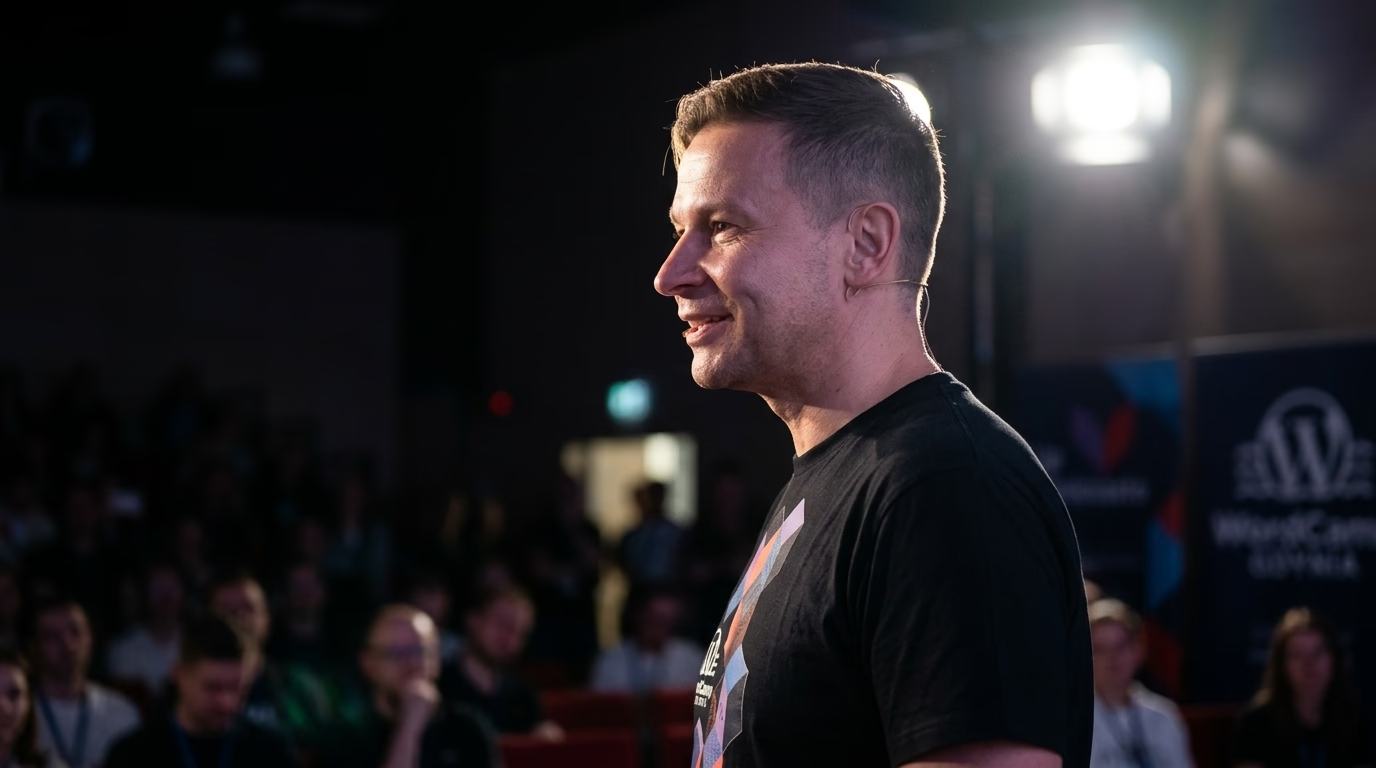
Six to sixteen weeks for typical engagements, with a four-phase shape: discovery, scoping, build and cutover, tuning. The variables are catalogue size, integration count, URL preservation, and editorial team readiness, not framework choice.
A definitive 4-year Total Cost of Ownership (TCO) analysis, real-world Core Web Vitals benchmarks, Astro 7 GraphQL APQ architecture, and a 10-point executive decision matrix for choosing between decoupled and traditional WordPress.
The Shopify Plus vs WooCommerce headless decision in 2026 is no longer a binary "platform vs custom" trade-off. Both can run headless, both integrate AI, both ship at the edge. The real axes are control, total cost over five years, and exit strategy. This article walks the matrix with confirmed platform facts.