My place in the WordPress community
- I have had a wordpress.org account since 2006.
- I contributed to WordPress core for versions 7.0 and 7.1.
- I maintain 30 plugins on wordpress.org.
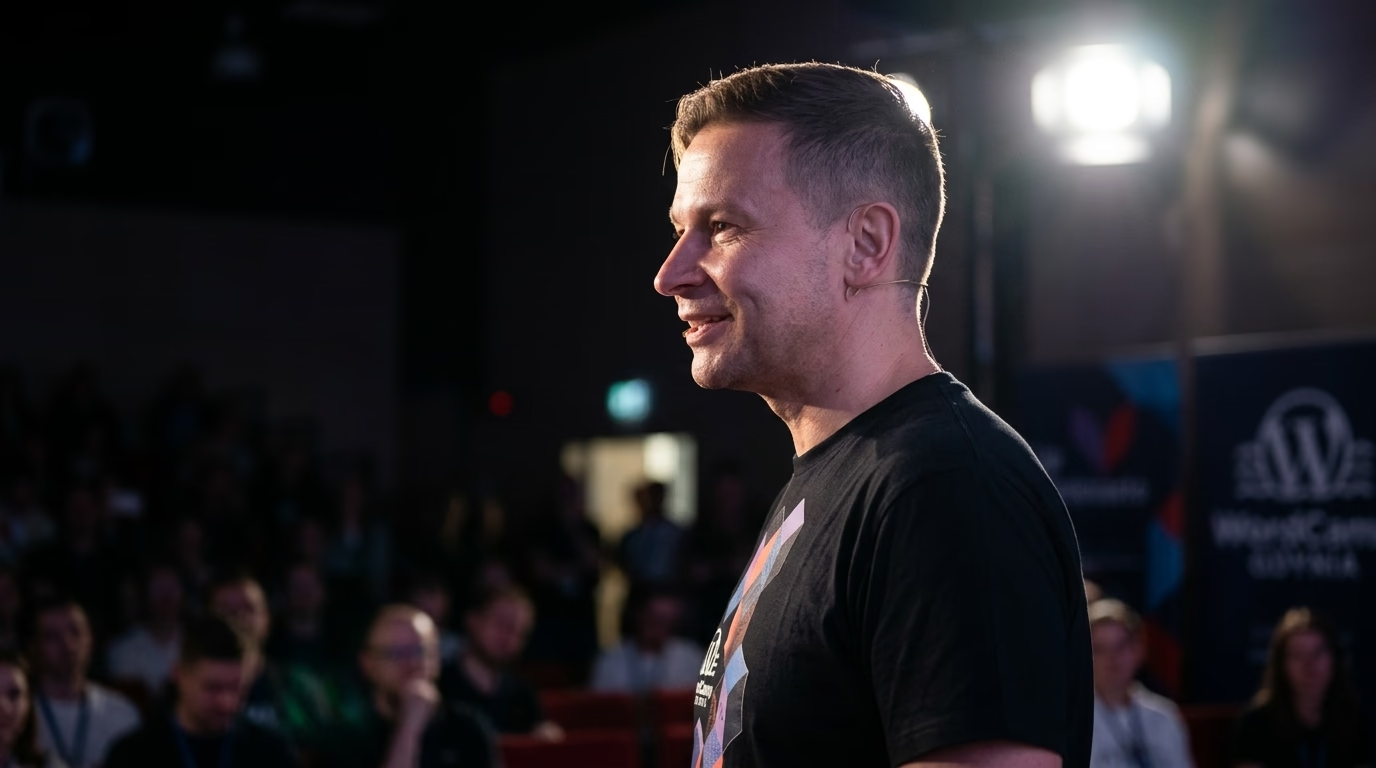
- I organise and speak at WordCamps.
- I have attended every WordCamp Europe from 2017 to 2026.
Next.js Developer for Bratislava Scaleups, STU Ventures, and Cross-Border Danube Portals
Bratislava sits at one of Central Europe’s closest cross-border innovation corridors, linking Slovak engineering talent directly with Vienna and wider DACH enterprise demand. Anchored by cybersecurity pioneer ESET and its upcoming ESET Campus, the Slovak University of Technology (STU) with its InQb incubator, and the Slovak Alliance for Innovation Economy (SAPIE), local companies build security-focused SaaS platforms, fintech onboarding portals, and multilingual B2B sites. Modern Next.js and strict TypeScript give those Bratislava teams instant page paint, tight security headers, and clean multilingual SEO.
I collaborate directly with Bratislava CTOs, founders, and IT leads as an independent Next.js developer. Working solo means one senior specialist designs your product UI, architects your Next.js App Router codebase, integrates your headless CMS or backend APIs, and delivers clean Git pull requests without agency markups.
Security-Minded UI Design and Accessible React Primitives
In a city shaped by cybersecurity leadership and cross-border DACH clients, messy interfaces and unvetted front-end packages undermine trust immediately. I handle visual interface craft alongside React front-end template development in one cohesive workflow. Prior to coding components, I map Slovak, German, and English user journeys, wireframe responsive dashboards and conversion screens, and design calm, high-contrast interfaces. Where your Bratislava product team already maintains a Figma library, I implement those design tokens accurately in Tailwind CSS and React Server Components.
Next.js 15 App Router Architecture Built for Enterprise Rigour
My Bratislava Next.js builds focus on clean server-first engineering with minimal client JavaScript and verifiable security hygiene:
- React Server Components and zero secret leakage: Keeping API keys, CMS queries, and permission checks on the server cuts browser JavaScript payloads and protects Interaction to Next Paint (INP).
- End-to-end TypeScript and Zod Server Actions: Typed API contracts, strict Content Security Policy headers, and explicit error boundaries keep onboarding, quoting, and billing flows dependable.
- Headless CMS and backend API bridges: Strictly typed connections to Sanity, headless WordPress, Strapi, Contentful, or custom Symfony, Laravel, and Node.js APIs backed by webhook-triggered ISR revalidation.
- Cross-border Danube SEO metadata: Clean Slovak, German, and English App Router URL trees, automated hreflang tags, dynamic Open Graph cards, and validated JSON-LD schemas.
Core Web Vitals, Accessibility, and European Compliance
Every Bratislava Next.js platform I ship is tuned for low Time to First Byte, responsive WebP and AVIF media through next/image, locally hosted typography via next/font, and strict bundle budgets so Largest Contentful Paint (LCP) and Cumulative Layout Shift (CLS) stay green.
Slovak and EU privacy discipline alongside accessible HTML semantics sit inside the Bratislava front end from sprint one. Consent-gated tracking loaders align with GDPR Article 28 and Article 32 obligations, while international portals serving British or Irish partners also honour UK GDPR, PECR cookie requirements, and the Irish Consumer Rights Act 2022. Focus navigation, interactive data tables, and form error summaries are audited systematically against WCAG 2.1 AA and European Accessibility Act criteria.
Controlled Git Releases and Portable Central European Cloud Hosting
Every Bratislava engagement runs in a private Git repository with strict TypeScript and ESLint CI checks, automated dependency vulnerability scans, Vitest or Playwright smoke tests, and preview links for every pull request. Your platform deploys cleanly to Slovak, Austrian, or German cloud servers, AWS, Docker and Kubernetes clusters, Vercel, or Cloudflare Pages with zero lock-in.
Direct Same-Time-Zone Collaboration
Sharing Central European Time with Bratislava keeps discovery workshops, pull-request reviews, and production cutovers straightforward. Upon delivery, your Bratislava team holds complete Git repository ownership, reusable component libraries, automated tests, and concise architectural documentation.
If your Bratislava organisation is planning a custom Next.js application, a headless CMS storefront, or an App Router upgrade, share your scope via the contact page to schedule a technical scoping call.
Selected projects
Examples of my work.
Confidential WooCommerce Performance Recovery & Core Web Vitals Optimization
How an EU-based B2B WooCommerce operator with a multilingual catalogue resolved critical checkout lag, reduced LCP from 5.4s to 1.8s, and cut checkout TTFB from 2.1s to 0.4s without risking transaction integrity.
Corporate Website: BALTIC PALACE
Baltic Palace is a unique spot on the map of the Polish coastline, combining modernity with cozy interior designs and a distinctive architectural form. Locat...
Corporate Website: centrum-csr.com
centrum-csr.com is a modern online platform dedicated to promoting the concept of Corporate Social Responsibility (CSR) and sustainable development. The webs...
WordPress support & development in Bratislava
See also in Slovakia
Need this service: Next.js developer in Bratislava?
Describe your project by e-mail. I reply within 24 hours.
Describe your projectExplore other WordPress services and knowledge base
Migration to Astro, Next.js, and headless WordPress.
WooCommerce sync with ERP and wholesale systems.
Business process automation around WordPress and company systems.
Library of concrete automation use cases.
Headless WordPress, Sanity, Strapi, and Contentful with Astro or Next.js.
Astro, MDX, edge delivery, and Core Web Vitals measured on real traffic.
Custom WordPress engineering and architecture.
Scalable headless, ERP, and AI architecture for enterprise.
Related categories
Supporting articles
Six to sixteen weeks for typical engagements, with a four-phase shape: discovery, scoping, build and cutover, tuning. The variables are catalogue size, integration count, URL preservation, and editorial team readiness, not framework choice.
A definitive 4-year Total Cost of Ownership (TCO) analysis, real-world Core Web Vitals benchmarks, Astro 7 GraphQL APQ architecture, and a 10-point executive decision matrix for choosing between decoupled and traditional WordPress.
The Shopify Plus vs WooCommerce headless decision in 2026 is no longer a binary "platform vs custom" trade-off. Both can run headless, both integrate AI, both ship at the edge. The real axes are control, total cost over five years, and exit strategy. This article walks the matrix with confirmed platform facts.