My place in the WordPress community
- I have had a wordpress.org account since 2006.
- I contributed to WordPress core for versions 7.0 and 7.1.
- I maintain 30 plugins on wordpress.org.
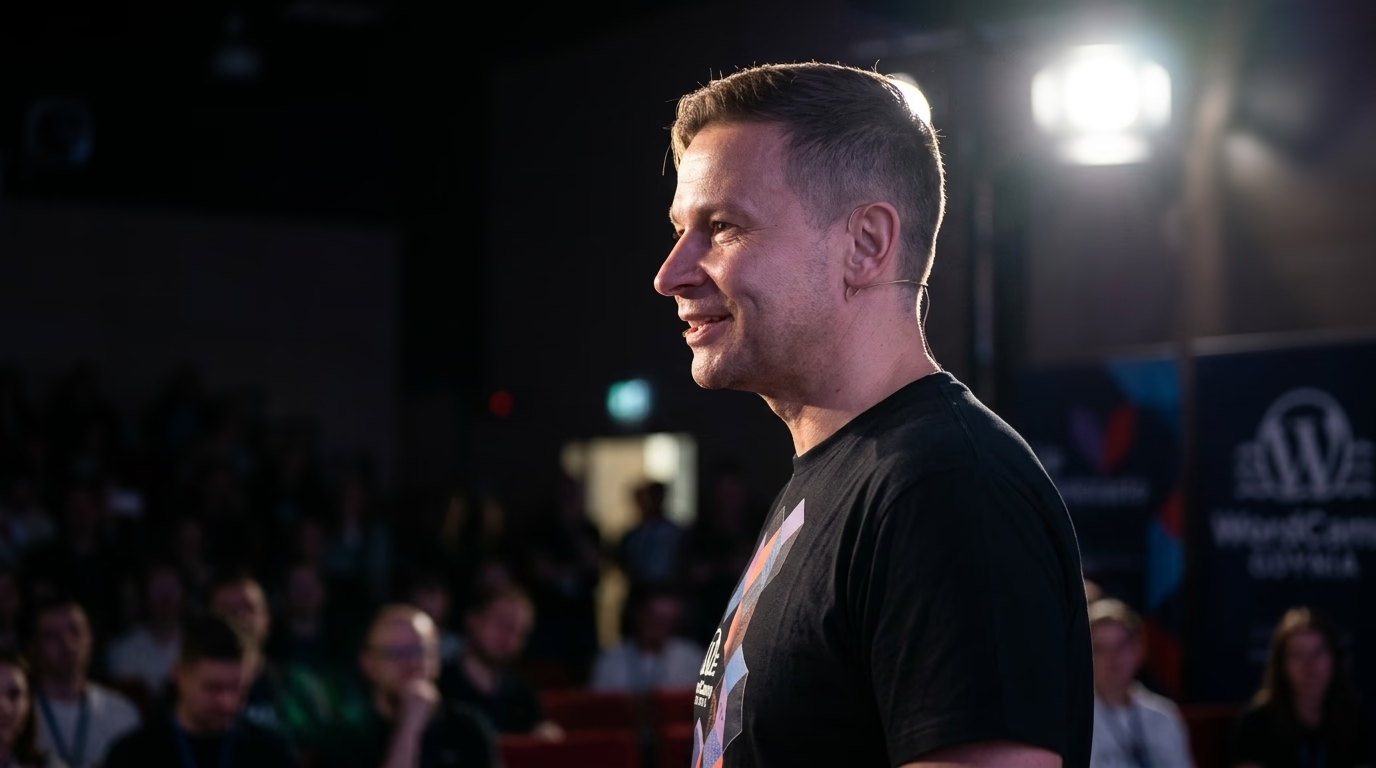
- I organise and speak at WordCamps.
- I have attended every WordCamp Europe from 2017 to 2026.
Modern Web Engineering in Manchester: The Engine of Digital Growth
Manchester stands proud as the digital and creative epicentre of the North. From the thriving creative agencies of the Northern Quarter and Ancoats to the digital media powerhouses at MediaCityUK in Salford, and the fintech scale-ups around Spinningfields, Manchester’s business community demands cutting-edge web infrastructure.
Yet many established enterprises across Greater Manchester remain tied to sluggish, monolithic architectures: legacy PHP setups, cumbersome Magento stores, or heavy WordPress platforms weighed down by dozens of incompatible plugins. These legacy installations introduce severe technical handicaps:
- Frustrating Mobile Performance: Bloated client bundles and database bottlenecks cause Largest Contentful Paint (LCP) times to exceed 3 to 5 seconds, driving away mobile consumers and reducing online revenue.
- Fragile Plugin Ecosystems: Updates frequently break checkout flows or lead capture forms, requiring constant emergency maintenance.
- High Infrastructure Costs: Dedicated cloud servers spend immense compute power regenerating pages that change only once a week.
Next.js represents the premier engineering solution for these challenges. By unifying static pre-rendering, edge computing, and React Server Components, Next.js empowers Manchester businesses to deploy blistering digital experiences that scale effortlessly during peak sales events like Black Friday.
+---------------------------------------------------------------------------------------------------+
|                        MODERN NEXT.JS ARCHITECTURE: APP ROUTER & REACT 19                         |
+---------------------------------------------------------------------------------------------------+
|  [ INCOMING USER REQUEST - EDGE ROUTING ]                                                         |
|  - Edge Middleware validates session, geolocation, and security headers                           |
|                                                                                                   |
|  +---------------------------------------------------------------------------------------------+  |
|  | NEXT.JS SERVER ENVIRONMENT (REACT SERVER COMPONENTS)                                        |  |
|  | - Data fetched directly from databases/APIs without client-side waterfalls                  |  |
|  | - Zero JavaScript emitted to browser for static layout, header, footer, and text content    |  |
|  +---------------------------------------------------------------------------------------------+  |
|                                                                                                   |
|  +---------------------------+     +--------------------------+     +--------------------------+  |
|  | CLIENT ISLAND: Cart Modal |     | CLIENT ISLAND: Search UI |     | SERVER ACTION: Checkout  |  |
|  | 'use client'              |     | 'use client'             |     | Secure mutations without |  |
|  | Minimal interactive JS    |     | Instant local filtering  |     | manual API route boilerplate|
|  +---------------------------+     +--------------------------+     +--------------------------+  |
|                                                                                                   |
|  [ GLOBAL CDN DISTRIBUTION - VERCEL / CLOUDFLARE ]                                                |
|  - Cached edge assets served across London, Manchester, and worldwide under 25ms                   |
+---------------------------------------------------------------------------------------------------+Architectural Advantages of Next.js for Manchester Enterprises
1. Superior Core Web Vitals and Conversion Optimization
Google’s Page Experience signals directly impact both search visibility and user conversion rates. In competitive eCommerce and lead-generation sectors, performance is a primary revenue driver:
- Sub-Second Largest Contentful Paint (LCP): Critical hero banners and product descriptions render immediately from server-rendered HTML.
- Flawless Interaction to Next Paint (INP): By offloading heavy logic to Server Components, the main browser thread stays completely responsive to clicks and keystrokes.
- Zero Cumulative Layout Shift (CLS): Next.js Image component (
next/image) automatically enforces width and height constraints and serves next-gen WebP/AVIF formats natively.
2. Flexible Rendering: Static, Dynamic, and Partial Prerendering
Unlike rigid platforms that force a choice between static and dynamic rendering, Next.js allows fine-grained control:
- Static Site Generation (SSG): Marketing pages, blogs, and landing pages compile into static HTML for maximum delivery speed.
- Incremental Static Regeneration (ISR): Refresh individual pages in the background when content changes in your CMS without rebuilding the whole site.
- Partial Prerendering (PPR): Combine a shell of instant static HTML with streaming server-rendered dynamic slots (such as user-specific pricing or stock status).
3. Fortified Enterprise Security
Decoupling your presentation layer from your back-office databases neutralizes typical security risks:
- Databases and private API credentials remain strictly behind the server boundary, invisible to client-side inspection.
- Public
/wp-adminURLs and vulnerable server extensions are shielded from external web scraping bots. - Strict Content Security Policies (CSP), subresource integrity, and edge rate-limiting protect against cross-site scripting (XSS) and brute-force incursions.
UK Legal Framework and Digital Compliance Standards
Building web applications for the British market demands rigorous adherence to UK legislation:
1. Data Protection Act 2018 & UK GDPR (ICO Enforcement)
The Information Commissioner’s Office (ICO) enforces stringent guidelines on privacy and data processing:
- Cookie Consent under PECR: Analytical cookies (Google Analytics 4, PostHog) and marketing pixels must remain inactive until the user provides unambiguous, affirmative consent.
- Self-Hosted Typography: Google Fonts are self-hosted via
next/font/google, eliminating user IP disclosures to third-party servers. - Data Minimisation: Contact and enquiry forms capture only necessary information, dispatching encrypted payloads over TLS 1.3 directly to secured endpoints.
2. Digital Accessibility (Equality Act 2010 & WCAG 2.2 AA)
Under the Equality Act 2010, commercial services must be accessible to users with disabilities:
- Strict semantic HTML markup ensuring compatibility with screen readers like JAWS and NVDA.
- Compliant contrast ratios (minimum 4.5:1 for standard body copy) and visible focus indicators for full keyboard navigability.
- Elimination of motion sickness triggers through CSS
prefers-reduced-motionmedia query integration.
3. Consumer Rights Act 2015 & E-Commerce Regulations
For Manchester digital merchants, checkout funnels must clearly disclose delivery terms, statutory cancellation rights, and total costs including VAT prior to purchase confirmation.
The 5-Phase Engineering Roadmap
Every Next.js project follows a methodical, milestone-driven development process:
+---------------------------------------------------------------------------------------------------+
|                        STRUCTURED NEXT.JS DEVELOPMENT ROADMAP                                     |
+---------------------------------------------------------------------------------------------------+
|  PHASE 1: TECHNICAL DISCOVERY & AUDIT                                                             |
|  - Full inventory of existing web assets, API endpoints, and legacy URLs                         |
|  - Baseline performance benchmarking and information architecture definition                      |
|                                                                                                   |
|  PHASE 2: COMPONENT DESIGN & DESIGN SYSTEM                                                        |
|  - Creation of modular React components using TypeScript and Tailwind CSS                         |
|  - Implementation of atomic design tokens, typography scales, and accessible primitives           |
|                                                                                                   |
|  PHASE 3: HEADLESS INTEGRATION & DATA PIPELINES                                                   |
|  - Connection to headless CMS (WordPress, Sanity) or eCommerce APIs (Shopify)                    |
|  - Configuration of Incremental Static Regeneration (ISR) and cache invalidation webhooks        |
|                                                                                                   |
|  PHASE 4: QA, ACCESSIBILITY & UK COMPLIANCE AUDIT                                                 |
|  - Automated Axe accessibility testing against WCAG 2.2 AA standards                              |
|  - Structured data validation (Schema.org Organization, Product, Article in JSON-LD)             |
|                                                                                                   |
|  PHASE 5: ZERO-DOWNTIME CUTOVER & EDGE ROUTING                                                    |
|  - Production deployment on Vercel or Cloudflare with complete 301 redirection ledger            |
|  - Real-time search engine crawl monitoring and post-launch telemetry analysis                    |
+---------------------------------------------------------------------------------------------------+Technical Comparison: Monolith vs. Headless Next.js
| Engineering Metric | Traditional Monolith (WordPress/Magento) | Headless Next.js (App Router) |
|---|---|---|
| Initial Page Load (LCP) | 2.5s-5.0s (server bottlenecks) | Under 0.8s (Edge CDN delivery) |
| Client JavaScript Footprint | Bloated with legacy jQuery & vendor plugins | Minimal (React Server Components) |
| Security Surface | Vulnerable plugins, exposed admin portals | Hardened serverless edge architecture |
| Scalability Under Spikes | Requires complex server clusters & caching | Effortlessly handles millions of requests |
| Hosting Overhead | Costly managed cloud hosting / dedicated VPS | Highly cost-effective serverless edge |
Partnering with an Independent Senior Engineer
Collaborating with a dedicated senior specialist delivers significant advantages over multi-layered digital agencies:
Direct Technical Communication
You communicate directly with the engineer who architects, writes, and deploys your application code. There are no sales account managers or junior developers in the chain, ensuring crystal-clear technical alignment.
Pragmatic Commercial Terms
Engagements are structured on transparent B2B contract terms. All intellectual property and source code are delivered directly into your private Git repository without proprietary licensing restrictions.
Synchronised Working Hours
Operating from Poland in the Central European Time zone (CET/CEST), my working day aligns perfectly with UK business hours. All updates are delivered with a guaranteed written response within 48 business hours.
Accelerate Your Web Strategy in Manchester
Whether you are planning a complete migration from a legacy CMS, building an enterprise eCommerce storefront, or seeking high-performance React engineering for your Manchester business, let’s discuss your technical roadmap.
Provide your current website URL or project specification. Within 48 business hours, you will receive an objective technical evaluation and a practical proposal tailored to your commercial objectives.
Selected projects
Examples of my work.
Corporate Website: BALTIC PALACE
Baltic Palace is a unique spot on the map of the Polish coastline, combining modernity with cozy interior designs and a distinctive architectural form. Locat...
Corporate Website: centrum-csr.com
centrum-csr.com is a modern online platform dedicated to promoting the concept of Corporate Social Responsibility (CSR) and sustainable development. The webs...
Corporate Website: DIGITAL WORLD CAPITAL LLP
Digital World Capital LLP is an alternative investment manager specializing in the telecommunications and media sectors on a global scale. The company focuse...
WordPress support & development in Manchester
Need this service: Next.js developer in Manchester?
Describe your project by e-mail. I reply within 48 hours.
Describe your projectFAQ - Next.js developer Manchester
Why are Manchester tech firms and eCommerce brands choosing Next.js over legacy web platforms?
Manchester is the economic and creative heartbeat of the Northern Powerhouse, home to major retail conglomerates, fintech innovators, and media enterprises in MediaCityUK and the Northern Quarter. Traditional monolithic frameworks struggle under high traffic peaks and complex user journeys. Next.js combines server-side rendering (SSR), static site generation (SSG), and React Server Components (RSC) to serve dynamic content at edge-network speeds. This ensures instantaneous page loads, zero client-side React bloat for static areas, and exceptional Core Web Vitals (LCP < 1.0s, INP < 80ms) that directly drive eCommerce conversion rates.
How do React Server Components (RSC) and Server Actions improve application performance?
With React Server Components in the Next.js App Router, large dependencies, markdown parsers, and database query libraries remain exclusively on the server, sending zero kilobytes of JavaScript to the user's browser. Server Actions eliminate the need to write separate API route endpoints and complex client fetching hooks for form submissions and user interactions, drastically reducing bundle size and cutting Interaction to Next Paint (INP) latencies on mobile devices.
What statutory UK regulations are embedded into your Next.js development projects?
Every project built for the UK market strictly observes British legal standards: the Data Protection Act 2018 and UK GDPR enforced by the Information Commissioner’s Office (ICO); the Privacy and Electronic Communications Regulations (PECR) regarding explicit opt-in cookie consent before tracking scripts execute; consumer protection rules under the Consumer Rights Act 2015; and digital accessibility obligations under the Equality Act 2010 adhering to WCAG 2.2 Level AA.
Can Next.js integrate with an existing WordPress backend or Shopify store?
Yes, seamlessly. In a headless architecture, your content editors continue using WordPress as an intuitive editorial CMS, or your merchandising team manages products via Shopify Admin. Next.js acts as the high-speed frontend presentation layer, fetching content via GraphQL or REST APIs during build time and on-demand via Incremental Static Regeneration (ISR). Webhooks automatically revalidate updated pages within milliseconds.
How does working directly with a solo senior developer compare to hiring a Manchester digital agency?
You collaborate directly with me, Mariusz Szatkowski, eliminating layers of account handlers, non-technical project managers, and inflated agency overheads. Every architecture review, component design, and deployment pipeline is handled personally by a senior engineer. Communication is structured and transparent via Git repositories and issue trackers, operating in the UK/European time zone with a written response guaranteed within 48 business hours.
Explore other WordPress services and knowledge base
Migration to Astro, Next.js, and headless WordPress.
WooCommerce sync with ERP and wholesale systems.
Business process automation around WordPress and company systems.
Library of concrete automation use cases.
Headless WordPress, Sanity, Strapi, and Contentful with Astro or Next.js.
Astro, MDX, edge delivery, and Core Web Vitals measured on real traffic.
Custom WordPress engineering and architecture.
Scalable headless, ERP, and AI architecture for enterprise.
Related categories
Supporting articles
Six to sixteen weeks for typical engagements, with a four-phase shape: discovery, scoping, build and cutover, tuning. The variables are catalogue size, integration count, URL preservation, and editorial team readiness, not framework choice.
A definitive 4-year Total Cost of Ownership (TCO) analysis, real-world Core Web Vitals benchmarks, Astro 7 GraphQL APQ architecture, and a 10-point executive decision matrix for choosing between decoupled and traditional WordPress.

The Shopify Plus vs WooCommerce headless decision in 2026 is no longer a binary "platform vs custom" trade-off. Both can run headless, both integrate AI, both ship at the edge. The real axes are control, total cost over five years, and exit strategy. This article walks the matrix with confirmed platform facts.