How to display current and parent category of a post (WordPress snippet)
Need to show the category hierarchy in your theme? Learn how to get the current category and its parent using get_the_category() and get_category_parents().
Supporting the local business ecosystem in Hannover. I offer accessible, high-performance web development tailored for growing companies in the Hannover region.
Local SEO, fast pages on mobile, and integrations with the CRM, booking and payment tools that local businesses already use.
Local context: Hanover’s local startup and tech scene, and WordPress Hannover Community is still a place where senior practitioners compare notes.
The PHP backend landscape in Hanover is dominated by two production frameworks: Laravel for fast-moving business applications and Symfony for long-lived enterprise systems. Both run on PHP 8.3 and 8.4 with strict typing, PSR-12, Composer for dependencies and CI/CD pipelines as standard. Companies in Hanover that try to staff a senior PHP role in-house typically wait three to six months and pay rates that rival full-stack TypeScript hires; freelance senior contracting closes the timeline gap and lets the budget scale to the actual scope rather than to a permanent salary.
I deliver senior PHP engineering for businesses in Hanover as a freelance contractor, EU jurisdiction, B2B contract on VAT invoice. The developer you speak to at the start is the one writing the code in week six. I work alone, so there is no offshore handoff and no project manager on your invoice. Pricing is individual after a one-hour audit, because a Laravel application with 50 routes costs very differently from a Symfony system with 30 microservices and NIS2 compliance.
The difference, from the client’s perspective in Hanover, is not the speed of writing code. A senior developer writes at about the same pace as a mid-level one, sometimes slower, because they review and document as they go. The difference shows in architecture decisions (dropping ideas that work in a demo but break at 100k users or 1M orders), code review (rejecting a PR that adds a feature but leaves a trap for whoever touches that code next month), refactoring (rewriting a module without changing its API, so the rest of the system is unaffected), migrations (knowing when PHP 7.4 to 8.4 takes one sprint and when it takes three because the legacy code relies on behaviour removed in 8.0 or 8.1), security (designing the threat model before the first line of authorisation code), and communication (telling the business “this is possible, but it costs 3x more and yields 1.2x value” before work begins).
For businesses in Hanover, this translates into:
Laravel 11 and 12 backends for business applications, admin panels, REST APIs and SaaS platforms. Eloquent ORM with careful eager loading, Blade or Inertia.js for server-rendered interfaces, Livewire for interactive components without a SPA, queues on Redis or Horizon for background work, and the scheduler for cron tasks. I build Laravel applications in Hanover that scale predictably from MVP to production: clean service-and-repository layers, domain events for cross-feature coordination, feature flags for safe rollout, and PHPUnit/Pest tests on the critical path.
Symfony 7.x for long-lived business systems, B2B portals and integrations with legacy ERP, CRM or accounting systems. Symfony’s strength is its decoupled components: Messenger for asynchronous work, API Platform for REST/GraphQL with generated OpenAPI docs, Doctrine ORM with DDD-style aggregates, the Workflow component for state machines, and the Security component for fine-grained access control. Symfony fits projects in Hanover that will run for ten years rather than three.
API-first backends for mobile apps, single-page applications, headless commerce, and partner integrations. REST with OAuth2 / JWT authorisation, rate limiting, idempotency keys, structured error responses and OpenAPI documentation generated from the code. GraphQL with federated schemas where multiple teams own different domains. gRPC for service-to-service traffic where REST overhead matters.
In my experience, most companies asking for microservices need a well-structured monolith first. I build both. When microservices really fit (independent scaling, separate teams, different languages), I build bounded contexts with clear API contracts, a message bus for asynchronous communication, distributed tracing and infrastructure as code. When a monolith fits, which is most of the time, I build clean modules with internal API boundaries and a strangler-pattern path in case the system ever needs to be split.
Procedural PHP 5.6 with global state and no tests, Symfony 4 past end of life, Laravel 6 with deprecated packages, a custom CMS with no migration path. I refactor legacy PHP in Hanover using the strangler pattern: tests around the existing behaviour first, then gradual extraction of modules into clean architecture, with the old code paths removed only after the new ones are verified in production. Migrations from PHP 5.x to 8.4 usually take 4 to 12 weeks, depending on dependencies, test coverage and how critical the system is to the business.
A PHP application that slows down after a year in production usually has N+1 queries, autoloader bloat, missing database indexes, or PHP-FPM bootstrap taking up most of the request time. I profile with Xdebug for development, Blackfire or Tideways for production, and Datadog or New Relic for continuous monitoring. Then I work through the list of problems: query optimisation, OPcache and JIT tuning, Redis caching, a CDN for static files, and Laravel Octane (with Swoole or RoadRunner) when the workload really benefits from long-running processes.
Security work follows OWASP guidelines and PHP security best practice: PDO prepared statements (never string concatenation in queries), CSRF tokens on every endpoint that changes state, input validation with proper types and constraints, output escaping in templates, security headers (CSP, HSTS, X-Frame-Options, X-Content-Type-Options), session hardening with Secure and HttpOnly flags, audit logging for every authentication and authorisation event, and rate limiting on login and password reset endpoints. I conduct security audits in Hanover on existing applications and remediate findings with documented before-and-after threat models.
PHP backends rarely live in isolation. Common integrations: SAP, Microsoft Dynamics, Salesforce, HubSpot for CRM; SAP Business One, Comarch ERP, fakturownia, wFirma, iFirma for accounting; Stripe, PayPal, Adyen, Worldpay, Przelewy24, Tpay, BLIK for payments; InPost, DPD, DHL, FedEx, Pocztex for shipping; Algolia, Meilisearch, Elasticsearch for search. Every integration ships with idempotent webhook handling, retry logic, dead-letter queues and monitoring, so failures are visible instead of silent.
From a backend engineering perspective: regional SMEs and growing scaleups hire senior developers under a constraint that larger companies rarely face, because every euro spent has to show a measurable business result within a quarter. What works is cutting the scope honestly at the start, getting to a working demo quickly, and shipping in small steps your operations team can follow on staging each week instead of seeing everything at the end of the quarter.
PHP 8.3 and 8.4 in new projects. PHP 8.1 only when the application has to run on older infrastructure. PHP 7.4 and older appear only in the first phase of a migration. Strict typing (declare(strict_types=1)) in every file, parameter and return types throughout, readonly classes from PHP 8.3 where state should not change, and property hooks from PHP 8.4 where setter logic belongs on the property instead of in a service.
PHPStan level 8 or Psalm for static analysis with zero ignored errors in new code. PHPUnit or Pest for unit and integration tests, with coverage driven by business risk instead of a target percentage. Rector for automated refactors during PHP and framework upgrades. PHP-CS-Fixer or PHP_CodeSniffer to enforce PSR-12 in CI. I review every pull request myself, with static analysis (PHPStan) and the test suite.
MySQL 8.x and MariaDB 11.x by default, with indexes designed for the queries the application actually runs. PostgreSQL 16+ for projects that need rich typing, JSONB, or serializable isolation. Redis for cache, queues, sessions, and distributed locks. Elasticsearch or Meilisearch for full-text search where the database default is not enough. Database migrations as code (Doctrine Migrations or Laravel Schema), idempotent, with rollback paths tested before they run in production.
Git with conventional commits and signed commits, GitHub Actions for CI (lint, static analysis, tests, build artefact, deploy to staging), Docker locally and in CI with docker-compose for the multi-service stack (PHP-FPM, Nginx, MySQL, Redis, MailHog), planned deploys via blue-green or Deployer with an atomic symlink swap, and monitoring with Sentry for errors plus New Relic or Datadog for application performance.
The senior PHP rate in Hanover reflects local market conditions and EU jurisdiction overhead. According to No Fluff Jobs Rynek pracy IT 2025/2026, 60 percent of IT job openings in Poland in 2025 were for senior roles, and according to Just Join IT 2024/2025, 60.12 percent of work was fully remote. In my quotes, rates for clients in Germany, Norway, the UK and the US come out 30 to 80 percent above the Polish baseline, depending on the framework, the compliance requirements and the contract length.
The implication for businesses in Hanover: a senior PHP engineer hired locally is roughly the same hourly cost as one contracted through an EU-based freelance arrangement, but the freelance arrangement skips the recruitment lead time (which currently sits at 3 to 6 months for senior roles), provides B2B invoicing rather than full-time employment overhead, and lets the engagement scale up or down with the actual scope of work.
For backends serving clients in Germany, the usual compliance requirements are:
These requirements shape the threat model and the audit trail before the first endpoint reaches staging.
Senior B2B in EU jurisdiction. A standard NDA and a framework agreement with scope and schedule, billed as time and materials or at a fixed price depending on how complete the brief is. Discovery is a one-hour audit: I read your brief, send technical questions in writing, check the state of the existing code (if there is any), list the risks and unknowns, and then send an individual written quote for the scope. My proposals do not quote a starting hourly rate, because the audit usually moves the estimate by 20 to 40 percent either way.
A typical Laravel greenfield engagement in Hanover:
A typical Symfony enterprise refactor:
No. A short paragraph with the goal, the constraints (deadline, budget range, compliance requirements) and the existing stack (if any) is enough for me to scope the discovery audit. I quote only after the audit, because greenfield projects without a brief tend to get inflated estimates that miss the real scope.
Client repository, README, ADRs (architecture decision records) for every non-trivial decision, a deployment runbook and emergency procedures, a list of environment configs (no secrets), and written handover notes for your in-house team if you have one. An optional retainer for the first three months after launch covers the usual bug fixes and small improvements that come up in the first weeks.
Yes, under specific terms. If a senior PHP consultant in Hanover takes on a project beyond their reach (e.g., a Laravel system with a KSeF-Polish-VAT integration plus distributed Redis queues plus PostgreSQL), I deliver a slice as a subcontractor. A B2B contract, an NDA and clear boundaries for code and responsibility; you deal with me directly throughout.
I migrate when the business actually needs microservices. Most of the time it does not. Most companies that split into 20 microservices end up with the same monolith talking over REST and 20 times the DevOps cost. A well-structured monolith (bounded contexts, a clear internal API, isolated test suites) is usually cheaper and more resilient. After the discovery audit I will tell you whether your situation really justifies microservices.
A Laravel greenfield SaaS MVP runs 8 to 12 weeks. A Symfony integration with business systems takes 12 to 24 weeks, depending on how much legacy code it touches. A PHP 7.4 to 8.4 migration with a framework upgrade takes 4 to 12 weeks. A security audit with remediation runs 2 to 4 weeks. Ongoing maintenance on a retainer runs month to month with a notice period.
The cost of working with one senior developer adds up differently from agency staffing. A senior developer costs more per hour but writes less code, with fewer bugs, fewer architectural mistakes and faster recovery when production breaks. For a single greenfield SaaS MVP, working with one senior developer is rarely the cheapest option at the start, but over the life of the system it usually is, because nothing is lost in a junior-to-senior handover and the first six months of code do not need rewriting in year two.
The PHP developer service in Hanover fits with three adjacent services I deliver:
WordPress and WooCommerce work has its own pages (WordPress developer, WooCommerce developer, headless WordPress), because it is a different market and a different toolchain. This page covers PHP backend work outside the WordPress ecosystem.
Senior PHP developer, available for senior B2B engagements. EU jurisdiction, individual quote after a one-hour audit. Send me the scope (greenfield, refactor, migration, integration, security audit), the framework or stack (Laravel, Symfony, Slim, custom), and your timeline. I reply on working days (CET).
Examples of my work.
Photo Studio Balbriggan is a modern photography centre in Ireland offering professional photography services, advanced photo editing, high-quality printing, studio rental, and photography workshops.
The Port Brzeźno Rope Park is a place where both children and adults can experience an unforgettable adventure at height with a good dose of adrenaline in Gdańsk, Poland.
The Quality Watch project was created with the aim of presenting the services of a company specializing in improving customer service standards, quality management, customer experience, customer journeys and customer intelligence.
Describe your project by e-mail. I reply within 48 hours.
Describe your projectNeed to show the category hierarchy in your theme? Learn how to get the current category and its parent using get_the_category() and get_category_parents().
Need to get the URL of the first image or link in an article? Prefer DOMDocument over regex. Ready-made WordPress PHP for developers.
PHP 8.5.12, 8.4.27, 8.3.36 and 8.2.35, released on 21 October 2026, fix two critical vulnerabilities in PHP itself (CVE-2026-109618, CVE-2026-109619). How to check the PHP version in WordPress, what to do when your host has not updated the server yet, and which passwords to change after the update.
Code ships with PSR-12 formatting, typed signatures where the PHP version allows, and tests around the risky paths. I document the moving parts and the deployment steps so another developer can pick it up without me. Handover is treated as part of the work, not a favour at the end.
Anything from PHP 8.x application development through the internals of WordPress and WooCommerce to Laravel and Symfony projects. In practice that means custom plugins, REST API endpoints, third-party integrations, and refactoring legacy code that has drifted across several PHP versions. If a job sits outside what I can support long-term, I say so in writing before we start.
Custom WordPress engineering and architecture.
Scalable headless, ERP, and AI architecture for enterprise.
Stores, checkout flow, and sales logic.
Stability, updates, and post-launch support.
What the monthly care fee covers and what changes it.
Business process automation around WordPress and company systems.
Headless WordPress, Sanity, Strapi, and Contentful with Astro or Next.js.
Astro, MDX, edge delivery, and Core Web Vitals measured on real traffic.
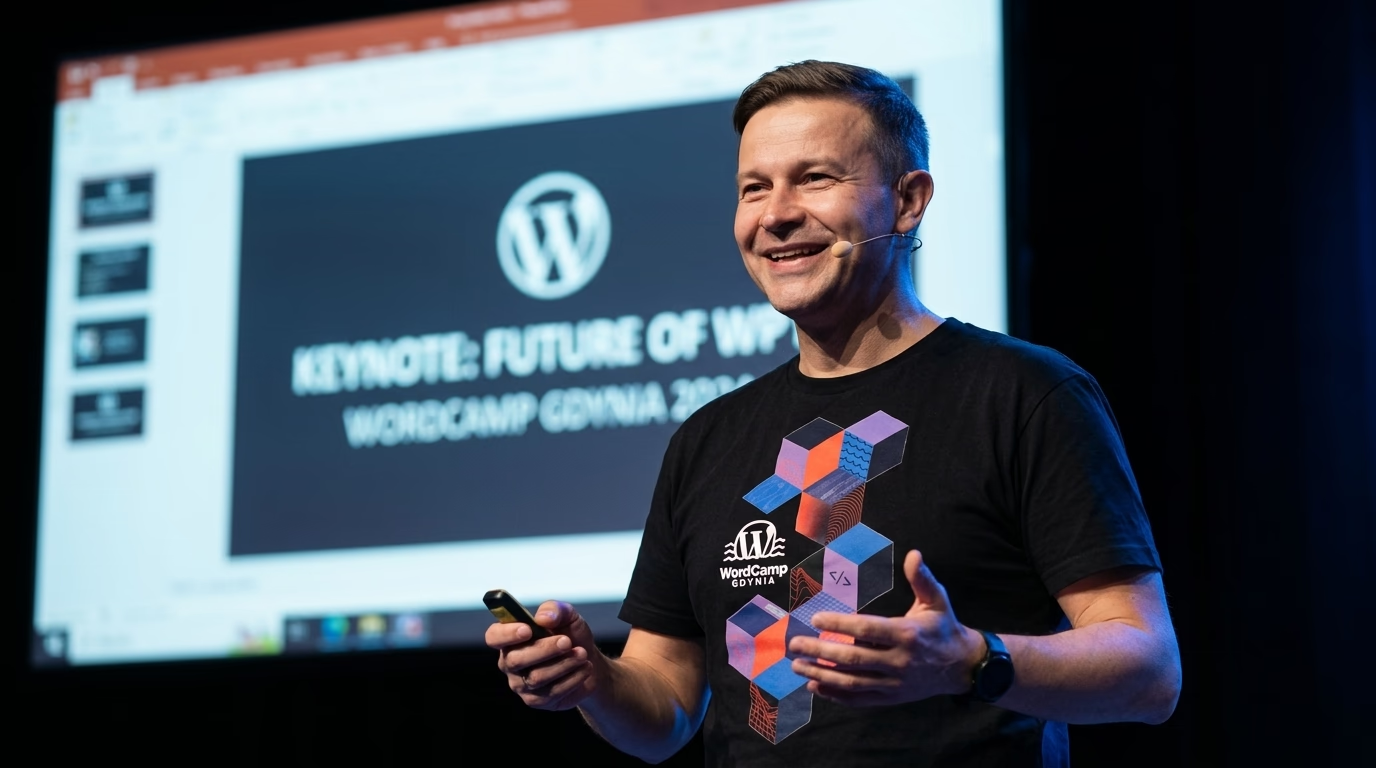
How to start as a WordPress developer in 2026. Local environment, theme and plugin development, REST API and headless paths, security and Core Web Vitals. A practitioner playbook that does not waste your first month.

WordPress 7.0 with AI Client vs Astro 6 after Cloudflare acquisition. Speed, cost, SEO and security comparison. My take after 20 years as a WP developer - when to migrate and when to stay.
WordPress 7.0 with AI Client against Astro 7 with the Rust compiler and Vite 8. Speed, cost, SEO and security compared, plus the real bill for my own Astro 6 to 7 migration.