How to display current and parent category of a post (WordPress snippet)
Need to show the category hierarchy in your theme? Learn how to get the current category and its parent using get_the_category() and get_category_parents().
If your company in Prague runs on PHP and the code needs an upgrade, a new back end or a second pair of hands, this page says what I do, what I do not, and how a project runs. I am Mariusz Szatkowski, one person, working with WordPress since 2006, and so writing PHP, from Gdynia in Poland. I am not a Prague agency, I have no office there, and I do not visit or take calls. All communication is written, in English.
I wrote it around the questions a technical owner in Prague has to answer anyway: which PHP version is still supported, what a legacy upgrade involves, and which Czech rules reach the code. Where the law is involved, I link the source and say which part is mine and which belongs to your lawyer.
The Czech Statistical Office puts the national ICT sector at 6.0% of business sector turnover in 2024, with 200,972 people employed (CZSO, ICT sector). Its Prague factsheet for 2024 gives the mid-year population as 1,387,354 against 10,886,531 for Czechia, and records 26 universities with 41 faculties and 124,706 students by place of study in 2024/2025 (CZSO, First hand figures Prague 2024). The same factsheet puts research and development spending in Prague at 2.7% of regional GDP in 2023, against 1.8% for Czechia.
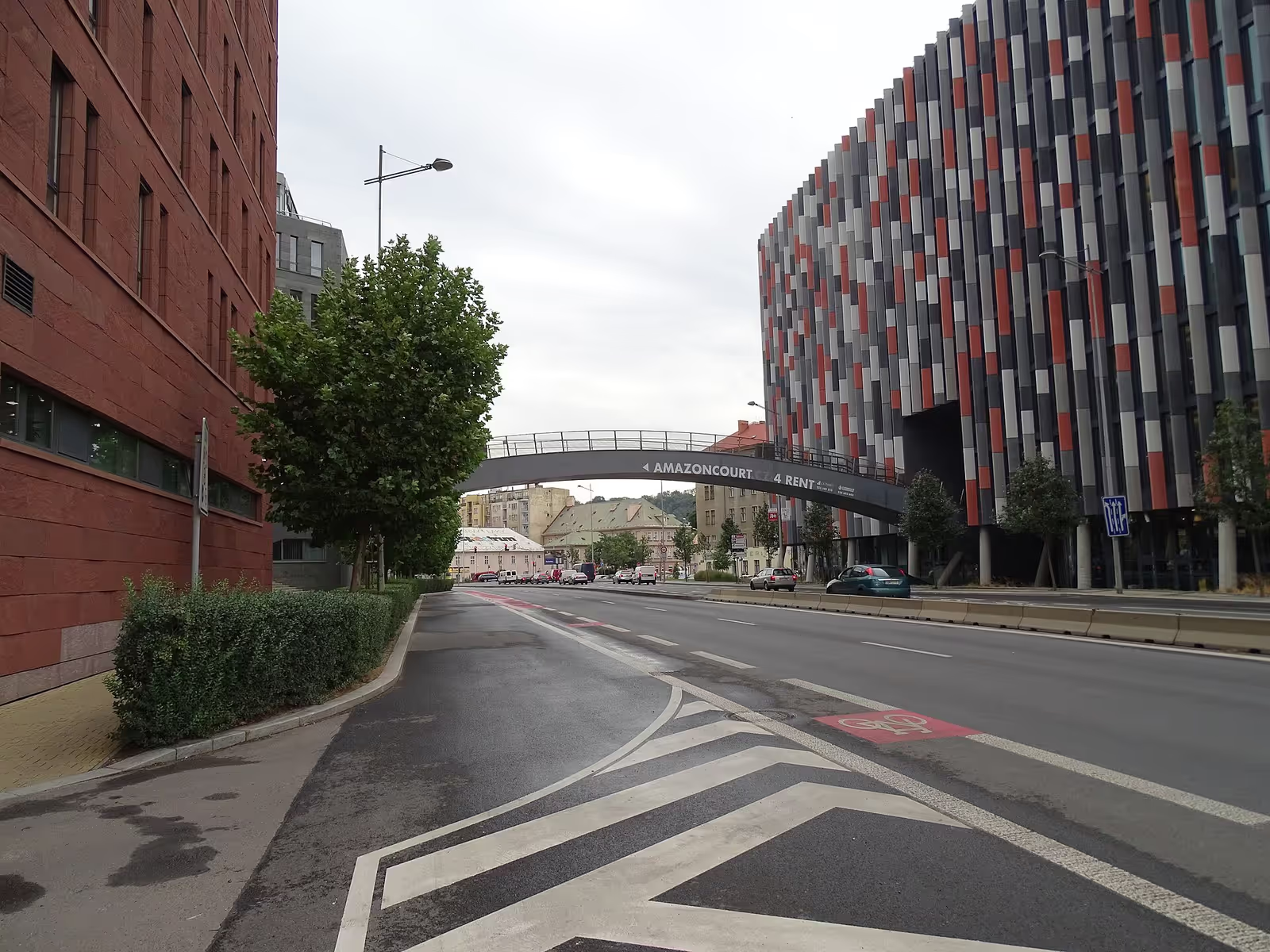
Photo: ŠJů, CC BY 4.0, Wikimedia Commons.
I do not work for any institution named on this page and I have no client references from them. What the figures say to me is narrow. A city with that much research and that many students has plenty of PHP written by people who have since moved on, and plenty of applications that outlived their first author. That is the shape of brief I expect from Prague: an application that works, that nobody dares to touch, and a PHP version that is about to lose support. The first question I ask is which of the two you have, a system to keep alive or a system to start.
The table below is from php.net, supported versions, read on 11 November 2026. Each branch gets two years of active support and two more years of security fixes only.
| PHP | Released | Active support until | Security fixes until |
|---|---|---|---|
| 8.2 | 8 Dec 2022 | 31 Dec 2024 | 31 Dec 2026 |
| 8.3 | 23 Nov 2023 | 31 Dec 2025 | 31 Dec 2027 |
| 8.4 | 21 Nov 2024 | 31 Dec 2026 | 31 Dec 2028 |
| 8.5 | 20 Nov 2025 | 31 Dec 2027 | 31 Dec 2029 |
Two things follow. PHP 8.2 stops receiving security fixes at the end of this year, so an application still on it has weeks, not months. And anything older than 8.2 is not in the supported table at all.
The frameworks have their own calendars. The Laravel support table says bug fixes run for 18 months and security fixes for 2 years, and lists Laravel 12 with bug fixes until 13 August 2026 and security fixes until 24 February 2027 on PHP 8.2 to 8.5. Laravel 11 security fixes ended on 12 March 2026 (Laravel, release notes). Symfony lists 6.4 as a long-term release with bug fixes until November 2026 and security fixes until November 2027, and 7.4 as the current long-term release with bug fixes until November 2028 and security fixes until November 2029 (Symfony, releases). If your application is on Laravel 11 or Symfony 6.4, the upgrade plan is the first deliverable.
An upgrade is not “change the version number”. I treat it as five written steps.
For a WordPress site the same steps apply to the theme and plugins, and I test them against the target PHP version before I touch production.
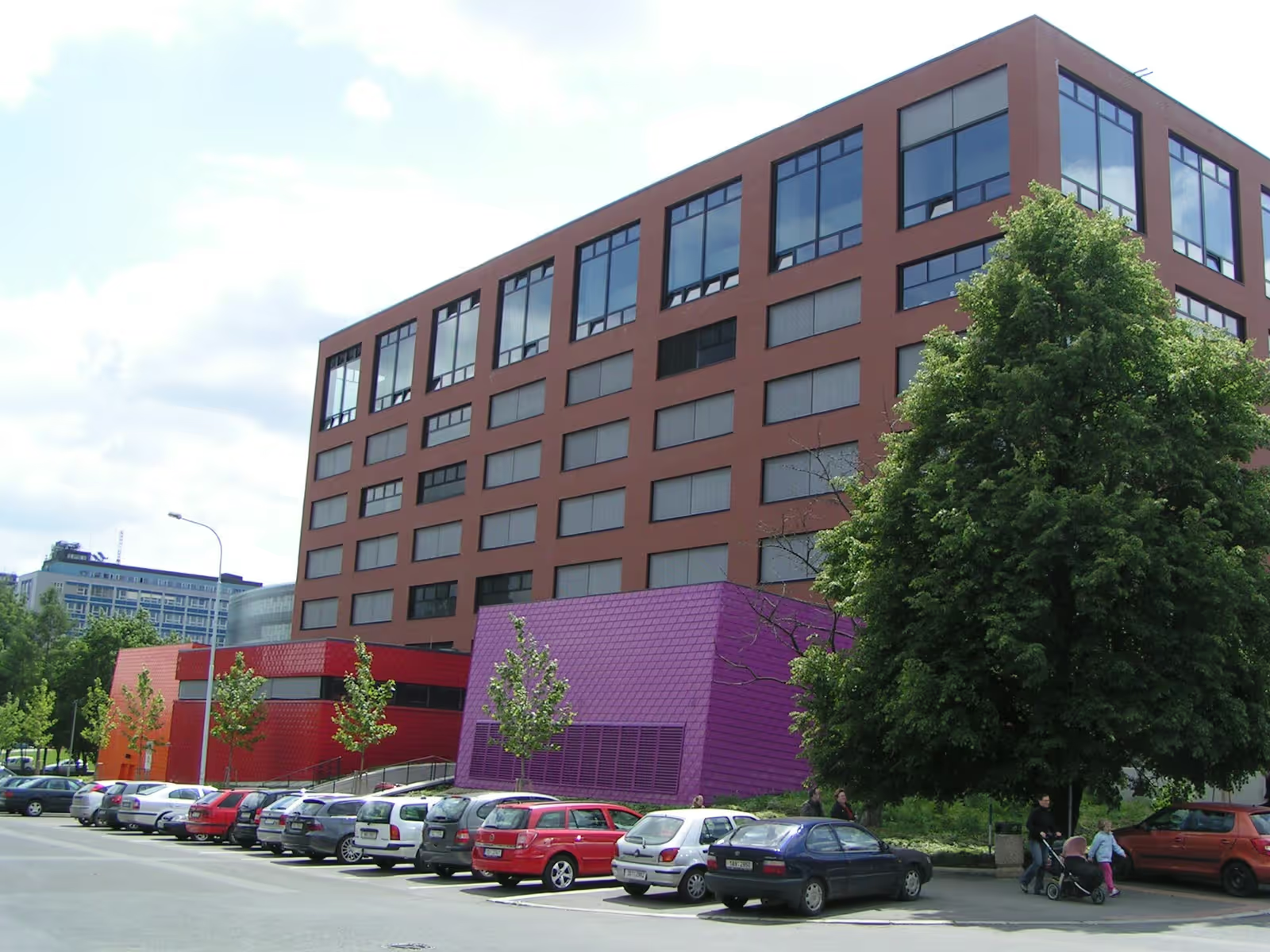
Photo: Czech Wikipedia user Utar, CC BY-SA 3.0, Wikimedia Commons.
What I take on, in plain terms:
What I do not do: UI design, mockups or wireframes. Those come from you, and I implement them. I also do not take work I cannot support long term. If a request sits outside my range, I say so before the scope is signed.
For the WordPress side of a Prague project there are separate pages: WordPress developer in Prague and WooCommerce developer in Prague. If the front end is Astro or Next.js, see Astro developer in Prague and Next.js developer in Prague. The general service page is PHP developer.
I am not a lawyer and I do not give legal opinions. These are the acts a Czech company usually has in mind, with what each means for the code.
The Czech act on the processing of personal data is zákon č. 110/2019 Sb. alongside the GDPR (Regulation (EU) 2016/679). Under section 50 the Office for Personal Data Protection (ÚOOÚ) is the central administrative authority for the field, and its seat is Prague (ÚOOÚ). Three points matter for a back end:
Zákon č. 480/2004 Sb. covers some information society services. Section 7 allows commercial messages by electronic means only with the recipient’s prior consent. It allows an exception for a business’s own similar products sent to addresses obtained from a sale, provided the customer can refuse simply and free of charge, in every message. Messages that hide the sender or carry no valid address for refusing are prohibited.
For a Laravel or Symfony application that sends newsletters, this becomes concrete: store the consent with date and source, put a working unsubscribe link and address in every marketing message, and keep marketing and transactional mail on separate queues and templates.
The Czech act transposing Directive (EU) 2019/882 is zákon č. 424/2023 Sb., effective from 28 June 2025. Section 2 lists e-commerce services among the consumer services it covers and excludes services provided by a microenterprise. The Czech Trade Inspection Authority (ČOI) supervises it, and its guidance defines a microenterprise as fewer than 10 staff with turnover or balance sheet total up to two million euros. The ČOI also says the act does not reach websites and mobile apps whose content has not changed since 28 June 2025, and that updated content must then comply (ČOI, accessibility for businesses).
If you run an online shop with a PHP back end, whether you are in scope is for you and the ČOI. What I add is the part in the code: keyboard-operable checkout, labelled fields, readable error messages, and an HTML output that a screen reader can follow.
The new Czech cybersecurity act, zákon č. 264/2025 Sb., has been in effect since 1 November 2025 and implements the NIS2 Directive (Directive (EU) 2022/2555). It names the National Cyber and Information Security Agency (NÚKIB) as the central authority. Section 18 covers, among others, cloud computing, data centres and managed services providers. Whether your company or your customer is a regulated provider is decided by that act and NÚKIB, not by me. If you are a supplier to a regulated company, ask them what they expect from you, and send me the requirement in writing so that it lands in the scope.
composer audit and list the packages with no maintainer.Replies come in writing on working days. Calls and meetings are not part of how I work, and I promise no response time.
If you are a software house in Prague and need an extra pair of hands on a defined slice, such as one module or one upgrade, the same written process applies. You stay the client-facing party and I work to your scope.
No. WPPoland is me, Mariusz Szatkowski, writing from Gdynia in Poland. Prague has no office of mine and no team stands behind this page.
php.net lists 8.2 to 8.5 as supported on 11 November 2026. PHP 8.2 gets security fixes only until 31 December 2026, so target 8.4 or 8.5. Anything older than 8.2 is not in the supported table.
Both. Laravel and Symfony back ends, REST endpoints and integrations, and custom WordPress and WooCommerce plugins. If a job is outside what I can support, I say so in the scope.
The ÚOOÚ, seated in Prague. Under section 41 of act no. 110/2019 Sb. a breach is reported without undue delay, and a report after 72 hours needs a reason for the delay.
Act no. 424/2023 Sb. covers e-commerce services for consumers and excludes microenterprises. Whether you are in scope is a question for you and the ČOI. I build the interface to work by keyboard and screen reader either way.
Nothing. A first written estimate is free of charge. Send the details below.
Send the repository or site URL, what you want done, your deadline and your current PHP and framework version. My reply is written: what I still need from you, and a first estimate that is free. Start on the contact page.
Examples of my work.
marcoaldany.pl is a WordPress website built to present personalised services to show how this system can support companies offering personalised services or...
The website mavicon.pl has been designed with a view to providing a comprehensive presentation of the company’s offerings, which are based on innovative tech...
metal-meble.pl is a WordPress website for a company offering metal furniture and constructions, with a clear catalogue, fast contact path, and simple administration.
Describe your project by e-mail. I reply within 48 hours.
Describe your projectNeed to show the category hierarchy in your theme? Learn how to get the current category and its parent using get_the_category() and get_category_parents().
Need to get the URL of the first image or link in an article? Prefer DOMDocument over regex. Ready-made WordPress PHP for developers.
PHP 8.5.12, 8.4.27, 8.3.36 and 8.2.35, released on 21 October 2026, fix two critical vulnerabilities in PHP itself (CVE-2026-109618, CVE-2026-109619). How to check the PHP version in WordPress, what to do when your host has not updated the server yet, and which passwords to change after the update.
Custom WordPress engineering and architecture.
Scalable headless, ERP, and AI architecture for enterprise.
Stores, checkout flow, and sales logic.
Stability, updates, and post-launch support.
What the monthly care fee covers and what changes it.
Business process automation around WordPress and company systems.
Headless WordPress, Sanity, Strapi, and Contentful with Astro or Next.js.
Astro, MDX, edge delivery, and Core Web Vitals measured on real traffic.
How to start as a WordPress developer in 2026. Local environment, theme and plugin development, REST API and headless paths, security and Core Web Vitals. A practitioner playbook that does not waste your first month.

WordPress 7.0 with AI Client vs Astro 6 after Cloudflare acquisition. Speed, cost, SEO and security comparison. My take after 20 years as a WP developer - when to migrate and when to stay.
WordPress 7.0 with AI Client against Astro 7 with the Rust compiler and Vite 8. Speed, cost, SEO and security compared, plus the real bill for my own Astro 6 to 7 migration.