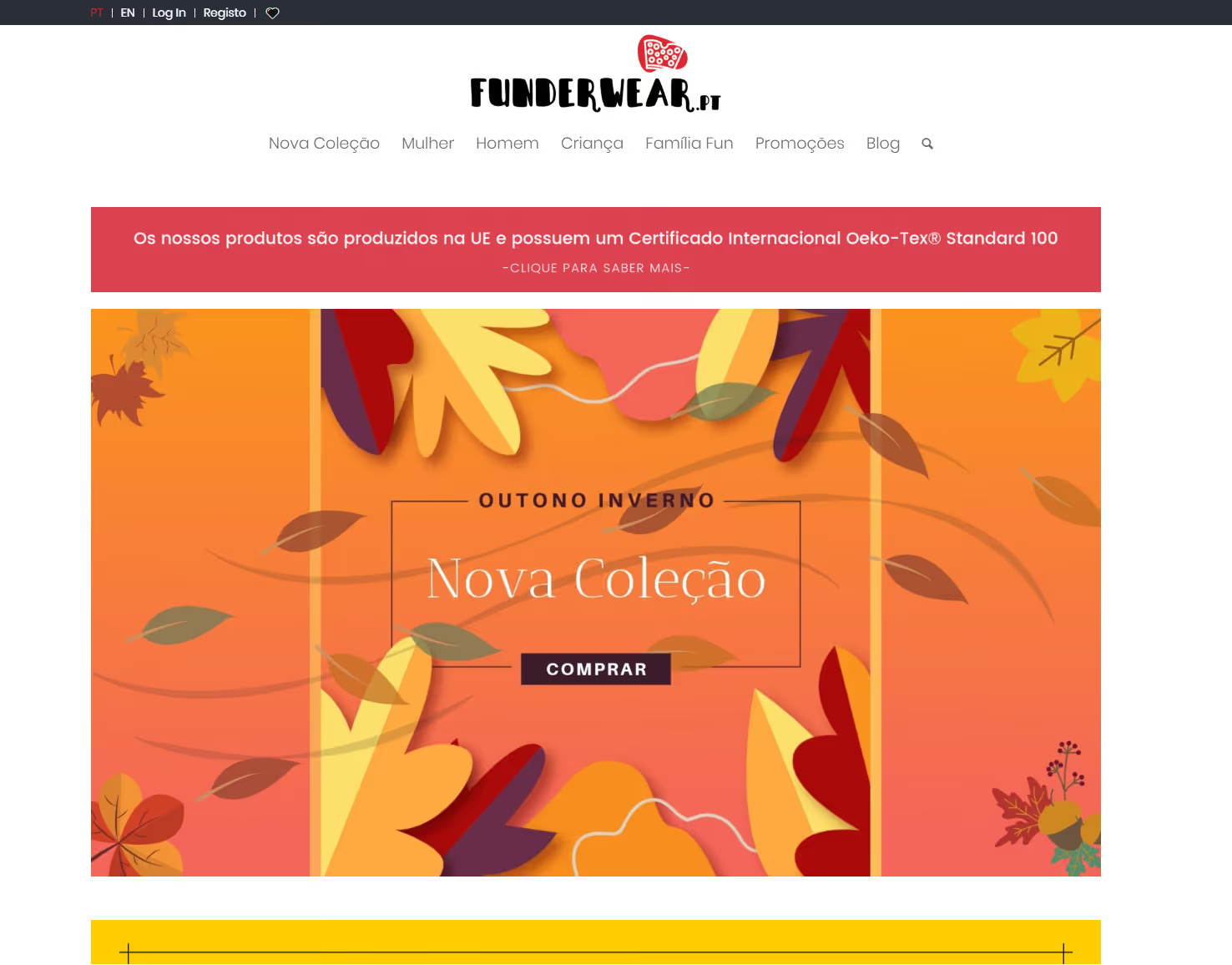
How a WooCommerce store for a Portuguese underwear brand was built
Funderwear.pt is a successful Portuguese e-commerce venture specializing in premium underwear with unique, fun, and playful designs. The project involved creating a complete WooCommerce-based online store that delivers an exceptional shopping experience while handling the complexities of fashion e-commerce.
Who funderwear.pt sells to and what the brand wanted
What gap a fun premium underwear brand set out to fill
Funderwear.pt identified a gap in the market for high-quality underwear that combines comfort with personality. Their vision was to create an online destination where customers could find underwear that:
- Features unique, conversation-starting designs
- Uses premium, body-comfortable materials
- Provides perfect fit and durability
- Makes an exceptional gift option
- Delivers a memorable unboxing experience
How a direct-to-consumer underwear brand sells gifts and subscriptions
- Direct-to-Consumer: Online-only sales model
- Curated Collections: Limited edition and seasonal designs
- Gift-Focused: Strong emphasis on packaging and presentation
- Subscription Option: Recurring delivery for regular customers
- International Reach: Shipping across Portugal and EU
How the funderwear.pt WooCommerce store is built
Which WooCommerce customisations an underwear shop needs
Core System: WooCommerce on WordPress
- Version: Latest stable WooCommerce with custom extensions
- Theme: Custom-designed theme optimized for fashion e-commerce
- Database: Optimized MySQL with query caching
- Hosting: High-performance managed WooCommerce hosting
Key WooCommerce Customizations:
- Custom product types for underwear variants
- Advanced size guide with fitting algorithms
- Bundle product configurations for gift sets
- Subscription integration for recurring orders
- Complex shipping rules for international delivery
How to make a WooCommerce fashion shop fast and easy to buy from
User Interface Design:
- Clean, modern aesthetic with playful touches
- Mobile-first responsive design
- Quick-view product modals
- Sticky add-to-cart functionality
- Size selection with visual guides
Performance Features:
- Lazy loading for product images
- Critical CSS inlining
- AJAX-powered filtering and sorting
- Minified and compressed assets
- WebP image format support
Conversion Optimization:
- One-page checkout process
- Guest checkout option
- Multiple payment gateways (Stripe, PayPal, MB WAY)
- Abandoned cart recovery
- Trust signals and security badges
How products, orders and customers are managed in WooCommerce
Product Management:
- Bulk product import/export system
- Automated inventory synchronization
- Product variation management for sizes/colors
- Dynamic pricing rules for promotions
- Stock level alerts and notifications
Order Processing:
- Automated order confirmation emails
- Integration with fulfillment center
- Shipping label generation
- Order tracking integration
- Returns and exchange management
Customer Management:
- Customer account dashboard
- Order history and reordering
- Wishlist functionality
- Loyalty points system
- Personalized product recommendations
Which WooCommerce features help sell underwear as a gift
How to present underwear online with zoom, video and a size calculator
Visual Commerce:
- High-resolution product photography with zoom
- 360-degree product views for select items
- Video demonstrations of fabric quality
- Lifestyle imagery showing products in use
- Size comparison visuals
Product Customization:
- Size calculator based on measurements
- Gift wrapping options with custom messages
- Subscription preferences management
- Bundle builder for custom gift sets
Which payment methods Portuguese shoppers expect at checkout
Optimized Checkout Flow:
- Multi-step checkout with progress indicator
- Address autocomplete via Google Places API
- Real-time shipping cost calculation
- Tax calculation for EU VAT compliance
- Saved payment methods for returning customers
Payment Solutions:
- Credit/debit card processing (Stripe)
- PayPal Express Checkout
- MB WAY (popular Portuguese mobile payment)
- Apple Pay and Google Pay
- Bank transfer for B2B orders
How to bring WooCommerce customers back with email and loyalty points
Email Marketing Integration:
- Welcome series for new subscribers
- Post-purchase follow-up sequences
- Abandoned cart recovery emails
- Product review requests
- Back-in-stock notifications
Loyalty and Retention:
- Points-based loyalty program
- Referral system with rewards
- VIP tier benefits
- Birthday discounts
- Early access to new collections
How to optimise a WooCommerce store for mobile shoppers
Why a Portuguese fashion shop is designed for the phone first
Mobile is where Portuguese shoppers do most of their browsing, so the mobile experience was treated as the primary case rather than the fallback. The share this claim once quoted appeared in no other locale of this entry and carried no source, so it is stated as a direction rather than a figure:
Mobile UX Features:
- Touch-friendly navigation and buttons
- Simplified mobile checkout
- Mobile-optimized product images
- One-tap payment options
- Progressive Web App capabilities
Mobile Performance:
- Accelerated Mobile Pages (AMP) for product listings
- Compressed assets for mobile networks
- Offline browsing capabilities
- Push notifications for order updates
How to do SEO for a WooCommerce underwear shop
Structured data, sitemaps and canonicals for product variations
Site Structure:
- Clean URL architecture
- XML sitemaps for products and categories
- Structured data markup (Product, Review, Organization)
- Canonical tags for product variations
- Breadcrumb navigation
Content Strategy:
- Product descriptions with target keywords
- Category page content
- Size guide and fitting advice blog posts
- Gift guide content
- User-generated content integration (reviews)
Performance Factors:
- Core Web Vitals optimization
- Mobile usability compliance
- HTTPS security implementation
- Schema markup for rich snippets
- Internal linking structure
How to keep a WooCommerce store secure and GDPR compliant
Which security measures protect payments in an online shop
- SSL/TLS: Full-site HTTPS encryption
- PCI DSS Compliance: Secure payment processing
- Fraud Detection: Automated fraud screening
- Data Protection: GDPR compliance for EU customers
- Regular Security Audits: Monthly vulnerability scans
What GDPR and cookie rules an EU online shop must meet
- Cookie consent management
- Privacy policy and terms of service
- Right to be forgotten implementation
- Data portability features
- Age verification for adult products
Why this case study publishes no traffic or revenue figures
This section used to carry four blocks of figures: monthly visitors, session length, pages per session, bounce rate, conversion rate, average order value, cart abandonment, retention and repeat purchase, page load speed, uptime, PageSpeed scores, revenue growth, registered customers, review counts and averages, social following and email subscribers. Not one of them can be traced to an export, a report or an account still in reach. The store went live in 2019 and the analytics behind those blocks belong to the client. So the figures come out rather than being softened into ranges, because a number that cannot name its source is not a cautious measurement, it is not a measurement at all.
What can be written down honestly is what each part of the build was meant to change in the way the shop runs.
How the catalogue is built for people shopping for a gift
This is a product people browse before they buy, frequently as a gift, and the catalogue is built around that behaviour rather than around a flat product list. Collections carry the browsing, filtering survives the back button, and the product page holds the material, fit and care information a buyer would otherwise have to ask for by email. Every question answered on the page is an order that does not wait for somebody to reply.
The mobile work follows the same logic and is not a resizing exercise. Navigation, image sizes and the checkout were built for the phone first and widened from there, because the reverse order produces a desktop layout with smaller type and a checkout nobody finishes standing up.
How the checkout removes reasons to abandon an order
The checkout held the most decisions. Payment methods sit where a Portuguese buyer expects to find them, shipping cost appears before the final step instead of at it, and the cart survives leaving the site and coming back later. None of that yields a figure worth publishing, but each one removes a named reason for abandoning an order, and removing reasons is the only thing a checkout rebuild can honestly claim to do.
Retention is the same argument stretched over a longer period. Order status messages, the customer account area and the email list exist so a second purchase does not have to start from a search engine. Whether it did is the client’s data to report, not ours.
How to keep filtered WooCommerce collections fast as the catalogue grows
Performance work concentrated on three things. Image weight first, because a fashion catalogue is mostly photographs and everything else is rounding. Then the number of database queries behind a filtered collection view, which is where WooCommerce becomes expensive as the catalogue grows and where the cost is invisible on a demo install. Then caching in front of both, so anonymous browsing never reaches PHP at all.
Cart and checkout stay outside the cache by necessity, since they are different for every visitor. That is exactly why the query work mattered more here than it would on a brochure site: the pages that cannot be cached are also the pages where an order is won or lost.
Availability rests on the hosting arrangement and the monitoring described further down, not on a percentage. The honest version is that outages were handled by alerting, and that a portfolio page is not the place to promise an uptime figure nobody can audit.
What a WooCommerce build can honestly claim about revenue
Revenue, customer counts, review averages and audience sizes are the client’s numbers and were never ours to publish. What the platform contributes to them is narrower and checkable: a store that takes an order without a person in the loop, a catalogue the in-house team extends without calling a developer, and a set of integrations that keep payment, shipping and email working with each other rather than in parallel. That is the boundary of what a build can claim, and staying inside it is the point of this rewrite.
Which problems an online underwear shop runs into
How to reduce underwear returns caused by unclear sizing
Problem: Underwear comes in multiple sizes with different fit characteristics, leading to high return rates if sizing is unclear.
Solution:
- Developed interactive size guide with measurement tutorials
- Implemented size recommendation algorithm based on customer data
- Added customer reviews filtered by size for reference
- Created video content showing fit on different body types
How well that worked is not something this page can put a number on. Whatever the returns data said at the time lives in an analytics account and a shop database that belong to the client, and a percentage nobody can trace back to a report proves nothing. The mechanism itself is describable. The measurement tutorial and the reviews filtered by size move the sizing decision to before the order rather than after delivery, and a recommendation built from orders already placed gives a first-time buyer a starting point instead of a guess. A return that never happens costs nobody anything to process, which is why this was worth building rather than answering by email one message at a time.
How to ship underwear across the EU with different tax rules
Problem: Shipping underwear across EU borders with different tax rules and delivery expectations.
Solution:
- Automated tax calculation based on customer location
- Multiple shipping options (standard, express, pickup points)
- Real-time tracking integration
- Customs documentation automation
- Clear delivery time estimates by country
How to keep WooCommerce up during Black Friday and Christmas
Problem: Major sales events (Black Friday, Christmas) caused server overload.
Solution:
- Implemented auto-scaling cloud hosting
- CDN integration for static assets
- Database query optimization
- Caching strategies for product pages
- Load testing before major events
What WooCommerce maintenance looks like after launch
How often to back up and update a WooCommerce store
- Daily Backups: Automated with 30-day retention
- Security Monitoring: Real-time threat detection
- Performance Optimization: Monthly speed audits
- Plugin Updates: Tested and deployed weekly
- Uptime Monitoring: 24/7 with instant alerts
How A/B tests and analytics drive changes to the shop
- A/B Testing: Monthly conversion work tests
- Feature Development: New features based on analytics
- UX Enhancements: User feedback implementation
- SEO Updates: Content strategy adjustments
- Analytics Review: Weekly performance reports
Which features are planned next for funderwear.pt
Upcoming enhancements include:
- AI-powered product recommendations
- Virtual try-on feature
- Sustainability calculator
- Subscription box customization
- B2B wholesale portal
Which plugins run the funderwear.pt WooCommerce store
Which WooCommerce extensions form the core of the shop
- WordPress (latest version)
- WooCommerce (latest version)
- WooCommerce Subscriptions
- WooCommerce Bookings
- Advanced Custom Fields Pro
Which payment and shipping plugins the shop uses
- Stripe for WooCommerce
- PayPal Checkout
- WooCommerce Shipping
- Table Rate Shipping
- Printful Integration (for print-on-demand)
Which marketing and analytics tools connect to WooCommerce
- Mailchimp for WooCommerce
- Google Analytics Enhanced Ecommerce
- Facebook Pixel
- Yoast SEO Premium
- Trustpilot Reviews
Which caching and security plugins keep the shop fast
- WP Rocket (caching)
- Wordfence Security
- Cloudflare CDN
- Imagify (image optimization)
- Query Monitor (development)
How a six-week WooCommerce build ran from scope to launch
The build ran about six weeks from scope analysis to launch, with layout and element placement supplied by the client. That removed the stage which eats the most calendar time on other projects and put the hours into the catalogue model, the checkout and the integrations instead.
The order of work was set by the checkout rather than by the homepage. Payment, shipping and tax rules were wired and tested first, because everything else in a shop is decoration if the last step does not complete, and because those three are where the build meets rules that are not ours to negotiate. Product presentation came next, then the marketing and retention pieces, which only start to make sense once there are real orders for them to react to.
Testing ran against real product data, not a demo catalogue. A collection page holding a dozen sample items behaves nothing like one carrying the full range with size and colour variants, and the difference shows up as query count long before anybody notices a slow page. The same applies to the checkout: the case that breaks is a discount code combined with a subscription item and a delivery address outside the country, never the single product bought at full price with a card that works.
After launch the shop moved into maintenance. Backups, monitoring, plugin updates tested before they reach production, and periodic review of the paths that actually carry orders, which is a shorter list than the site map suggests and the only list worth checking weekly.
Conclusion
The funderwear.pt project showcases the power of WooCommerce when combined with strategic e-commerce design and development. By focusing on user experience, performance optimization, and conversion rate optimization, we created a platform that not only meets the client’s business goals but exceeds customer expectations.
The success of this project demonstrates that even in competitive e-commerce markets, a well-executed technical solution combined with a strong brand can achieve remarkable results. The ongoing partnership ensures that the store continues to evolve and improve, staying ahead of market trends and customer expectations.
Frequently asked questions
Practical answers to apply the topic in real execution.
Popular questions
What scope did the funderwear.pt - Premium Underwear E-commerce Platform project cover?
#How did delivery run for funderwear.pt - Premium Underwear E-commerce Platform?
#What was the hardest technical part of funderwear.pt - Premium Underwear E-commerce Platform?
#What part of funderwear.pt could be reused on another build?
#Need an FAQ tailored to your industry and market? We can build one aligned with your business goals.
Let’s discuss