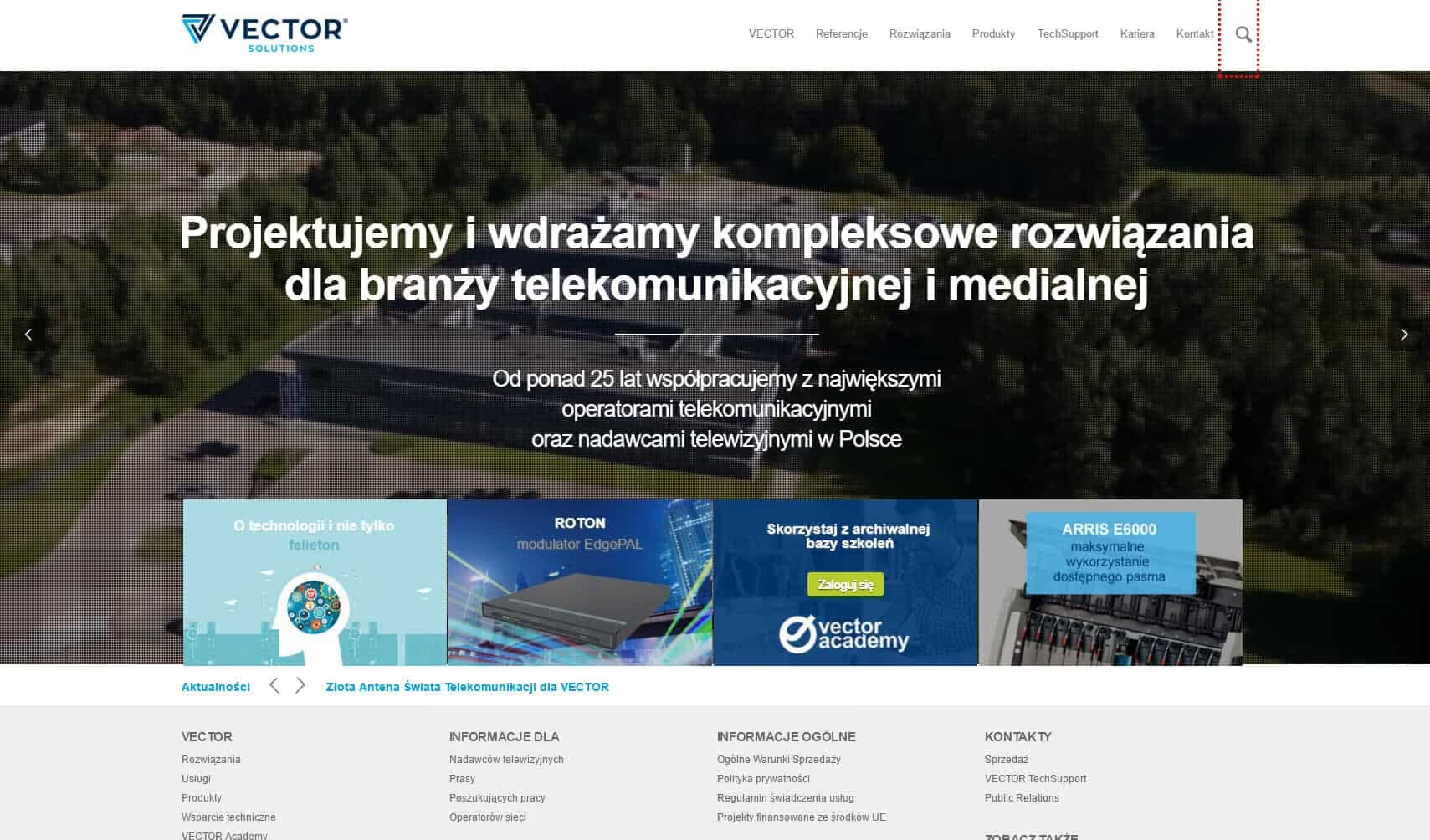
WordPress website for Vector Solutions, a Gdynia telecom company
Vector Solutions belongs to the VECTOR group in Gdynia, which has been trading since 1988 and started out building amplifiers for cable television installations. The company rolled out DOCSIS across Polish cable networks in 2001, began work on telemetry systems in 2007, and today employs more than two hundred software, systems and hardware engineers. Its customers are cable operators, telecoms and broadcasters, which is to say buyers who read a specification sheet before they look at a homepage.
The project reached us in 2017, the same year the group opened the rebranding process it closed in 2019 with the launch of VECTOR BLUE HUB. Delivery took roughly six weeks.
What a cable and telecom technology company needs from its website
Where Vector Solutions operates and which sectors it serves
Vector Solutions has established itself as a technology leader through:
- European Presence: Operations spanning Poland and throughout Europe
- Innovation Focus: Continuous development of breakthrough technological solutions
- Sector Expertise: Deep understanding of cable, telecommunications, and media industries
- Partnership Approach: Collaborative relationships with major industry players
- Solution Portfolio: Comprehensive range of communication and infrastructure technologies
How to organise a catalogue of products from several generations
Thirty years in hardware leaves a mark on the content model. The solution catalogue spans products from several technology generations, some still maintained in operator networks, some being withdrawn, and the documentation for both has to stay reachable side by side. So the site could not be a brochure with five service tiles. It had to carry a model where one solution has many variants, each variant its own specification, and a specification is sometimes visible only to a logged-in partner.
The second consequence is about the reader. An engineer at a cable operator is hunting for one parameter, not for a story about innovation. Search and attribute-level filtering therefore outranked the visual layer, whose layout the client supplied anyway.
How the Vector Solutions site is built on WordPress
Why use Redis, Varnish and Cloudflare together on WordPress
The stack is WordPress with a bespoke theme, Redis for the object cache, Varnish in front of it for page cache, and Cloudflare at the edge. Three cache layers in one deployment sounds like excess until you see that each one answers a different kind of request: Cloudflare serves static assets and anonymous pages, Varnish holds the composite catalogue views that cost a dozen database queries to build, and Redis shortens those queries for everything that reaches PHP at all.
The architectural tension in this project sits exactly where caching meets personalisation. The site has to tell an anonymous visitor from a logged-in partner from an internal staff member, and show three different versions of the same URL. Edge caching dislikes that by definition, because its whole return comes from serving many people the same byte. The resolution was to split the layers: the page shell and the catalogue are shared and cached hard, while everything that depends on a role is fetched by a separate request after sign-in and never enters Varnish.
Key System Components:
Dynamic Offer Management System
- Complex offer creation and configuration
- Multi-tier pricing and packaging
- Automated proposal generation
- Client-specific customization tools
- Integration with billing systems
Interactive Portfolio Showcase
- Case study presentation system
- Project gallery with filtering
- Success metrics visualization
- Client testimonial integration
- Dynamic content loading
Real-Time Data Integration
- Live industry trend feeds
- Technology achievement showcases
- Market analysis integration
- External API connections
- Automated content updates
How solution filtering and comparisons work on the front end
Design Philosophy:
- Professional, technology-forward aesthetic
- Clean layouts emphasizing innovation
- Dynamic visual elements
- Industry-appropriate color scheme
- Trust-building credibility signals
User Interface Features:
- Personalized Content Delivery: System adapts displayed content based on user profiles
- Advanced Filtering: Multi-dimensional project and solution filtering
- Interactive Demos: Live technology demonstrations
- Comparison Tools: Side-by-side solution comparisons
- Quick Contact Features: Simplified inquiry processes
Responsive Design:
- Mobile-first approach
- Touch-optimized interactions
- Fast loading on all devices
- Accessibility compliance (WCAG 2.1)
- Cross-browser compatibility
How custom post types, roles and CRM integration are set up
Content Management:
- Custom post types for solutions and case studies
- Advanced taxonomy system for organization
- Multi-language content support
- Workflow management for content approval
- Version control for content changes
User Management:
- Role-based access control
- Partner portal functionality
- Client account management
- Lead tracking and CRM integration
- Analytics and reporting dashboard
Integration Capabilities:
- Third-party API connections
- CRM system integration
- Marketing automation tools
- Analytics platforms
- Payment processing systems
Which B2B features the site adds beyond a product catalogue
How to configure partner pricing and offers in WordPress
The platform enables sophisticated offer management:
Offer Configuration:
- Modular solution bundling
- Pricing tier management
- Geographic availability rules
- Promotion and discount application
- Automated contract generation
Client-Specific Features:
- Custom pricing for partners
- Volume discount calculations
- White-label options
- API access for enterprise clients
- Dedicated account management tools
How to build a live industry data dashboard in WordPress
Live Data Visualization:
- Industry trend monitoring
- Technology adoption metrics
- Market performance indicators
- Competitive analysis feeds
- Custom alert systems
Interactive Elements:
- Filterable data views
- Time-series comparisons
- Geographic data mapping
- Export capabilities
- Scheduled report generation
How to personalise WordPress content by industry and role
Content Personalization Engine:
- User Profiling: Industry, role, and interest-based categorization
- Behavioral Tracking: Page visits, downloads, engagement metrics
- Recommendation System: AI-powered content suggestions
- Custom Dashboards: Role-specific landing pages
- Targeted Communications: Personalized email and notification systems
How to keep a large WordPress B2B catalogue fast and secure
Which caching and speed settings a WordPress catalogue needs
Speed Enhancements:
- Server-side rendering for fast initial load
- Lazy loading for below-fold content
- Image optimization and WebP format
- Critical CSS inlining
- Database query optimization
Caching Strategy:
- Multi-layer caching (Redis, Varnish, CDN)
- Dynamic content fragment caching
- API response caching
- Browser caching policies
- Cache invalidation workflows
Scalability Solutions:
- Cloud-based auto-scaling infrastructure
- Load balancing for high traffic
- Database read replicas
- Microservices architecture for key functions
- Graceful degradation under load
How to secure a WordPress B2B site with a WAF and GDPR controls
Enterprise-Grade Security:
- SSL/TLS encryption throughout
- Regular security audits and penetration testing
- Web application firewall (WAF)
- DDoS protection
- Intrusion detection systems
Data Protection:
- GDPR compliance implementation
- Data encryption at rest and in transit
- Access logging and monitoring
- Regular backup procedures
- Disaster recovery planning
How to do SEO for a technology company’s WordPress site
How to set up schema and hreflang for a multilingual catalogue
Technical SEO:
- Schema markup for organization and services
- XML sitemaps with priority weighting
- Clean URL structure with keywords
- Canonical tag implementation
- Internal linking strategy
Content Strategy:
- Industry-specific landing pages
- Technology glossary and definitions
- Case study optimization
- Thought leadership blog content
- White paper and resource library
International SEO:
- Hreflang implementation for multi-language
- Country-specific content variations
- Local search optimization
- International backlink building
- Multi-regional hosting strategy
How to measure a B2B catalogue after moving to GA4
Analytics did not stand still from launch. The 2017 deployment started on Universal Analytics, because Google Analytics 4 did not exist yet, and the migration came later as maintenance work. That is worth stating plainly, because case studies routinely present today’s stack as the one the project launched with, and then there is no way to tell a design decision from a replacement a vendor forced on you.
Beyond the tool itself, measurement covers custom events, funnel analysis and user journey mapping. In a technical catalogue the most valuable event is not a form submission but a specification download: it shows which product variant actually holds an engineer’s attention, long before anyone writes an enquiry.
Reporting Dashboard:
- Real-time traffic monitoring
- Lead generation metrics
- Content performance analysis
- SEO ranking tracking
- Competitive benchmarking
What the Vector Solutions site changed after launch
How partner offers and specs moved from email to the portal
This section carried a column of percentages for lead generation, time on site, satisfaction ratings, support ticket volume, conversion and sales cycle length. Not one of them can be traced to a source. The site launched in 2017 and whatever was measured went with a mailbox nobody can open now, so the figures are removed rather than restated more cautiously. A number that cannot name where it came from is not evidence, and dressing it as a range would only hide that.
What the build was actually meant to change is describable without inventing arithmetic. Preparing an offer for a partner had been a correspondence exercise: a request arrives, someone assembles a price list for that partner’s tier and region, sends it, and waits. The offer system moved that work into configuration, so the combination of tier, packaging, regional availability and discount rules produces the proposal directly. The gain is not that it is faster in some measurable percentage, it is that the step no longer waits on a specific person being at their desk.
The partner portal does the same thing for questions that used to arrive by email. Documentation, specifications and account material sit behind a login, scoped by role, which means the answer to “send me the spec for this variant” is a link rather than an attachment someone has to locate. Support load moves from answering to maintaining, and that is a different job with a different ceiling.
The third change is editorial. A catalogue spanning several product generations goes stale in the parts nobody is looking at, and a content model with explicit variants and a taxonomy makes staleness visible rather than letting it hide inside handwritten pages. That is the least visible of the three and the one that decides whether the site still holds together years after handover.
What the performance work on the catalogue focused on
Speed Metrics: This section used to carry a row of precise figures, none of which survives a check against our own records. The project shipped in 2017 and the measurements, if they were ever taken, went with a mailbox we no longer hold. Numbers presented as measurement and then unable to name their source are worse than no numbers, so here is what can be stated honestly instead.
The performance work targeted three things. Page weight, by keeping the catalogue views out of PHP through the Varnish layer. Time to first byte, by shortening the database work behind the views that could not be cached. And cache hit rate, which on a site of this shape is the single number that decides whether the other two matter, because a miss walks the whole request down to the origin regardless of how well the origin is tuned.
Reliability rests on the fallback behaviour described further down rather than on an uptime figure: an outage in one of the external systems degrades a single section instead of the page, and the everyday load sits far enough below the tested ceiling that a launch does not need an emergency response.
Which integration and traffic problems the project had to solve
How to connect WordPress to CRM, ERP and billing without slowing pages
Problem: Integrating with multiple external systems (CRM, ERP, billing, industry databases) while maintaining performance.
Solution: a middleware layer, so WordPress never talks to a client system directly but through its own adapter for each one. Fetching is asynchronous, which means an unreachable CRM does not block the page from rendering, and responses are cached with a separate lifetime per source, because a price list changes once a quarter and stock levels change within the hour.
The decision that mattered most was what happens when an integration falls over. The default behaviour of most plugins is to surface an error or an empty section, which on a sales site reads as though the whole thing is broken. Here every adapter carries a fallback: the last known response from cache, and when even that is missing, a static variant of the section. The visitor then sees a page without the live panel rather than an error message. An outage in one external system becomes an event for monitoring, not for the reader.
How to show live data without slowing down page load
Problem: Displaying live data feeds without impacting page load times.
Solution: live data never blocks the first render. The page arrives complete without it, and the dashboard loads afterwards through separate endpoints split between the critical and the ones that can wait. Reference data that rarely changes sits in the browser, so a second visit does not ask the server the same question again.
Refresh frequency is matched to how fast each figure actually moves, rather than set to one value for the whole dashboard. That distinction decides the bill: polling everything every five seconds looks impressive in a demo and generates traffic somebody pays for over the following years, without giving the reader a single fact they would not have had a minute later.
How to handle partner, client and staff roles in WordPress
Problem: Supporting diverse user types (partners, clients, prospects, internal staff) with different needs and permissions.
Solution: role-based access control, with a separate dashboard view for the partner, the client and internal staff, and a menu that hides what a role cannot reach instead of leading it to a refusal screen.
The trap in systems like this is always the same: permissions checked at the interface rather than at the data. A hidden menu link is no defence against typing the address by hand, and in a catalogue where part of the specification sits under a confidentiality agreement, that is not cosmetic. The role check therefore lives where content is fetched, and the view layer only reflects what has already been settled below it. The same mechanism forms the cache key, so a partner never receives a page built for someone with different permissions.
How to prepare WordPress for traffic peaks at product launches
Problem: major product announcements drove traffic well above the everyday baseline, concentrated into a short window.
Solution: static assets come from the CDN, database queries were reviewed for the ones that grow linearly with catalogue size, and non-critical operations such as sending notifications or rebuilding the search index moved to a queue and happen outside the user’s request.
Load testing before an announcement ran against a copy of production, not a clean install, and that is the important sentence in this section. The performance of WordPress carrying a catalogue of several thousand variants and a dozen integrations has nothing in common with the performance of a fresh install running a demo theme. The bottleneck turned out not to be PHP but cache hit rate: at launch the traffic lands on a single address nobody has visited before, so the whole wave reaches the backend at once. Warming the cache before the announcement goes live is cheaper than provisioning capacity that idles for the rest of the quarter.
What ongoing support for a B2B WordPress site includes
How often to monitor, update and load-test the site
Technical Care:
- 24/7 monitoring and alerting
- Weekly security updates
- Monthly performance audits
- Quarterly load testing
- Annual security penetration testing
Content Management:
- Regular case study additions
- Product portfolio updates
- Industry news integration
- SEO optimization maintenance
- Analytics reporting and insights
How new features are planned after launch
Feature Development:
- Quarterly roadmap planning
- User feedback integration
- Emerging technology adoption
- Performance optimization iterations
- Security enhancement updates
Strategic Consulting:
- Digital strategy alignment
- Technology trend analysis
- Competitive benchmarking
- Conversion optimization
- User experience enhancements
Which plugins and services run the Vector Solutions site
Which WordPress plugins form the core platform
- WordPress (latest stable version)
- Custom Vector Solutions theme
- Advanced Custom Fields Pro
- Custom plugin suite for specialized functionality
- Multilingual support (WPML)
Which caching and security tools protect the site
- Redis object caching
- Varnish page caching
- Cloudflare CDN and security
- Wordfence Security Pro
- WP Rocket optimization
Which CRM and marketing tools connect to WordPress
- Salesforce CRM
- HubSpot marketing automation
- Google Analytics 4
- Custom API integrations with the client systems listed above
- Payment processing gateways
Which tools are used for development and deployment
- Git version control
- Docker for local development
- CI/CD pipeline (GitHub Actions)
- Automated testing framework
- Staging environment workflow
How the project went from scope analysis to launch in six weeks
The whole thing took roughly six weeks from scope analysis to launch. Layout and element placement came from the client, so the stage that eats most of the calendar on other projects fell away here. That time went into the content model and the integrations instead, the parts nobody sees on a mockup and the parts that decide whether the site can be maintained after launch.
The decisive call came at the testing stage. The paths traffic actually takes were checked against a copy of production, not a clean install with demo data. On a catalogue this size the difference is fundamental: a query that returns in a dozen milliseconds across twenty products can grow by two orders of magnitude across several thousand variants, and on an empty install nobody will ever see it. The same goes for caching, whose effectiveness can only be measured against a real distribution of entry points.
After launch the project moved into maintenance: monitoring and alerting, regular security updates, periodic performance reviews, and load testing ahead of larger product announcements. That last item is not a formality, because launches are exactly what drives traffic onto addresses nobody has visited before, which is precisely the case where caching does not help.
Conclusion
The Vector Solutions project demonstrates how a sophisticated WordPress implementation can serve as the digital backbone for a technology company operating at the forefront of European telecommunications. By combining real-time data integration, personalized user experiences, and enterprise-grade performance, we created a platform that not only showcases Vector Solutions’ innovation but actively drives their business growth.
The success of this project lies in understanding that for B2B technology companies, a website isn’t just a brochure - it’s a critical business tool that must handle complex workflows, integrate with existing systems, and deliver measurable ROI. The Vector Solutions platform achieves all of this while maintaining the flexibility to evolve with the rapidly changing technology landscape.
Frequently asked questions
Practical answers to apply the topic in real execution.
Popular questions
What scope did the Vector Solutions - Telecommunications Technology Pioneer project cover?
#How did delivery run for Vector Solutions - Telecommunications Technology Pioneer?
#What was the hardest technical part of Vector Solutions - Telecommunications Technology Pioneer?
#What part of Vector Solutions could be reused on another build?
#Need an FAQ tailored to your industry and market? We can build one aligned with your business goals.
Let’s discuss