Websites for museums, theatres, galleries and arts centres
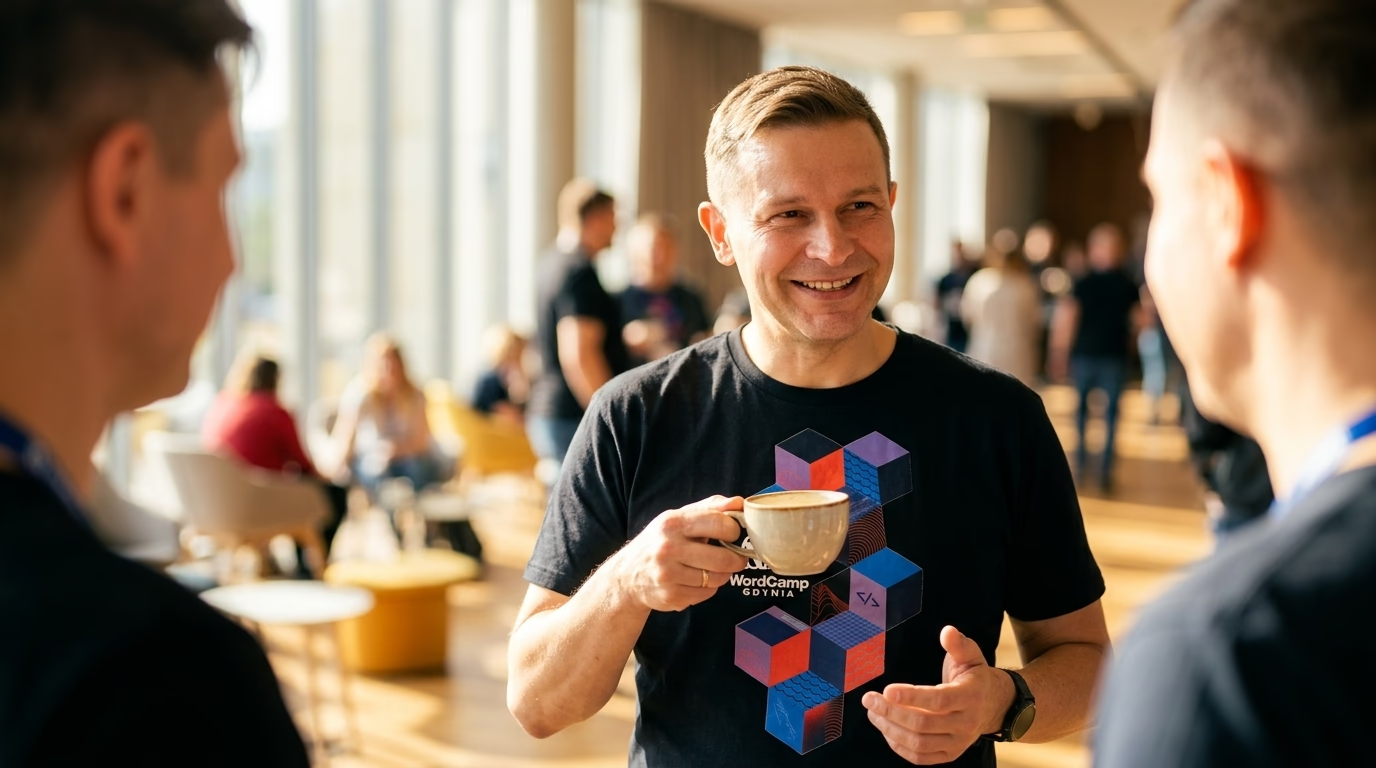
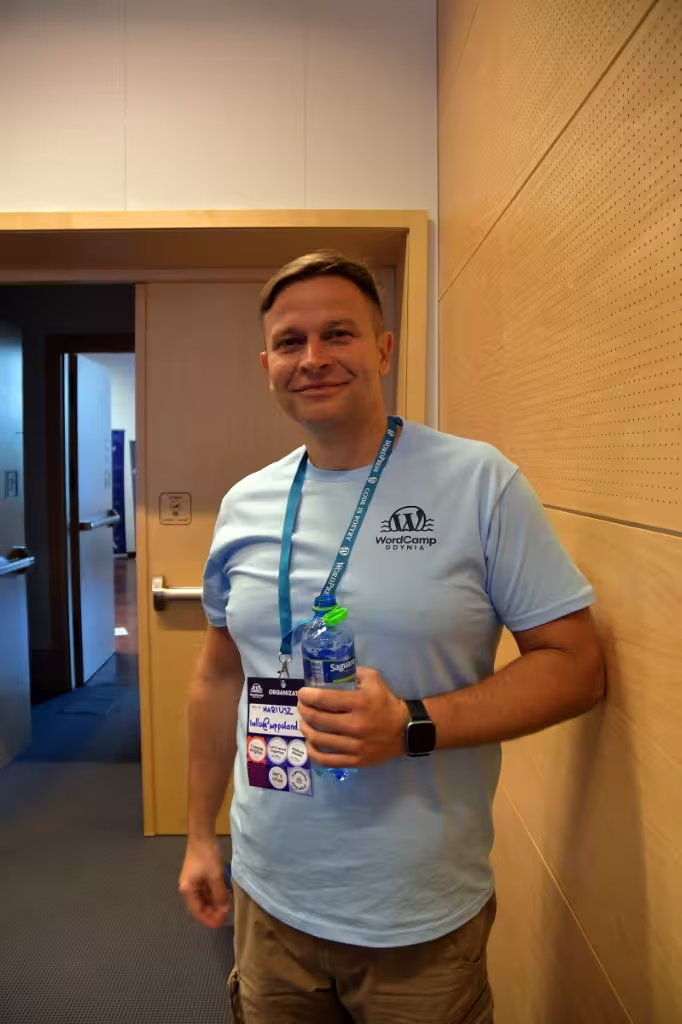
People who open a theatre or museum website usually want three answers: what’s on, what a ticket costs and when the doors open. Many of them are already standing outside with a phone. I build sites where those answers sit at the top and where curators, learning teams and press officers publish without a developer. I’m Mariusz Szatkowski, a WordPress developer since 2006, based in Gdynia, Poland, and I work alone.
You bring the graphic design and wireframes, as a Figma file or as a filled-in template marking which element goes where on each page. I build them into a responsive theme with blocks for exhibitions, productions, events and learning resources.
What’s on and booking
Events have categories (performance, concert, talk, workshop), filters by date and venue, repeat dates generated automatically, and a list view that works on a phone. The booking button comes from your ticketing system. Many UK and Irish venues use platforms such as Spektrix, Tessitura or Ticketsolve; if yours offers an API or a booking widget, I connect it directly, and I read its documentation before quoting. Smaller sales such as workshops, exhibition catalogues or donations from members can run through WooCommerce with the payment provider you already use.
Learning teams get a booking form for school groups and a page of downloadable resources for teachers.
Collections online
A digital object is more than a photo with a title. Before migration I agree the required fields: accession number, maker, date, materials and technique, rights status, alt text and source. Links between objects, exhibitions and people are stored as relationships in the database, not as prose in a description, so collection search works by artist, period and technique.
Rights status decides what the site shows. Owning an object is different from having the right to publish its photograph, so required credit lines appear automatically and high-resolution downloads are blocked when the licence does not allow them. The IIIF standard suits deep-zoom views of detail. Whether records can be imported from your collections management system depends on the exports it offers; I test that on a sample before I give you a scope.
Accessibility rules for museums and venues in the UK and Ireland
Publicly funded museums, galleries and libraries that count as public sector bodies fall under the Public Sector Bodies (Websites and Mobile Applications) (No. 2) Accessibility Regulations 2018 in the UK and S.I. No. 358/2020 in Ireland. Both implement EU Directive 2016/2102. Whether your institution counts as a public sector body depends on who funds and controls it.
Two exclusions matter for collections. Both sets of regulations exclude live time-based media and reproductions of items in heritage collections that cannot be made fully accessible, either because accessibility would conflict with preserving the item or the authenticity of the reproduction, or because no affordable automated solution exists, for example for manuscripts. In the UK that is regulation 4(2); in Ireland regulation 3(3)(c) and (f). Object descriptions, navigation, listings and booking still have to be accessible.
- A label on every form field and error messages a screen reader announces.
- Full keyboard operation with a visible focus state.
- Text contrast of at least 4.5:1 and captions for recorded video.
- axe-core checks before every deployment, NVDA and VoiceOver testing before launch.
Several venues, one installation
A museum service with several sites, or a theatre that runs its own festival, can keep every website on WordPress Multisite. Each venue has editors who see only their own site, the media library can be shared, and I update the whole network at once.
Language versions, for example Irish alongside English, run on Polylang or WPML. Your institution provides the translations; I take care of URLs, hreflang and making sure no language version leads to an empty page.
Large collection images are served as AVIF in sizes that fit the screen, and third-party scripts load only after consent. Before I get access to a site holding personal data from newsletters, group bookings or the shop, I sign a processing agreement under Article 28 GDPR (UK GDPR has the same article). I use no sub-processors.
How a project runs
- Brief through the contact form; questions in writing.
- Quote with scope, assumptions and timeline before any code. If the site is part of a funding bid, I describe the scope so it can be reported on later.
- Build in a private Git repository, every change on staging first.
- Sign-off on staging against typical records: short and very long object texts, an object without an image, sold-out and cancelled events.
- Maintenance if you want it: WordPress maintenance with uptime monitoring every 1 to 5 minutes, backups kept for at least 30 days in EU countries and updates tested on staging. No 24/7 on-call cover.
I don’t sell hosting; you choose the provider. The contract is under Polish law and invoices carry my EU VAT ID PL7393037445.
Contact
Send your current site address, what should change and the name of your ticketing system through the contact form. You will get questions back or a quote with the assumptions behind it. Larger projects are described under enterprise solutions.
I describe similar needs for government offices, hospitals and foundations.