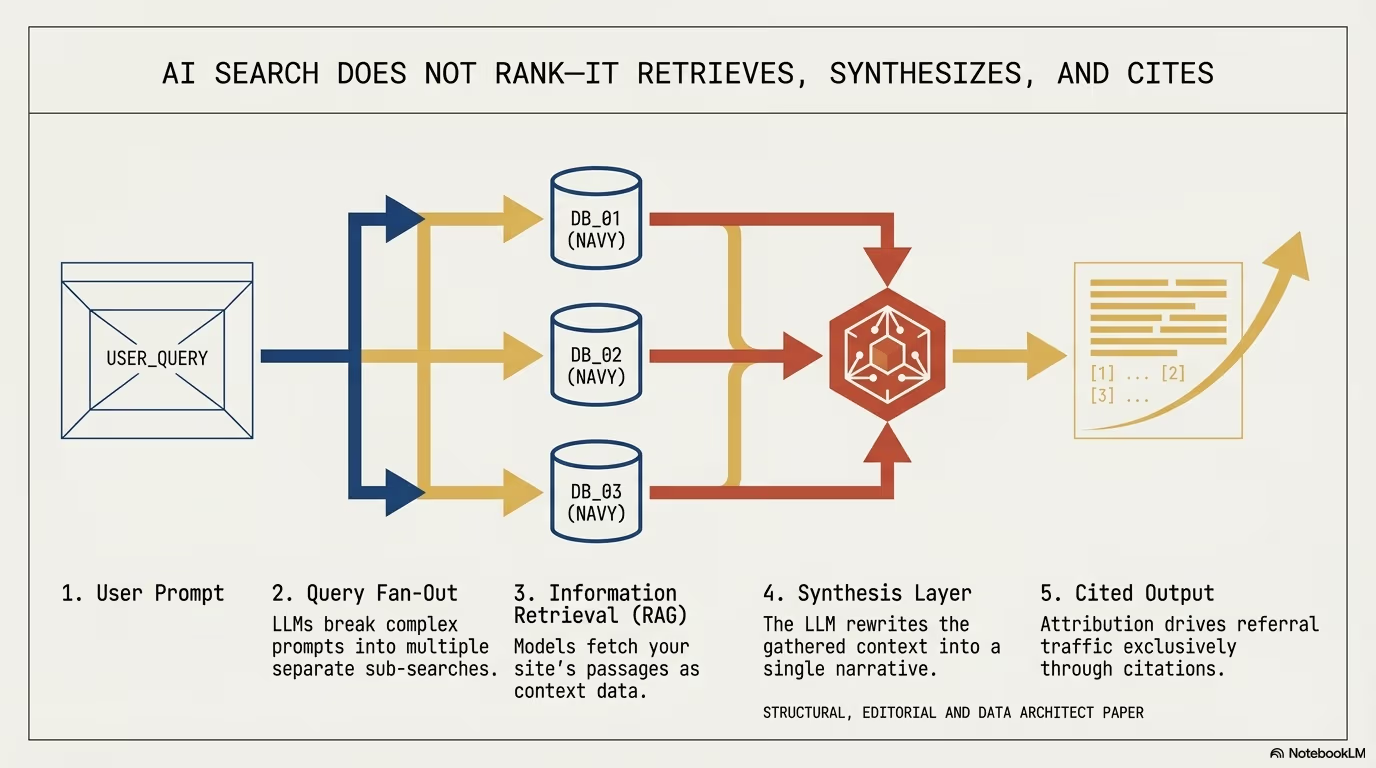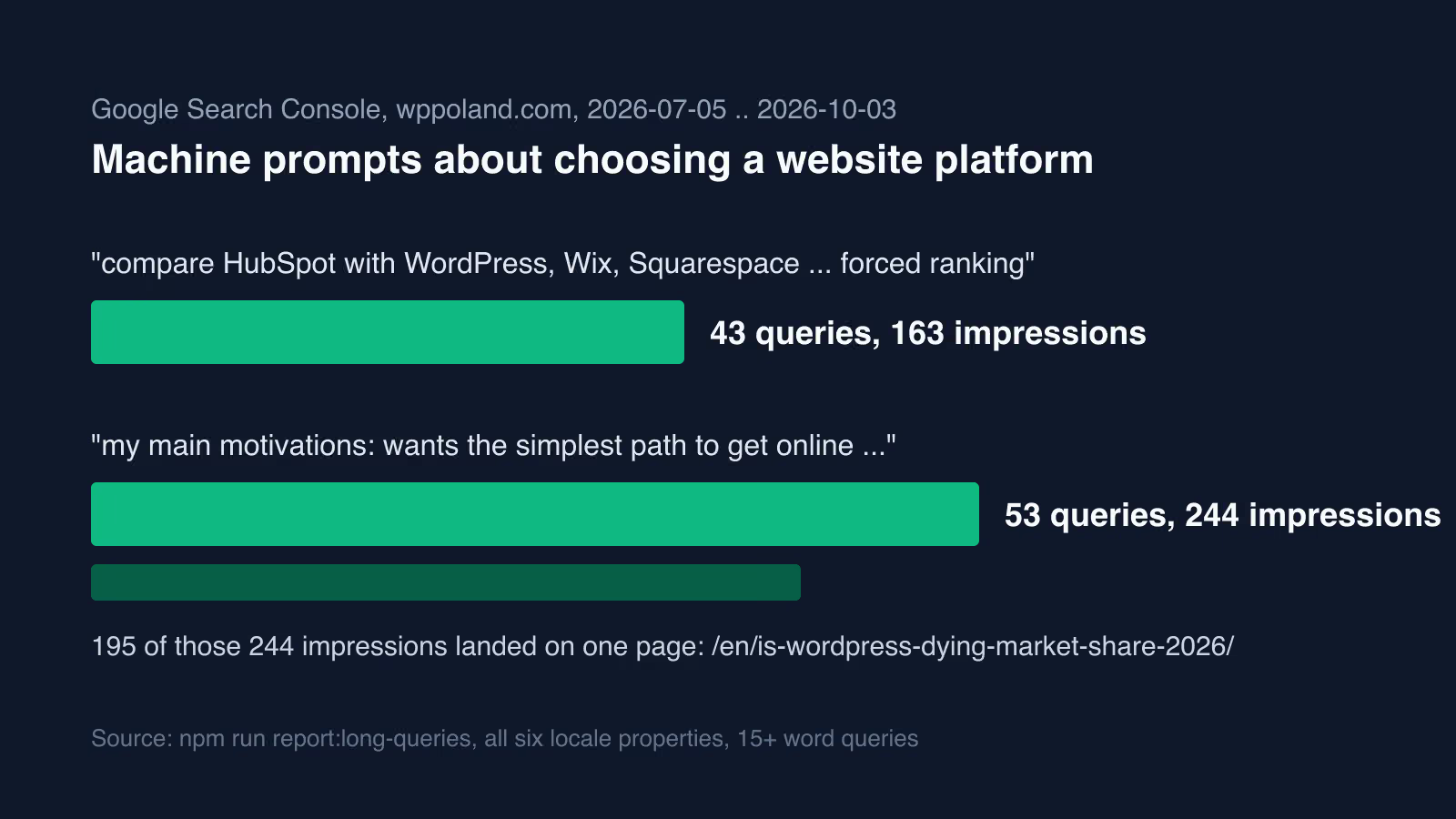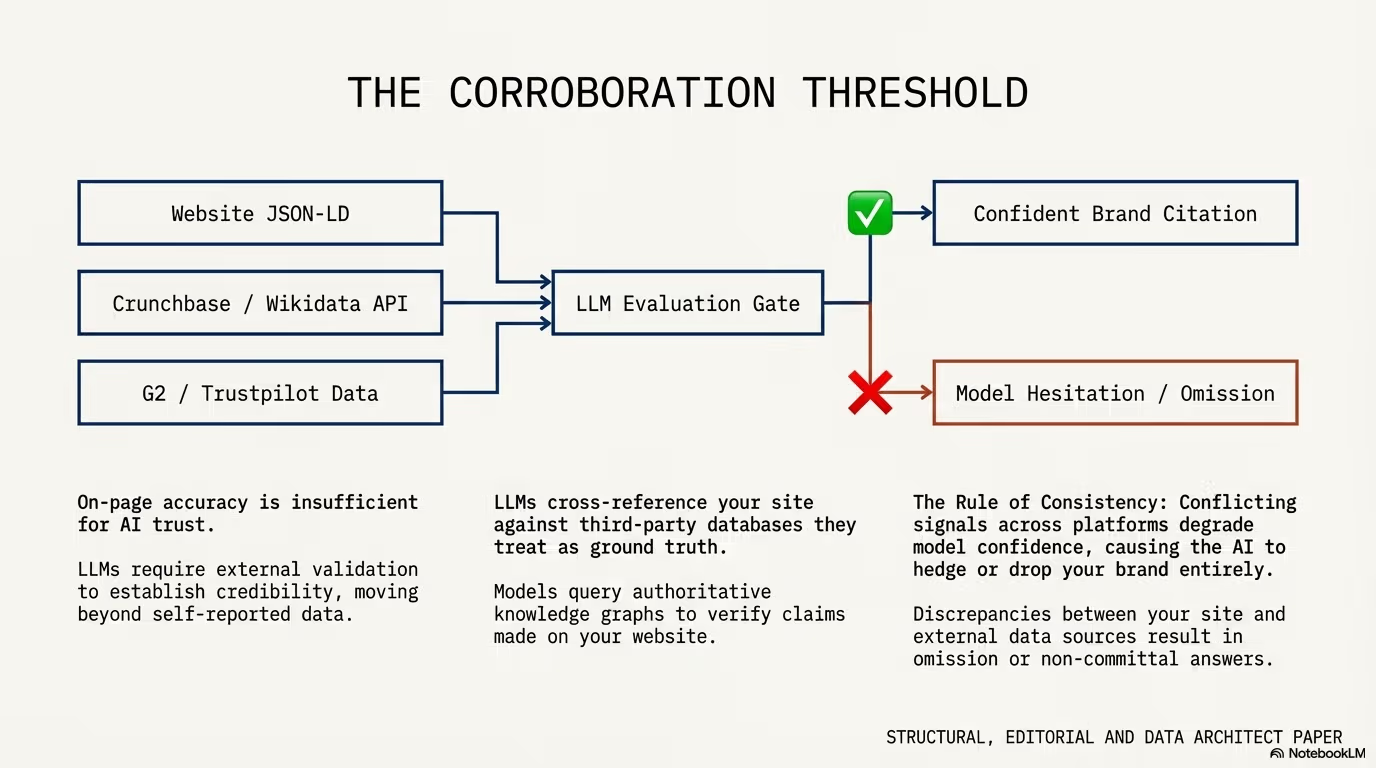
A customer no longer has to visit your shop to buy from it. In 2026 an AI agent can read your catalogue, add a product, and complete a WooCommerce order on the buyer's behalf, and it does all of that over an interface, not in a browser tab. The order lands in your admin. The money arrives. And your analytics record nothing.
This is not a hypothetical. WooCommerce’s own developer blog laid out the AI and agentic commerce roadmap, including a native agent path to checkout, and the ecosystem is filling in around it faster than the tracking plugins can keep up. At WPPoland we build and instrument WooCommerce stores for clients selling across the EU, and the first stores to receive agent orders are already seeing the gap between what they sold and what their dashboards say they sold.
Here is the mechanism, the specific things that break, why the Conversions API does not save you automatically, and the way to instrument it properly.
Why AI agent orders are missing from GA4
The short answer: nothing happens to your analytics, and that is the problem. Your reporting stack was built on the assumption that every purchase is preceded by a human loading pages in a browser. An agent breaks that assumption. It completes the order server-side, so every browser-based signal your analytics depends on simply never fires.
You end up with a WooCommerce order that has no matching session in Google Analytics, no matching event on the Meta pixel, and no attribution because there was no click, no UTM-tagged landing, and no browser to read any of it from. The revenue is real. The trail is empty.
Why GA4 and the Meta pixel need a browser
Most WooCommerce measurement is client-side by design. Google Analytics 4 collects through gtag.js, a script the visitor’s browser downloads and runs. The Meta pixel is the same idea: a snippet that executes in the browser and reports PageView, AddToCart, InitiateCheckout and Purchase as the shopper moves through the funnel. Google Tag Manager, the container most stores route these tags through, is also a browser runtime.
Every one of those tools needs a page to render and a script to execute. That is the single point of failure. Take away the browser session and you have taken away the only place these tags were ever going to run.
An agent checkout takes away the browser session.
Which WooCommerce reports break with agent orders
It is worth being precise, because “analytics breaks” hides how many separate reports go wrong at once.
- GA4 funnel and purchase events. No
page_view, noadd_to_cart, nobegin_checkout, nopurchase. The order never enters GA4, so revenue, conversion rate and funnel drop-off are all understated. - The Meta pixel conversion. No
Purchaseevent reaches Meta from the browser, so the sale is missing from your ad reporting and from the optimisation signal the algorithm learns from. - Attribution. Attribution models read a click, a referrer, UTM parameters or a stored client id from the browser session. An agent order has none of these, so it cannot be attributed to a channel, a campaign or a source. It shows up, at best, as direct or unassigned, and often not at all.
- Remarketing audiences. A buyer the pixel never saw cannot be added to a customer audience or excluded from a prospecting one. You will keep paying to advertise to people who have already bought through an agent.
- Return on ad spend. Revenue in WooCommerce stops matching revenue in your ad dashboards. ROAS looks worse than reality, and the natural but wrong reaction is to cut the very campaigns that are working.
None of this throws an error. That is what makes it dangerous. The store keeps running, the orders keep arriving, and the dashboards quietly drift away from the truth.
Does Meta Conversions API catch agent orders?
The obvious objection is that Meta already solved server-side tracking. The Conversions API sends events straight from your server, no browser required. So agent orders should be covered.
They are not, at least not with a standard install, and the reason is deduplication. The Conversions API is designed to work alongside the pixel, not instead of it. You are expected to send the same conversion twice, once from the browser pixel and once from the server, and Meta collapses the pair into one using a shared event_id and event_name. That is the whole point: measure reliably without double-counting.
An agent order has no browser half. There is no pixel event to pair with the server event, and the popular WooCommerce CAPI setups build the dedup key at the moment the thank-you page renders. For an agent order that page never renders, so the key is never produced, and the server event is either not sent or sent without the identity information Meta expects. The dedup model that protects you from double-counting browser-plus-server orders is the same model that silently drops an order that only ever existed on the server.
Server-side tracking is the right direction. Bolting it onto a browser-first assumption is not the same as being ready for agents.
How to track WooCommerce purchases server-side
The durable fix is to stop treating the thank-you page render as the moment of truth and start treating the order itself as the moment of truth. The order is the one thing that reliably exists no matter how the sale was placed.
Concretely:
- Fire the purchase server-side from an order hook. WooCommerce raises
woocommerce_order_status_completedand related payment hooks on the server for every order, browser or agent. Send your GA4 purchase via the Measurement Protocol and your MetaPurchasevia the Conversions API from that hook, so collection no longer depends on a page loading. - Deduplicate on the order id. Use the WooCommerce order id as the
event_id. A browser order and its server twin still collapse into one because both carry the same order id, and an agent-only order comes through cleanly because the key does not need a pixel counterpart. - Tag the order source. Store where the order came from, the payment gateway id or a dedicated meta field, at creation. Now every report can split agent revenue from browser revenue instead of blending them into an average that hides the shift.
- Rebuild attribution around identity you actually hold. For agent orders, the customer account, the email, or the agent’s own identifiers are what you have. Map those to your channels deliberately rather than hoping a UTM string appears.
This is ordinary WooCommerce engineering, hooks, webhooks and server-to-server events, but it has to be designed for the agent case from the start rather than patched onto a pixel that assumes a browser.
When to fix agent order tracking in WooCommerce
For now agent orders are a trickle for most stores, which is exactly why this is the right moment to fix it. The stores that instrument server-side collection while the volume is small will have clean, comparable numbers when it is not. The stores that wait will spend 2027 trying to explain a widening gap between their WooCommerce revenue and their ad dashboards, and rebuilding attribution under pressure is far more expensive than building it once, calmly, now.
If you sell through WooCommerce and you are starting to see orders your pixels cannot explain, that is the signal. It is a plumbing problem with a known fix, and it is the kind of work that pays for itself the first time a campaign you were about to cut turns out to have been profitable all along. When dashboards and TTFB both look wrong, treat analytics and checkout latency as one workstream: the layered playbook is in WooCommerce performance optimization 2026, and the field recovery sequence is in the confidential WooCommerce performance recovery case study.
We do this work as part of our WooCommerce development engagements, and it sits next to the broader question of whether your store is discoverable and buyable by agents in the first place, which we cover in our AI commerce readiness guide and in the Universal Commerce Protocol explainer. If you want to understand how agents reach your catalogue in the first place, our read-only WooCommerce MCP server shows the mechanics, and for the client-side foundations that still matter, our Google Analytics 4 for WordPress guide covers the browser side that agent orders bypass.
Last updated: 20 July 2026.