When and where WordCamp Europe 2023 took place
WordCamp Europe 2023 took place in Athens from 8 to 10 June 2023. The first day, 8 June, was Contributor Day, and 9 and 10 June were the conference days. According to the organisers’ summary (WCEU 2023 in numbers), 2545 people from 90 countries attended, and 1400 of them were at WordCamp Europe for the first time. The conference brought together WordPress creators, developers, designers and enthusiasts.
The venue was the Megaron Athens International Conference Centre, one of the largest conference centres in the Greek capital, which according to the event press page holds 6000 people. The nearest metro station is Megaro Moussikis on the blue line, number 3 (pre-arrival information).
Athens, known for its rich history and culture, turned out to be an excellent backdrop for the event. Attendees could not only expand their technical knowledge but also explore the Greek capital with the help of guides prepared by the organisers. These guides covered the Greek language, getting around Athens, visiting museums, shopping and even the best beaches.
The programme was aimed at people at every level, from beginner WordPress users to experienced developers and core contributors. In the schedule published through the event site’s API (WCEU 2023 sessions) I count 63 talks, panels and workshops across three main tracks and two workshop rooms, plus the WP Connect meetups.
How many people attended WordCamp Europe 2023
The organisers published a full summary in numbers on 28 July 2023 (WCEU 2023 in numbers). The key figures:
| What | Number |
|---|---|
| Attendees | 2545 from 90 countries |
| First-time attendees | 1400 |
| Speakers | 102 from 29 countries |
| Volunteers | 142 from 40 countries |
| Organisers | 98 from 21 countries, in 11 teams |
| Sponsors | 64 |
| Contributor Day participants | 658, including 144 newcomers, in 23 teams |
| Visa letters generated | 222 |
This table corrects figures that circulated in reports from Athens: there were not more than 3000 attendees, nor 250 volunteers. The breakdown of speakers by country is also interesting: the most, 21 people, came from the USA, 11 from Spain, 9 each from the Netherlands and the United Kingdom, and 8 from Germany. Among the sponsors, 56.25% returned from the previous edition in Porto, and 43.75% sponsored WordCamp Europe for the first time.
How long WordCamp Europe has been running
WordCamp Europe is an annual conference that brings together the European WordPress community. According to the press page, the event takes place in a different European city each year and is organised by community volunteers. The editions before Athens were Paris (2017), Belgrade (2018), Berlin (2019), two online editions (2020 and 2021) and Porto (2022). The organisers called the 2024 edition in Turin the twelfth, which makes Athens the eleventh edition of the conference.
The history of WordCamp Europe is closely tied to the growth of WordPress itself. As the platform evolved and gained popularity, its user community grew too. WordCamp became the place where this community could meet, share experience and work together on the future of the project.
WordCamp Europe is not the only event of its kind. WordCamps take place all over the world every year, from small local gatherings to large conferences such as WordCamp US. The European edition includes two conference days and a separate Contributor Day, which according to the organisers helps strengthen the ties between the European communities that support the open source project.
WordCamp Europe 2023 programme and speakers
The schedule had three talk tracks (Track 1, 2 and 3), two workshop rooms and the WP Connect space. 102 speakers took the stage. Alongside classic talks, the programme included panels on, among other things, artificial intelligence in WordPress, performance from the community’s perspective, women and non-binary people in WordPress, and the future of WordCamp Europe itself.
WP Connect stood out in particular: Adam Zieliński led a demo of WordPress Playground there. The WCEU community team organised 6 events in the WP Connect space over the two conference days (WP Connect programme). Adam’s demo took place on the second conference day, 10 June, from 11:00 to 11:45. WordPress Playground is a tool that runs WordPress directly in the browser, with no local installation or server configuration.
Another important talk was Dawid Urbański’s Gutenberg collaborative editing experience on Track 1, also on 10 June. Dawid, a fullstack developer working mainly with JavaScript, TypeScript and Node, is a keen WordPress fan. In the session description he announced that phase 3 of Gutenberg was just around the corner, that its main goal was collaboration, and that the talk would cover the challenges the Gutenberg team would face when implementing real-time editing.
Best sessions at WordCamp Europe 2023
Three WP Connect conversations on the first day, 9 June, show well how this space differed from the main stages:
How contributing to the WP open-source project changed our lives, led by Michelle Frechette (10:15 to 11:00). A conversation about how involvement in an open source project changes the professional and personal lives of the people taking part in it.
How to pitch your ideas to someone (company, client, sponsor), with Morten Grauballe and Miriam Schwab (11:30 to 12:15). The topic was presenting your own ideas to a company, a client or a sponsor in a way that wins their support.
Coming back to in-person events, led by Junko Nukaga and Simon Kraft (14:30 to 15:15). The full title promised a conversation about how local communities experienced the return to in-person events in 2022, what went well for them and what they expected from 2023.
What WP Connect was at WordCamp Europe 2023
WP Connect replaced WP Café, familiar from earlier editions. In the January post Presenting WP Connect, the organisers explained two reasons for the change. First, in some cultures and languages the word “Café” suggested an ordinary coffee shop rather than a shared event. Second, the old meetups were split by experience level, while the new format was meant to be open to everyone at once.
The full WP Connect programme according to the event page:
| Day and time | Topic | Hosts |
|---|---|---|
| 9 June, 10:15 | How contributing to the WP open-source project changed our lives | Michelle Frechette |
| 9 June, 11:30 | How to pitch your ideas to someone | Morten Grauballe, Miriam Schwab |
| 9 June, 14:30 | Coming back to in-person events | Junko Nukaga, Simon Kraft |
| 9 June, 16:00 | Five for the future: sponsored contributors | Hari Shanker, Courtney Robertson, Afshana Diya, Emanuel Blagonic |
| 10 June, 10:00 | Developer relations / developer advocacy in open source | Michael Burridge |
| 10 June, 11:00 | Demo: WordPress Playground | Adam Zieliński |
The conversation about the Five for the Future programme, that is, how to become a sponsored contributor and how a company can dedicate an employee to the WordPress project, is available as a recording on WordPress.tv.
How WordPress Playground works in the browser
One of the most exciting moments of the conference was the WordPress Playground demo led by Adam Zieliński. WordPress Playground runs a full WordPress installation directly in the web browser, without setting up a local development environment or installing additional software.
What WordPress Playground is
WordPress Playground is an open source project which, according to its documentation, runs entirely on the client side, in WebAssembly, with no backend and no login. This means you can experiment with WordPress, test plugins, try new themes and develop your own projects without a server or a local PHP and MySQL installation.
The tool is especially valuable for several groups of users:
For beginners, WordPress Playground is a way to learn WordPress without the risk of breaking an existing site. You can experiment with different settings, test features and learn without worrying about the consequences.
For developers, the tool shortens the setup of an environment for testing plugins and themes. Instead of configuring a local environment for every project, you can open the browser and start working.
For people selling services, WordPress Playground lets you show potential clients how WordPress works without preparing a separate demo environment.
What technologies WordPress Playground runs on
WordPress Playground is built on several technologies described in the project repository:
WebAssembly makes it possible to run code written in other languages in the browser, including the PHP interpreter.
PHP in the browser is a compilation of PHP to WebAssembly. Playground developed it on top of the earlier projects oraoto/pib and seanmorris/php-wasm, as the project states explicitly in its README.
SQLite replaces the MySQL database. WordPress uses it through the SQLite Database Integration plugin developed by the WordPress team, which translates MySQL queries into SQLite.
Offline mode is now part of the project: the repository includes instructions for testing Playground without a network connection.
Real-time collaborative editing in Gutenberg
Dawid Urbański’s talk was about a feature that Gutenberg did not yet have in June 2023. Gutenberg, introduced in WordPress 5.0, is the block editor that changed how content is created in WordPress. The next phase of its development was meant to add collaboration of several people on a single piece of content.
How the block editor works
The block editor (Gutenberg) is a change in the approach to creating content in WordPress. Instead of one large text editor, content is built from a series of blocks, self-contained units, each responsible for a specific element of the content. There are text, image, video, quote, button blocks and many more.
This architecture gives more control over the content layout than the classic TinyMCE editor. Each block can have its own styles, settings and behaviour. Blocks can also be grouped and moved as a whole, which makes reorganising content easier.
What collaborative editing in Gutenberg means
Phase 3 of Gutenberg’s development has collaboration as its main goal: several people edit the same content at the same time and see each other’s changes, much like in Google Docs. According to the session description on the WCEU 2023 site, adding this feature to the editor was meant to be a major milestone for WordPress.
Dawid focused on what a reliable real-time collaboration solution requires and on the challenges the Gutenberg team would face when implementing the feature. For editorial teams the stakes are concrete: no more manually merging changes between the author, the editor and the proofreader as a text moves through its stages.
The recording of the talk is available on WordPress.tv.
Types of additional Gutenberg blocks
The Gutenberg block ecosystem keeps growing. Besides the blocks built into WordPress, there are blocks available in the official directory and in plugins from third-party developers.
Some of the most popular block categories are:
Layout blocks let you build page layouts without writing CSS. They include column, section, container and group blocks.
Media blocks offer additional options for presenting images, video and audio, for example lazy loading and responsive sizes.
Form blocks let you create forms, from simple contact forms to surveys.
Interactive blocks add elements such as accordions, carousels and countdown timers.
Matt Mullenweg on 20 years of WordPress
The conference closed with the session Variations on a theme: 20 years of WordPress on Track 1, on 10 June. According to the session description, WordPress Executive Director Josepha Haden Chomphosy and Matías Ventura, product architect at Automattic, summarised the project’s achievements and lessons from 2023. Then co-founder and project lead Matt Mullenweg answered questions and shared reflections after 20 years of open source innovation. The title is a play on the word “theme”, meaning both a subject and a WordPress theme. It was not a State of the Word presentation, which Matt delivers separately at the end of the year.
How WordPress has changed over 20 years
WordPress celebrated its 20th anniversary in 2023. Over two decades the platform went from a simple blogging tool to a full content management system that powers more than 40% of all websites in the world.
The anniversary was felt outside the hall too. On the evening of 10 June there was an afterparty under the banner Happy 20th Birthday, WordPress!, listed in the official conference schedule. The recording of the whole closing session is available on WordPress.tv.
What Contributor Day at WordCamp Europe 2023 looked like
Contributor Day took place on Thursday 8 June 2023 and lasted the whole day. According to the Contributor Day page, it is the day when WordPress users work together on the open source project: translating, writing documentation, testing and fixing bugs. The organisers listed technical tasks such as testing and reporting bugs, writing patches for core and plugins, and working on the mobile apps, as well as non-technical tasks: documentation, translations, helping on the support forums, training materials and photos for Openverse.
In Athens 658 people took part, including 144 newcomers, split into 23 teams (WCEU 2023 in numbers). The day’s schedule included a welcome, team work before and after the lunch break, a group photo and a closing summary of what each team achieved.
The Polish WordPress community and WordUp meetups
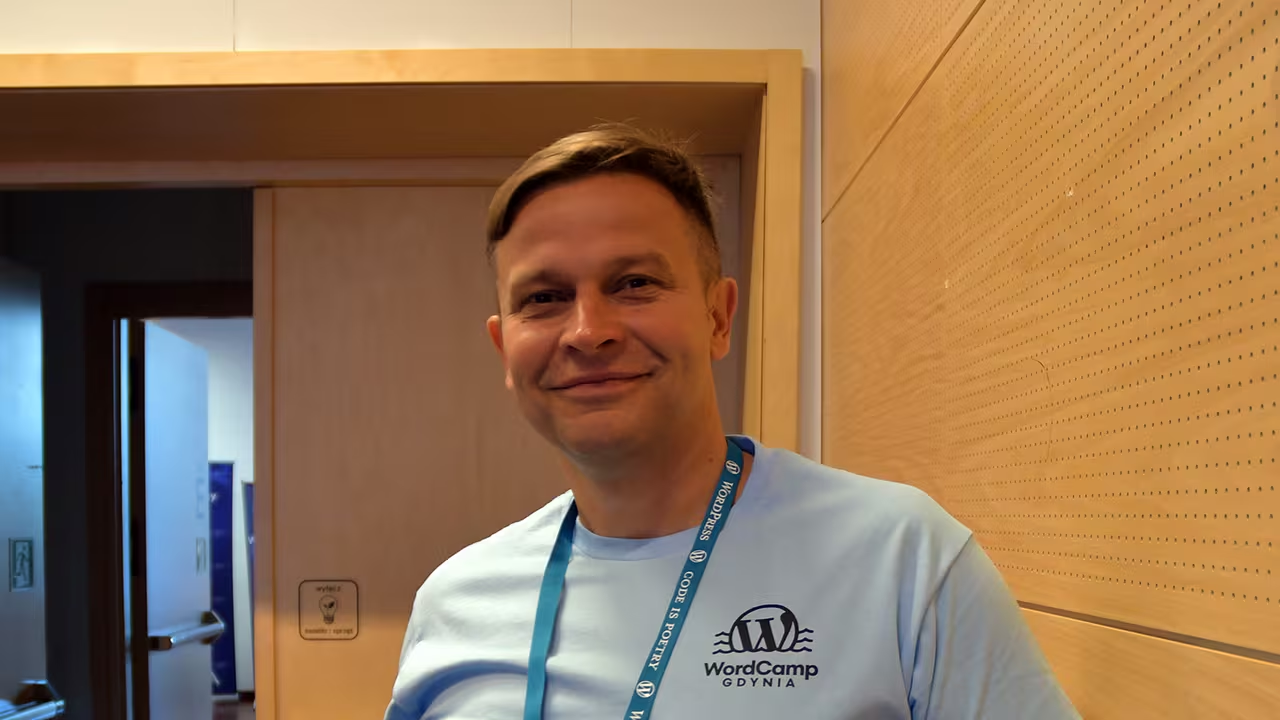
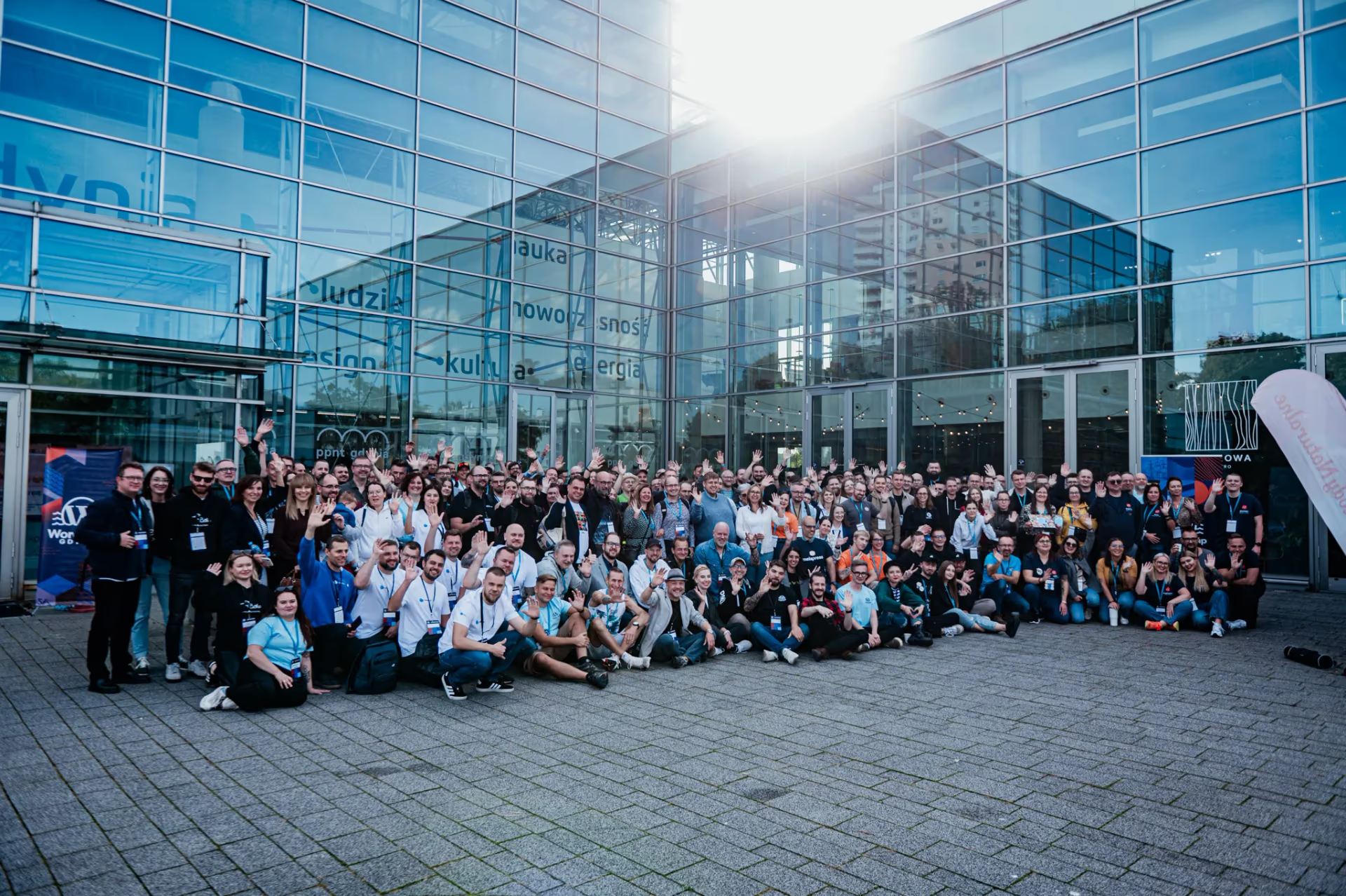
WordCamp Europe 2023 was also a chance for the Polish WordPress community to meet. The photo at the top of this post shows the Polish crew with Matt Mullenweg. Dawid Urbański spoke on the main stage, and Adam Zieliński led the demo at WP Connect.
The Polish WordPress community is active. Local meetups take place in many Polish cities. WordUp Trójmiasto (Tricity), co-organised by wppoland.com among others, runs regularly and draws dozens of attendees to each meetup.
What WordUp Trójmiasto is
WordUp Trójmiasto is a regular meetup of WordPress enthusiasts in the Tricity area and a chance to share experience, learn and network. The meetups include presentations on a range of WordPress topics, from plugin and theme development, through SEO, to design and marketing.
The organisers of WordUp Trójmiasto, including the founder of wppoland.com, also take part in organising larger events such as WordCamp Poland.
The Polish WordPress community is also active in global WordPress projects. Polish translators contribute to the localisation of WordPress core and many popular plugins, and Polish developers contribute to core development and build plugins and themes used around the world.
Organisational problems at WordCamp Europe 2023
Despite the overall success of the event, it was not without problems. One member of the Polish delegation was robbed, which cast a shadow over the overall experience. Safety should be a priority at any event of this size.
Another problem was the afterparty. The club hosting the party turned out to be too small to fit everyone who wanted to come, and the overcrowding affected the atmosphere. The catering at the afterparty left a lot to be desired, both in the quality of the food and in its availability.
These experiences are a lesson for the organisers of future events. When choosing an afterparty venue, its capacity has to be checked, and attendees need adequate security.
What to see in Athens during WordCamp
Athens offered attendees not only good conditions for learning and networking but also a wealth of culture and history. The organisers prepared a series of guides that helped people get around the city and make the most of their stay in the Greek capital.
Top sights in Athens
The main attraction is the Acropolis, the ancient citadel with the Parthenon. It is also worth visiting the Ancient Agora of Athens, the Acropolis Museum and the Plaka and Monastiraki districts, where you can feel the atmosphere of old Athens and buy souvenirs.
The organisers’ guides covered, among other things:
Transport, with a description of buses, trams and the metro.
Food, with a list of traditional Greek dishes worth trying.
Museums and galleries for a day spent with culture.
Beaches within reach of public transport, for a rest after intense conference days.
Day trips, for example to the ancient theatre at Epidaurus or to the oracle at Delphi.
Can you get by in English in Athens
Yes. The organisers’ language guide (Unlocking Athens) stresses that English is widely spoken in Greece. Still, it is worth knowing a few Greek words, such as “efharisto” (thank you), “parakalo” (please) and “nai” (yes), which locals appreciate.
WordCamp Europe 2024 in Turin
During the Athens conference itself, on 9 June, the organisers announced the next city: WordCamp Europe 2024 took place in Turin, Italy, from 13 to 15 June 2024, as the twelfth edition (organisers’ announcement). The organisers described Turin as a city with more than 2000 years of history and more than 300 km of avenues and parks, located at the foot of the Western Alps.
Turin was the first capital of unified Italy and is known for car manufacturing (Fiat), chocolate and Baroque architecture.
Is WordCamp Europe worth attending
WordCamp Europe 2023 showed how the global WordPress community works. 2545 people from 90 countries met in Athens to share knowledge, make connections and work together on the platform that powers more than 40% of the web.
The key moments of the conference were the WordPress Playground demo, which showed how developer tooling for WordPress has changed, the talk on the challenges of collaborative editing in Gutenberg, and the closing session with Josepha Haden Chomphosy, Matías Ventura and Matt Mullenweg.
Despite the organisational problems, such as the theft affecting one attendee and the shortcomings of the afterparty, the overall conference experience was positive. Attendees had the chance to learn from experts, but also to make connections and friendships that last for years.
For people who have never been to a WordCamp, it is a chance to get to know the WordPress community up close. 1400 people in Athens came to WordCamp Europe for the first time, so a newcomer is no exception there.
Where to watch WordCamp Europe 2023 recordings
Recordings of the Athens talks are available on the WordCamp Europe 2023 page on WordPress.tv. The organisers announced their publication in their post-conference thank-you (Thank you from WordCamp Europe 2023), and most of them appeared from the end of September 2023 onwards. Among them:
- Gutenberg collaborative editing experience, Dawid Urbański,
- Variations on a theme: 20 years of WordPress, Josepha Haden Chomphosy, Matías Ventura and Matt Mullenweg,
- AI in WordPress, a panel on artificial intelligence,
- WordPress performance: community perspectives, a panel on performance,
- WCEU Globals: future of WCEU, a conversation about the future of the conference.
Athens showed that the most interesting conversations happen outside the session rooms, in the sponsor area and over coffee. The same practical knowledge later comes back into our projects when we deliver WordPress implementations for businesses.