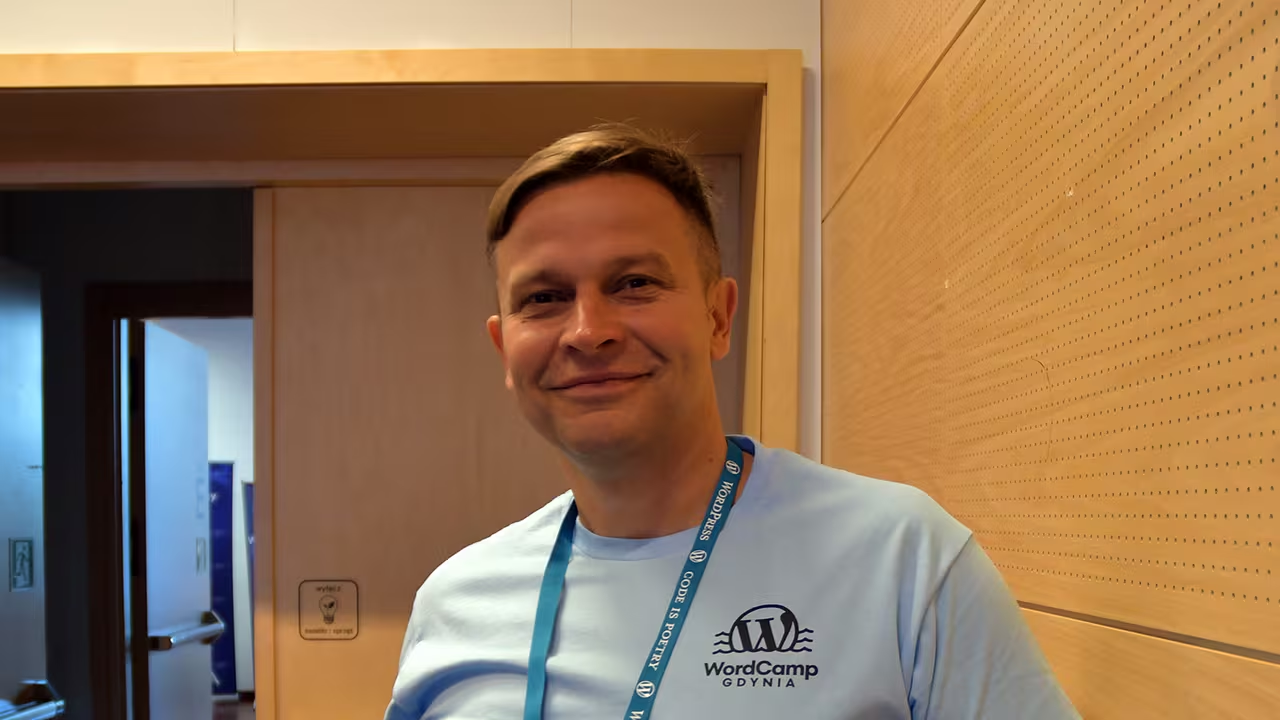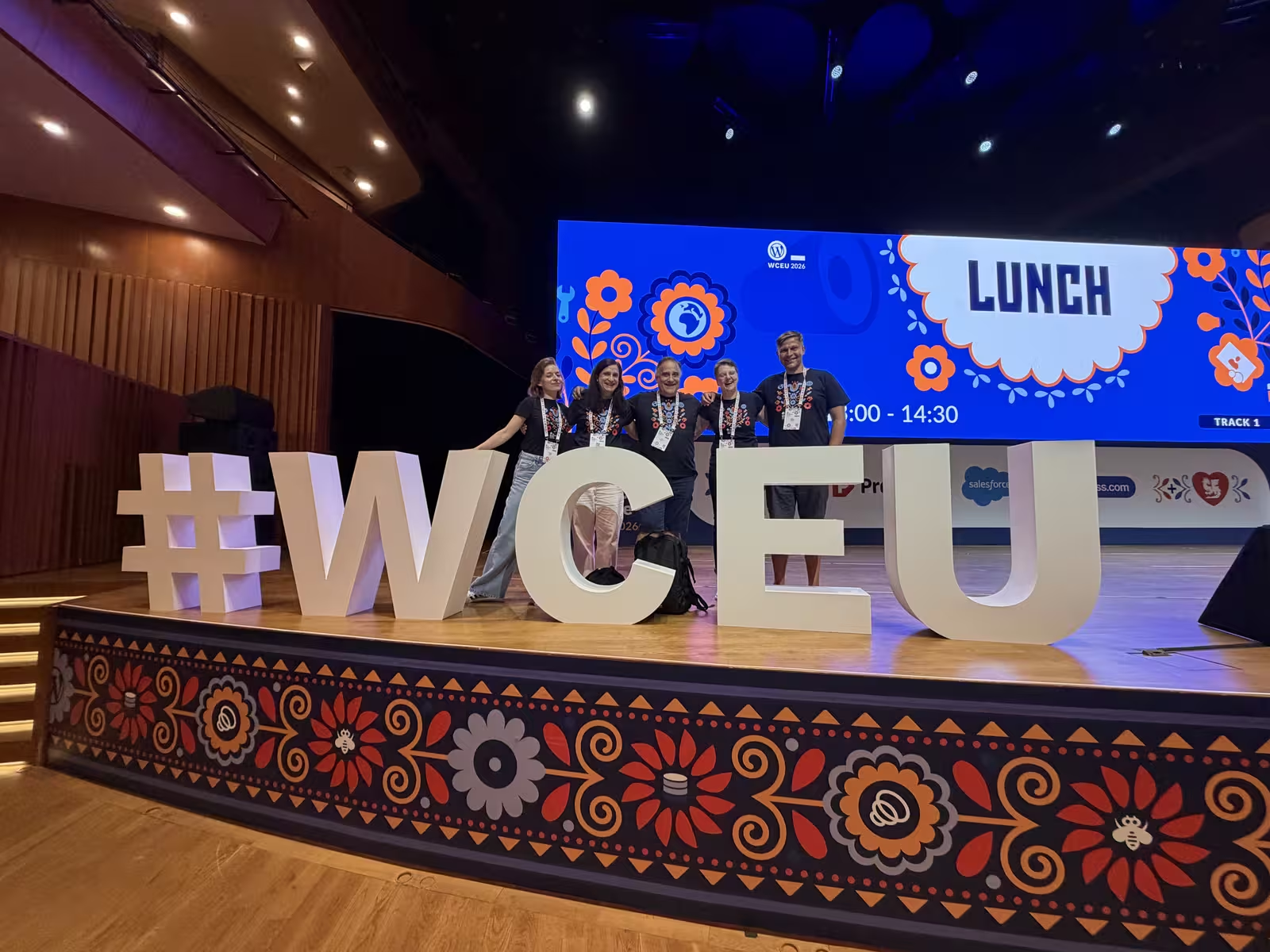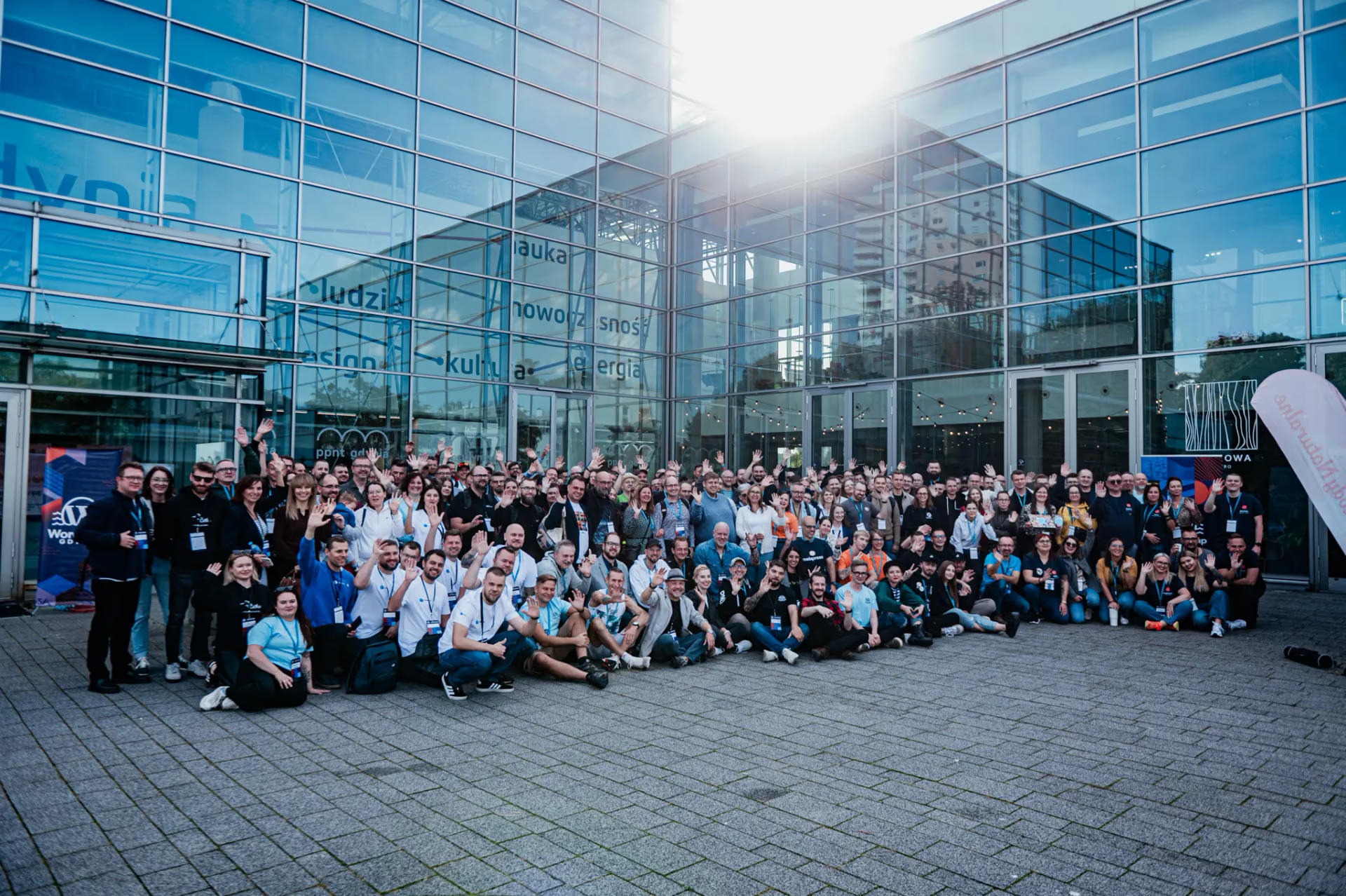
WordCamp Gdynia 2024 went down in history as an event full of smiles, practical advice, and interesting discussions about WordPress. From October 4-6, 2024, 226 participants gathered at the Marine Fisheries Institute, including volunteers, speakers, and sponsors.
Learn more about our WordPress community involvement at WPPoland.
Venue and atmosphere at WordCamp Gdynia 2024
The Marine Fisheries Institute conference center in Gdynia hosted the event. Spacious halls, good acoustics, and intimate corners for conversations - everything conducive to both focusing on presentations and spontaneous chats. Attendees praised the comfortable venue, and the seaside location tempted many to take short walks during breaks.
What happened at WordCamp Gdynia 2024
Contributor Day and before-party
WordCamp Gdynia 2024 started Friday, October 4th with Contributor Day - developers working together on WordPress development. That evening, 60 people headed to the before-party.
Conference and workshops
Saturday (October 5) and Sunday (October 6) featured the main program: 21 sessions and numerous workshops for all skill levels - from technical topics (WP security, Full Site Editing, performance optimization) to marketing, SEO, and WordPress community support.
Standout speakers at WordCamp Gdynia 2024
Adam Zieliński on WordPress Playground
Key WordPress contributor from Automattic presented “WordPress Playground - A Breakthrough in WordPress” - the project enabling WordPress to run directly in the browser.
Fresh from WordCamp Europe, Adam opened the stage with the keynote as the first speaker of WordCamp Gdynia 2024. He is a WordPress core contributor and was the lead technical editor of WordPress 6.0. By day he works at Automattic; after hours he practises improv and plays badminton.
WordPress Playground runs WordPress directly in the browser, with no server. It cuts setup time for testing and removes technical barriers: people use it to build new apps, to learn, and to test pull requests, plugins and themes, free and open source under the GPL licence.
Michał Strześniewski on headless Full Site Editing
His 9th WordCamp appearance! Presented “Full Site Editing in a Headless Approach - Case Study.”
Michał has 13 years of development experience. He is a speaker, educator and co-founder of the WWW Foundation, has taught at WordCamps, WordUps, Infoshare Academy and Workshops 4DEV, and works as Head of Product Development at 300.codes. With more than 150 delivered projects behind him, he mixes practical advice with case studies. The session was aimed at developers who build themes for clients and at Gutenberg and FSE users, and showed what a headless approach adds to client projects built with Full Site Editing.
Krzysztof Miotk on the UX trust pyramid
UX expert presented “The User Trust Pyramid - How UX Helped Us Raise 50 Million.”
Krzysztof co-owns the UX agency Quale, co-hosts the “UX After Hours” podcast and leads Poland’s first postgraduate UX Research programme at Collegium Da Vinci in Poznań. His UX work has supported BLIK, mBank, G2A, OLX, T-Mobile, ING, Santander, Alior Bank and Booste. He is known for a business-first approach: products that are easy to use and serve the client’s conversion and retention goals.
The full title of the talk ends with “and then we lost it all”. Krzysztof presented a five-layer pyramid for building user trust that helped one company raise more than 50 million PLN in funding within a year, with examples aimed at marketers and business owners.
Security track
- Maciej Palmowski (Patchstack) - WordPress Security
- Tomasz Dziuda - Plugin Traps
- Artur Cyganek - 7 Security Layers (OSI Model)
Development track
- Przemek Hernik - MVC Pattern in WordPress
- Maciej Lech - CSS Clamp() in theme.json
- Piotr Misztal - Custom REST API
SEO and marketing talks
- Mariusz Jałyński - Effective Google Indexing
- Karol Sawka - Google Tag Manager Performance
- Joanna Jelenik - SEO x DEV Collaboration
- Adrian Pakulski - What to automate in SEO
Workshops
- Tomasz Palak - Legal Aspects for Web Creators
- Dominik Liss - GDPR without secrets
Business, e-commerce and accessibility talks
- Piotr Mońka - Accessibility: Beyond Plugins
- Filip Sroka - WooCommerce subscriptions step by step
- Dorota Helińska-Bartoszek - On budget and on time with FSE
Four more sessions from the official programme
The official agenda lists four more speakers whose sessions round out the weekend.
Dominik Liss, an Austrian freelancer and WordPress developer who has co-organised WordCamp Vienna since 2018, ran “GDPR without secrets: how to avoid mistakes and test WordPress sites” (original title: “RODO bez tajemnic: Jak unikać błędów i testować strony WordPress”). He covered the typical mistakes made when building WordPress sites, how to test a site for GDPR compliance, and which plugins suit which setups.
Filip Sroka from PlanetPay presented “WooCommerce: subscriptions step by step” (original title: “WooCommerce: Subskrypcje Krok po Kroku”). He showed how to roll out a subscription model in a WooCommerce shop, the problems he ran into along the way, and how the PlanetPay plugin handles recurring payments.
Adrian Pakulski, CEO of the SEO agency Paq Studio and co-owner of the motorcycle e-commerce company Enduro7, asked “What to automate in SEO?” (original title: “Co automatyzować w SEO?”). His talk covered which SEO areas to automate first, what to leave manual, and when an LLM is needed versus a plain IF statement.
Dorota Helińska-Bartoszek, a project manager working in an agile setup, told the story behind “Success on budget and on time: how we delivered an extensive FSE site with minimal information at the start” (original title: “Sukces w Budżecie i Czasie: Jak dostarczyliśmy rozbudowany serwis w FSE, przy minimalnych informacjach na starcie.”). Agile methods, close communication in the project team and WordPress features kept the Full Site Editing project within budget and schedule.
Maciej Lech on CSS clamp() in theme.json
We promised new faces, and Maciej Lech was one of the debutants. He is a developer at TigriWeb, one of our bronze sponsors, and builds WordPress and WooCommerce sites every day, with a focus on quality and on clear collaboration with clients. He has eight years of WordPress experience and recharges by fishing.
In his first talk, “Clamp(): simplify CSS and save time”, Maciej explained the CSS clamp() function in theme.json: it reduces the amount of code and scales elements fluidly without extra media queries. He showed practical WordPress examples and his own formula for choosing the values.
How to get a WordPress site indexed in Google
Poor indexing cuts online visibility, traffic and business results, and Google Search Console errors are often where the trouble shows first. Mariusz Jałyński’s session, “Effective website indexing in Google”, went deep into indexing, with a focus on sites built on WordPress.
Mariusz is an SEO manager with more than eight years in digital marketing and a record of SEO work that measurably raised brand visibility. He covered:
- crawl budget and its role in indexing,
- the common Google Search Console pitfalls,
- managing WordPress indexing for better visibility.
MVC pattern in WordPress projects
Early architectural decisions decide how a project grows and how stable it stays. Przemek Hernik, software engineer and CTO at Coditive, presented “Basics of the MVC pattern and its use in WordPress projects”. He also created pragmate.dev and works on WordPress, Vue and Nuxt projects. Przemek showed how the Model-View-Controller pattern splits an application into three components, which keeps the code simpler and easier to scale. The talk covered:
- the benefits of MVC in WordPress,
- implementing MVC with performance and scalability in mind,
- avoiding the architectural mistakes that slow a project down.
It was aimed at junior engineers and at business owners who want their WordPress sites ready for the years ahead.
Plugin pitfalls and safe WordPress updates
A thoroughly vetted plugin does not guarantee peace of mind. Tomasz Dziuda, a full-stack developer and active WordPress contributor who specialises in security, performance and stability, showed why in “Pitfalls hidden in plugins”. He presented real cases in which plugin updates damaged privacy, performance or security, and argued for watching a site after every update. The talk was meant for WordPress users, developers and site owners who want to recognise risky plugins and manage updates with care.
Does Google Tag Manager slow down a website
Google Tag Manager (GTM) is the tool developers, SEO specialists and marketers reach for to handle tracking, A/B tests and widget integrations. Used carelessly, it slows a site down: even a well-tuned WordPress site on a strong server can buckle under too many GTM scripts. Dropping GTM is not the answer, managing it better is.
Karol Sawka addressed this directly in “Google Tag Manager slows the site down? It does not have to!”. Karol is a WordPress developer, an SEO specialist and co-founder of Cross Border Agency, and optimises WooCommerce and WordPress projects. He showed how to handle external scripts and GTM so the site stays fast for users.
Krzysztof Dróżdż on performance and security plugins
Paying for tools that promise miracles and then fail is a common experience. Krzysztof Dróżdż, with more than ten years of WordPress work for brands such as Próchnik and ScanMed, ran one of the most memorable sessions: “Is the magic real or just empty spells?”. He took apart tools that claim to improve performance or security, and gave criteria for choosing the ones that work and avoiding the ones that do harm. Developers and site owners alike got a way to separate real solutions from marketing noise.
Maciej Palmowski on WordPress security
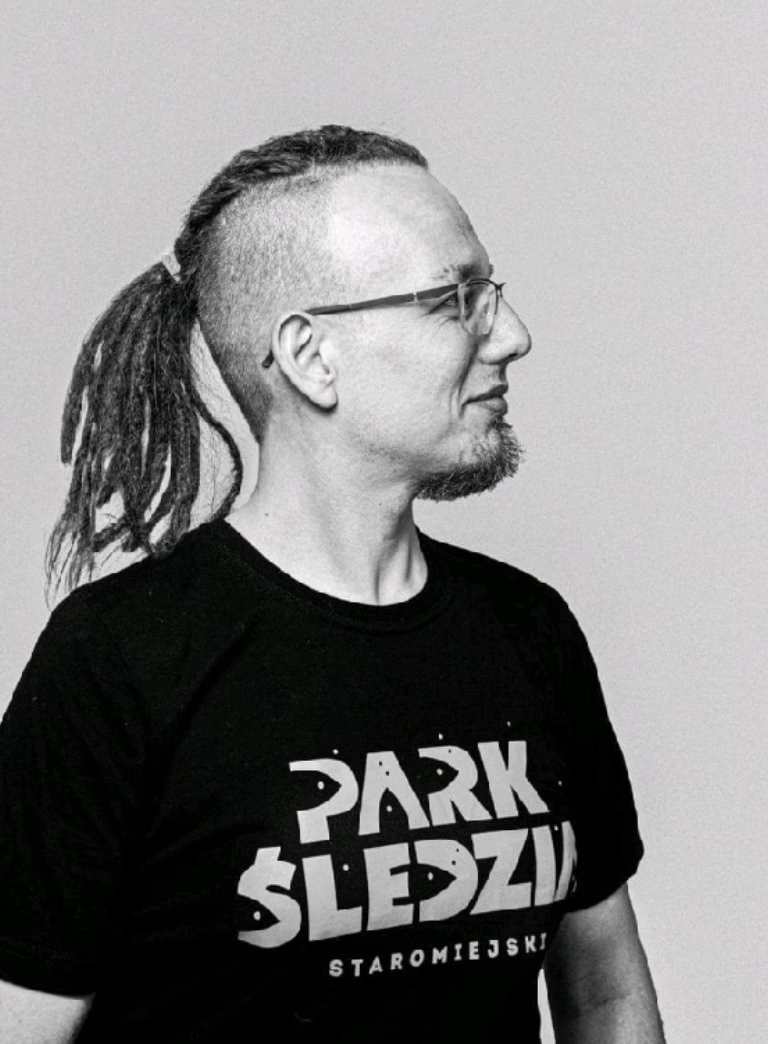
WordPress often takes the blame for security flaws. Maciej Palmowski tested that reputation in “How to stay safe: WordPress security explained”. He broke down the data and the mechanisms behind WordPress vulnerabilities, credited the work plugin authors put into fixes, and gave practical security advice.
Maciej is Security Community Manager at Patchstack, speaks at international conferences and writes a weekly newsletter on maciekpalmowski.dev with news from the industry.
SEO and developer collaboration during a site migration
Debut speaker Joanna Jelenik explained how to run a migration without stress by syncing SEO and development work. Her talk, “SEO x DEV collaboration: how to make ‘it works on my machine’ work on both sides”, brought technical examples, SEO advice and migration practices. Joanna is an SEO manager at Insightland with five years of technical optimisation for brands such as Wojas and New Balance, and works on SXO, behavioural analysis and JavaScript-based migrations. The talk suited project managers and agency teams.
Project management for WordPress agencies
Project management often feels like a burden. In “Stand out with project management”, Paweł Janus showed how good project management turns into value, quality and a competitive edge. Paweł has spoken at WordCamp Europe and is a senior project manager at Osom Studio, where he runs digital projects for clients such as 3Dconnexion and Expereo. The talk was aimed at managers, team leads, agency owners and anyone who wants order in their projects.
WordPress accessibility beyond plugins
Piotr Mońka, Tech Lead at Ambiscale, gave the talk “Accessibility: not only automated tools and plugins”. He explained why investing in accessibility matters, especially on WordPress and WooCommerce, walked through the legal requirements (WCAG 2.1, EN 301 549) and compared European and North American regulation. With EU law getting stricter, neglecting accessibility carries legal and reputational risk.
Piotr has worked with WordPress since 2012, leading teams and delivering projects focused on performance, security, SEO and accessibility. His main point: plugins alone are not enough, and manual testing is what makes a site usable for everyone, including people with disabilities. The talk was a must for developers, business owners and WordPress and WooCommerce users facing growing accessibility requirements.
Why and how to monitor WordPress
Arek Stęplowski’s talk did not hand out ready answers. It raised questions and widened the view on WordPress monitoring, as a map for understanding how a site really works. Arek describes himself as “a landlubber who lives like a pirate: smokes a pipe, drinks rum and tells colourful stories”. He remembers the time before Google, and his knowledge of security and WordPress is hard to match. In “Why and how to monitor WordPress” he gave technical advice useful for both no-code and advanced users, aimed at intermediate sysadmins, application administrators and managers of WordPress sites working in no-code or low-code mode.
What you can build with WordPress blocks
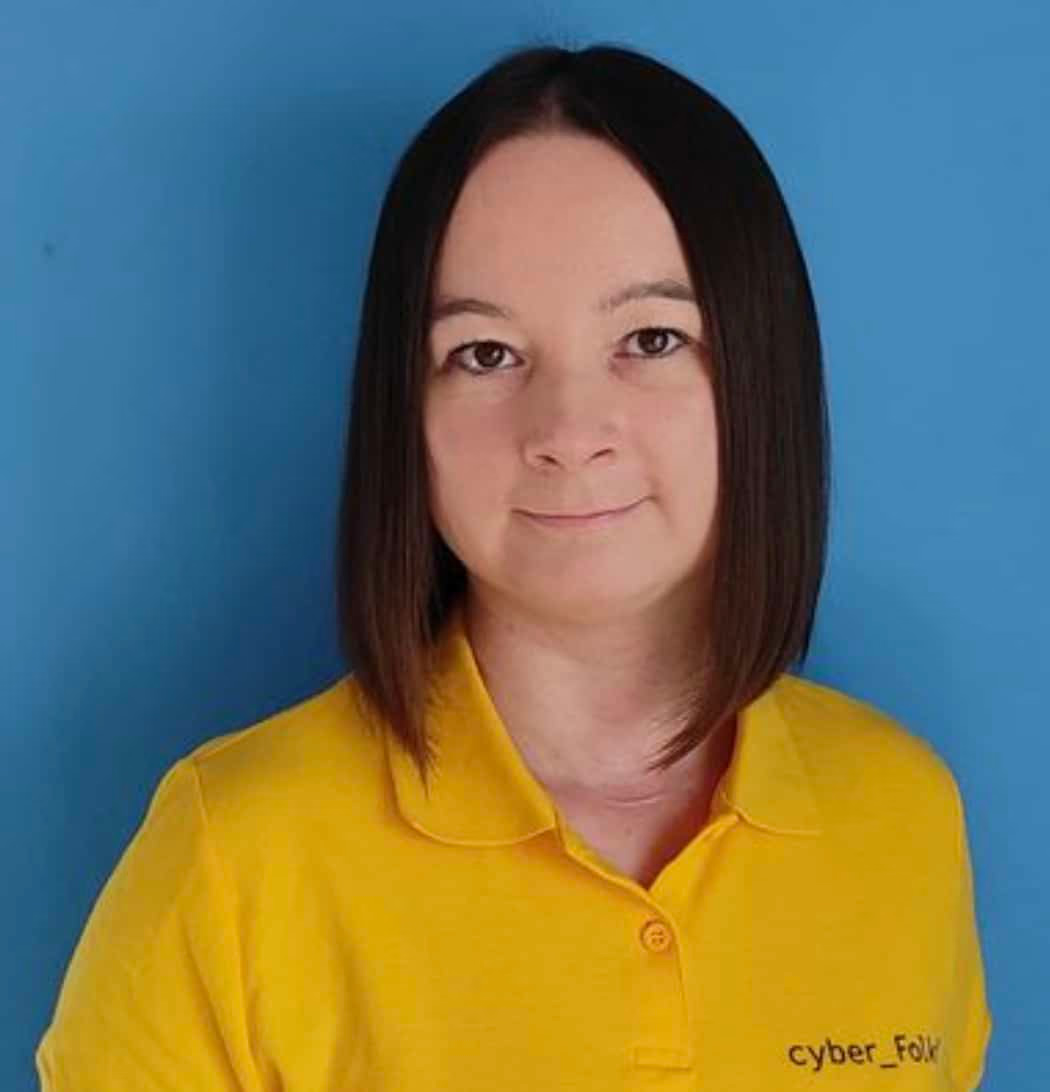
Magda Paciorek’s talks are full of news, tips and ideas. A Polish WordPress veteran, she made her debut in Turin this year. Magda is a developer and WordPress evangelist at cyber_Folks, likes Gutenberg and no-code solutions, works as a digital nomad, writes a lot and organises the Poznań WordPress meetup. In “Creativity without limits: what can be built with WordPress blocks” she showed unusual layouts and creative projects built with blocks, with or without code, and made the case that Gutenberg works for amateurs and professionals alike.
Custom REST API endpoints in WordPress
Piotr Misztal, who spoke in Kraków before, extended the topic in Gdynia with new, practical solutions. His workshop, “Custom REST API: registering and handling your own endpoints in WordPress”, walked participants through register_rest_route(), which opens the way to custom endpoints for mobile apps, site-to-site communication and integrations with third-party services. Piotr is a WordPress enthusiast, developer, data analyst and founder of SzkoleniaMi.pl, and draws on dozens of custom projects in IT, logistics and finance.
Law for website creators
Tomasz Palak’s workshop, “What can be missed in the paragraphs and who can claim money for it”, covered the legal questions web creators run into. Tomasz is a lawyer and has spoken at I Love Marketing, TEDx and Infoshare. He covered:
- protecting the copyright in your own work and avoiding disputes,
- obligations around user data that follow from the GDPR,
- the legal basics of running an online shop.
It was aimed at developers and beginners who want to move safely around legal traps.
OSI model and web security layers
Artur Cyganek, a cybersecurity expert with 20 years in IT, presented “7 layers of security: one OSI model to rule them all”. He explained how each OSI layer affects network and application security. Artur works at BotGuard, where he covers Eastern Europe and Turkey, and previously worked at Citrix and Acronis. BotGuard also sponsored the Middle Party.
WordCamp Gdynia 2024 after-party
The Saturday after-party drew almost 100 attendees, and the relaxed setting turned conversations into new contacts and future collaborations.
Who organised WordCamp Gdynia 2024
The event was run by the organising team, among them Kasia Mikita, Karolina Czapla, Dominik Kawula, Krzysiek Grabania and Mariusz Szatkowski, supported by 10 volunteers. Sponsor funding paid for the venue, varied catering (burritos, pizza, Subway sandwiches), good audiovisual equipment and the after-party.
WordCamp Gdynia 2024 in numbers
- Over 220 people in one place - impressive attendance
- High quality content - sessions on optimization, security, FSE, SEO, UX
- Strong networking - dedicated networking zones
- Sponsor support - nearly 80,000 PLN raised from sponsors, according to the official event summary, paid for catering and AV equipment
- Online reach - 22,000+ website visits, 300,000+ social media reach
What attendees praised at WordCamp Gdynia 2024
- Participant count - 226 people is impressive
- Networking atmosphere - everyone praised the positive climate
- Topic diversity - from RODO workshops to advanced developer talks
Attendance of 226 people was a strong post-pandemic turnout, and almost everyone mentioned the friendly atmosphere that made it easy to meet people.
What attendees want improved at WordCamp Gdynia
- Better Contributor Day communication
- More 1:1 meeting spaces
- Catering logistics
Some people felt Contributor Day needed a clearer introduction for newcomers, quieter spots for one-to-one meetings were missing, and exhibitors reserving portions limited the food available to others.
WordCamp Gdynia 2024 online reach
The WordCamp Gdynia 2024 website recorded more than 22,000 visits, and social media posts reached more than 300,000 users. The hashtags #WordCampGdynia, #WCGdynia and #WordPressCommunity were active on Facebook, LinkedIn and X.
Plans for the next WordCamp Gdynia edition
- Clearer Contributor Day communication: a guide sent before the event could raise participation.
- Quiet conversation zones: more tables and coffee corners for one-to-one meetings.
- Advanced development sessions: workshops on custom plugins and front-end optimisation.
- Catering logistics: regular restocking so everyone gets a meal.
- Tighter openings and closings: a short, clear agenda at the start and the end.
- Sponsor perks: dedicated gifts for smaller sponsors to strengthen the relationship.
WordCamp Gdynia 2024 and the Polish WordPress community
- Local WordPress community: the event strengthened the Polish WordPress scene, especially in the Tricity (Gdańsk, Sopot, Gdynia), where WordPress and development practices keep growing.
- Varied agenda: more than 20 talks showed the range of WordPress, from blogging to e-commerce.
- Quality of talks: attendees praised the level of the content, useful for professionals and hobbyists alike.
- Community building: the pre-party and the after-party made it easy to meet developers, freelancers and SEO specialists.
Next WordPress events after WordCamp Gdynia 2024
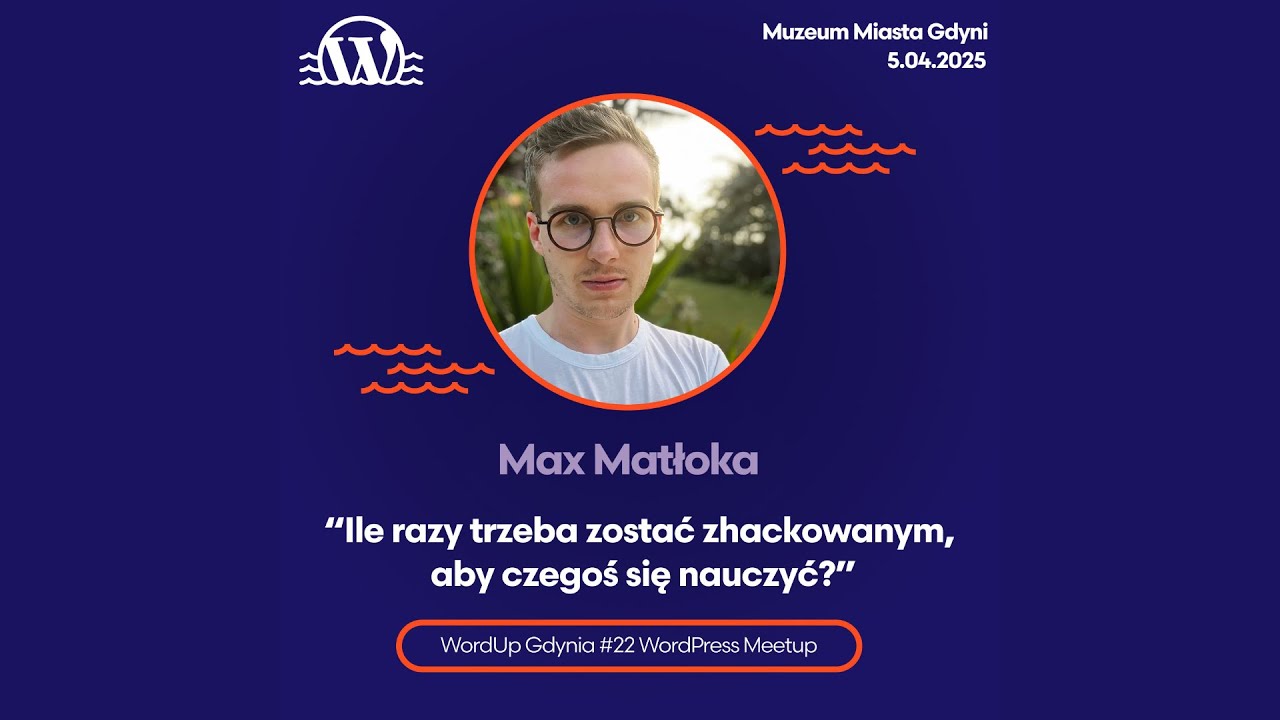
Many participants already confirmed attendance at the next WordUp on April 5, 2025. The slides are full of advice for developers, marketers and bloggers.
Resources:
WordCamp Gdynia 2024 presentations on video
Where to watch WordCamp Gdynia 2024 recordings
For the delivery side of this topic we keep the work under WordPress developer.