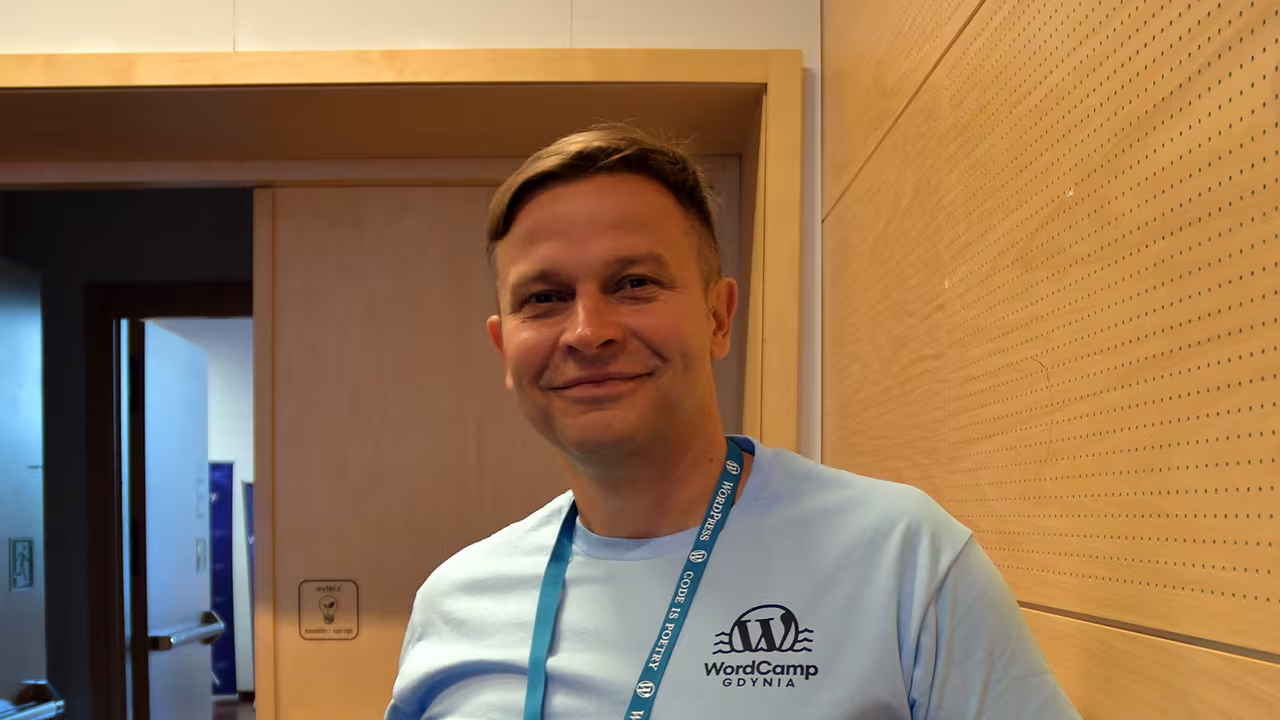
We cordially invite you to WordUp Trójmiasto #18 - a free conference for WordPress users and enthusiasts, which took place on April 22, 2023, at 12:00 PM at the Gdynia City Museum, Zawiszy Czarnego 1 Street. The event was organized for professionals across the internet ecosystem, including agency engineers, PR and marketing leads, technical bloggers, software architects, and freelancers creating enterprise web solutions on top of the WordPress core.
Organizing a localized conference with 12 distinct presentations and an interactive panel discussion completely free of charge represented a major milestone for the Polish WordPress community. After prolonged disruptions to in-person meetups, this edition restored face-to-face knowledge sharing on the Baltic coast, uniting developers from Gdańsk, Sopot, Gdynia, and across Poland.
What was on the WordUp Trójmiasto #18 agenda?
The WordUp Trójmiasto #18 conference brought together twelve prominent speakers who shared their practical domain expertise on diverse engineering, design, legal, and operational aspects of WordPress. Below is the comprehensive list of presentations delivered during this full-day event:
- Marcin Krzemiński - Automated deployment workflows using GitLab CI/CD pipelines
- Marcin Jóźwiak - Malware infection, targeted penetration, or operational negligence: real-world post-mortems from production website audits
- Magdalena Paciorek - Implementing repeatable fields within the WordPress Block Editor without third-party Advanced Custom Fields dependencies
- Maciej Kuchnik - The WordPress Power Trio: Custom Post Types, custom taxonomies, and custom field architectures
- Grzegorz Ciesielski - QNAP storage infrastructure integrated with WordPress: disaster recovery and backups using QNAP MARS
- Dawid Urbański - Key qualifications and engineering paths to becoming a professional WordPress developer
- Dominik Kawula - Sustainable business principles: how to structure agency operations so clients establish long-term retainer partnerships
- Izabela Karkocha - Three practical architectural optimizations to stand out in Google organic search results
- Tomasz Palak - Legal boundaries and compliance obligations when integrating artificial intelligence (ChatGPT, Midjourney, LLM APIs) into WordPress
- Krzysztof Dróżdż - Vulnerability intelligence: analyzing changelogs, code diffs, CVE advisories, and regression patches
- Sebastian Kurzynowski - Test-Driven Development (TDD) methodologies and their direct financial impact on enterprise software maintenance costs
- Expert Panel Discussion - Moderated by Kamil Kawałko, examining the future roadmap of the WordPress platform and ecosystem challenges
Community networking at Browar Port Gdynia
Following the formal lecture tracks at the museum auditorium, attendees gathered at Browar Port Gdynia on the waterfront. This evening reception provided an open setting for engineers, product leads, and business founders to exchange architecture reviews, discuss real project hurdles, and establish durable professional collaborations across agencies.
Why did WordUp #18 celebrate 20 years of WordPress?
WordUp Trójmiasto #18 served as an official regional celebration for the twentieth anniversary of the WordPress open-source project. Originally released on May 27, 2003, by Matt Mullenweg and Mike Little as a fork of b2/cafelog, WordPress evolved over two decades from a lightweight blogging tool into the operating system of the open web, powering over 40% of all websites globally.
During the conference sessions, speakers and attendees reflected on this historic technological progression: the introduction of custom post types in version 3.0, the REST API inclusion in version 4.7, the block editor architecture introduced in WordPress 5.0, and the modern Full Site Editing (FSE) paradigm of WordPress 6.x. The gathering celebrated not merely the longevity of the code repository, but the vibrant, self-sustaining global community that maintains and refines it daily.
Which sessions and speakers ran at WordUp #18?
Magdalena Paciorek: native repeaters in Gutenberg without ACF
Magdalena Paciorek is an experienced WordPress engineer and open-source evangelist at cyberFolks.pl. In addition to engineering custom client platforms and Gutenberg block solutions, Magdalena actively organizes community WordPress events in Poznań.
In her presentation, “Repeater in the block editor without ACF”, Magdalena addressed a widespread agency dilemma: the persistent reliance on ACF Pro for building repeatable nested layout elements. While Advanced Custom Fields has served developers for over a decade, introducing heavy plugin layers for simple structured lists often produces unnecessary database overhead and slows down the editing interface.
Magdalena demonstrated how developers can construct clean repeatable modules natively within Gutenberg using InnerBlocks, core block templates, and lightweight custom block components with the @wordpress/block-editor package. By leveraging native block attributes stored as structured JSON comments, engineering teams can eliminate third-party commercial plugin dependencies, reduce maintenance costs, and accelerate runtime page rendering.
Krzysztof Dróżdż: changelogs, diffs, CVEs, and patch management
Krzysztof Dróżdż is a software engineer who has maintained enterprise WordPress platforms since 2005. Having engineered scalable solutions for corporate brands including Próchnik, Browar Czarnków, and ScanMed, Krzysztof specializes in high-security environments and vulnerability remediation.
His presentation, “Changelogs, diffs, vulnerabilities, and patches: website security audits”, walked attendees through the forensic analysis of plugin updates. Krzysztof showed how attackers and white-hat security researchers monitor public plugin repositories for silent bug fixes and unannounced security patches.
By running git diff inspections between released versions, engineers can uncover the exact vulnerabilities resolved in an update before public CVE advisories appear. Krzysztof provided clear operational guidance on patch hygiene, automated changelog monitoring, staging environment testing, and rapid deployment procedures to insulate client sites against zero-day exploits.
Izabela Karkocha: three SEO tips to stand out in Google
Izabela Karkocha transitioned from frontend development to technical SEO consulting and digital product training. She combines technical code precision with business practicality, advocating for structured development workflows that prioritize measurable organic search performance.
In her session, “Three simple tips to stand out in Google”, Izabela demystified search engine optimization for WordPress developers and agency owners. Rather than relying on generic keyword density formulas, she focused on high-impact structural adjustments:
- Semantic Information Architecture: Organizing content hierarchies through intentional heading tiers (
h1throughh4) and semantic HTML5 tags that clarify thematic context for search engine crawlers. - Structured JSON-LD Schema Integration: Injecting rich schema markup for organizations, FAQs, articles, and reviews to win enhanced rich snippets and knowledge graph placement.
- Core Web Vitals Optimization: Eliminating render-blocking scripts, prioritizing above-the-fold asset delivery, and avoiding Cumulative Layout Shifts caused by unreserved media slots.
Maciej Kuchnik: custom post types, taxonomies and custom fields
Maciej Kuchnik is the host of the well-known Polish podcast Rób WordPressa, author of the practical handbook Rób WordPressa lepiej, przenieś swoją pracę na wyższy poziom, and a senior WordPress developer at White Label Coders.
His session, “WordPress Power Trio: Custom Post Types, Custom Taxonomies, and Custom Fields”, explained the foundational architectural pattern that transforms WordPress from a blogging script into a flexible enterprise content management system. Maciej demonstrated how to model complex relational data schemas natively within WordPress without resorting to disconnected external databases.
Through code examples, Maciej analyzed proper registration hooks (init), rewrite rule management, optimized taxonomy queries (tax_query), and metadata caching strategies (update_postmeta_cache). He stressed the importance of long-term maintainability, showing developers how to document custom schemas so that distributed engineering teams can extend the data structure seamlessly years into the future.
Sebastian Kurzynowski: how TDD affects project profitability
Sebastian Kurzynowski began his engineering career with WordPress before expanding into JavaScript, distributed cloud systems, and FinTech infrastructure. Having designed vessel alarm systems and financial software, Sebastian currently serves as Chief Technology Officer at a technology venture creating no-code solutions, while actively studying executive business administration.
In his talk, “TDD impact on project profitability”, Sebastian presented a compelling business case for integrating automated testing into WordPress development cycles. Software maintenance costs routinely exceed original construction budgets by a factor of three when codebases lack test coverage.
Sebastian explained how writing unit and integration tests prior to implementation (the Red-Green-Refactor cycle) prevents regression bugs during core updates, shortens quality assurance testing loops, and protects agency margins. He provided actionable guidance on introducing PHPUnit, Brain Monkey, and Vitest into legacy agency projects without disrupting ongoing client sprint deadlines.
Dawid Urbański: how to become a professional WordPress developer
Dawid Urbański is a full-stack engineer, former JavaScript Tech Lead at CKSource, and certified Codeable expert. Dawid is known for building sophisticated web solutions with deep JavaScript and TypeScript integrations.
His session, “What does it take to become a professional WordPress developer?”, tackled the changing skill requirements of the modern WordPress landscape. Dawid outlined the transition from traditional PHP template manipulation to modern full-stack development, requiring fluency in React, Node.js tooling, WP-CLI automation, REST API consumption, and modular JavaScript architecture. He inspired junior and mid-level developers to look beyond copy-paste code snippets and invest in fundamental computer science principles, clean architecture patterns, and open-source contributions.
Dominik Kawula: how to run a WordPress business clients return to
Dominik Kawula has built and maintained WordPress and WooCommerce platforms since 2010, drawing on years of retail operational management. He is a co-organizer of Polish WordCamps, a community trainer, an active moderator of Polish WordPress and WooCommerce support groups, and a contributor to the WordPress Polyglots translation team.
In his lecture, “Positive business: how to run your own WordPress company so clients want to come back”, Dominik discussed client management strategies for freelancers and boutique agencies. He outlined actionable communication frameworks, transparent scope estimation tactics, and reliable post-launch maintenance contracts. By treating client relationships as strategic partnerships rather than transactional one-off projects, developers can establish predictable recurring revenue streams while minimizing scope creep and communication friction.
Tomasz Palak: legal aspects of AI in WordPress
Tomasz Palak is an attorney-at-law (radca prawny), author of the recognized book Internet a prawo: jak się nie potknąć?, and a frequent legal keynote speaker at conferences such as Infoshare, TEDx, and I Love Marketing. He lectures at prominent universities including WSB, WSAiB, and UTH.
His presentation, “Legal aspects of AI in WordPress: ChatGPT, Midjourney, and intellectual property”, arrived at a crucial moment when generative artificial intelligence tools began flooding web publishing workflows. Tomasz examined the legal ambiguities surrounding copyright ownership of AI-generated prose and imagery, GDPR compliance when sending user prompts to foreign third-party API servers, and liability risks associated with hallucinations. He offered agency owners clear contractual clauses to safeguard their intellectual property and shield their businesses against copyright infringement claims.
Grzegorz Ciesielski: automated WordPress backups with QNAP MARS
Grzegorz Ciesielski, a veteran systems engineer with over 25 years of Linux experience and deep WordPress full-stack knowledge, served as technical support engineer at QNAP during the conference.
In his session, “QNAP x WordPress: backing up your site via QNAP MARS”, Grzegorz demonstrated how agencies and self-hosted enterprises can deploy automated, secure offsite backups using QNAP’s Multi-Application Recovery Service (MARS). He explained snapshot management, incremental backup scheduling, encrypted network transport, and bare-metal disaster recovery protocols to ensure business continuity during catastrophic server failures or ransomware attacks.
Marcin Jóźwiak: malware, hacks and negligence in website audits
Marcin Jóźwiak is the founder of Dream Focus and an active WordPress evangelist who has audited and recovered dozens of compromised commercial installations for clients such as Remondis Electrorecycling, Elektro-System S.A., and Centrum Zdrowia Dziecka.
In his talk, “Virus, hack, or negligence: cases from website audits”, Marcin shared vivid case studies of enterprise sites compromised through avoidable security failures. He identified the primary infection vectors: outdated third-party plugins, weak administrative passwords, shared hosting permissions, unauthenticated file upload handlers, and inactive default themes left in the directory tree. Marcin presented a pragmatic hardening checklist that engineers can implement immediately to prevent unauthorized access and protect sensitive customer data.
Marcin Krzemiński: automated WordPress deployment with GitLab CI
Marcin Krzemiński has developed web platforms since 2006, leading enterprise engineering teams focused on CMS and modern e-commerce architectures for global clients across Australia, the United States, and Europe.
His presentation, “Automatic deployment using GitLab CI”, focused on eliminating error-prone manual FTP uploads from agency production pipelines. Marcin demonstrated how to construct a robust GitLab CI/CD pipeline that automatically executes code linting (PHPCS), runs automated test suites, compiles frontend assets with Vite or Webpack, and deploys verified release bundles to staging and production servers via SSH and rsync. Adopting automated continuous integration ensures reproducible builds and minimizes costly downtime during deployments.
Wapuu mascot of WordUp Trójmiasto
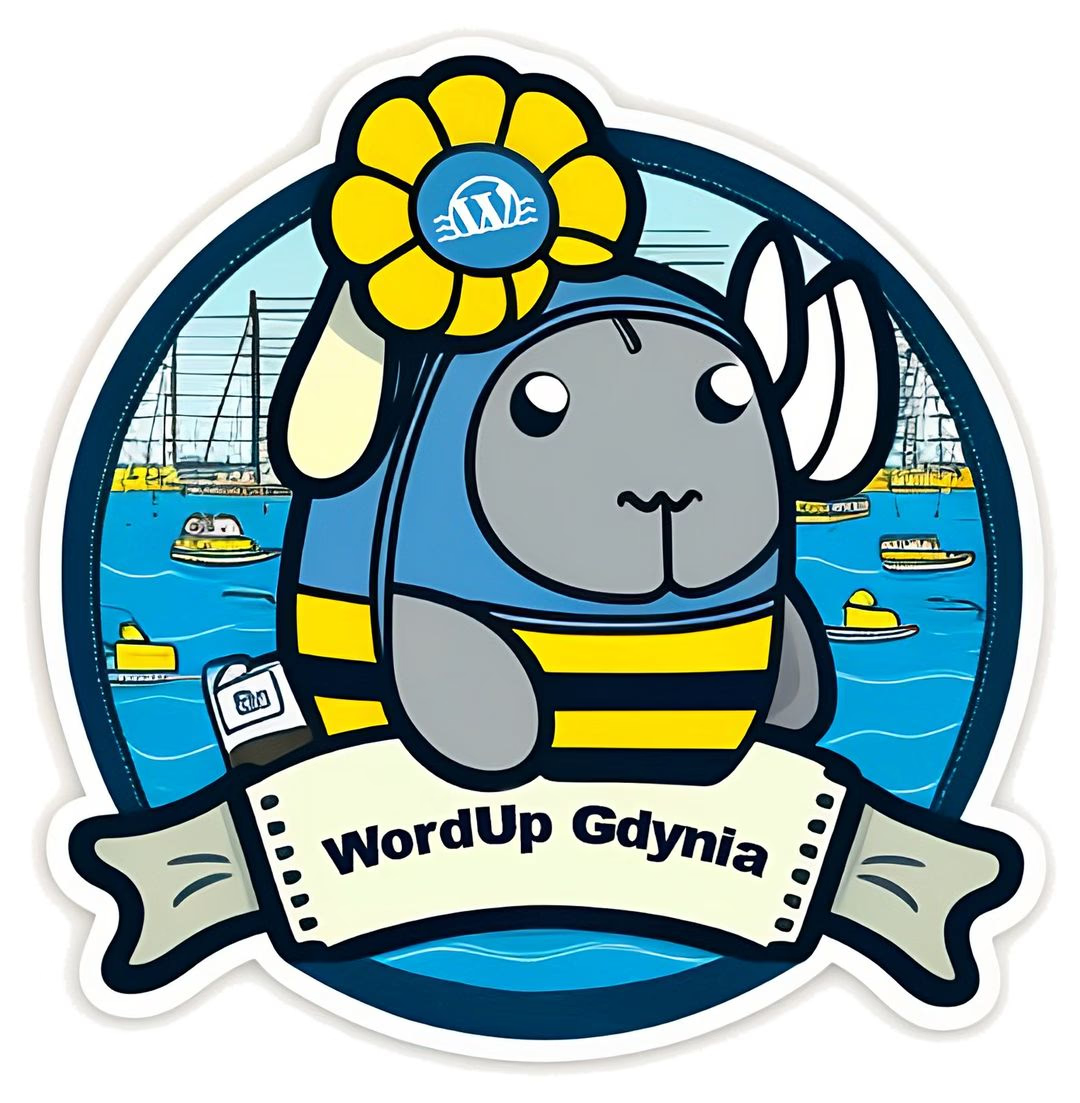
The official mascot of the conference was a customized maritime Wapuu character, designed specifically to reflect the maritime heritage, naval architecture, and coastal identity of Gdynia and the surrounding Pomeranian region.
Why do regional WordPress conferences matter?
Regional conferences such as WordUp Trójmiasto form the bedrock of the global open-source community. Face-to-face technical exchange between freelancers, corporate architects, and agency founders breaks down isolation, fosters peer code reviews, and sparks innovative technical collaborations across the Baltic coastline. WordUp Trójmiasto #18 underscored that local community initiatives remain vital in shaping modern, resilient web standards for enterprise software development.