Service pillar
Laravel developer for APIs, WordPress migrations and maintenance
Plan Laravel workSend me the project details.
Include where the repository lives, the PHP and Laravel versions, the hosting, which parts of WordPress or WooCommerce the app has to talk to, and how changes reach production today.
- APIsREST, Sanctum, rate limits
- QueuesHorizon, failed jobs
- Migrationsfrom WordPress and WooCommerce
- Upgradesone major version at a time
Where Laravel fits next to WordPress
Most of my Laravel projects run beside an existing WordPress site. The usual cases are a custom API for a mobile app, billing logic, a customer portal where each account keeps its own data, scheduled tasks that WP-Cron handles poorly, or a headless front end that signs users in through Sanctum or Passport. I suggest Laravel when the requirement needs queues, strict separation of customer data or a permission model WordPress was not designed for.
What I work on
Laravel 13 applications and upgrades of older ones, admin panels in Filament, Livewire or Inertia, queues supervised by Horizon, payment integrations with Stripe, Przelewy24 or MultiSafepay, webhook handling for WooCommerce order and stock events, and moving logic out of WordPress into a Laravel backend behind a headless front end.
What I avoid
I do not sell Laravel as a default rebuild. If your WordPress site can carry the new requirement with a plugin or a small piece of custom code, that is what I recommend. Laravel pays off once keeping everything inside WordPress costs more than moving part of the system out.
How do you move from WooCommerce to Laravel in stages?
Laravel starts as an API next to the running shop, on its own subdomain and database, and the old URLs keep working. Customers sign in once: either Laravel accepts a signed token issued from the WordPress session, or both sides use one identity provider over OpenID Connect. WooCommerce sends order, customer and stock events as webhooks, and Laravel puts each one on a queue, so an outage on one side does not lose data on the other. Then I move one area at a time, for example the customer account first, the catalogue next, the basket and Stripe payments last. Each step can be undone with one change at the proxy, so traffic goes back to WordPress the same day if something breaks, and the data stays in sync.
What do you check when taking over a Laravel app?
I start with versions. Laravel 11 lost security fixes on 12 March 2026, Laravel 12 gets them until 24 February 2027, and PHP 8.2 reaches the end of security support on 31 December 2026, so many inherited apps are behind on both. Next comes composer audit, which lists packages with known advisories or abandoned by their authors, then php artisan queue:failed to see which jobs have been failing unnoticed, then the scheduler: whether cron on the server really calls schedule:run every minute and whether each task is still needed. I run whatever tests exist, and check that the .env file is not in the repository and that no passwords are written into config files. Upgrades go one major version at a time with the official upgrade guide. Laravel Shift, a paid service, can do the mechanical part, and I review its changes line by line.
What does Laravel maintenance include?
Laravel ships patch releases as often as weekly, and each major version gets security fixes for two years. Maintenance means those fixes reach your production server within days, together with Composer dependency updates and a composer audit run, always tested on staging first. For monitoring I set up Pulse to track slow requests, slow jobs, queue throughput and exceptions. Its dashboard is reachable only locally until an authorization gate is defined, so in production I open it to admin accounts alone. I use Telescope on the test copy when a single request or job needs tracing in detail. The database and uploaded files are backed up on a schedule, and I test restoring them. Once a year, after the new major version lands in the first quarter, I plan the upgrade so the app never runs on a version without security fixes.
Frequently asked questions
When does Laravel make more sense than WordPress?
When the application needs reliable queues, data kept apart per customer account, complex permissions or an API that does not fit the WordPress data model. For a content site or a standard shop, WordPress usually stays cheaper to run.
Can you migrate a WooCommerce store to Laravel?
Yes, in stages. Laravel first runs beside the existing WooCommerce checkout, then the catalogue, orders and customer data move over one area at a time, each with a way back. I advise against rewriting the whole shop at once, because nothing can go live until everything works.
Do you work with Filament, Livewire or Inertia?
Yes, all three. Filament for admin panels, Livewire for server-rendered interfaces, Inertia when the front end is written in Vue or React with Laravel behind it. I pick what the team that will maintain the app already knows.
What about Laravel Forge or Vapor?
Forge when the app runs on a VPS you control, Vapor when serverless on AWS suits the workload. I decide after looking at traffic, queue volume and who on your side needs access to the hosting.
Do you take Laravel work with no WordPress connection?
Yes, when the scope is clearly defined and I can take responsibility for the whole codebase. Most of my Laravel projects connect to WordPress or WooCommerce, but a standalone application is fine when there is a concrete reason to build it.
Explore other WordPress services and knowledge base
Strengthen your business with professional technical support in key areas of the WordPress ecosystem.
Stores, checkout flow, and sales logic.
Store outage, slow checkout, post-update chaos.
Ongoing WooCommerce care, monitoring, and uptime.
EU store checklist: VAT, accessibility, evidence pack.
White-label WordPress development for agencies.
WooCommerce sync with ERP and wholesale systems.
Business process automation around WordPress and company systems.
Library of concrete automation use cases.
Related categories
Supporting articles
Architecture for a WooCommerce catalog on Astro 7. What stays in wp-admin, which plugins die with the theme, Store API versus GraphQL, and why checkout stays on WooCommerce.

Google launched Universal Cart in Search and Gemini powered by the Universal Commerce Protocol (UCP). How to prepare WooCommerce for native AI shopping.
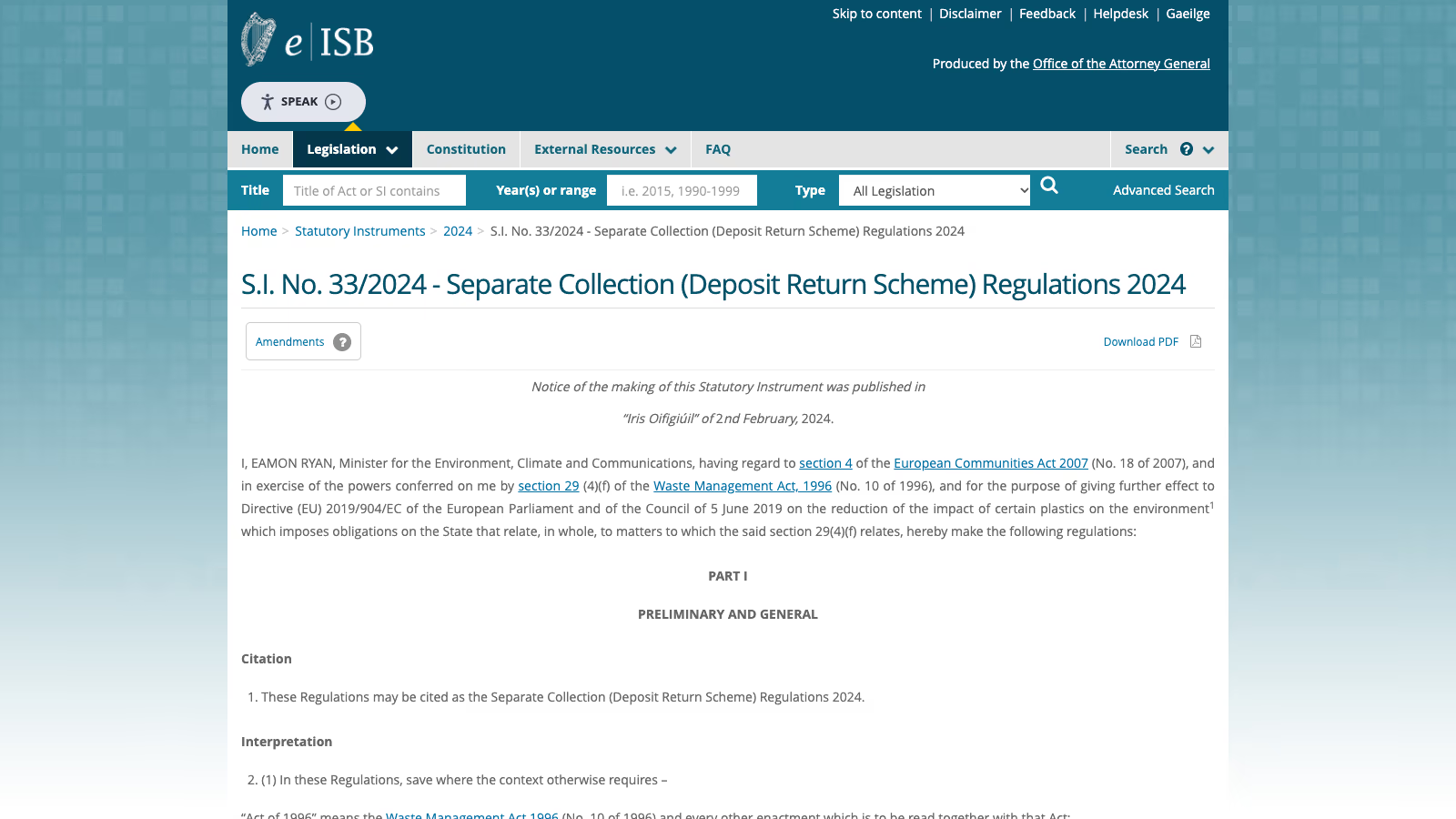
Ireland's Re-turn deposit, the UK scheme due on 1 October 2027 and the EU schemes your parcels may cross into: what the law says an online drinks shop must charge and display, how VAT treats the deposit in each country, and how to build it as a WooCommerce cart fee.
Related services
Laravel developer for backends beside WordPress: custom APIs, phased WooCommerce migrations, Horizon queues, takeovers of existing apps and Laravel 13 upgrades.
Recommendations and reviews of working with WPPoland
Selected recommendations from WordPress, WordCamp and e-commerce leaders - with a focus on delivery on time, technical depth, and a business-driven approach to WordPress development.

Karolina Czapla
Marketing Strategist, Performance & Digital Strategy
“Working with Mariusz on WordCamp has shown me how rare it is to combine deep technical skill with genuine leadership. He plans, coordinates and delivers with precision, while giving the team space to grow and contribute....”
Co‑organiser, WordCamp Gdynia 2024 & 2025

Anna Kamińska
Talent Acquisition Specialist / HR People Partner
“Mariusz's portfolio speaks for itself. It reflects his precision, versatility and sense of responsibility. You can trust him to guide a project from idea to delivery, keep stakeholders informed and make sure things are d...”
Worked on the same team

Sarah‑Luisa Kwolek
IT Project Management & Product Owner, Web/App
“For over two years I could always rely on Mariusz to handle WordPress tasks calmly and professionally, from styling and templating to third‑party integrations. He brings steadiness to the team and keeps the frontend side...”
Mariusz was her client for WordPress work

Argert Boja
Senior Full‑Stack Developer
“Mariusz is the teammate everyone hopes for: strong full‑stack WordPress skills, clear explanations and a positive attitude even under pressure. He moves easily between custom plugins, performance work and Gutenberg layou...”
Worked alongside Mariusz on WordPress projects

Varun Patil
Growth & CRM Lead
“Beyond development, Mariusz understands SEO, analytics and growth. He talks directly with stakeholders, asks the right questions and ships solutions that move business metrics, from AMP to tracking to performance.”
Managed Mariusz on growth initiatives

Rafał Osiński
Founder @ EasyTrips.pl, Senior WordPress Dev
“I've known Mariusz through the WordPress community for many years. He's reliable, deeply involved and consistently shows up, at meetups, WordCamps and in projects. If you care about long‑term collaboration and someone wh...”
WordPress community co‑organiser

Daniel Blossfeld
Process Optimization & Digitalization Consultant
“I had the pleasure of working with Mariusz for almost three years. During that time, his WordPress development skills proved invaluable across a range of projects, from website builds to online member areas and even Shop...”
Mariusz was his client for WordPress work

Natalie Wiszczor
CRM & E-Mail Marketing Manager
“I had the great pleasure of working with Mariusz for over 4 years in the technical field. During this time, he proved to be a competent and reliable colleague. What stood out in particular was his friendly nature and his...”
Worked with Mariusz on different teams

Mark Chalklen
Head of Design & Build at Itineris Limited
“Mariusz is a great member of the team, always happy to get stuck into any task and happy to learn new things. A great communicator and all round nice guy to work with. Hard to beat on our weekly Strava leader board thoug...”
Managed Mariusz directly

Jessica Di Pasquale
Leading SEO initiatives with data-driven growth strategies.
“Mariusz is a very skilled, patient and expert guy. Always ready to help and to fix errors, I really appreciated working with him. He is such a great colleague!”
Managed Mariusz directly

Biki John
Content Marketing Aficionado & SEO Enthusiast
“It was great to work with Mariusz. I really appreciated his extensive knowledge of WordPress and how that came in handy whenever I needed support navigating the CMS. I commend Mariusz totally for his patience, good natur...”
Worked with Mariusz on different teams

Rafal Borowiec
Software Developer, Consultant, Manager and Lecturer
“I had an opportunity to work with Mariusz for 7 months. He excels in technical optimization for search engines (SEO). Mariusz has also strong expertise in AMP development, GTM, and GA. Mariusz feels very comfortable with...”
Managed Mariusz directly

Belinda Koch
Web-Tracking Analyst at TUI
“Mariusz is a great person to work with. He is extremely motivated to learn new things and share his knowledge, and is very knowledgeable on a wide range of topics. We worked together on digital analytics and tracking top...”
Worked with Mariusz on digital analytics and tracking topics

Ali Nezamolmaleki
Growth, SEO, Analytical thinking, AMP
“Mariusz is an extremely talented person in his field of work. He is always capable of giving a new perspective to solve problems and to think out of the box in situations where everything seems to be locked. Working with...”
Worked with Mariusz on the same team

Karol Jakubcewicz
Front-end / JavaScript Developer
“Mariusz is an incredibly experienced WordPress developer and SEO/SEM specialist I've had the pleasure to work with for almost two years. As a pilot of the team responsible for AirHelp's website development, he's been one...”
Worked with Mariusz on the same team

Paweł Lewczuk
Front-end developer, WordPress developer
“I collaborated with Mariusz on several projects and our cooperation was always exemplary. I believe there are many more joint projects ahead of us. Highly recommended!”
Mariusz was Paweł's client

Przemek Wroblewski
Software Developer with 20+ years of experience
“I found Mariusz as someone with great expertise and profound knowledge of frontend solutions. Powerful, knowledgeable and accountable WordPress developer. Has an easiness to build interpersonal relations with others. He ...”
Worked with Mariusz on different teams
Send me the project details.
Include where the repository lives, the PHP and Laravel versions, the hosting, which parts of WordPress or WooCommerce the app has to talk to, and how changes reach production today.
Plan Laravel work