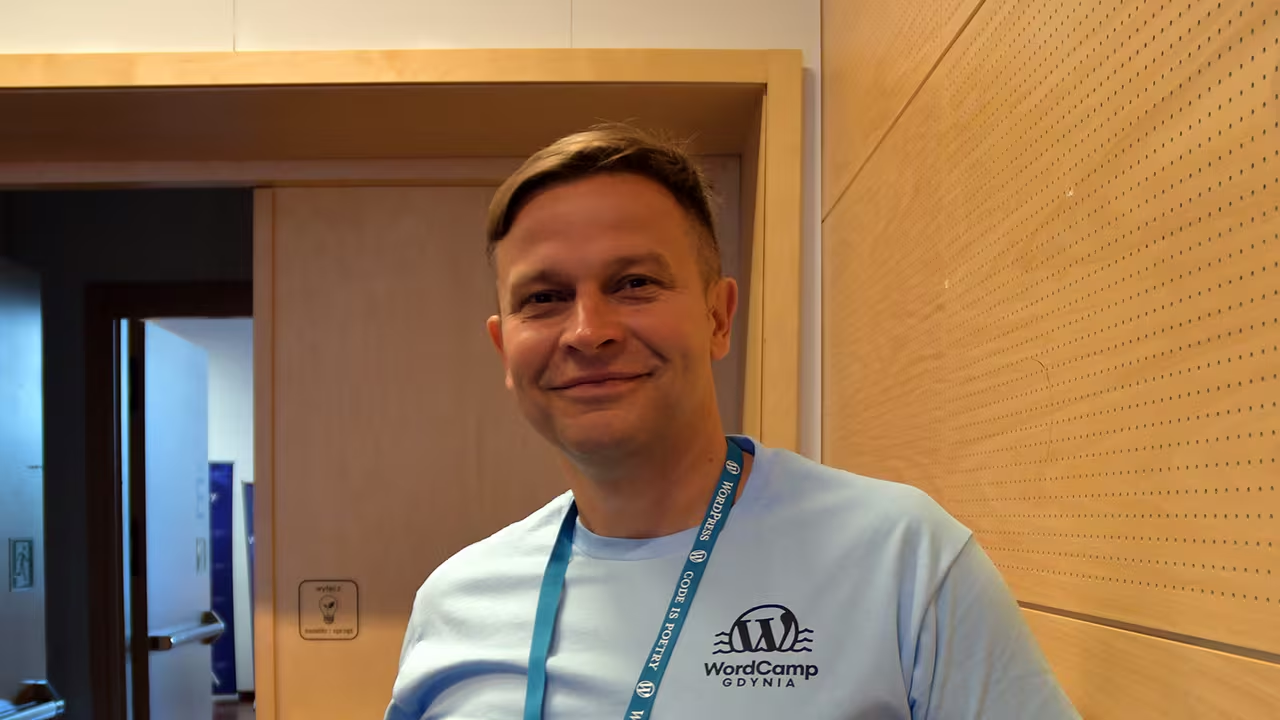
WordCamp Europe 2026 is over. The final numbers, the keynote, the Local Team that made the building work, and the Malaga announcement are now part of the record. 2,442 attendees from 81 countries. 779 contributors across 26 teams on Contributor Day. A CERN keynote that filled the main auditorium. And at the closing ceremony, the reveal: WCEU 2027 heads to Malaga.
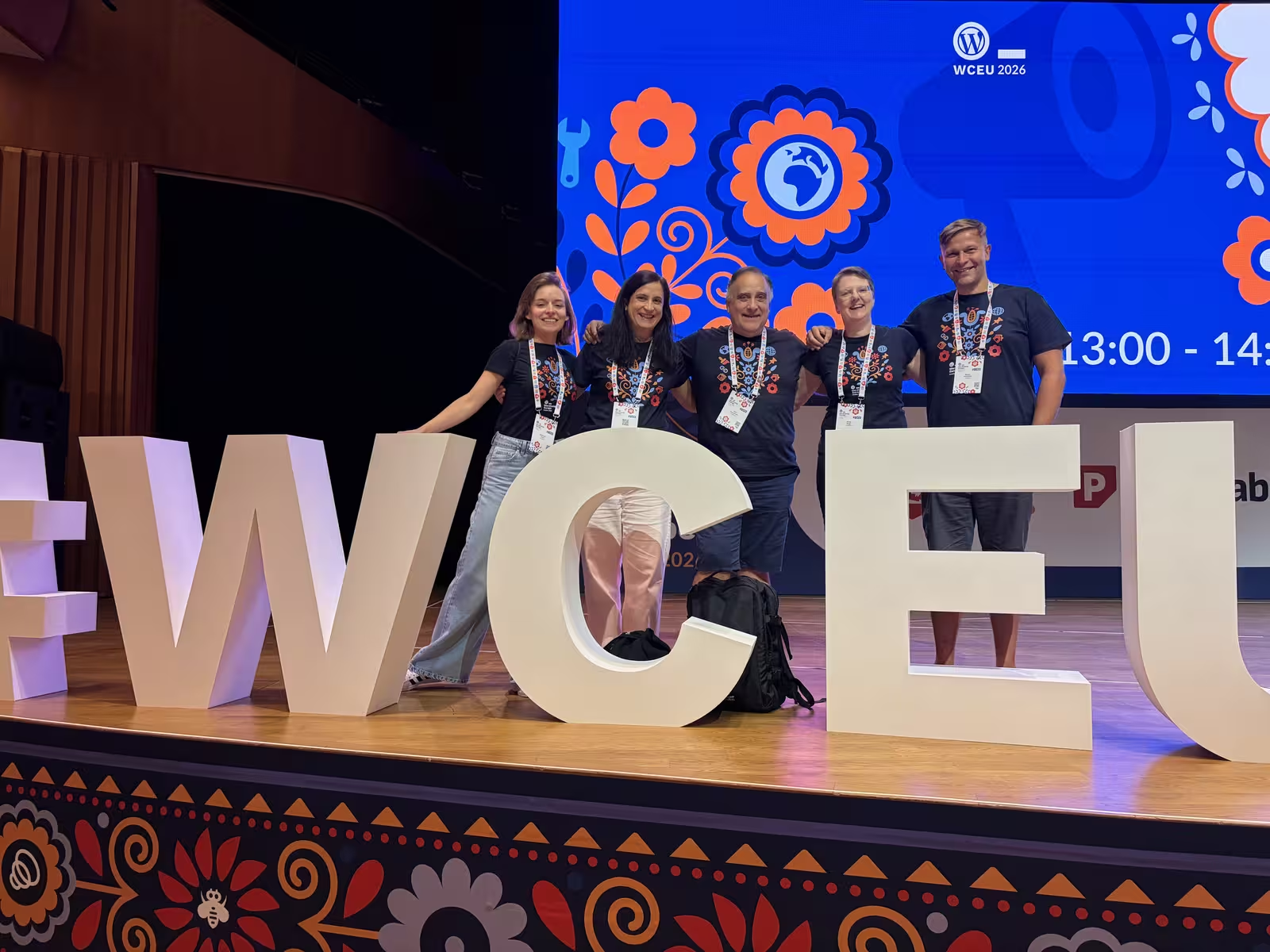
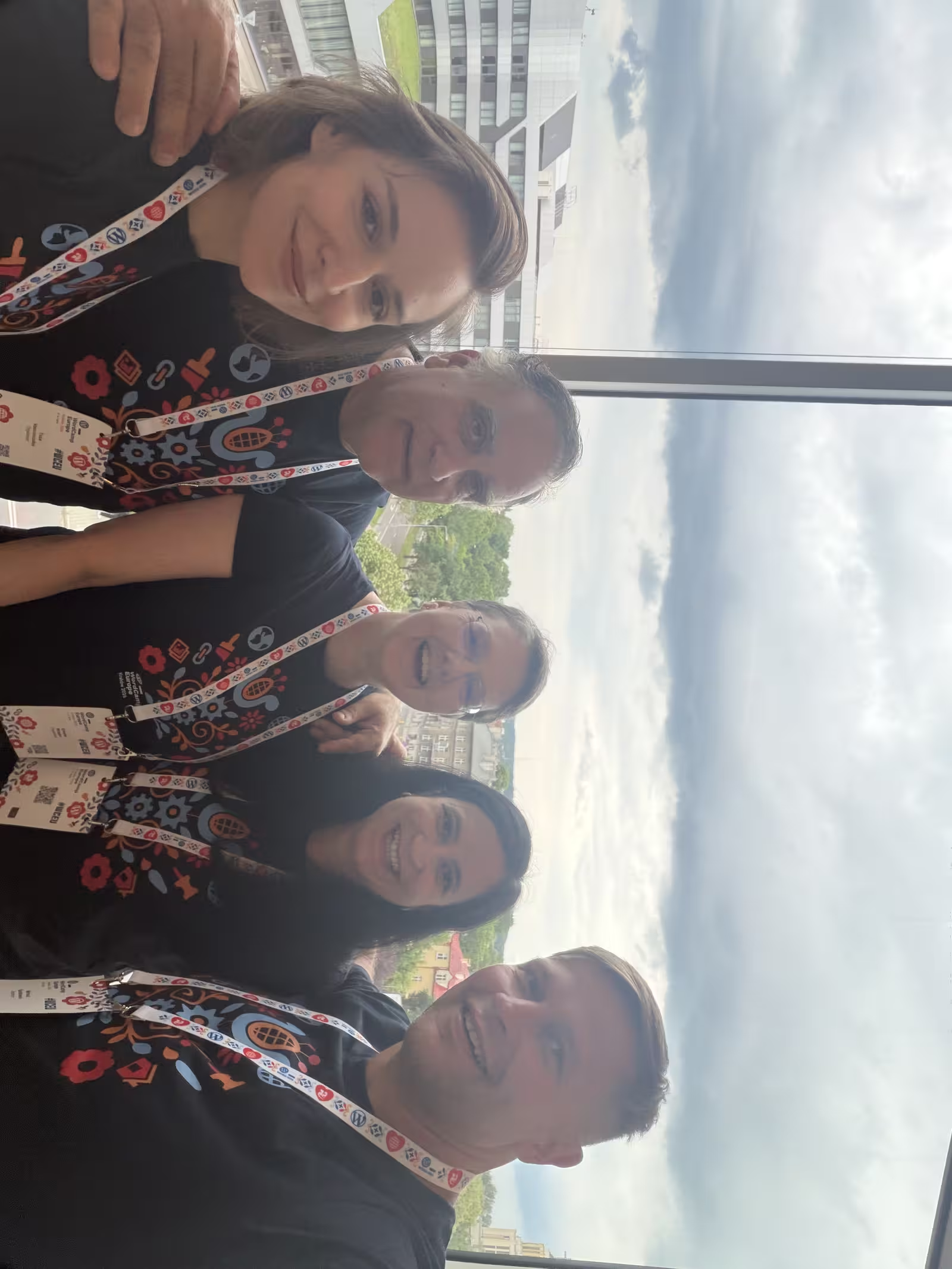
For us, this edition was different in one specific way. Like at WCEU 2025 in Basel, I had the pleasure of being part of the organising team. In Krakow, that meant working on the Budget Team across many months with Emma Wager, Toze Vasconcelos, Katarzyna Kimel, and Carolina Osorio. This is a wrap-up written from inside the event, not just from inside the audience.
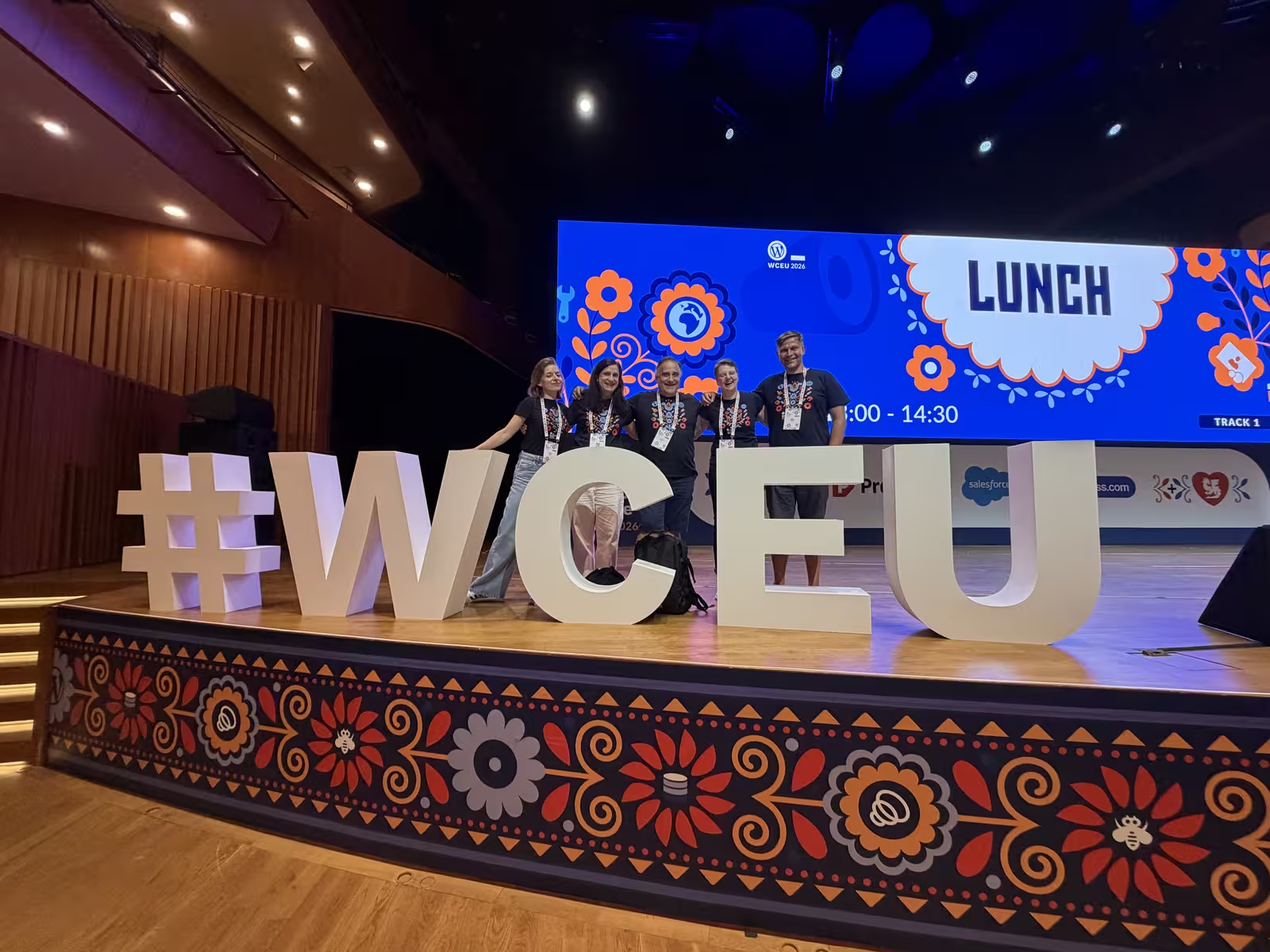
The rest of this post walks through what the conference signalled for European agencies, what the personal experience of organising one looks like from the budget side, and the Local Team thanks that have to be on the record.
How many people attended WordCamp Europe 2026
WordCamp Central published the final figures: 2,442 attendees from 81 countries. That puts WCEU 2026 comfortably ahead of Athens 2023 and inside the same band as Porto 2024 and Berlin 2022. The country count - 81 - is the highest in WCEU history. WordPress as a project still travels.
The Contributor Day figure is the one we keep coming back to. 779 contributors across 26 teams is not a sponsorship trophy. It is a measure of how many people will still spend a working Thursday in a hall full of laptops to ship something they will not directly be paid for. That number, more than any keynote, is the load-bearing data point for the health of the project.
The team distribution tells a sharper story than the totals:
Contributor counts below follow the Make WordPress / WordCamp Europe 2026 coverage.
| Team | Contributors | Headline output |
|---|---|---|
| Polyglots | 71 | 44,000 strings across 28 languages |
| Plugins | active review queue | 155 plugins reviewed, 35 flagged for fixes |
| Community | active triage | new meetups confirmed in Italy, Spain, Costa Rica |
| Core, Docs, Hosting, Themes, Performance, Mobile, Test, Training, Marketing, Design, Photos, Openverse, Five for the Future, Sustainability, Tide, Theme Review, Patterns, Block Editor, Make Marketing, BuddyPress, bbPress, WP-CLI | balance of the 26 | working sessions, ticket triage, documentation |
The Polyglots throughput stands out. 44,000 strings is roughly the size of a midyear core release’s translatable surface. The 28 language coverage includes regions that often lag the English release by a full minor version. Closing that gap in one day matters for every agency that ships to a localised audience.
The Childcare program is the underreported structural success of WCEU 2026. It made parent participation a working option for the entire event. WordPress is a community that depends on people in their thirties and forties, which is the same age cohort balancing the heaviest caregiving load. Childcare at WordCamps is what keeps that cohort in the room.
How the WordCamp Europe budget team works
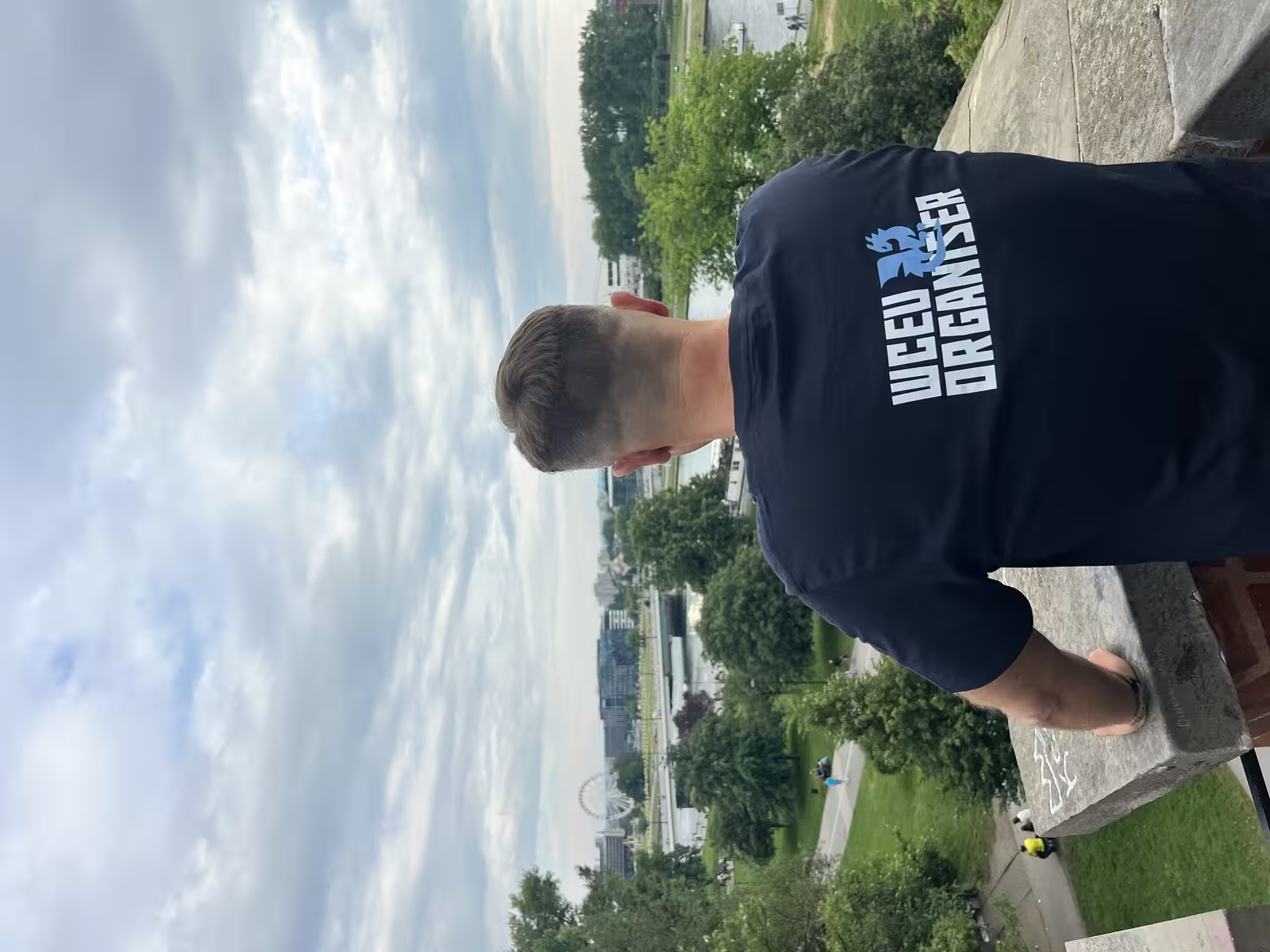
For many months before Krakow, the Budget Team handled the parts of WCEU that attendees never see. We worked with Emma Wager, Toze Vasconcelos, Katarzyna Kimel, and Carolina Osorio across the budget, sponsor pipeline, ticket sales projections, production costs, catering, the scholarship program, and dozens of other line items that decide whether an event of this scale actually happens.
What this role looks like, in concrete terms:
- Sponsor pipeline modelling. Every WordCamp Europe runs on a sponsor pyramid. The Budget Team builds the projections, watches commitments land, and signals the Programme and Logistics teams when assumptions need to flex. A sponsor tier landing late changes catering, venue layout, and signage decisions weeks downstream.
- Ticket revenue forecasting. WCEU pricing is a community decision, not a market decision. The Budget Team tracks sell-through against historical curves and gives the Marketing team data to time outreach windows.
- The scholarship program. WCEU scholarships are paid for from the same budget as everything else. Decisions about how many scholarships to fund and at what level are weighed against catering, venue, and AV decisions. The Budget Team’s job is to keep the trade-offs visible to the rest of the organising team.
- Invoice triage and reconciliation. Tens of contracts, hundreds of invoices, currency conversions, VAT handling for cross-border vendors. None of this is glamorous. All of it is load-bearing.
The role is invisible to almost everyone. That is exactly when it has worked. When the budget conversation reaches the rest of the organising team late, something has gone wrong. In Krakow, the conversation reached them on time.
How CERN runs 1,200 WordPress sites
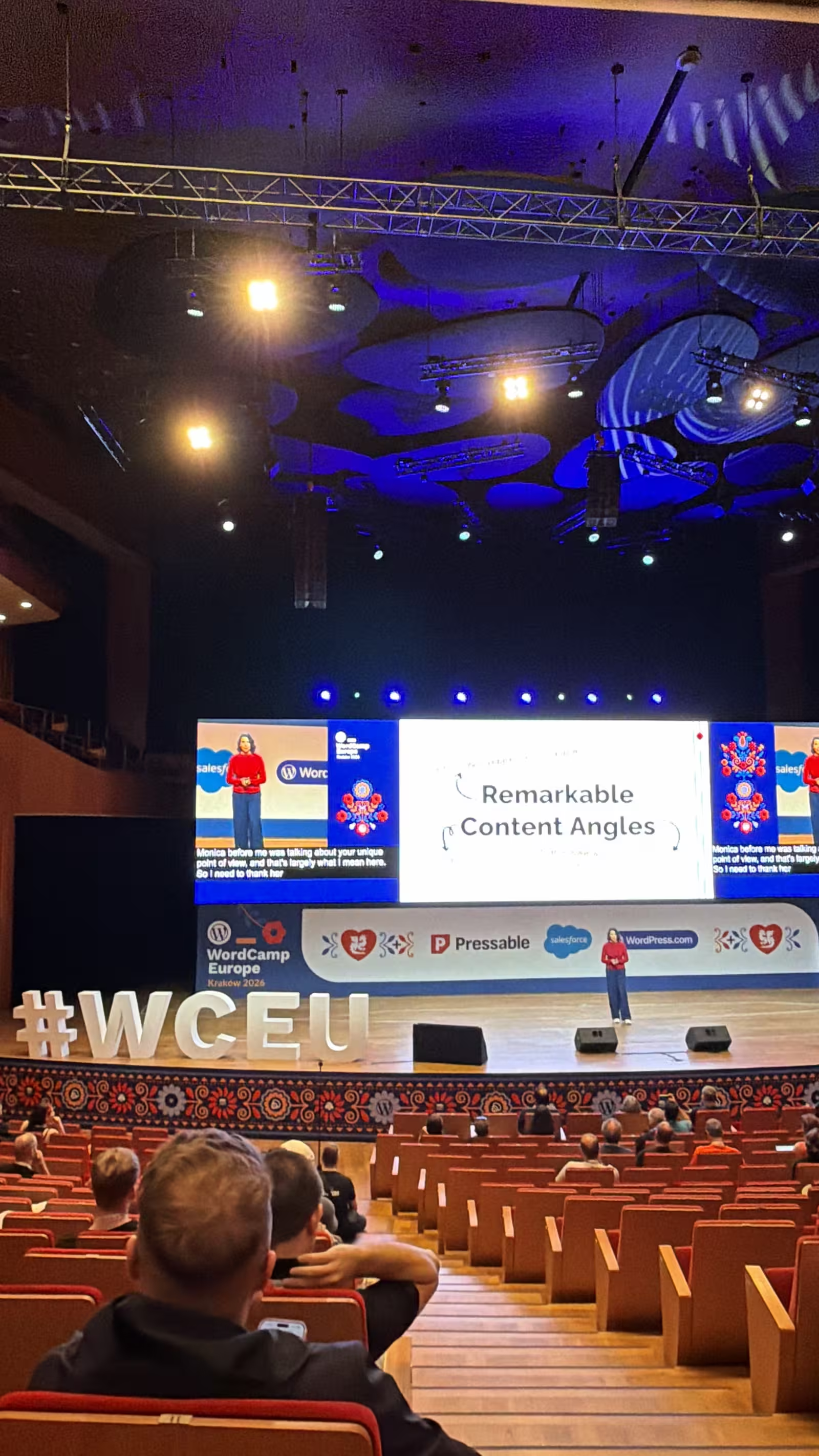
The Friday morning opening went to CERN. Web Manager Joachim Valdemar Yde and Platform and Infrastructure engineer Francisco Borges Aurindo Barros took the main stage with a session titled Two worlds collide: WordPress at CERN. The room was full before the lights went down.
CERN runs more than 1,200 WordPress sites across its laboratory, experiments, education programs, and outreach. The keynote was not a marketing showcase. It was an engineering report on how a research institution with petabyte-scale data and a mandate to publish openly built its public web presence on WordPress without rebuilding the wheel for every faculty.
Three points from the keynote that the audience took screenshots of:
- Standardisation through patterns, not custom themes. CERN does not allow per-site theme forks. Brand consistency is enforced through block patterns and a managed parent theme. This is the same direction Automattic has pushed for enterprise WordPress for two years, presented as live infrastructure rather than a sales deck.
- The Multisite question, answered. CERN runs a federated set of Multisite networks rather than a single mega-Multisite. The reasoning was operational: blast radius on database incidents, faster recovery windows, and clearer ownership for content teams.
- Authentication tied to existing identity infrastructure. CERN integrates WordPress logins with its institutional Single Sign-On. This decision shapes plugin choices and forces a discipline on what gets installed that smaller installations rarely impose on themselves.
For agencies building for public-sector or research clients in Europe, the keynote is the closest thing the WordPress project has to a reference architecture. It is worth waiting for the WordPress.tv recording.
WordPress community and the market share decline
The most quoted line of the conference did not come from a stage. Event mentor Steve Mosby was asked on X what the WordPress community meant to him. His answer:
“It means friends, it’s like home. It’s such a wonderful feeling when you walk into a room with loads of people you know and got to know, and those you are yet to meet.”
Steve Mosby, via X
We include this because it captures something the numbers miss. The 2,442 ticket figure is a count. What it represents is around 2,400 working relationships that have been maintained, in many cases, for a decade or more. WordCamps are where those relationships compound. The release cycle, the plugin reviews, the Polyglots strings, the security disclosures all run faster because the people involved have shaken hands in person at least once.
That is also why the “WordPress market share decline” headline keeps missing. The platform’s resilience is not measured by w3techs charts. It is measured by how many people still want to be in the same room for it.
Partnerships, hiring and Polyglots after WCEU Krakow
WordPress meetups exist in every major Polish city, but the local agency scene has historically operated downstream of decisions made in San Francisco, Houston, or Porto. Krakow as host city compressed that distance for at least a year.
What this looks like operationally:
- Plugin partnerships. Polish plugin authors who normally exhibit at WordCamp Poland were on the same hallway as Automattic, Bluehost, GoDaddy, Patchstack, and the major European hosts. Co-marketing deals that take six months over email got sketched on a napkin in twenty minutes.
- Hiring and contractor flow. European agencies looking for senior WordPress engineers spoke directly to a contributor pool that includes Polish developers who would not typically apply through LinkedIn. Equally, Polish freelancers introduced themselves to European agencies face to face. Both sides reported this was the most efficient hiring channel in WordPress.
- Polyglots strengthening. Polish locale representation in the Polyglots team gets a recruitment bump every time WCEU lands in a Polish-speaking city. The 28 languages Polyglots covered on Thursday already includes Polish at full release-keeping pace, and the locale team gained contributors who should stay active for the next year of point releases.
- Press and community media. Polish-language WordPress media has been smaller than its German or Spanish counterparts. WCEU 2026 will produce a year of locally produced coverage that audiences in the surrounding region can find without translation friction.
For a Polish agency, this matters because the standard WCEU year tracks as: introductions in June, follow-ups through summer, contract starts in September. Krakow shortened the first step. We were already in the conversation.
New WordPress meetups in Italy, Spain and Costa Rica
Community team triage on Contributor Day confirmed new official meetups in Italy, Spain, and Costa Rica. Three meetups is not a headline number on its own. The pattern matters.
Italy and Spain both have mature WordPress agency markets and several active meetups already. Adding more in 2026 says the existing groups are saturating their cities and the long tail of regional meetings is filling in. Costa Rica is the more telling addition. Latin American WordPress activity has been concentrated in Mexico City, Sao Paulo, and Buenos Aires. A confirmed Costa Rica meetup is part of a broader pattern where Central American developers are organising around WordPress in their own languages with locally relevant content.
For agencies tracking which markets will produce contributors and plugin authors in 2027 and 2028, the meetup growth pattern is a leading indicator. Markets with rising meetup counts produce contributors. Contributors produce plugin authors. Plugin authors anchor local agency ecosystems.
Common issues flagged in WordPress plugin review
155 plugins reviewed, 35 flagged for fixes. The first number is impressive. The second is the more useful one.
The 22.5% flag rate is our own arithmetic on the day’s 155 and 35. The Plugin Review Team publishes weekly figures only, and they swing widely from week to week, so there is no average window to be in line with. The categories of issues at a Contributor Day tend to skew toward security review backlog rather than first-time submissions. Among the kinds of issues that get flagged at this volume:
- Direct database queries without
$wpdb->prepare()or with broken parameter binding - Missing capability checks on REST endpoints registered via
register_rest_route eval()or dynamic include patterns that pass user input- Output escaping gaps in admin notices and shortcode rendering
- Missing nonce verification on form handlers
If your agency maintains client plugins, the WCEU Contributor Day flag list is a useful gut check for what the Plugin Review Team is finding in 2026. The fact that 22.5% of reviewed plugins still have issues, in a population that has presumably been through at least one prior review, says the bar is being held.
WordCamp Europe 2026 Krakow Local Team
WordCamp Europe lives or dies on its Local Team. Krakow was no exception. The Polish Local Team carried hundreds of decisions that attendees never had to think about because everything just worked.
To the WCEU 2026 Local Team - Sebastian Misniakiewicz, Dawid Urbanski, Katarzyna Krowka, Maciej Pilarski, Magdalena Slezak, and Michal Strzesniewski - thank you. The venue logistics, the supplier coordination, the volunteer onboarding, the AV setup, the food service, the signage, the wayfinding, the speaker greenroom, and every other piece of operational detail were yours. Most attendees never saw the work. That is the highest compliment a Local Team can earn.
The same thanks go to every organiser, volunteer, sponsor, speaker, and attendee. WCEU stays bigger than the sum of its sessions because the people in the building keep it that way.
Where and when is WordCamp Europe 2027 in Malaga?
At the closing ceremony, the WCEU 2027 host city was announced: Malaga, Spain.
What Malaga as host signals for the next twelve months:
- A strong Spanish-speaking WordPress year ahead. Spain has one of the most active national WordPress communities in Europe, with WordCamp Espana, a strong meetup network in Madrid, Barcelona, Valencia, and Seville, and a healthy plugin and theme author cohort. Malaga 2027 will recruit a year of new contributors from that base.
- A Mediterranean travel pattern. Malaga is one of the most accessible cities in Europe for the rest of the continent and an easier-than-average destination for Latin American attendees on long-haul routes. Expect a different country mix in the 81-country tally next year.
- An Andalucian ecosystem moment. Andalucia has a smaller WordPress agency scene than Madrid or Barcelona. WCEU 2027 will put it on the map the way Krakow 2026 just did for the rest of Poland.
For Polish agencies, the practical move is to use the rest of 2026 to lock in the conversations Krakow started. The corridor introductions from this year compound only if they get follow-up.
Three steps for agencies after WCEU 2026
Three concrete moves coming out of WCEU 2026 Krakow:
- Map your plugin and theme partner list against the WCEU sponsor floor. Anyone on both lists is a person you should follow up with in the next month while Krakow is fresh.
- Audit your in-house plugins against the Plugin Review Team’s 2026 flag categories. If you run more than three custom plugins for clients, do this in June. Better to fix a
$wpdb->queryissue this month than be caught in a security audit in September. - Get a contributor onto the Polyglots team. The 44,000-string day Polyglots ran on Thursday is what the Polish locale needs at smaller volumes for plugin and theme directory coverage. Polyglots is the lowest-friction Five for the Future contribution any agency can make.
WCEU 2026 was the most Central-European-feeling edition in years. WCEU 2027 in Malaga will be a different kind of conversation. The rest of the year is for converting Krakow corridor time into real engagements.
See you in Malaga.
Interactivity API at WCEU 2026 Contributor Day
Discussions during Thursday’s Contributor Day in Krakow highlighted critical architectural priorities for enterprise agencies:
- Interactivity API standardization: Establishing lightweight client directives as the core standard eliminates heavy JavaScript overhead while delivering instantaneous UI reactivity.
- Strategic cross-border partnerships: WordCamp Europe reinforced the growing importance of pan-European agency collaboration for large-scale enterprise headless implementations. Continuous open-source stewardship ensures lasting technical and operational excellence. Community-driven innovation remains the engine of the open web.
Open Horizons Scholarship for WCEU 2026
Attending and contributing to WordCamp Europe 2026 was made possible for me by the Open Horizons Scholarship. I’m grateful for the support that let me be part of the team behind the event in Krakow, and I’m already looking forward to Malaga 2027.
This opportunity was made possible thanks to the support of the Open Horizons Scholarship, funded by Automattic.
Last updated: 2026-06-29.