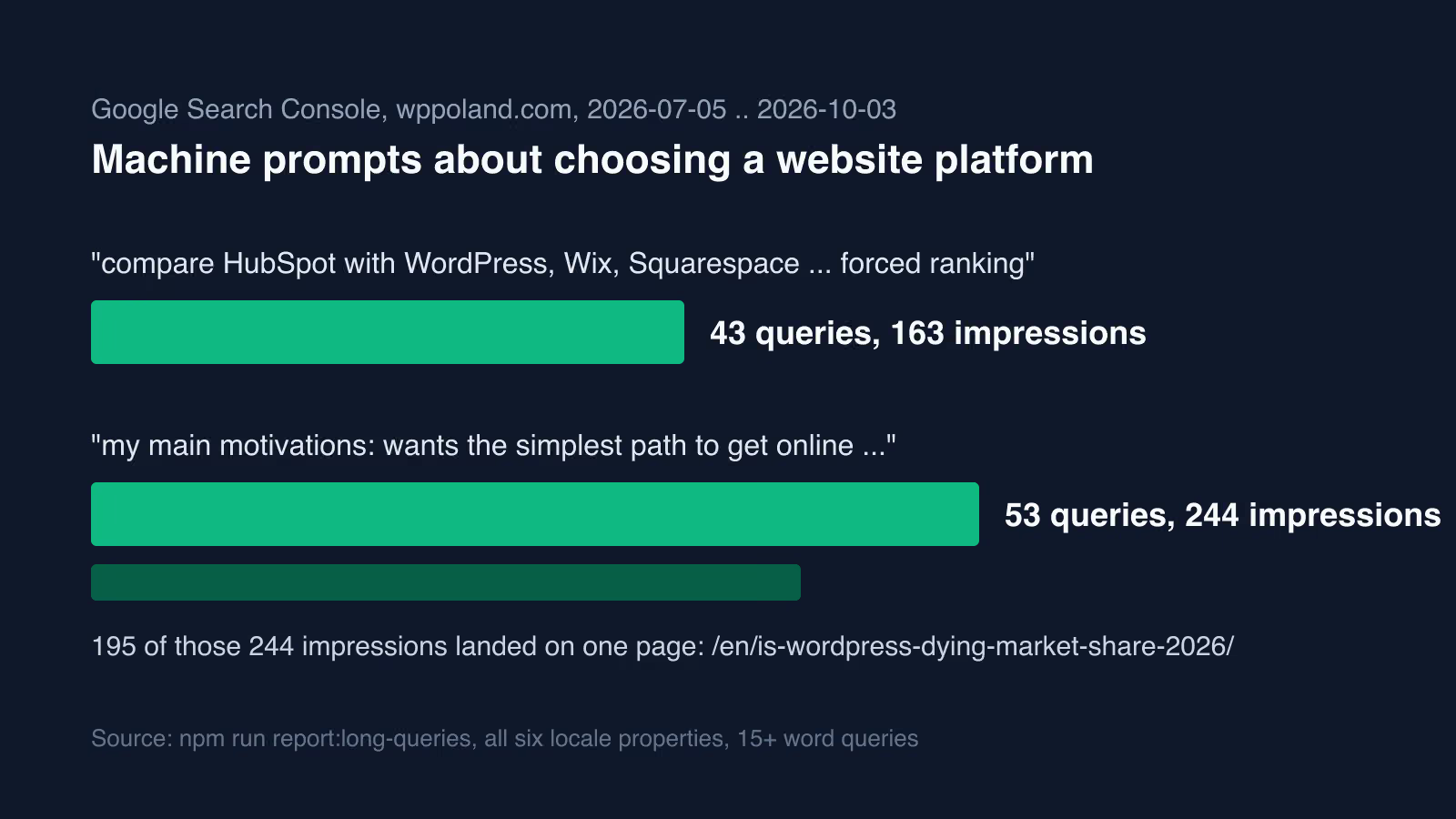
More and more often an agent picks the platform based on its training data. Andy Peatling and Brian Coords argue that WordPress is losing out. Our Search Console data shows what the prompts making that decision look like, and where they land.
Posts in category ai
This block routes category visitors into the commercial pages and supporting content that complete the search intent.
Visibility in Google and AI answer systems.
Claude, OpenAI, and RAG inside WordPress with BYOK and EU residency.
Schema, UCP, and readiness for shopping agents.
Core Web Vitals, caching, and faster delivery.
Custom WordPress engineering and architecture.
Headless WordPress, Sanity, Strapi, and Contentful with Astro or Next.js.

Which Schema.org types matter for AI search engines? Practical guide to AEO and GEO optimization - making your content discoverable by ChatGPT, Perplexity, Google AI Mode, and answer engines.

llms.txt, Markdown for bots, FAQ schema, and the phrase "GEO instead of SEO": five myths we hear from WordPress and WooCommerce clients. What we actually ship on wppoland.com and what we measure in Search Console.

A practical GEO playbook for 2026. What actually moves AI citation rates in ChatGPT, Claude, Perplexity and Gemini, what is folklore, and the order to implement each lever.

Google now expands AI Overviews to a full AI Mode answer on some queries and pushes the ten blue links down. Our Search Console numbers on offer URLs at positions 2 to 4, and what we changed so the overview has a fact to cite.
More and more often an agent picks the platform based on its training data. Andy Peatling and Brian Coords argue that WordPress is losing out. Our Search Console data shows what the prompts making that decision look like, and where they land.
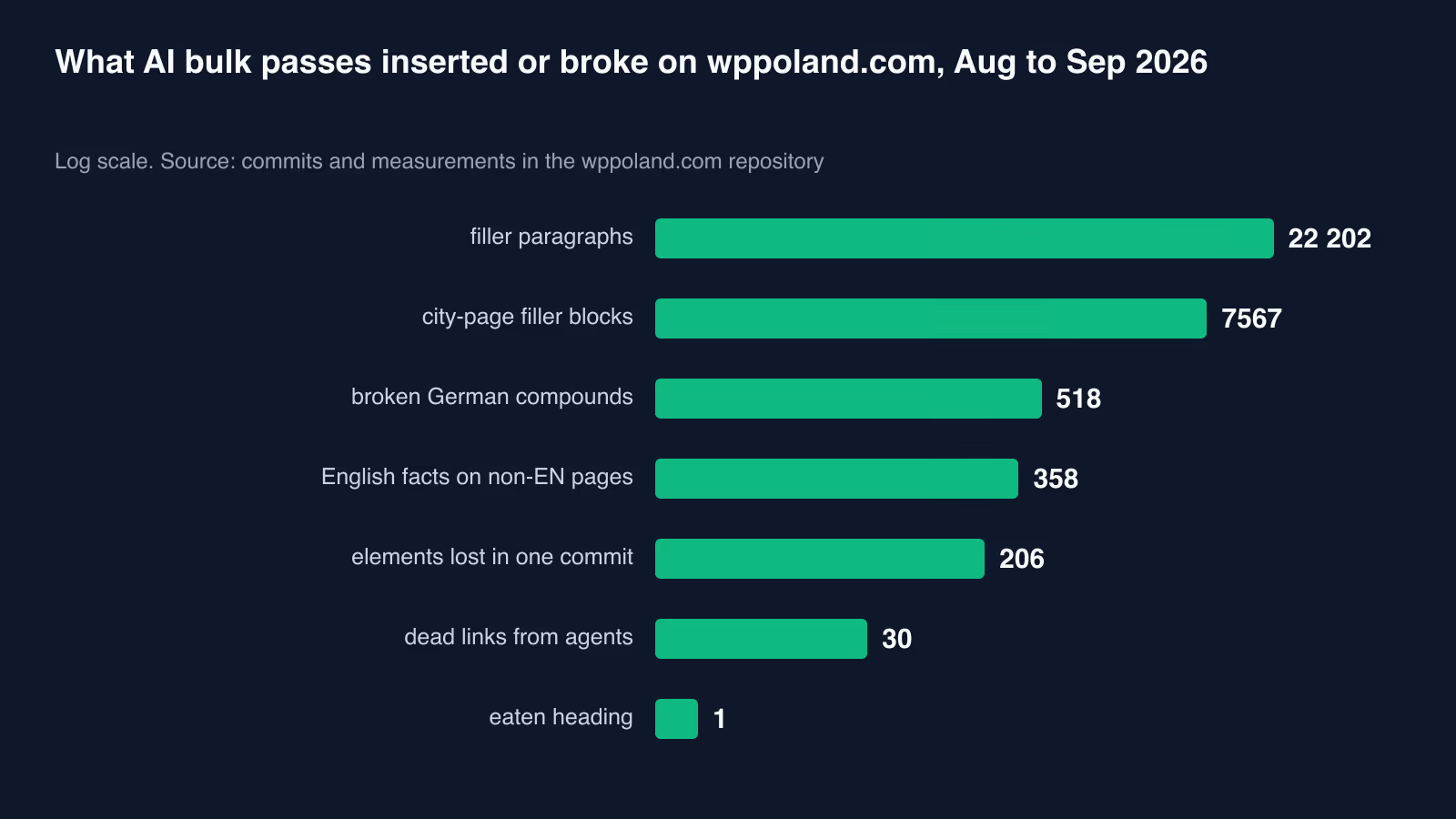
A post-mortem from our own repository: 22,202 filler paragraphs, a heading eaten by a price regex, 358 English sentences on German and Polish pages, invented case studies. Every pass reported success. We describe what reached production and which gate catches it today.
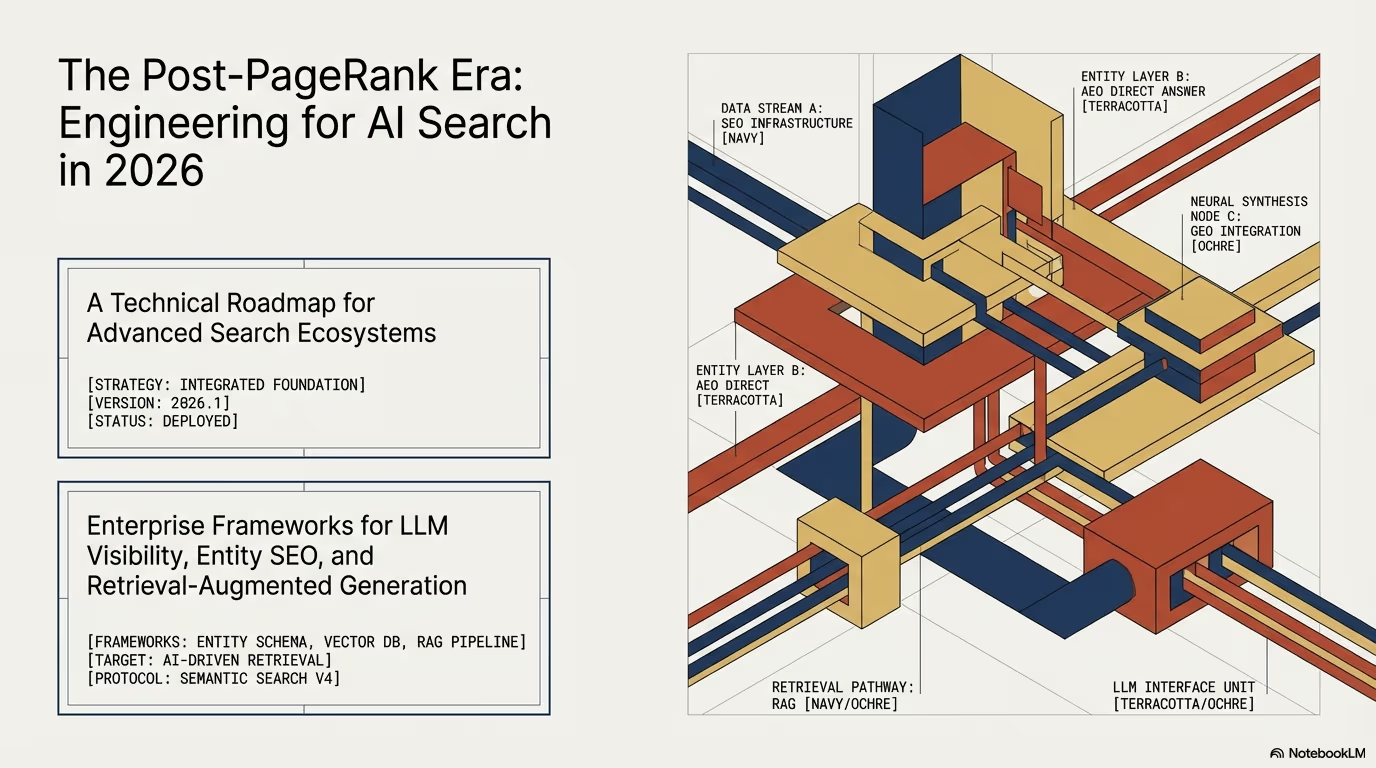
What the Abilities API, the MCP Adapter, Elementor's MCP beta, Block Runner and the WordPress 7.1.1 security credits mean for WordPress sites that AI agents read and edit.
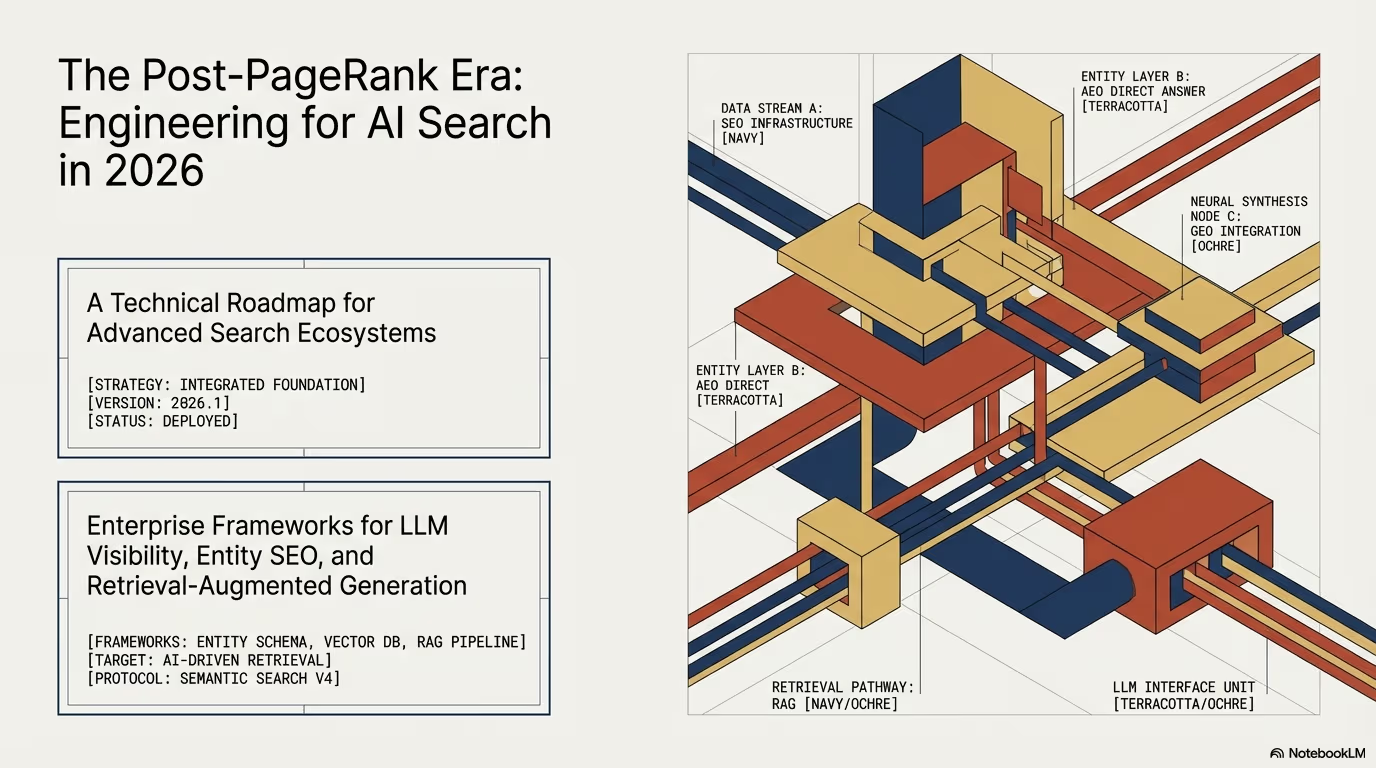
A practitioner guide to the live public endpoint wppoland.com/mcp and the woocommerce-mcp server. How to connect AI assistants (Claude Desktop, Cursor) to WordPress without plugins or write risk, practical business applications, and edge deployment lessons.

CVE-2026-65640 needs Author plus Imagick plus Ghostscript. File scanners miss remote JSON. Vibe-coded plugins skip review. Hardening is policy.xml, not another security plugin.
We turned a static marketing site into a live, read-only Model Context Protocol server at POST /mcp. Not a store, a content site: why we did it, the Cloudflare Pages Function that runs it, hand-rolled JSON-RPC with zero SDK, and the read-only safety stance behind the request_quote tool.
AI agents now place WooCommerce orders server-side, so the browser pixels your reporting depends on never fire. Here is what breaks, why the Conversions API is not an automatic rescue, and how to instrument agent checkout properly.

We published @wppoland/woocommerce-mcp - a read-only Model Context Protocol server for WordPress and WooCommerce. Install from npm, wire Claude or Cursor, and let agents answer stock and order questions without write risk.

A YMYL diagnostic for WordPress sites: how to find fake stats, fabricated citations, duplicate AI pages, wrong dates, and invented team bios before they damage trust, compliance, or AI citations.
The new Generative AI section in Google Search Console reports impressions from AI Overviews and AI Mode. What it measures, what it leaves out, and how to read the data without drawing the wrong conclusions.

A senior developer's data-backed take on vibe coding, agentic coding tools (Lovable, Bolt.new, Cursor, Claude Code, Google Antigravity, AWS Kiro) and WordPress. Where AI-generated sites break, how to spot one, and when a project needs a foundation instead of a generated screen.

Article 50 of the AI Act has applied since 2 August 2026 and imposes transparency duties on companies that use AI. What you actually have to label, when editorial review lifts the obligation, and how to put two layers of labelling into practice for media, marketing and agencies.

A source-backed senior take on the AI productivity paradox in 2026. Why generative AI helps but rarely explodes output, and what that means for WordPress agencies running WordPress 7.0 AI features.

WordPress 7.0 added a Connectors screen that stores AI provider credentials, and some hosts auto-installed AI plugins. Here is the threat model and a hardening checklist.

Generic text-to-image gives you a stranger. A face reference drifts. A LoRA that renders laptop screens looks uncanny. What finally worked for a consistent editorial hero across hundreds of posts, and why.

AI translation in multilingual WordPress nails 99 percent of prose, then breaks the structural fields - slug, canonical URL, hreflang, taxonomy terms, redirect map. Operations report from 6 locales.

Recap from WordCamp Portugal 2026 in Porto: accessibility as an SEO signal, WordPress Abilities API, AI in core, Claude Code and the agency model shift.

A practical walkthrough of building a Model Context Protocol server in front of WooCommerce. Tool definitions, catalogue and order endpoints, schema.org alignment, Zod validation, and a Cloudflare Workers deployment that an AI agent can talk to.

A working set of authentication patterns for Model Context Protocol servers. OAuth for human-delegated agent access, scoped API tokens for B2B and headless flows, when to require auth versus stay anonymous, rate limiting, and what to log.

A decision guide for picking between Model Context Protocol and a REST API when the consumer is an AI agent. Typed surface vs JSON shape inference, mutating actions, authentication, and the hybrid pattern that often beats both.

A four-week migration playbook for putting a Model Context Protocol server in front of an existing WordPress REST API. Endpoint audit, MCP scaffold, parallel-run, cutover, and the observability that makes the move safe.

How to design Zod schemas for MCP tool inputs and outputs, including idempotency keys, error response shapes, and the typed agent contracts that prevent silent drift between the MCP server and a WooCommerce origin.

How to register, discover and execute WordPress abilities with JSON Schema, permission callbacks and authenticated REST endpoints.
Which Schema.org types matter for AI search engines? Practical guide to AEO and GEO optimization - making your content discoverable by ChatGPT, Perplexity, Google AI Mode, and answer engines.

WordPress Playground now supports MCP (Model Context Protocol), letting AI agents like Claude and Gemini install plugins, run PHP, and manage WordPress directly in the browser. What this means for developers and agencies.

Yoast introduces the Schema Aggregation feature, built with the Microsoft NLWeb team. Learn how the new endpoint changes the way AI agents and search engines read WordPress structured data.

Writing code still matters, but results now depend on how teams orchestrate AI agents. This guide explains a practical agentic workflow and how to adopt it without losing quality.

What is a WordPress developer, what does one do, and will AI replace the role? Honest look at rates, skills, and the real impact of AI on WordPress development in 2026.
Google's Universal Commerce Protocol (UCP) enables AI agents to complete purchases directly. Learn what this means for your business and how to prepare.

A practical guide to the best AI tools for WordPress in 2026, covering content generation, SEO workflows, chatbots, image tools, code assistants, and editorial risks.

I published a "behind the scenes" article on how we are building the CMS Conf 2026 website, and it is much more than "just a landing page".
An Ahrefs researcher created a fake luxury brand, Xarumei, to test how AI models handle fact-checking. The results show how easily models invent brand facts.

LLMO Executive Summary: Why your brand needs to be 'AI-Ready' now. A high-level strategic overview of Large Language Model Optimization.

AI in WordPress development in 2026: coding tools, research on AI and developer productivity, personalization, RAG and vector search, Gutenberg content workflows, data privacy, CI/CD and the AI APIs in WordPress 6.9 and 7.0.